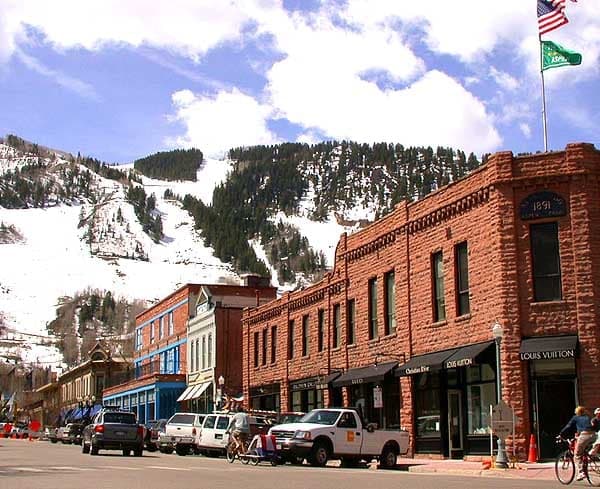
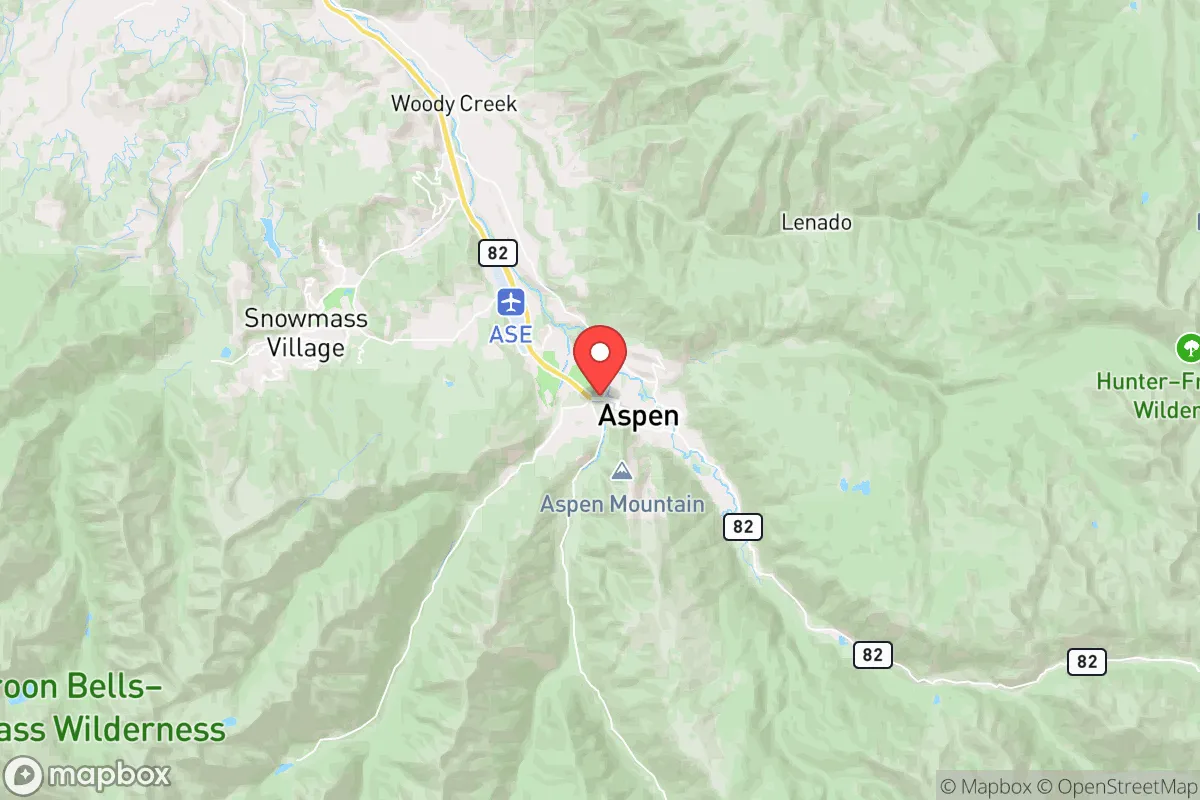
Photo: Wikipedia
Political ClimatePolitical Climate in Aspen, CO
District shown is the primary district for this city’s centroid. Cities may span multiple districts.
Local Political AnalysisPolitical Analysis of Aspen, CO
Aspen, Colorado, has a political climate that feels like a world apart from the rest of the state, and honestly, it’s a bit of a head-scratcher if you’re used to the old-school Western values that built this place. The city itself leans heavily progressive, but the surrounding Pitkin County—and especially the rural areas just outside town—still hold onto a more traditional, live-and-let-live vibe. The Cook PVI for the area is R+5, which tells you the broader region isn’t as blue as Aspen’s city council might suggest. But over the last decade, you’ve seen a steady shift toward government overreach, with new regulations on short-term rentals, building codes, and even what you can do on your own land. It’s a far cry from the days when folks here just wanted to be left alone to ski, hunt, and mind their own business.
How it compares
When you stack Aspen against the rest of Colorado, the contrast is stark. The state as a whole has a Cook PVI of D+6, meaning it’s solidly blue, driven by the Denver-Boulder corridor and the Front Range. But Aspen’s local politics are even more progressive than the state average, which is saying something. Drive 30 minutes down the road to Carbondale or Glenwood Springs, and you’ll find a more balanced mix—folks there are still wary of too much government meddling, especially on property rights and taxes. Head an hour north to Rifle or Parachute, and you’re in deep red territory, where the idea of Aspen’s carbon taxes and plastic bag bans would get laughed out of a town hall. The real kicker is that Aspen’s wealth—driven by second-home owners and out-of-state money—has insulated it from the economic consequences of its own policies, while the surrounding working-class towns get squeezed by the same regulations.
What this means for residents
For someone living here long-term, the biggest red flag is how much personal freedom has eroded in the name of “community values.” You can’t just build a deck on your house without jumping through hoops, and the city’s strict rental caps make it nearly impossible for locals to earn extra income from their own property. The school board and city council have pushed DEI initiatives and climate mandates that feel more like virtue signaling than practical solutions. If you value the right to make your own choices—whether it’s about your home, your business, or your kids’ education—Aspen’s trajectory is concerning. The long-term trend points to more of the same: tighter controls, higher taxes, and a cultural shift that prioritizes government solutions over individual responsibility. It’s not the Aspen I remember from 20 years ago, and I worry it’s only going to get harder for regular folks to live here without bending the knee to the latest progressive agenda.
One cultural distinction that stands out is Aspen’s embrace of “luxury environmentalism”—where the wealthy push for green policies that don’t apply to their private jets or massive homes. Meanwhile, the local ranchers and tradespeople who actually keep the town running get hit with the costs. The city’s ban on single-use plastics and its push for all-electric new construction sound nice on paper, but they add layers of bureaucracy that make it harder for small businesses to survive. If you’re looking for a place where you can live free from constant government oversight, Aspen might not be it anymore. The surrounding towns like Basalt or Woody Creek still offer some breathing room, but even there, the influence is creeping in. Keep an eye on the next few election cycles—if the progressive wave continues, it’ll be a tough spot for anyone who values personal liberty over collective control.

State Political ClimatePolitical Climate in Colorado
State Political AnalysisPolitical Environment in the State
Colorado has shifted from a quintessential purple state to a solidly blue one over the past two decades, now carrying a Cook PVI of D+6. The dominant coalition is a mix of urban progressives, suburban moderates, and a growing population of out-of-state transplants, particularly from California and the Northeast, who have reshaped the electorate. The trajectory has been a steady march leftward since the early 2000s, when the state was still competitive in presidential races, but the last decade has cemented a Democratic trifecta in state government, with the governorship and both legislative chambers firmly under progressive control.
Urban vs. rural divide
The political map of Colorado is a textbook case of the urban-rural chasm. The Denver metro area, including Denver proper, Aurora, and Boulder, is the engine of Democratic power, delivering massive margins that swamp the rest of the state. Boulder County is one of the most liberal jurisdictions in the nation, while Denver and Adams County reliably vote D+20 or more. The Front Range corridor from Fort Collins down to Colorado Springs is where the real action is. Colorado Springs, home to the Air Force Academy and a heavy military presence, remains a conservative stronghold in El Paso County, but even there, the margins have been shrinking as the city grows and diversifies. The Western Slope and Eastern Plains are deeply red, with counties like Mesa (Grand Junction), Weld (Greeley), and Elbert voting Republican by 20-30 points. However, these rural areas lack the population density to counterbalance the Front Range. A notable shift is in suburban Jefferson County, once a bellwether that flipped from red to blue in the 2010s and now reliably votes Democratic, driven by educated, affluent transplants who prioritize environmental and social issues over fiscal conservatism.
Policy environment
Colorado’s policy environment is increasingly progressive, with a tax structure that is moderate but trending upward. The state has a flat income tax rate of 4.4%, but voters approved Proposition HH in 2023, which temporarily reduces that rate while expanding property tax breaks—a classic trade-off that critics argue masks future revenue grabs. The regulatory posture is heavy, especially on energy and land use. Colorado has some of the strictest oil and gas regulations in the country, including Senate Bill 19-181, which gave local governments veto power over drilling permits, effectively killing new development in many areas. Education policy is dominated by the Colorado Department of Education, which has pushed progressive curricula and gender identity mandates in schools, sparking parental rights battles. Healthcare is heavily regulated, with a state-run insurance exchange and Medicaid expansion under the Affordable Care Act. Election laws have been loosened significantly: Colorado was one of the first states to implement universal mail-in voting and automatic voter registration, which critics say erodes ballot security. The state also has a “red flag” law (Extreme Risk Protection Orders) that allows courts to temporarily seize firearms from individuals deemed a threat, a policy that remains deeply controversial in rural areas.
Trajectory & freedom
The trajectory in Colorado is unmistakably toward less personal freedom, particularly in areas of gun rights, parental rights, and economic liberty. The red flag law, passed in 2019, was followed by a 2021 law requiring universal background checks for private firearm sales and raising the purchase age to 21. In 2023, the legislature passed a ban on so-called “assault weapons” (defined broadly to include many semi-automatic rifles), which is currently tied up in court but signals the direction. Parental rights have taken a hit with the 2021 “Comprehensive Human Sexuality Education” law, which mandates age-appropriate instruction on sexual orientation and gender identity from kindergarten onward, and allows students to use preferred names and pronouns without parental consent. Medical autonomy has been curtailed by vaccine mandates for healthcare workers and schoolchildren, though some of these have been relaxed post-pandemic. Property rights are under pressure from aggressive land-use planning and renewable energy mandates, including a 2021 law requiring utilities to achieve 100% clean energy by 2040, which has driven up electricity costs. On the positive side for conservatives, Colorado has a Taxpayer’s Bill of Rights (TABOR) that limits state revenue growth and requires voter approval for tax increases, though progressives have chipped away at it through ballot measures and accounting tricks.
Civil unrest & political movements
Colorado has seen its share of civil unrest and political flashpoints. The 2020 George Floyd protests in Denver turned violent, with property damage and clashes with police, and the city’s defund-the-police movement led to a temporary reduction in the police budget, though it was later restored. Immigration politics are a hot-button issue: Denver has declared itself a sanctuary city, and the state has a “Safe Haven” law that limits cooperation with federal immigration enforcement. The influx of migrants from the southern border in 2023-2024 overwhelmed Denver’s resources, leading to a political backlash and a shift in some suburban voters toward more moderate positions. Election integrity remains a concern for conservatives, with widespread use of mail-in ballots and ballot drop boxes, though no major fraud scandals have been proven. The “Colorado Project” and other grassroots conservative groups have organized around school board races and county-level issues, achieving some success in rural areas. Secession talk has surfaced in Weld County and the Eastern Plains, where some residents have floated the idea of forming a new state called “North Colorado,” though it remains a fringe movement. The most visible flashpoint for a new resident would be the constant political tension in the Denver metro area, where progressive policies clash with a significant minority of conservative and libertarian-leaning residents.
Projection
Over the next 5-10 years, Colorado is likely to continue its leftward drift, driven by demographic trends. The state is a magnet for young, college-educated professionals from blue states, who tend to vote Democratic. The Hispanic population, concentrated in the Denver metro and the San Luis Valley, is growing and leans Democratic, though not as heavily as national trends suggest. The rural population is shrinking, and even conservative strongholds like Colorado Springs are becoming more moderate as tech and defense industries attract a more diverse workforce. Expect further restrictions on gun rights, expansion of renewable energy mandates, and increased state control over local land use. The parental rights movement may gain some traction, but the progressive education establishment is deeply entrenched. A new resident moving in now should expect to live in a state where the political culture is increasingly hostile to traditional conservative values, with higher taxes, more regulation, and a government that prioritizes environmental and social justice over economic freedom. The one wild card is the state’s housing crisis, which could drive out the very transplants who are fueling the blue shift, potentially slowing the leftward momentum.
For a conservative-leaning individual or family considering relocation, Colorado offers a mixed bag. The natural beauty and outdoor lifestyle are unparalleled, and the economy is strong, particularly in tech, aerospace, and healthcare. But the political climate is a real headwind. You will be living in a state where your values are increasingly out of step with the dominant culture, especially in the Front Range. If you can find a niche in a rural county like Elbert or Mesa, you can insulate yourself somewhat, but you will still be subject to state-level policies that restrict your freedoms. The bottom line: Colorado is a beautiful place to live, but it is no longer a friendly one for conservatives. If you value personal liberty, lower taxes, and a government that stays out of your life, you may want to look elsewhere or be prepared to fight for your rights at every turn.
* Values derived from national, state, county, city and local statistics and may differ in a specific area. Last updated: 2026-05-11T22:11:57.000Z
Narrative content on this page is AI-generated and may contain mistakes. Verify any details that matter before acting on them.
ReloMaps may earn a commission from affiliate links at no extra cost to you.

