 Popular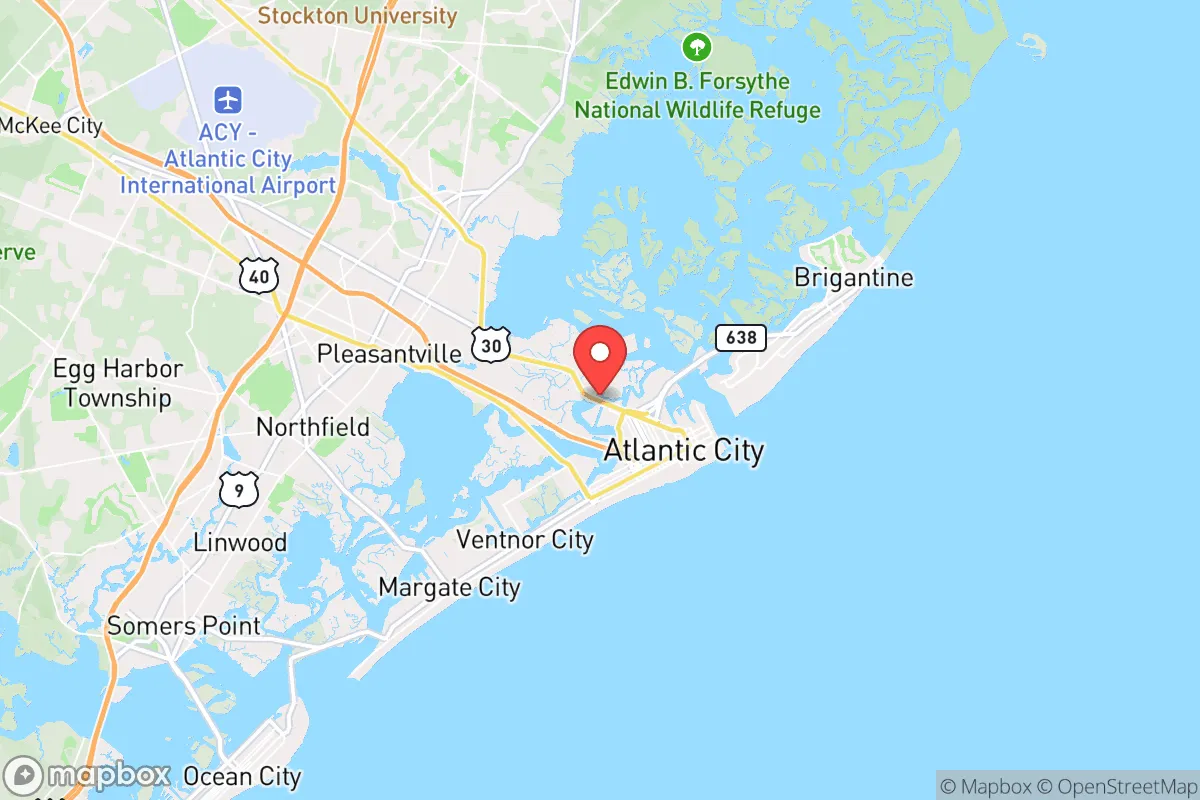
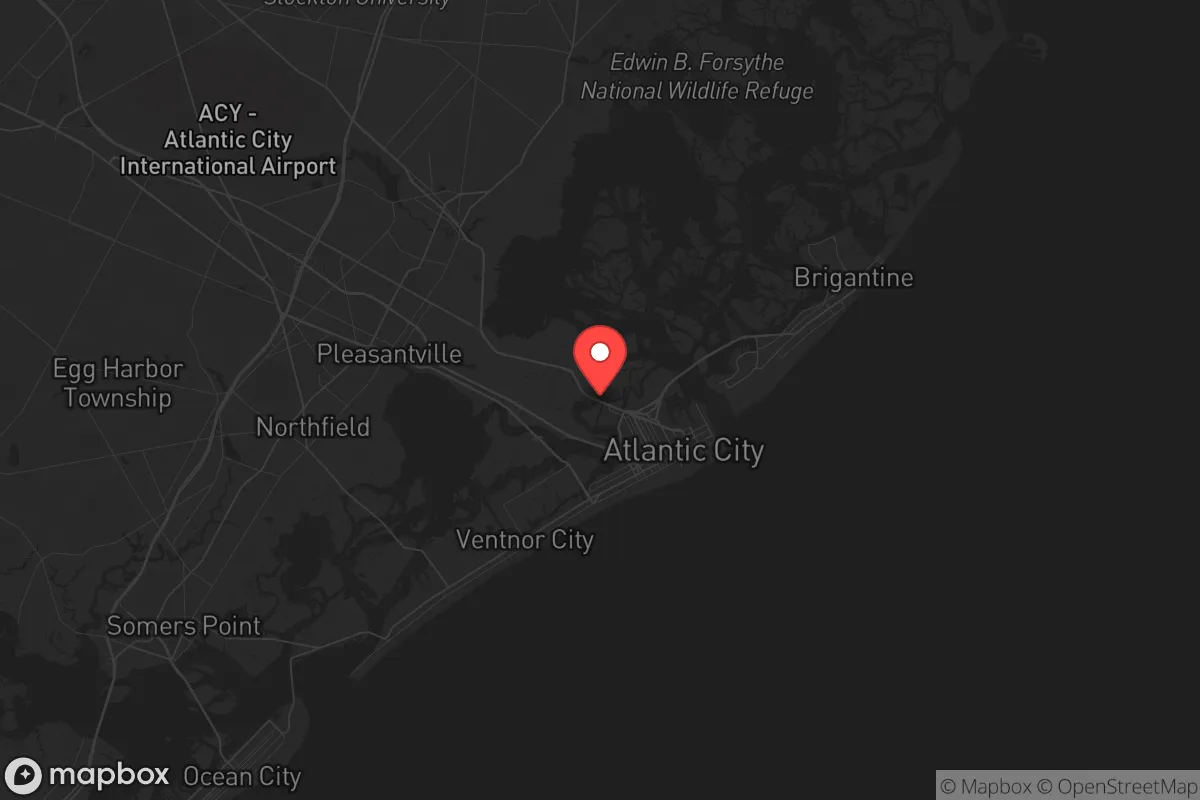
Photo: Wikipedia
Quality of Life in Atlantic City, NJ
Above-average quality of iife. The area offers a reasonable cost of living, decent mobility, and a mix of neighborhood amenities.
What does Quality of Life tell us?
Quality of Life blends cost of living, nearby amenities, socioeconomic signals, and neighborhood character. City-level scores represent the whole municipality; individual neighborhoods can differ.
What does this tell us?
Quality of Life blends cost of living, nearby amenities, socioeconomic signals, and neighborhood character. City-level scores represent the whole municipality; individual neighborhoods can differ.
Cost of Living
17% below national average
The Real Cost of Living in Atlantic City, NJ for 2026
| Tier | Individual | Family (4) |
|---|---|---|
| Survival | $17k | $33k |
| Comfortable | $37k | $54k |
| Luxury | $65k+ | $101k+ |
| Elite (Top 5%) | $103k+ | $159k+ |
67%
The Area Signal
A metric tracking the socioeconomic signals of the area.
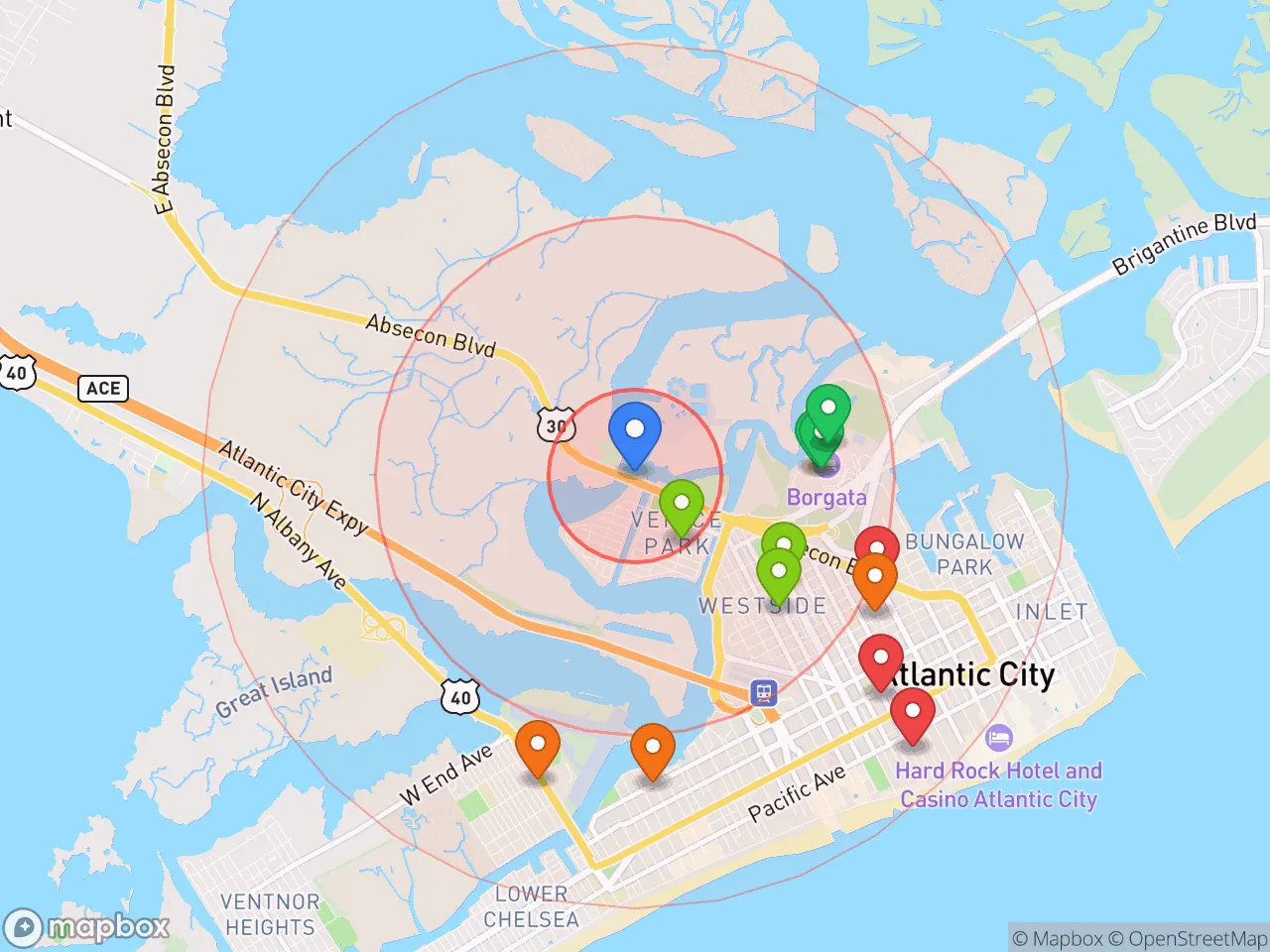
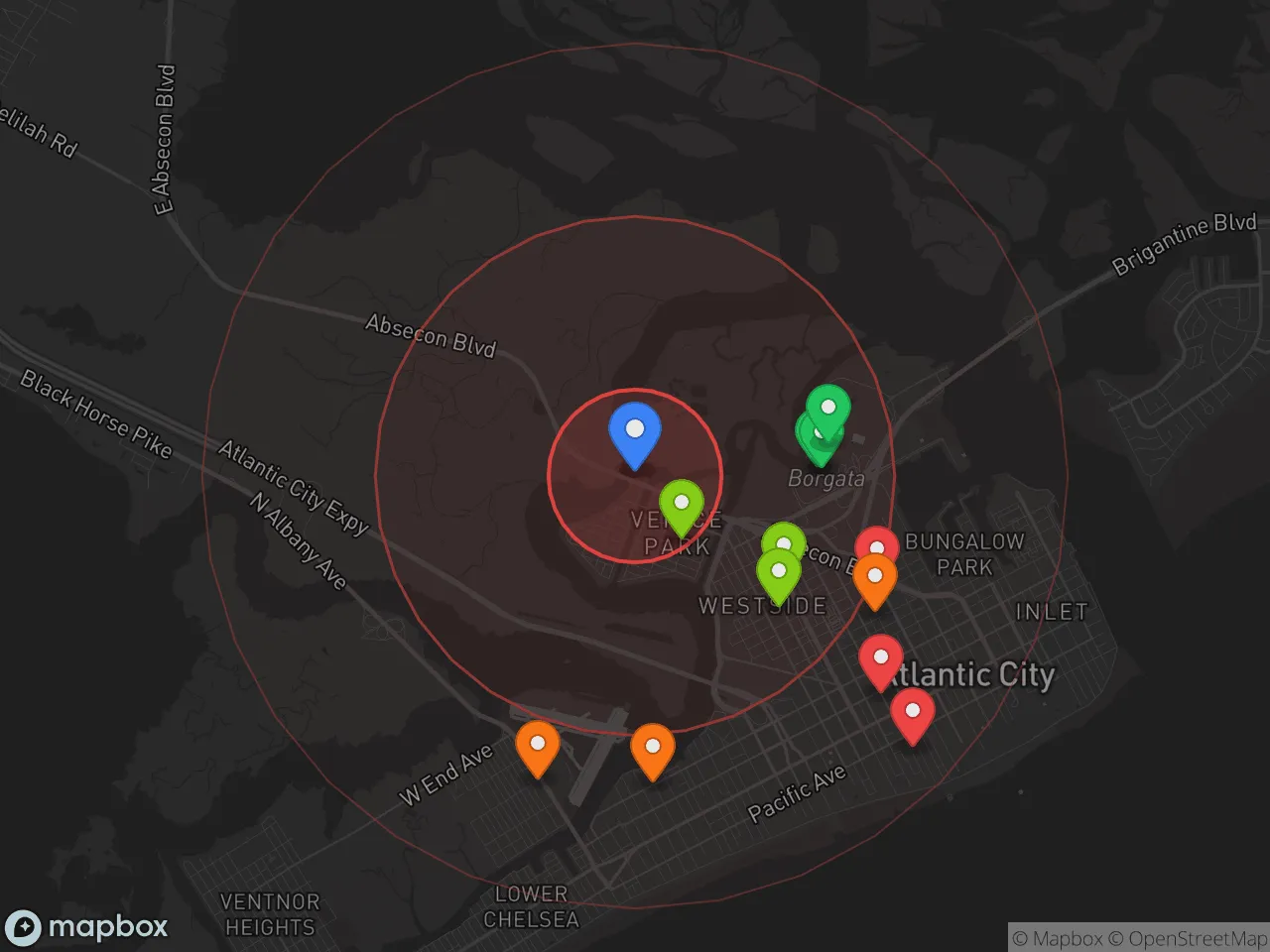
Hobbies
Explore the areaGroceries
7 within 10 miles
Gas
20 within 10 miles
Hospital
4 within 20 miles
Airport
PHL — Philadelphia International
Post Office
USPS — Atlantic City, NJ
Critical Amenities
Quality-of-Life Analysis
Atlantic City, New Jersey, presents a unique quality-of-life profile defined by its status as a significantly more affordable coastal city in a high-cost state, attracting a diverse mix of casino workers, service-industry employees, retirees on fixed incomes, and second-home investors. With a cost-of-living index of 83 (17% below the U.S. average), the city offers a financial reprieve compared to the rest of the Northeast, though this affordability is counterbalanced by persistent economic challenges and a fluctuating local economy tied to tourism and gaming. The population is a blend of long-term residents, seasonal workers, and those drawn by the promise of beachfront living without the premium price tag of nearby shore towns like Avalon or Cape May.
Cost of living, housing affordability, and how Atlantic City compares to nearby areas
Atlantic City’s housing market is the primary driver of its low cost of living, with a median home value of $189,600—roughly one-third the New Jersey state median of over $400,000. This makes homeownership attainable for moderate-income households, particularly those working in the casino or hospitality sectors. Median rent sits at $1,084, well below the state average of $1,600, though rental inventory can be tight and older units may require renovation. The average commute of 23.7 minutes is notably shorter than the state average of 31 minutes, reflecting the concentration of jobs within the city and immediate vicinity. However, property taxes in Atlantic County remain high (averaging 2.5% of assessed value), and buyers should factor in flood insurance costs for properties in flood zones. Compared to nearby Brigantine or Ventnor, Atlantic City offers lower entry prices but also higher crime rates and more variable neighborhood quality, making location-specific research essential.
Local amenities, schools, and what daily life is like for residents
Daily life in Atlantic City revolves around its dual identity as a tourist destination and a working-class city. The Atlantic City Boardwalk, casinos, and beaches provide constant entertainment options, but residents also rely on practical amenities like the ACUA (Atlantic County Utilities Authority) for waste and recycling, and the Jitney bus system for local transit. The city’s public school system, part of the Atlantic City School District, has historically struggled with low graduation rates (around 75%) and underfunding, leading many families to consider charter schools like the Atlantic City Community Charter School or private options. Healthcare access is anchored by AtlantiCare Regional Medical Center, the largest hospital in the region. Grocery shopping is concentrated in a few supermarkets, with limited full-service options in the downtown core, pushing many residents to drive to nearby Pleasantville or Egg Harbor Township for larger stores. The rhythm of life is seasonal: summers bring crowds, traffic, and higher noise levels, while winters are quieter but can feel isolated, with some businesses reducing hours.
Atlantic City is best suited for individuals and families who prioritize affordability and coastal proximity over suburban tranquility or top-tier public schools. Retirees on fixed incomes, casino and hospitality workers, and remote workers who can tolerate seasonal tourism will find the cost savings compelling. Those seeking strong school systems, low crime, or a quiet residential environment should look to neighboring suburbs like Northfield or Linwood, where home values rise to $300,000–$400,000 but offer better safety and school ratings. For the right resident—one who values beach access, a low cost of entry, and a lively urban atmosphere—Atlantic City provides a unique and financially accessible lifestyle unmatched in coastal New Jersey.

Crime in Atlantic City, NJ
Significantly higher crime rates than 90% of comparable U.S. locations.
Violent CrimeViolent Crime Analysis
Property CrimeProperty Crime Analysis
Crime Analysis
Atlantic City, New Jersey, faces significant public safety challenges, with crime rates that far exceed both state and national averages. The city's violent crime rate stands at 1,498.9 incidents per 100,000 residents, while property crime occurs at a rate of 5,977.6 per 100,000, placing it among the most dangerous municipalities in the state. These figures reflect a complex environment shaped by the city's tourism-driven economy, socioeconomic pressures, and a local justice system that has increasingly embraced progressive prosecutorial policies, which critics argue prioritize offender rehabilitation over public safety and victim rights.
Crime in context
To understand the severity of Atlantic City's crime problem, comparison to broader benchmarks is essential. The city's violent crime rate is roughly four times higher than the New Jersey state average and nearly five times the national median. Property crime, while less violent, is similarly elevated—approximately double the state average and significantly above national norms. These statistics place Atlantic City in the bottom percentile nationally for safety. A key contributing factor is the influence of progressive district attorneys and judges in Atlantic County, who have implemented policies such as cash bail reform, reduced sentencing guidelines for repeat offenders, and diversion programs that keep habitual property criminals on the street. While intended to reduce incarceration rates, these measures have been linked to a revolving-door justice system that undermines deterrence and leaves victims with little recourse.
What residents experience
For those living in Atlantic City, the high crime rates translate into tangible daily concerns. Violent offenses—including aggravated assault, robbery, and homicide—are concentrated in certain neighborhoods and often linked to drug trafficking and gang activity. Property crimes such as burglary, larceny, and motor vehicle theft are pervasive, with tourists and residents alike frequently targeted. Many locals report feeling unsafe walking alone after dark, and businesses invest heavily in private security and surveillance. The progressive judicial philosophy in the region has been a particular point of frustration: offenders arrested for theft or drug possession are often released on summons or minimal bail, only to reoffend quickly. This pattern erodes trust in the justice system and places a disproportionate burden on working-class residents who cannot afford to relocate to safer suburbs.
Neighborhood-level variation
Safety conditions in Atlantic City are not uniform. The Marina District and the Boardwalk area, heavily patrolled by casino security and police, see lower rates of street-level crime, though property theft remains a concern. In contrast, neighborhoods west of the Atlantic City Expressway—such as Bungalow Park and the Chelsea Heights area—experience higher concentrations of violent crime and drug activity. The city's southern and eastern residential blocks, closer to Ventnor and Margate, tend to be safer but still face spillover effects from the core. For prospective residents, choosing a location with strong community watch programs and proximity to police substations can mitigate risk, but the overarching reality is that Atlantic City's crime challenges are systemic and unlikely to improve without a fundamental shift away from progressive criminal justice policies that currently prioritize offender leniency over public safety.
* Values derived from national, state, county, city and local statistics and may differ in a specific area. Last updated: 2026-04-30T01:25:51.000Z
Narrative content on this page is AI-generated and may contain mistakes. Verify any details that matter before acting on them.
ReloMaps may earn a commission from affiliate links at no extra cost to you.

