 Popular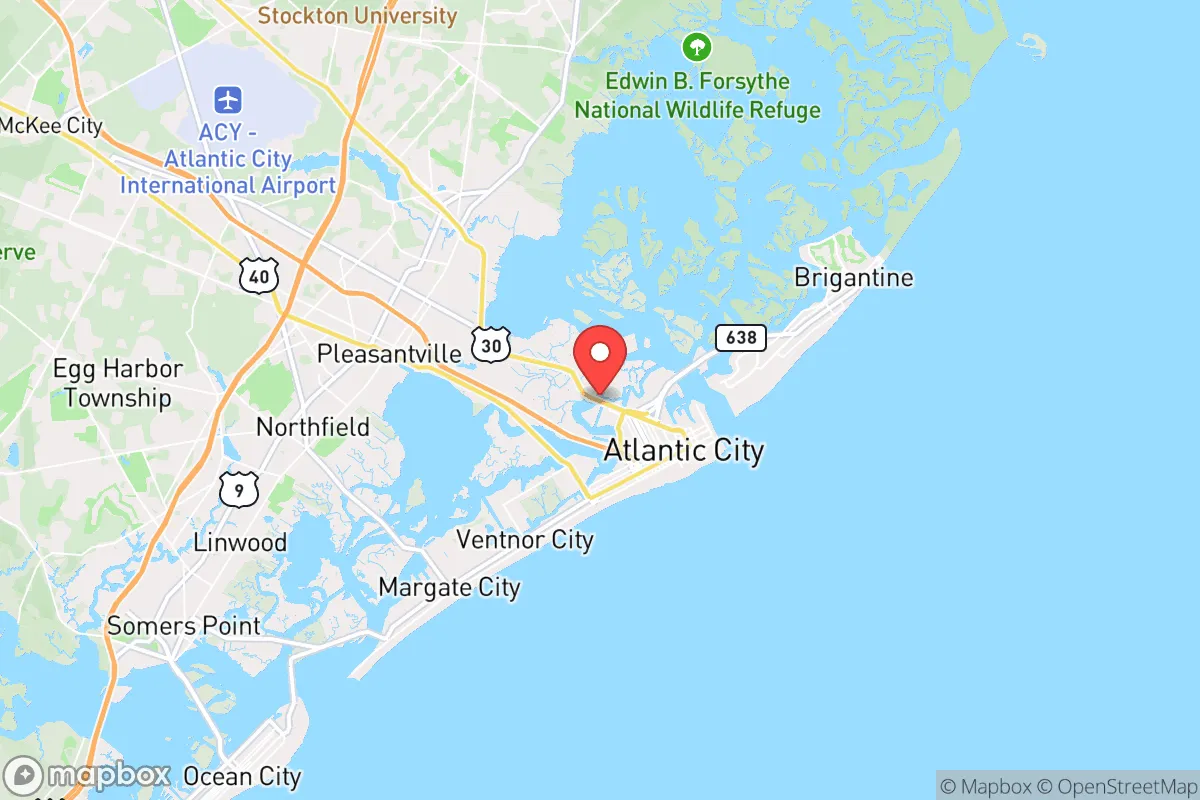
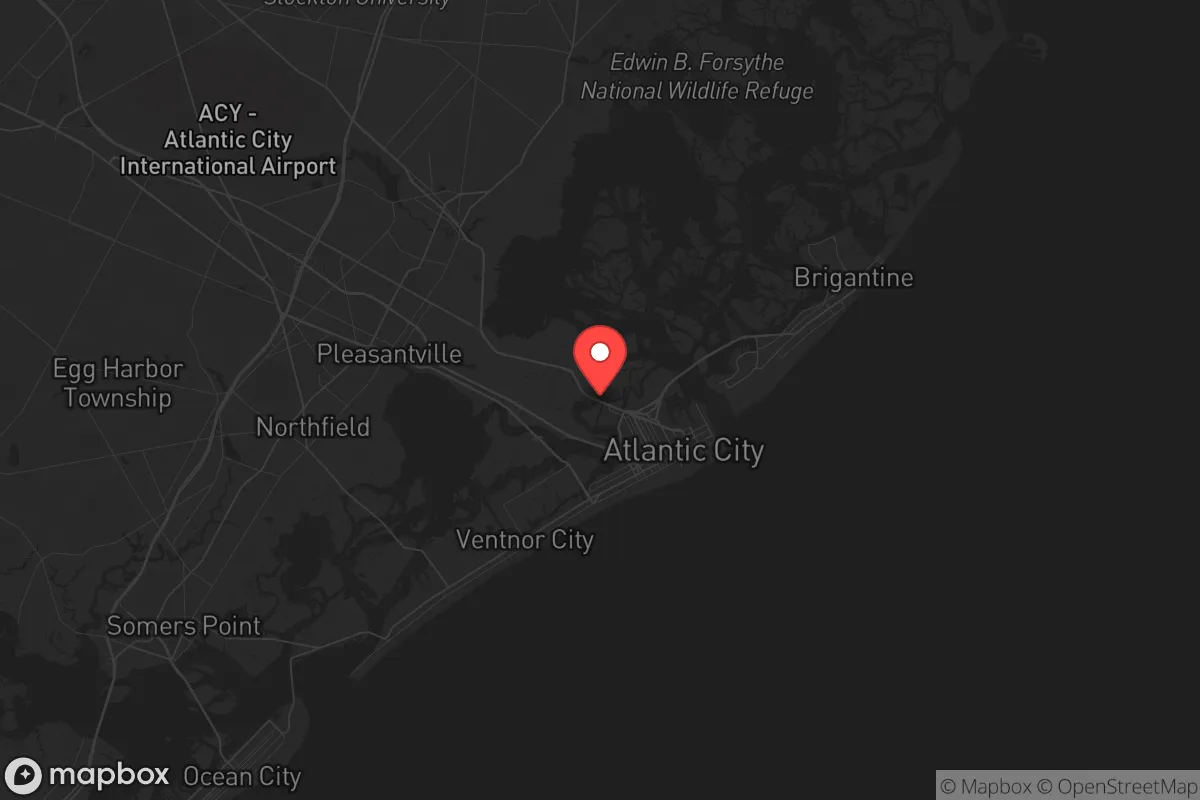
Photo: Wikipedia
Strategic Assessment of Atlantic City, NJ
Multiple tactical vulnerabilities. Population density, target proximity, or disaster risk are likely compounding. A retreat property and exit planning is required.
What does the Strategic Assessment tell us?
Our Strategic Assessment grades tactical survivability of an area. Major population centers, military targets, fallout zones, natural disasters, and border exposure all drive risk — lower exposure means a more defensible position in a crisis.
This is heavily inspired by Joel Skousen's Strategic Relocation book. Highly recommended you checkout the book ($)What does this tell us?
Our Strategic Assessment grades tactical survivability of an area. Major population centers, military targets, fallout zones, natural disasters, and border exposure all drive risk — lower exposure means a more defensible position in a crisis.
This is heavily inspired by Joel Skousen's Strategic Relocation book. Highly recommended you checkout the book ($)Strategic Pillars

Key Distances
Regional Safe Places
Below is our recommended "safe zones" in New Jersey and the surrounding area based on our strategic heuristics. For most people, it's unrealistic to live in a “safe zone” full-time due to work, family or other personal reasons. They tend to be more rural. However, many of these areas are perfect for second homes and retreat properties that double as a vacation home or even a short-term rental.
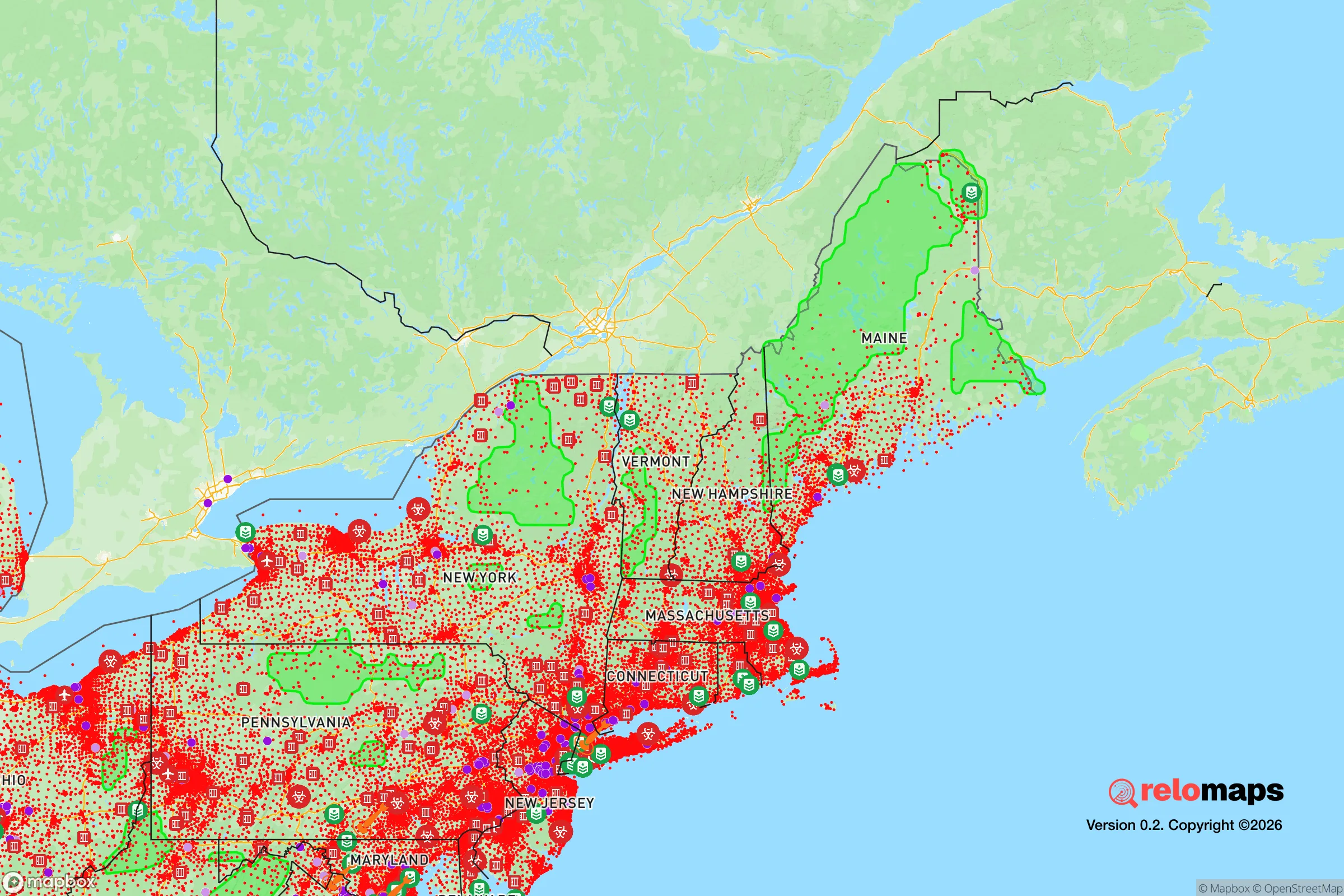
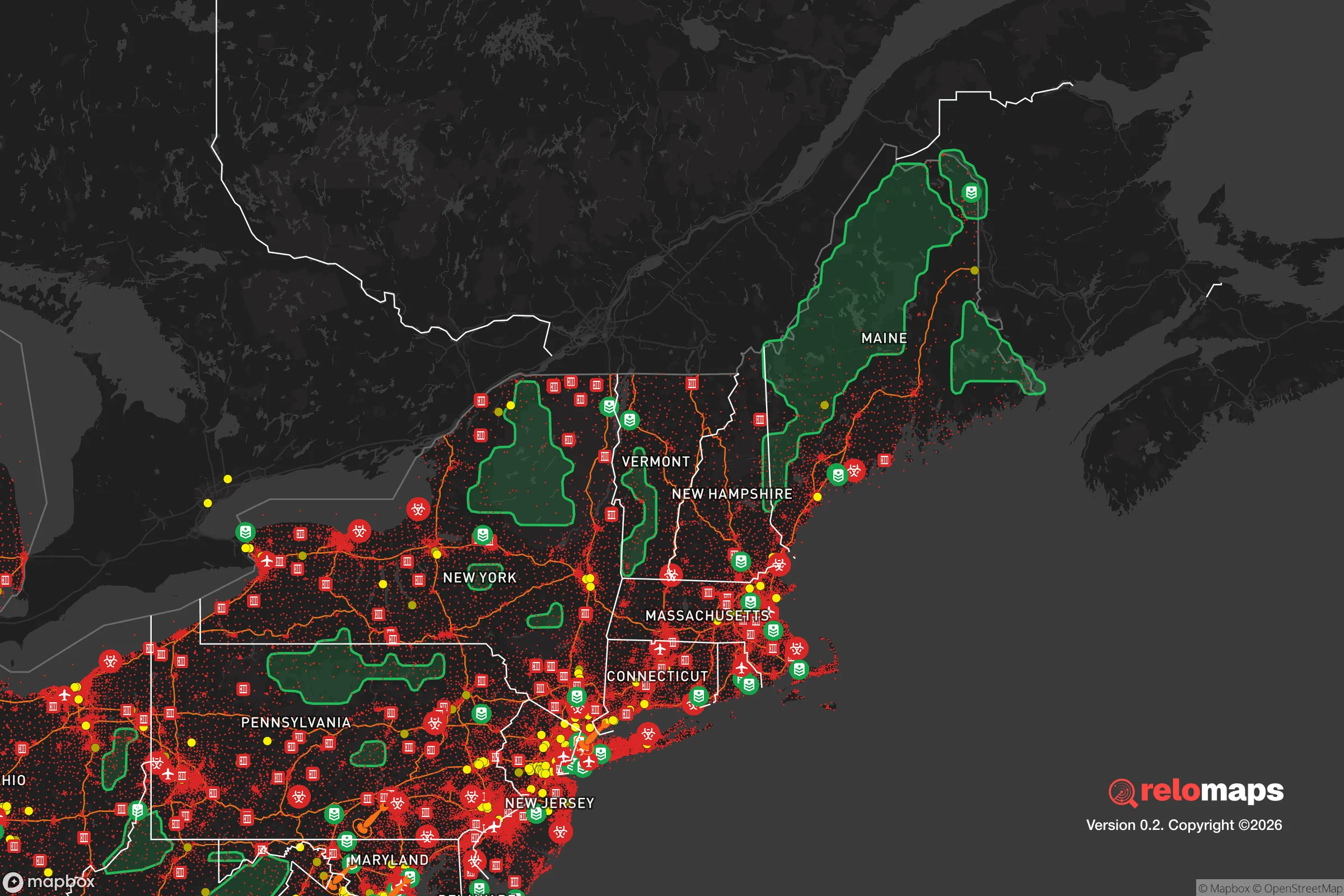


Important Note: For informational purposes only. This does not mean nothing bad ever happens in the green zones. Please use common sense. This is based on public data and modeled with AI. We tried to take a conservative approach but mistakes happen. We update this regularly as new information becomes available.
Solar Generator Recommendations
Backup power matters more here than in safer locations. We've picked three solar generators across budgets and capacity tiers — start with the budget unit if you only need a few essentials, or step up if you want to run a fridge and HVAC for days at a time.

Jackery Portable Power Station Explorer 300
Budget OptionPower on the Go: Weighing only 11 lbs, it's convenient to set up and store with book-sized foldable solar panels

BLUETTI Portable Power Station AC180
Designed for both indoor and outdoor scenarios, AC180 is highly capable as it has a robost capacity and continuous output power.

EF ECOFLOW DELTA Pro Ultra Power Station
Upgraded PickEcoFlow DELTA Pro Ultra is a whole-home energy system designed to grow with your family. Integrated with the Smart Home Panel 2, it scales to meet your evolving energy needs — keeping your home powered, intelligent, and secure through every stage of life.
We earn a commission, at no additional cost to you.
Strategic Assessment Analysis
Atlantic City, New Jersey, presents a deeply contradictory picture for the conservative prepper or strategic relocator. On one hand, its location on the Jersey Shore offers a unique set of natural advantages—access to the Atlantic Ocean, a major estuary, and a position that is surprisingly insulated from the worst of the Northeast Corridor's immediate fallout zones. On the other hand, the city itself is a high-risk, high-density urban environment with a history of economic instability, crime, and infrastructure strain. For a single individual or family looking to hunker down and ride out civic unrest or a major disaster, Atlantic City is not a destination in itself, but rather a potential staging ground or a cautionary tale. The real strategic value lies not in the casinos and boardwalk, but in the surrounding mainland communities and the area's inherent geographic resilience, provided you understand the very real risks that come with being so close to a major tourist and transportation hub.
Geographic position and natural advantages for long-term survival
Atlantic City sits on Absecon Island, a barrier island connected to the mainland by a series of bridges and causeways. This geography is a double-edged sword. For a prepper, the primary advantage is the abundant water supply. The Atlantic Ocean provides an essentially limitless source of water for desalination or, in a pinch, for non-potable uses like sanitation and cooling. The surrounding back bays and the Mullica River watershed to the west offer additional freshwater sources and rich fishing grounds. The area is also relatively flat, which simplifies construction and movement compared to mountainous regions. The climate is temperate, with a longer growing season than inland areas, allowing for extended food production. The real strategic gem, however, is the proximity to the Pine Barrens, a massive, sparsely populated forest ecosystem just a 20-minute drive west. This area offers timber, game, and a natural buffer zone. For a relocator, the mainland communities like Egg Harbor Township, Galloway, and Hammonton provide a more defensible, lower-density base of operations, with access to the city's resources (like the airport and port) without being trapped on the island itself.
Risks, exposures, and proximity to fallout-relevant landmarks
This is where the analysis gets serious. Atlantic City's location is a major liability in a national crisis. The most glaring risk is its proximity to the Philadelphia metropolitan area, roughly 60 miles to the northwest. In a scenario involving civil unrest, a major terrorist attack, or a grid-down event, Philadelphia's 1.6 million people would become a massive, desperate population seeking escape routes. The Atlantic City Expressway and the Garden State Parkway would become chokepoints, and the city itself would be a target for looting and violence due to its casino cash and tourist reputation. Furthermore, the city is directly in the path of any fallout from a strike on the Delaware River refineries or the Philadelphia Naval Shipyard, both high-value strategic targets. The prevailing westerly winds would carry contamination directly over the island. Additionally, the area is home to the Federal Aviation Administration's William J. Hughes Technical Center in nearby Egg Harbor Township, a potential target for sabotage or attack. The Atlantic City International Airport itself, while a resource, also makes the area a potential secondary target. The barrier island geography also means that a single bridge failure—from a storm, accident, or sabotage—would trap residents on the island, turning it into a death trap. The risk of a major hurricane or nor'easter causing catastrophic flooding and cutting off all escape routes is a constant, real threat.
Practical resilience for a relocator: food, water, energy, and defensibility
For a relocator willing to live on the mainland, the practical resilience picture improves significantly. Water is the biggest win: the shallow aquifer under the Pine Barrens is one of the largest and cleanest in the Northeast. A well on a mainland property provides a reliable, off-grid water source. Food is a mixed bag. The local fishing industry is robust, but commercial agriculture is limited to smaller farms in the surrounding counties. The area is not a breadbasket. You would need to rely heavily on home gardening, hunting in the Pine Barrens (deer, turkey, small game), and stockpiling. The energy situation is precarious. The grid is old and vulnerable to storms. Natural gas pipelines run through the area, but a disruption would leave most homes without heat or cooking fuel. Solar is viable, but the coastal climate means frequent cloud cover. A generator with a large fuel store is a near-necessity. Defensibility is the hardest factor. The mainland suburbs are typical sprawl—lots of roads, lots of neighbors. A rural property in the Pine Barrens offers better concealment and a natural perimeter, but it also means isolation and a long drive to supplies. The city itself is indefensible for a small group. The best strategy is to be in a small, tight-knit community on the mainland, with a pre-planned bug-out location deeper in the Pine Barrens. The Atlantic City area is not a fortress; it's a resource node—a place to gather supplies and information, not a place to make a last stand.
The overall strategic picture for Atlantic City is one of high risk with a narrow, specific opportunity. It is not a recommended primary relocation target for a conservative prepper seeking a safe, self-sufficient haven. The proximity to Philadelphia, the vulnerability of the barrier island, the crime and instability of the city itself, and the lack of a robust local food production system are major negatives. However, for a relocator who already has ties to the region, or who is looking for a temporary staging area to gather maritime resources and then move inland to the Pine Barrens, it has a niche value. The real play here is not Atlantic City, but the mainland communities and the Pine Barrens beyond. If you can secure a property with a well, establish a garden, and build a network with like-minded locals in the rural areas west of the city, you can leverage the ocean and the forest for survival. But you must be prepared to cut ties with the city itself the moment the situation deteriorates. This is a location for a strategic withdrawal, not a permanent settlement. The casinos are a distraction; the real assets are the water, the woods, and the distance from the major population centers to the north and west. Approach with eyes wide open, and have a plan to leave before you need to.

* Values derived from national, state, county, city and local statistics and may differ in a specific area. Last updated: 2026-04-30T01:25:51.000Z
Narrative content on this page is AI-generated and may contain mistakes. Verify any details that matter before acting on them.
ReloMaps may earn a commission from affiliate links at no extra cost to you.

