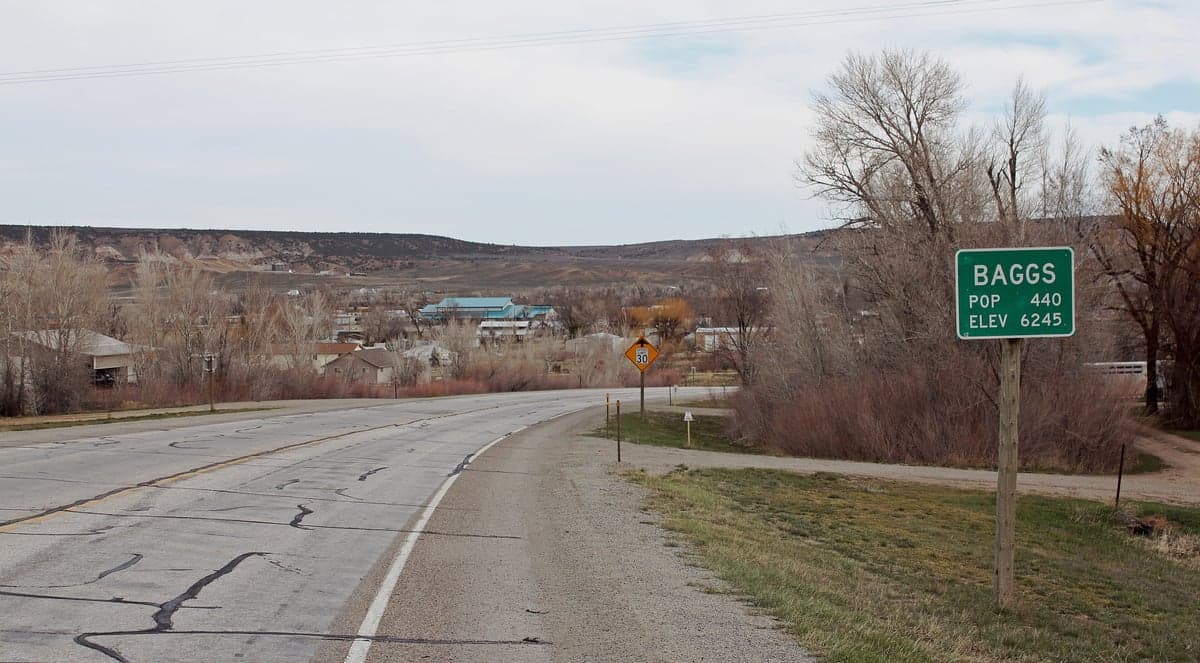
Photo: Wikipedia
Personal Sovereignty in Baggs, WY
Viable for self-reliance. Generally workable, though some barriers may limit total independence.
What does Personal Sovereignty tell us?
Personal Sovereignty measures your capacity for self-reliance and independence with minimal government friction. Higher scores mean fewer barriers between you and the way you want to live... but it assumes you have the space you need and good neighbors.
What does this tell us?
Personal Sovereignty measures your capacity for self-reliance and independence with minimal government friction. Higher scores mean fewer barriers between you and the way you want to live... but it assumes you have the space you need and good neighbors.
State Policy
Energy independence: Net exporter (800% of energy produced in-state)
Personal Liberty
Homesteading

Personal Liberty Analysis
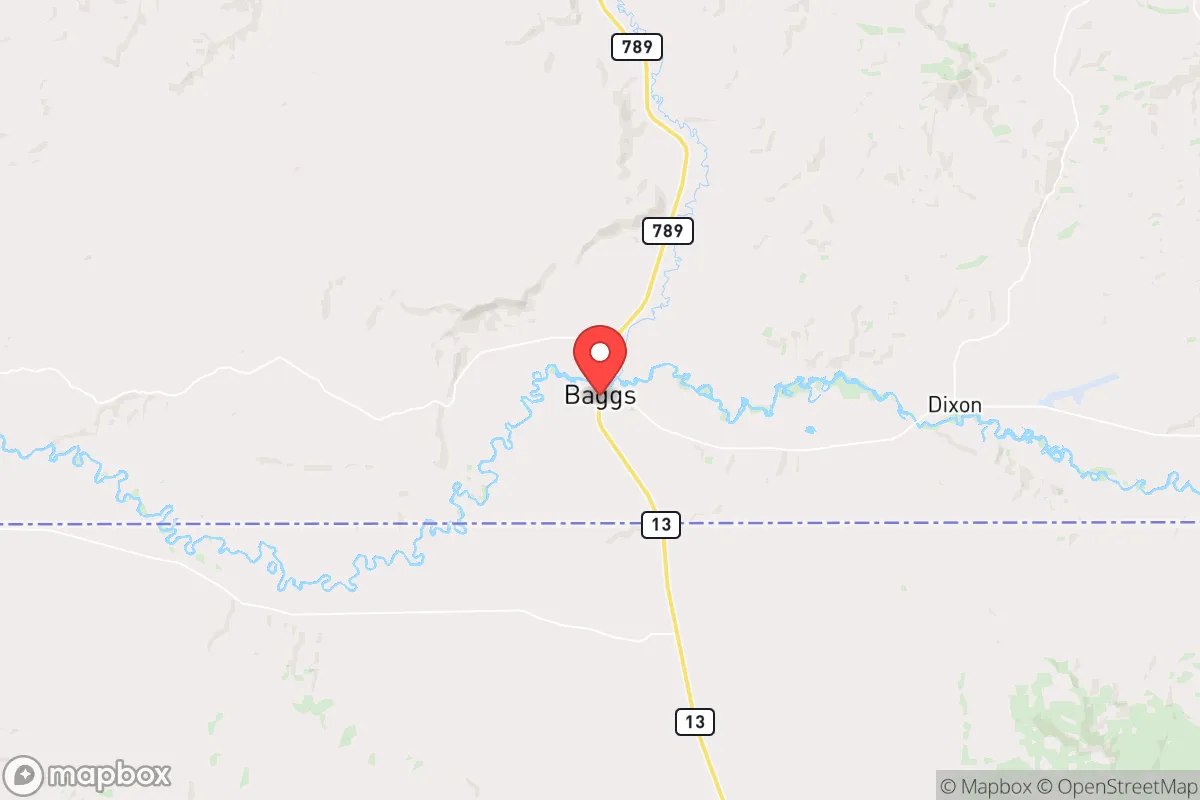
Baggs, Wyoming, offers one of the strongest personal sovereignty environments in the lower 48, functioning as a de facto redoubt for those seeking to minimize government contact while maximizing individual control over life, property, and family. Located in Carbon County near the Colorado line, this small community of roughly 440 people sits in a state that consistently ranks among the most liberty-oriented in the nation—no state income tax, minimal business regulation, and a culture that treats government as a necessary nuisance rather than a provider. For the survivalist or prepper, Baggs represents a place where the legal and practical distance between you and the authorities is measured in miles and mindset, not just statute pages.
Tax burden and regulatory posture in Carbon County
Wyoming’s tax structure is the single most important financial advantage for anyone relocating with a sovereignty focus. There is no state income tax, no corporate income tax, and no tax on retirement income or military pensions. The state sales tax in Carbon County is 5.5% (4% state plus 1.5% county), and groceries and prescription drugs are exempt. Property taxes are among the lowest in the nation—the effective rate on residential property in Carbon County hovers around 0.6% of assessed value, meaning a $200,000 home carries an annual tax bill of roughly $1,200. There is no estate tax or inheritance tax, which matters for anyone building multi-generational holdings. On the regulatory side, Wyoming operates under a "right to farm" statute that protects agricultural operations from nuisance lawsuits, and the state has no general building code in unincorporated areas like those surrounding Baggs. The county does enforce basic septic and well standards, but there is no zoning board telling you what color to paint your shed or how many chickens you can keep. For the prepper, this means you can build a reinforced structure, store supplies, and operate a homestead without filing a stack of permits—so long as you stay out of the town limits proper.
Self-defense and gun law specifics in Baggs
Wyoming is a constitutional carry state, meaning no permit is required to carry a concealed firearm for anyone 21 or older who can legally possess a gun. Baggs sits in Carbon County, where the sheriff’s office is known for a pro-Second Amendment posture and where local law enforcement generally treats defensive firearm use with deference. There is no state-level red flag law, no magazine capacity restrictions, and no firearm registration. The state preempts all local gun ordinances, so Baggs cannot pass its own restrictions even if the town council wanted to—which it doesn’t. Wyoming also has a "stand your ground" law with no duty to retreat, and Castle Doctrine protections extend to occupied vehicles and workplaces. For the survivalist, the practical reality is that you can own, carry, and store any legal firearm without government tracking, and you can train on your own land without noise complaints being treated as a violation. The nearest gun range is in Rawlins, about 45 minutes north, but most locals simply shoot on their own property. One nuance: Wyoming does require a background check for all firearm purchases from licensed dealers, but private sales between individuals have no such requirement. Ammunition is not tracked, and there are no waiting periods.
Self-reliance and homesteading viability near Baggs
The land around Baggs is where the sovereignty promise meets practical reality. Most parcels outside town limits are zoned for agricultural use with no minimum lot size in unincorporated Carbon County, meaning you can buy a 5-acre or 40-acre tract and build immediately without subdivision approval. Off-grid living is not just tolerated but expected—many residents rely on private wells, septic systems, and solar or propane power because grid extension is expensive and slow. The county does require a permit for a new well (around $200) and a septic system design approval (typically $300-500), but there is no requirement to connect to any municipal utility. Rainwater collection is legal and unregulated. For those wanting to be fully self-sufficient, the growing season is short (about 100 frost-free days) but suitable for cold-hardy crops like potatoes, root vegetables, and hay. Livestock—cattle, sheep, goats, chickens—are common and unrestricted by zoning. The biggest practical constraint is water availability: the area receives only 10-12 inches of precipitation annually, so a reliable well (typically 200-400 feet deep) is essential. Drilling costs run $15-30 per foot, so budget $6,000-$12,000 for a well. Solar insolation is excellent, with over 300 sunny days per year, making off-grid photovoltaic systems highly viable. There are no county-level restrictions on structures like shipping container homes, earth berms, or underground bunkers, provided they meet basic safety codes for habitation.
Personal liberties: parental rights, medical autonomy, and property
Wyoming law explicitly recognizes parental rights as fundamental, and the state has no universal vaccine mandate for schoolchildren—parents can claim a philosophical exemption to any immunization requirement. Medical freedom is further supported by the state’s lack of a prescription drug monitoring program that tracks all controlled substances (though some federal systems apply), and there is no state-level mandate for COVID-19 or other experimental treatments. The Wyoming Freedom Act, passed in 2022, prohibits state and local governments from discriminating against individuals based on vaccination status. On property rights, Wyoming is a "Dillon’s Rule" state, meaning local governments have only the powers explicitly granted by the state legislature—this limits the ability of Baggs or Carbon County to impose surprise regulations. The state also has a Private Property Rights Protection Act that requires compensation for any regulatory taking that reduces property value by more than 50%. For speech, Wyoming has no hate speech laws that criminalize expression, and the state constitution provides stronger free speech protections than the First Amendment in some contexts. The practical effect in Baggs is that you can homeschool without state interference (Wyoming requires only a basic curriculum notice), decline medical interventions for your children within broad limits, and speak your mind at town meetings without fear of official retaliation. The nearest federal presence is the BLM office in Rawlins, which manages surrounding public lands—but their authority is limited to federal land, not your private property.
Compared to most areas of the country, Baggs offers a sovereignty profile that rivals rural Alaska or the Idaho panhandle, but with better road access and lower supply costs. The trade-offs are real: limited healthcare (the nearest hospital is in Rawlins, 45 minutes away), harsh winters, and a small population that means you cannot rely on community services for much. But for the person who wants government to be a distant concept rather than a daily presence, Baggs delivers. The combination of no income tax, constitutional carry, minimal zoning, off-grid legality, and strong parental rights creates an environment where personal sovereignty is not just a legal abstraction but a lived reality. If your relocation calculus prioritizes maximum autonomy with minimum government overhead, this is one of the few places in the contiguous United States where that equation still works in your favor.

* Values derived from national, state, county, city and local statistics and may differ in a specific area. Last updated: 2026-05-16T09:59:00.000Z
Narrative content on this page is AI-generated and may contain mistakes. Verify any details that matter before acting on them.
ReloMaps may earn a commission from affiliate links at no extra cost to you.

