Photo: Wikipedia
Political ClimatePolitical Climate in Baggs, WY
District shown is the primary district for this city’s centroid. Cities may span multiple districts.
Inherited from parent state — no local data available.
Local Political AnalysisPolitical Analysis of Baggs, WY
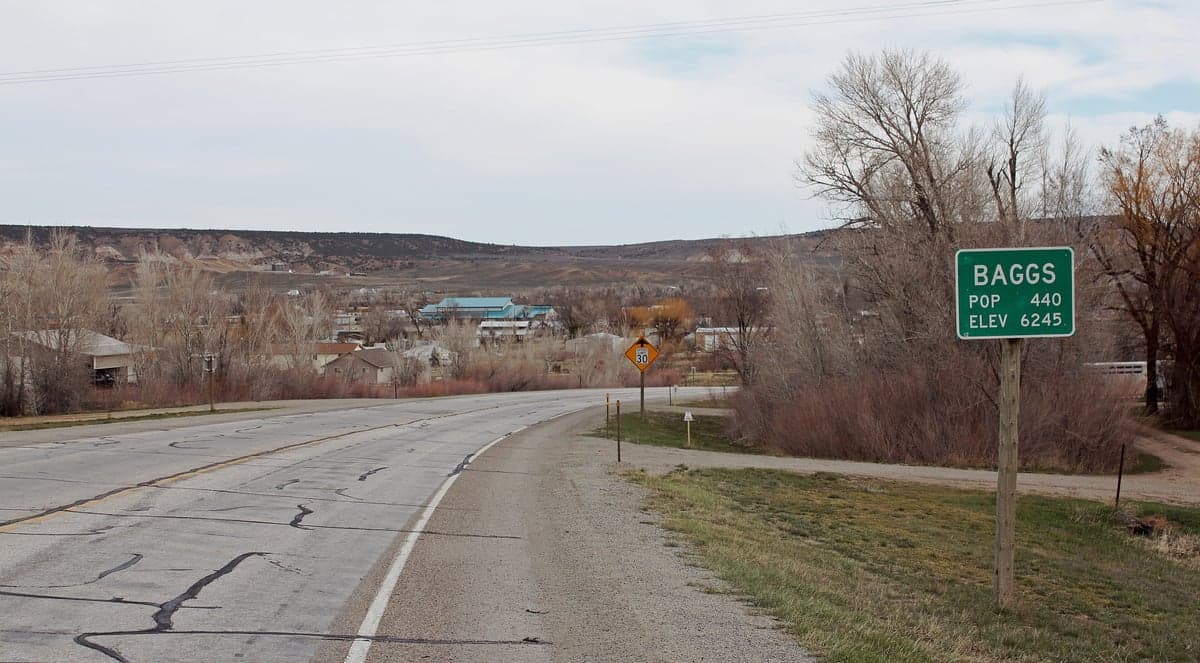
Baggs, Wyoming, sits deep in the red, and it’s been that way as long as anyone around here can remember. The Cook PVI for the area is a solid R+23, which means Republicans hold a 23-point advantage over the national average in local elections. That’s not just a number—it’s a reflection of a community that values personal liberty, minimal government interference, and the right to live life without a bunch of red tape. You won’t find much appetite for progressive policies here; folks tend to see that kind of thinking as a direct threat to the freedoms that make this place worth living in. The political lean hasn’t shifted much over the years, and if anything, it’s hardened as national politics have gotten more divisive. People in Baggs don’t just vote conservative—they live it, from the way they manage their land to how they raise their kids.
How it compares
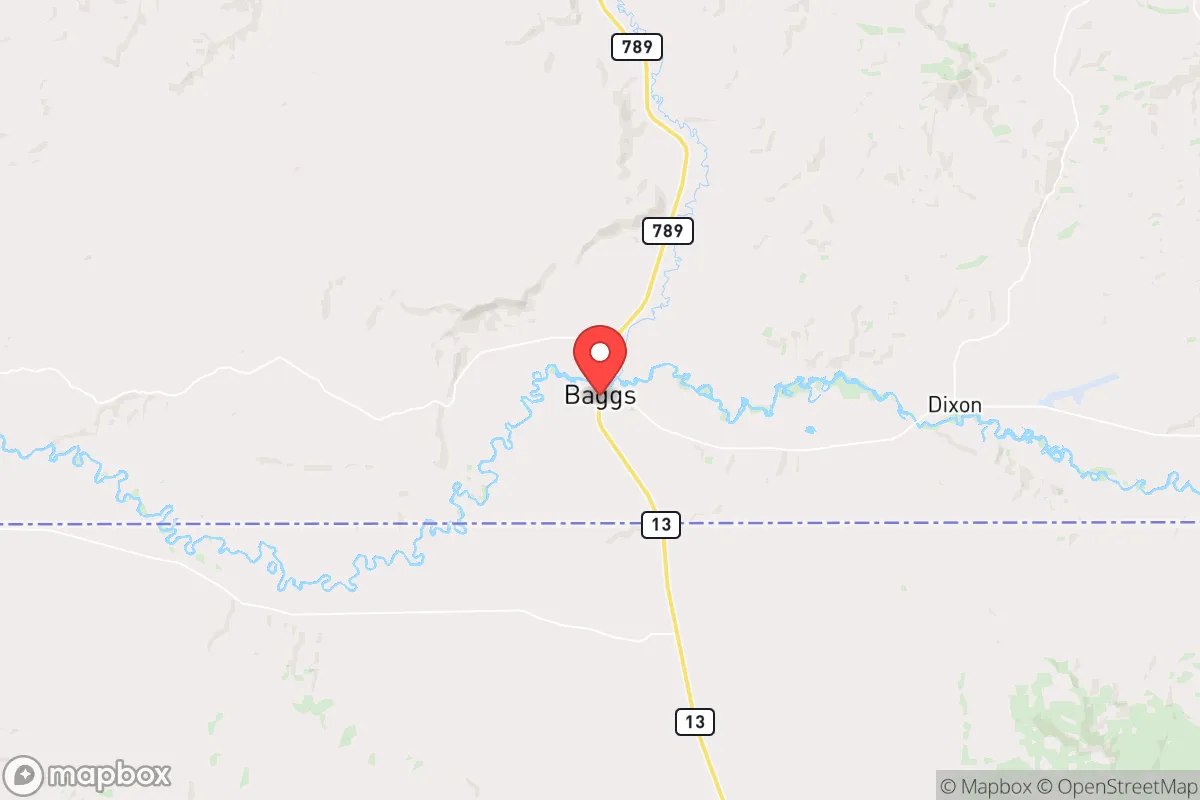
When you compare Baggs to the rest of Wyoming, Wyoming—the state as a whole—the numbers are identical: R+23 across the board. That might make it seem like there’s no difference, but the reality is more nuanced. Baggs is a tiny, unincorporated community in Carbon County, and its politics are even more locally focused than the state average. In contrast, larger towns like Rawlins, about 45 miles north, or even Rock Springs, 60 miles west, have a bit more diversity in political views, with some pockets of moderate or even progressive thought creeping in, especially among younger transplants. Baggs doesn’t have that. It’s a place where the county commission, school board, and local law enforcement are all deeply conservative, and there’s little tolerance for the kind of government overreach you see in places like Laramie or Jackson Hole. The state’s R+23 rating is a broad brush, but Baggs is a darker shade of that red—more resistant to change, more skeptical of outside influence, and more committed to the old ways of doing things.
What this means for residents
For someone living in Baggs, the political climate translates directly into daily life. You don’t have to worry about zoning laws telling you what you can do with your property, or about local officials pushing green energy mandates that don’t make sense for a rural community. The tax burden is low, and the Second Amendment isn’t just a right—it’s a way of life. But there’s a growing concern among long-time residents that the state’s overall R+23 rating might start to slip if more people from blue states move in, drawn by Wyoming’s low taxes and wide-open spaces. That’s already happening in places like Teton County, and the fear is that those newcomers bring their politics with them. In Baggs, that hasn’t happened yet, but the worry is real. The community is tight-knit, and most folks know each other, so there’s a social pressure to keep things conservative. If you value personal freedom and want to be left alone by the government, this is still one of the best places in the country to be.
Culturally, Baggs stands apart from even its neighbors in Carbon County. While Rawlins has a more transient population due to the prison and the interstate, Baggs is rooted in multi-generational ranching families. There’s a strong sense of self-reliance here—people don’t look to the government for solutions. Policy-wise, the town operates with a light touch: no unnecessary business licenses, minimal building codes, and a general attitude that if it’s not broken, don’t fix it. The biggest policy distinction is the local resistance to any form of land-use planning that might infringe on private property rights, a stance that puts Baggs at odds with more progressive parts of the state. Looking ahead, the long-term trajectory depends on whether the area can maintain its cultural and political identity as Wyoming grows. For now, Baggs remains a stronghold of conservative values, but keeping it that way will require vigilance against the creeping influence of outside ideologies.

State Political ClimatePolitical Climate in Wyoming
State Political AnalysisPolitical Environment in the State
Wyoming is about as solidly Republican as a state gets, with a Cook PVI of R+23 and a political culture that has been dominated by the GOP for generations. Over the last 10-20 years, the state has only hardened its conservative lean, with Democrats holding virtually no statewide office and the legislature becoming increasingly assertive on gun rights, property rights, and limited government. The dominant coalition is a mix of ranchers, energy workers, and libertarian-leaning transplants who value Wyoming’s independent streak above all else.
Urban vs. rural divide
The political map in Wyoming is less about urban vs. rural and more about degrees of conservatism. The largest city, Cheyenne, is reliably Republican but tends to elect more pragmatic, business-friendly conservatives—think state senators who prioritize infrastructure and economic development. Casper, the second-largest city, is similar, though it has a stronger oil-and-gas flavor. The real engine of the state’s hard-right tilt is the rural expanse: counties like Sublette, Lincoln, and Park routinely vote 80%+ Republican. Teton County, home to Jackson Hole, is the glaring exception—it’s the only blue county in the state, driven by wealthy second-home owners and a tourism economy that attracts a more progressive crowd. But even there, the county commission has flipped back and forth, and the state legislature has repeatedly overridden Jackson’s local ordinances on things like short-term rentals and mask mandates. Laramie, home to the University of Wyoming, is a lighter shade of red, with a noticeable progressive student presence, but it still votes Republican in statewide races.
Policy environment
Wyoming’s policy environment is a dream for anyone fleeing high-tax, high-regulation states. There is no state income tax, and the sales tax is a low 4% (with local options pushing it to around 6% in some towns). Property taxes are among the lowest in the nation, though they’ve been creeping up in fast-growing areas like Sheridan and Gillette. The regulatory posture is aggressively pro-business, especially for energy extraction—coal, oil, and natural gas still dominate the economy, and the state has fought federal overreach on public lands for decades. Education policy is a mixed bag: the state funds schools well through mineral royalties, but there’s a strong school-choice movement, and the legislature passed a universal school-choice bill in 2024 that allows families to use state funds for private or homeschool expenses. Healthcare is a sore spot—Wyoming has some of the highest premiums in the country and did not expand Medicaid, leaving a coverage gap. Election laws are solid: voter ID is required, same-day registration is not allowed, and the state has resisted mail-in ballot expansions. The legislature also passed a law in 2023 banning ranked-choice voting statewide, a direct response to efforts in other states.
Trajectory & freedom
Wyoming is becoming more free in several key areas, but there are warning signs. On gun rights, the state passed constitutional carry in 2017 and a “Second Amendment Preservation Act” in 2022 that purports to nullify federal gun laws—though it’s mostly symbolic. On parental rights, the legislature passed a “Parents’ Bill of Rights” in 2023 that requires schools to notify parents about curriculum changes and medical services. Medical autonomy is a bright spot: Wyoming banned nearly all abortions in 2022 with a trigger law, and the legislature has resisted vaccine mandates and mask mandates at the state level. Property rights are a major battleground—the state has a strong “right to farm” law, but the Biden administration’s public lands policies have sparked fierce resistance, with the legislature passing a 2024 resolution demanding the transfer of federal lands to state control. The biggest threat to freedom, in the eyes of many locals, is the influx of out-of-state money and people. Jackson Hole has become a playground for the ultra-wealthy, driving housing prices to absurd levels and creating a two-tier economy. That dynamic is spreading to Sheridan and Laramie, where Californians and Texans are buying up property and pushing up taxes. The legislature has responded with a 2023 law capping property tax increases at 5% annually, but it’s a temporary fix.
Civil unrest & political movements
Wyoming is not a hotbed of civil unrest, but there are flashpoints. The most visible is the ongoing fight over federal land management. In 2023, a group of ranchers in Carbon County staged a protest against the Bureau of Land Management’s new conservation rule, blocking a road with tractors. The “Wise Use” movement, which advocates for local control of public lands, has deep roots here. On the left, there’s a small but vocal activist scene in Laramie and Jackson, focused on climate change and Indigenous rights, but it rarely translates into electoral wins. Immigration politics are relatively quiet—Wyoming’s foreign-born population is tiny (under 4%), and the state has no sanctuary cities. There was a brief controversy in 2022 when the governor sent National Guard troops to the Texas border, but it was widely supported. Election integrity is a live issue: the legislature passed a 2021 law requiring all ballots to be hand-counted in counties with fewer than 1,000 voters, and there’s ongoing pressure to expand that to all counties. No major fraud has been found, but the distrust persists. The most notable political movement is the “Wyoming First” faction within the GOP, which pushes for nullification of federal laws and has introduced bills to create a state-run cryptocurrency and to reject federal election funding.
Projection
Over the next 5-10 years, Wyoming will likely become more conservative on cultural issues but less economically free due to demographic pressure. The in-migration from blue states is accelerating—Sheridan and Gillette are growing fast, and even Cheyenne is seeing a wave of remote workers. These newcomers tend to be conservative-leaning but less rooted in the state’s libertarian ethos; they often support more government services, like better schools and roads, which means higher taxes. The energy transition is the wild card: if coal and oil decline, the state will lose its primary revenue source, forcing either a tax increase or a drastic cut in services. The legislature is already exploring a state income tax as a backup, which would be a seismic shift. On the cultural front, expect more laws targeting transgender athletes, library content, and DEI programs in schools—the 2024 session saw bills on all three. The federal land fight will intensify, especially if a Republican wins the White House in 2028 and pushes for land transfers. A new resident moving in now should expect a state that remains deeply conservative but is grappling with growing pains—higher housing costs, more traffic in the tourist towns, and a legislature that is increasingly willing to use state power to enforce a specific vision of freedom.
Bottom line for a new resident: Wyoming is one of the last places in the country where you can still own a gun without a permit, keep your tax bill low, and tell the federal government to pound sand. But it’s not a libertarian paradise—the state is small, the economy is narrow, and the political class is just as prone to overreach as anywhere else. If you’re moving here, expect to pay a premium for housing in the desirable towns, deal with long drives for basic services, and navigate a political scene that is fiercely independent but not always consistent. The freedom is real, but it comes with trade-offs.
* Values derived from national, state, county, city and local statistics and may differ in a specific area. Last updated: 2026-05-16T09:59:00.000Z
Narrative content on this page is AI-generated and may contain mistakes. Verify any details that matter before acting on them.
ReloMaps may earn a commission from affiliate links at no extra cost to you.

