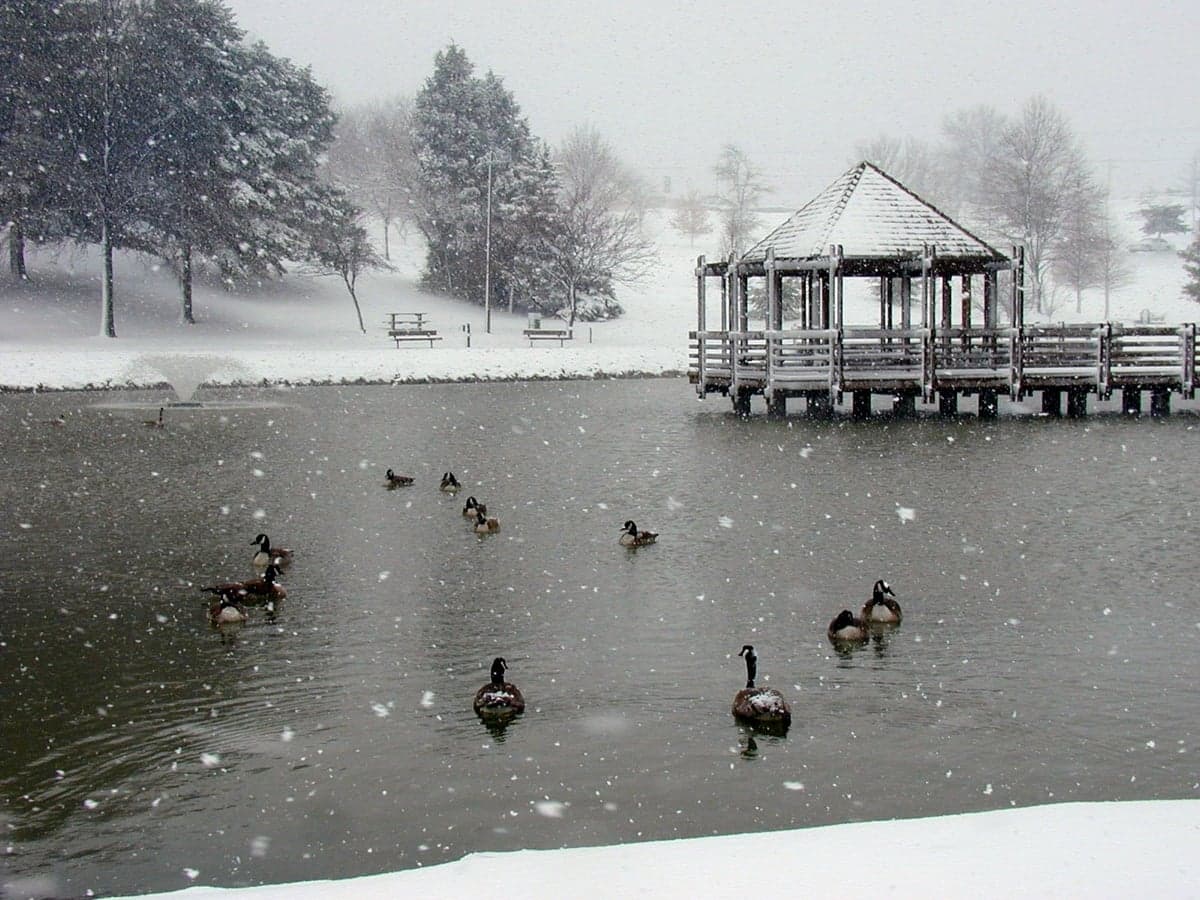
Photo: Wikipedia
Strategic Assessment of Ballwin, MO
Meaningful friction. Expect exposure to either population pressure, blast zones, or natural disaster risk. Consider buying a retreat property.
What does the Strategic Assessment tell us?
Our Strategic Assessment grades tactical survivability of an area. Major population centers, military targets, fallout zones, natural disasters, and border exposure all drive risk — lower exposure means a more defensible position in a crisis.
This is heavily inspired by Joel Skousen's Strategic Relocation book. Highly recommended you checkout the book ($)What does this tell us?
Our Strategic Assessment grades tactical survivability of an area. Major population centers, military targets, fallout zones, natural disasters, and border exposure all drive risk — lower exposure means a more defensible position in a crisis.
This is heavily inspired by Joel Skousen's Strategic Relocation book. Highly recommended you checkout the book ($)Strategic Pillars

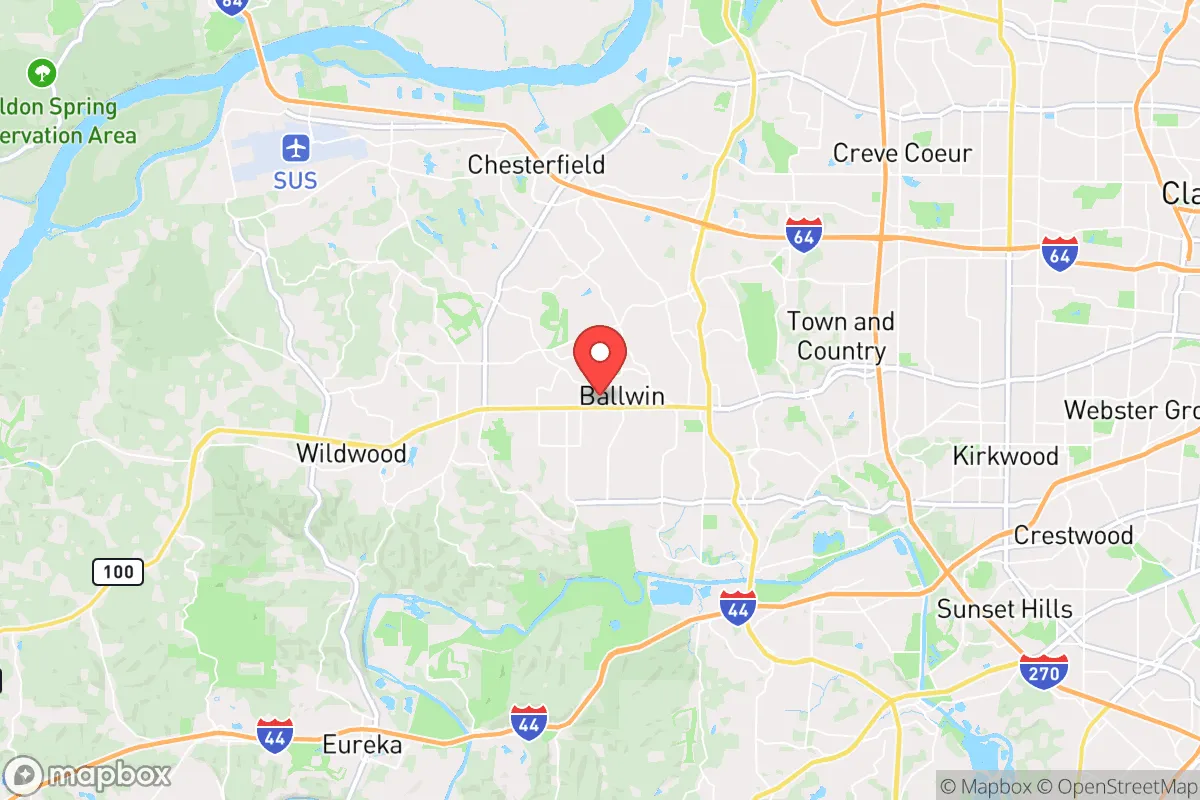
Key Distances
Regional Safe Places
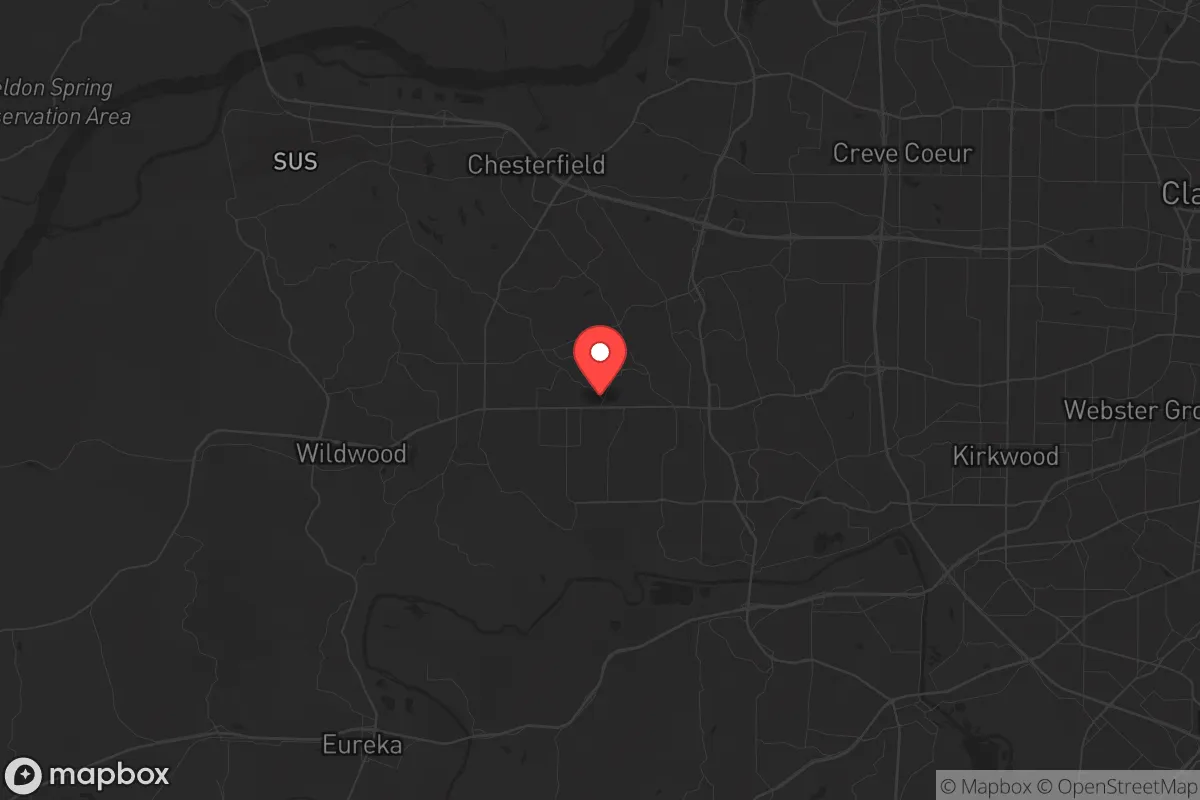
Below is our recommended "safe zones" in Missouri and the surrounding area based on our strategic heuristics. For most people, it's unrealistic to live in a “safe zone” full-time due to work, family or other personal reasons. They tend to be more rural. However, many of these areas are perfect for second homes and retreat properties that double as a vacation home or even a short-term rental.


Important Note: For informational purposes only. This does not mean nothing bad ever happens in the green zones. Please use common sense. This is based on public data and modeled with AI. We tried to take a conservative approach but mistakes happen. We update this regularly as new information becomes available.
Solar Generator Recommendations
Backup power matters more here than in safer locations. We've picked three solar generators across budgets and capacity tiers — start with the budget unit if you only need a few essentials, or step up if you want to run a fridge and HVAC for days at a time.

Jackery Portable Power Station Explorer 300
Budget OptionPower on the Go: Weighing only 11 lbs, it's convenient to set up and store with book-sized foldable solar panels

BLUETTI Portable Power Station AC180
Designed for both indoor and outdoor scenarios, AC180 is highly capable as it has a robost capacity and continuous output power.

EF ECOFLOW DELTA Pro Ultra Power Station
Upgraded PickEcoFlow DELTA Pro Ultra is a whole-home energy system designed to grow with your family. Integrated with the Smart Home Panel 2, it scales to meet your evolving energy needs — keeping your home powered, intelligent, and secure through every stage of life.
We earn a commission, at no additional cost to you.
Strategic Assessment Analysis
Ballwin, Missouri, sits in a deceptive pocket of the St. Louis metro area that offers a mix of suburban stability and strategic depth, but its proximity to a major urban center and critical infrastructure creates a layered risk profile for anyone thinking long-term. For the prepper or survivalist, this is not a remote redoubt—it’s a buffer-zone community where daily life is comfortable, but the calculus for civil unrest, grid-down scenarios, or mass-casualty events requires honest assessment. The town’s location along the I-64/US-40 corridor provides rapid access to resources, yet that same artery becomes a liability when the system falters.
Geographic position and natural advantages for long-term stability
Ballwin’s position in west St. Louis County places it roughly 25 miles from the St. Louis Arch and the central urban core, a distance that offers a meaningful buffer against the immediate chaos of a city-wide event. The area sits on the rolling hills of the Ozark Plateau fringe, with elevations around 600 feet, which provides decent drainage and reduces flood risk compared to river-bottom communities like Chesterfield or Valley Park. The Meramec River runs a few miles south, offering a potential water source if municipal systems fail, though access is not direct from most neighborhoods. The surrounding landscape—a mix of oak-hickory forest, old farm fields, and suburban developments—gives a relocator options for short-term retreat without being completely isolated. The key natural advantage is the region’s abundant groundwater and moderate climate, which supports year-round gardening and reduces the severity of winter survival challenges. However, the area is not defensible in any tactical sense; it’s a grid of cul-de-sacs and arterials, not a mountain pass. For a single individual or family, the stability comes from being far enough from downtown to avoid the first wave of unrest, but close enough to monitor the situation and make decisions.
Risks, exposures, and proximity to fallout-relevant landmarks
The most significant risk for Ballwin is its location within the St. Louis metropolitan statistical area, a region with a population over 2.8 million. In a mass-casualty event—whether from a biological outbreak, coordinated attack, or economic collapse—the urban core becomes a source of refugees, resource competition, and potential violence. Ballwin sits directly in the path of any westward exodus from St. Louis, as I-64 and Manchester Road (MO-100) are primary evacuation routes. The town is also within 15 miles of the Spirit of St. Louis Airport, a general aviation hub that could be a target or a staging point for government operations. More concerning is the proximity to the Weldon Spring Chemical Plant site, a former uranium processing facility now a Superfund site, located about 10 miles northwest. While the site is remediated, any major infrastructure failure or deliberate attack could re-mobilize contaminants. Additionally, the area is within 50 miles of the Callaway Nuclear Plant, a pressurized water reactor that, while well-regulated, represents a low-probability but high-consequence risk. For the conservative prepper, the biggest exposure is not physical destruction but social fragility: Ballwin’s population density (roughly 3,000 people per square mile) means that in a prolonged grid-down scenario, neighbors become competitors for the same limited resources. The town’s reliance on just-in-time grocery delivery and centralized water treatment makes it vulnerable within 72 hours of a major disruption.
Practical resilience for a relocator: food, water, energy, and defensibility
For someone serious about self-sufficiency, Ballwin offers a mixed bag. The town is served by Missouri American Water, which draws from the Missouri River—a reliable but vulnerable surface source. Private well water is rare within city limits, so a relocator should plan for rainwater catchment or a deep well if they buy on the outskirts. The soil is decent for gardening, with loamy clay that supports tomatoes, peppers, and root vegetables, but the growing season is only about 180 days, so indoor or greenhouse growing is necessary for year-round food security. Local zoning allows for backyard chickens and small livestock in most residential areas, but be aware of homeowners’ association restrictions in subdivisions like the Estates of Ballwin or the Villages. Energy resilience is achievable: many homes have natural gas for heating and cooking, which is more robust than all-electric, but a whole-house generator or solar-plus-battery system is essential for extended outages. The local power grid is served by Ameren Missouri, which has a mixed reliability record during storms. Defensibility is the weak point. Ballwin is a typical suburban layout with no natural chokepoints, and the police department (part of the St. Louis County system) would be overwhelmed in a widespread event. The best strategy is to build a low-profile, well-stocked home with layered security—motion lights, reinforced doors, and a neighborhood watch network—rather than attempting to fortify a property against a determined group. For single individuals, a smaller home on a corner lot with multiple escape routes is preferable to a large house in a cul-de-sac.
The overall strategic picture for Ballwin is one of calculated compromise. It offers a comfortable, low-crime baseline with good schools and a conservative-leaning community that values self-reliance, but it is not a bug-out location. For the relocator who wants to maintain a professional career in St. Louis while building a resilient home base, Ballwin works—provided you treat it as a semi-prepared position, not a fortress. The real test will come in the first 48 hours of a major event: those who have stored water, food, and medical supplies, and who have a plan to either hold or move west toward the Ozarks, will fare better than those who assume the suburbs are safe by default. Ballwin is a good place to be from when things go bad, but not necessarily a good place to be in. If your risk tolerance allows for proximity to a major city in exchange for a decent quality of life, this is a viable option. If you’re looking for true independence, keep driving west past the 270 loop.

* Values derived from national, state, county, city and local statistics and may differ in a specific area. Last updated: 2026-04-19T11:25:07.000Z
Narrative content on this page is AI-generated and may contain mistakes. Verify any details that matter before acting on them.
ReloMaps may earn a commission from affiliate links at no extra cost to you.

