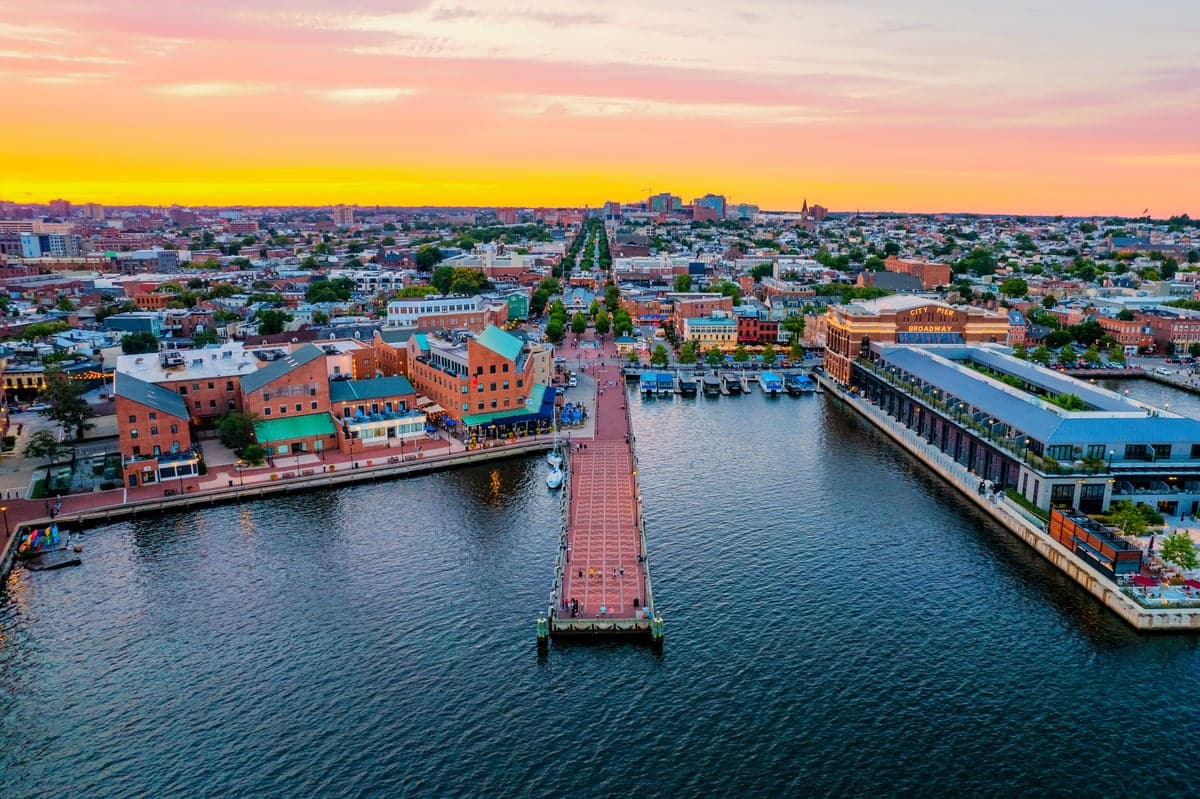
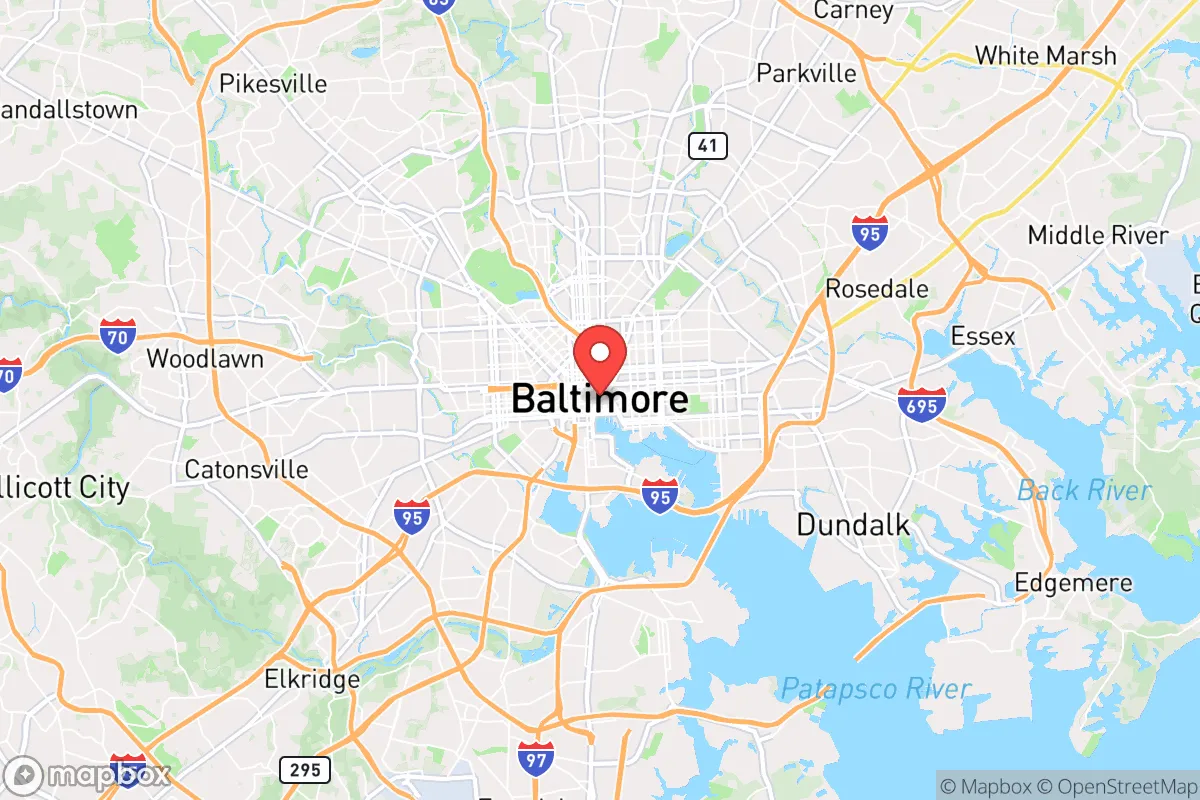
Photo: Wikipedia
Personal Sovereignty in Baltimore, MD
Moderate friction. Expect trade-offs in some aspect of personal liberty and independence.
What does Personal Sovereignty tell us?
Personal Sovereignty measures your capacity for self-reliance and independence with minimal government friction. Higher scores mean fewer barriers between you and the way you want to live... but it assumes you have the space you need and good neighbors.
What does this tell us?
Personal Sovereignty measures your capacity for self-reliance and independence with minimal government friction. Higher scores mean fewer barriers between you and the way you want to live... but it assumes you have the space you need and good neighbors.
State Policy
Energy independence: Importer (8% of energy produced in-state)
Personal Liberty
Homesteading

Personal Liberty Analysis
Baltimore, Maryland presents a challenging environment for personal sovereignty, where state-level preemption and a dense urban landscape significantly constrain individual autonomy. For those prioritizing self-reliance and minimal government interference, the city’s high tax burden, restrictive gun laws, and limited homesteading opportunities create substantial friction. While Maryland’s progressive policies often override local control, Baltimore’s specific regulatory posture amplifies these pressures, making it a location where strategic planning and legal vigilance are essential for preserving personal freedoms.
Tax burden and regulatory posture: How Maryland’s policies impact your wallet and choices
Maryland’s tax structure is among the most aggressive in the nation, and Baltimore residents bear the brunt. The state’s income tax ranges from 2% to 5.75%, but Baltimore City adds its own local income tax of 3.2%, bringing the combined top marginal rate to nearly 9%. Property taxes are equally punishing: Baltimore’s real property tax rate is $2.248 per $100 of assessed value, one of the highest in the state. For a $250,000 home, that’s over $5,600 annually in property taxes alone. Sales tax is 6%, applied to most goods and services, including prepared food. This fiscal environment leaves less capital for personal savings, emergency preparedness, or investment in self-sufficient infrastructure. Regulatory burdens compound the issue. Maryland’s strict environmental regulations on building, land use, and water rights make even minor modifications to property—like installing a rainwater catchment system or a backyard greenhouse—subject to permitting and inspection. The state’s energy code is among the most stringent in the Mid-Atlantic, increasing costs for off-grid solar or generator installations. For the survivalist-minded, every dollar extracted by the state is a dollar not spent on food storage, ammunition, or durable goods. The cumulative effect is a system that systematically reduces personal financial sovereignty.
Self-defense and gun law specifics: Navigating Maryland’s restrictive firearms environment
Maryland is a shall-issue state for concealed carry permits, but the process is onerous and expensive. Applicants must complete a 16-hour training course, pass a live-fire qualification, submit fingerprints, and undergo a state and FBI background check. The application fee is $75, but training costs typically run $200–$400. Even after approval, permit holders face restricted carry in sensitive places—including schools, government buildings, and any property where the owner posts a “no firearms” sign. Baltimore City itself has a high rate of firearm-related crime, which some residents cite as a reason to carry, but the legal hurdles create a deterrent. The state also bans assault weapons and high-capacity magazines (over 10 rounds), limiting the types of firearms available for home defense or prepping. Magazine capacity restrictions are particularly problematic for those who view a rifle as a primary defensive tool. Additionally, Maryland has a red flag law that allows law enforcement to temporarily seize firearms based on a complaint, without a criminal conviction. For the prepper, this represents a direct threat to the right to keep and bear arms, as a neighbor’s or family member’s report could trigger a confiscation order. The legal landscape demands that gun owners maintain meticulous records, stay current with changing laws, and consider legal defense insurance as a necessary expense.
Self-reliance and homesteading viability: Lot sizes, zoning, and off-grid feasibility in Baltimore
Baltimore’s urban density makes traditional homesteading nearly impossible. The typical residential lot in the city is 1,500 to 3,000 square feet, with many rowhomes on lots under 1,200 square feet. Zoning codes are restrictive: keeping chickens is allowed only with a permit and is limited to a maximum of four hens (no roosters). Beekeeping is permitted but requires registration with the state and adherence to strict apiary standards. Raising goats, pigs, or other livestock is prohibited within city limits. Gardening is feasible, but soil contamination from historical industrial use is a serious concern—lead and heavy metals are common in urban soils, requiring raised beds or imported soil. Off-grid living is effectively illegal. Baltimore requires connection to the municipal water and sewer system; rainwater collection for potable use is prohibited by state health code. Solar panels are allowed but must be grid-tied; net metering is available, but the utility (BGE) controls the interconnection process. Composting toilets are not permitted as a primary sanitation method. For those seeking true self-reliance, Baltimore offers little. The best strategy is to view the city as a base for income generation while maintaining a separate rural property for actual homesteading. Some residents do practice urban prepping—stockpiling food, water, and medical supplies in small apartments—but the lack of land and legal constraints on water and waste systems make long-term off-grid survival unrealistic within city limits.
Personal liberties: Parental rights, medical autonomy, speech, and property
Maryland’s legal framework generally favors state authority over individual and parental rights. Parental rights in education are limited: the state mandates comprehensive sex education, including LGBTQ+ content, and parents cannot opt their children out of specific lessons—only the entire program. Homeschooling is legal but requires submission of a “portfolios” of work for review by the local school system, and the state can deny a parent’s homeschool application if the curriculum is deemed insufficient. Medical autonomy is similarly constrained. Maryland has no religious or philosophical exemptions from vaccination for school attendance; only medical exemptions are recognized. During public health emergencies, the governor has broad powers to mandate treatments or restrict movement. The state also has a prescription drug monitoring program that tracks all controlled substance prescriptions, limiting the ability to stockpile medications without raising red flags. Free speech is protected under the First Amendment, but Maryland has a “false light” privacy tort that can be used to sue individuals for statements that are technically true but presented in a misleading way—a potential chill on political or social commentary. Property rights are weak: the state’s eminent domain authority is broad, and Baltimore has used it aggressively for redevelopment projects. The city also has a vacant property tax that penalizes owners of unoccupied homes, effectively forcing sale or renovation. For the conservative-leaning individual, these policies represent a steady erosion of the autonomy that once defined American life.
Compared to states like Texas, Florida, or Idaho, Baltimore and Maryland rank near the bottom for personal sovereignty. The combination of high taxes, restrictive gun laws, limited homesteading options, and weak parental and medical rights creates an environment where the individual is perpetually subordinate to the state. For the survivalist or prepper, the city is best approached as a temporary base or a place to earn income while maintaining a more libertarian-friendly residence elsewhere. Those who must live here should invest in legal counsel, maintain low profiles, and focus on financial and informational preparedness rather than physical self-sufficiency. In the broader landscape of American freedom, Baltimore is a cautionary example of how dense regulation and progressive governance can systematically dismantle the tools of self-reliance.

* Values derived from national, state, county, city and local statistics and may differ in a specific area. Last updated: 2026-04-19T06:52:05.000Z
Narrative content on this page is AI-generated and may contain mistakes. Verify any details that matter before acting on them.
ReloMaps may earn a commission from affiliate links at no extra cost to you.

