Photo: Wikipedia
Quality of Life in Baltimore, MD
Above-average quality of iife. The area offers a reasonable cost of living, decent mobility, and a mix of neighborhood amenities.
What does Quality of Life tell us?
Quality of Life blends cost of living, nearby amenities, socioeconomic signals, and neighborhood character. City-level scores represent the whole municipality; individual neighborhoods can differ.
What does this tell us?
Quality of Life blends cost of living, nearby amenities, socioeconomic signals, and neighborhood character. City-level scores represent the whole municipality; individual neighborhoods can differ.
Cost of Living
2% below national average
The Real Cost of Living in Baltimore, MD for 2026
| Tier | Individual | Family (4) |
|---|---|---|
| Survival | $21k | $39k |
| Comfortable | $43k | $63k |
| Luxury | $108k+ | $167k+ |
| Elite (Top 5%) | $152k+ | $235k+ |
95%
The Area Signal
A metric tracking the socioeconomic signals of the area.


Hobbies
Explore the areaGroceries
2 within 10 miles
Gas
0 within 10 miles
Hospital
3 within 20 miles
Airport
BWI — Baltimore/Washington International Thurgood Marshall Airport (BWI)
Post Office
USPS — Baltimore, MD
Critical Amenities
Quality-of-Life Analysis
Baltimore, Maryland, offers a quality of life defined by historic character, urban energy, and a cost of living that stands out among major East Coast cities. With a cost of living index of 98 (just below the U.S. average of 100), the city attracts a diverse mix of young professionals, longtime residents, artists, and academics—particularly those drawn to its affordability relative to Washington, D.C., and Philadelphia. The population includes a significant number of renters and homeowners who value walkable neighborhoods, cultural institutions, and a slower pace than the nearby capital, though the city’s economic challenges and crime rates temper its appeal for some.
Cost of living, housing affordability, and how Baltimore compares to nearby cities
Baltimore’s housing market is a major draw for budget-conscious movers. The median home value sits at $219,300, dramatically lower than the Washington, D.C., metro area median of roughly $650,000 and well below Philadelphia’s $280,000. Median rent is $1,290, making it possible to live in neighborhoods like Federal Hill, Hampden, or Canton without the rent burden common in Arlington or Bethesda. The average commute of 29.4 minutes is slightly longer than the national average of 26 minutes, but still shorter than the 35-minute average in the D.C. suburbs. Many residents commute via the MARC train to D.C. or use the Baltimore Light Rail and Metro Subway, though car dependency remains high outside the central core. Property taxes in Baltimore City are higher than in surrounding Baltimore County (2.2% vs. 1.1%), which can offset some housing savings for homeowners.
What daily life is like: amenities, schools, and neighborhood rhythm
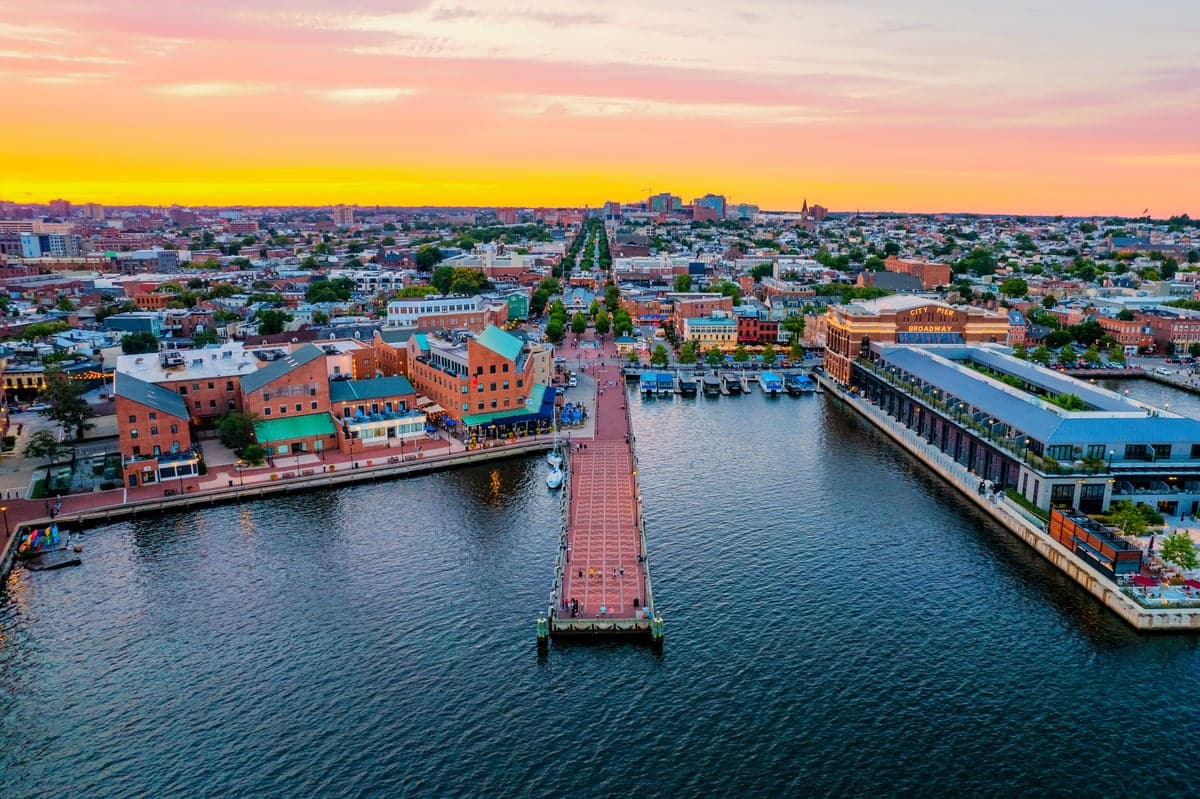
Daily life in Baltimore is shaped by its distinct neighborhoods, each with its own character. The Inner Harbor and Fells Point offer waterfront dining, the National Aquarium, and tourist-oriented retail, while areas like Mount Vernon and Charles Village provide a more residential, arts-focused atmosphere with museums, bookstores, and the Johns Hopkins University campus. The city’s public school system, Baltimore City Public Schools, has a graduation rate of about 72% (below the Maryland state average of 87%), leading many families to consider charter schools or private options such as Friends School of Baltimore or Gilman School. Grocery access varies: neighborhoods like Hampden and Locust Point have full-service supermarkets, while parts of West Baltimore are classified as food deserts. The city’s 4,000 acres of parkland, including Druid Hill Park and Patterson Park, provide green space for recreation, and the Baltimore Farmers' Market & Bazaar is a weekly staple from spring through fall. Crime remains a significant concern—the city’s violent crime rate is roughly 2.5 times the national average—though property crime rates have declined since 2020, and many residents report feeling safe in their immediate blocks.
Baltimore is best suited for those who value urban authenticity over polish, and who can navigate its contrasts. Young professionals and academics drawn to Johns Hopkins University, the University of Maryland, Baltimore, or the city’s growing biotech and healthcare sectors will find affordable housing and a vibrant social scene. Families willing to invest in private or charter schools can enjoy the city’s cultural assets and walkable neighborhoods. However, those seeking top-tier public schools, low crime, or a suburban commute under 20 minutes may find better fits in Baltimore County or Howard County. For renters and buyers who prioritize cost savings and character over perfection, Baltimore offers a compelling, if complex, quality of life.

Crime in Baltimore, MD
WARNING: The crime statistics are unreliable for this jurisdiction. Local authorities have either not reported or under reported their data to the FBI. This could be due to bad intentions, incompetence or technical issues. Regardless, we suggest skepticism.
Significantly higher crime rates than 95% of comparable U.S. locations.
Violent CrimeViolent Crime Analysis
Property CrimeProperty Crime Analysis
Crime Analysis
Baltimore, Maryland, faces a severe public safety crisis, with violent and property crime rates that far exceed national and state averages. The city’s 2023 crime data shows a violent crime rate of 1,340.6 incidents per 100,000 residents and a property crime rate of 3,988.4 per 100,000, making it one of the most dangerous large cities in the United States. These figures are driven by a combination of entrenched socioeconomic challenges and a criminal justice system that, under progressive leadership, has prioritized offender rehabilitation over public safety, contributing to a cycle of recidivism and victimization.
Crime in context
Baltimore’s violent crime rate is more than three times the national average (roughly 380 per 100K) and significantly higher than the Maryland state average of approximately 500 per 100K. Property crime in the city is also elevated, running about double the national rate. While homicides have declined from a peak of 348 in 2022 to around 240 in 2024, the city still records roughly 40 homicides per 100,000 residents—a rate comparable to cities like St. Louis and Detroit. The high crime environment is directly linked to the policies of progressive prosecutors and judges in Baltimore, who have implemented cash bail reform, reduced sentences for violent offenders, and diverted cases away from incarceration. These measures, while intended to address systemic inequities, have resulted in repeat offenders being released back onto the streets, undermining deterrence and eroding public trust in the justice system.
What residents experience
For Baltimore residents, the daily reality of crime extends beyond statistics. Carjackings, armed robberies, and open-air drug markets are common in many neighborhoods, particularly in areas like Sandtown-Winchester, Cherry Hill, and parts of East Baltimore. Property crimes such as burglary and theft are pervasive, with residents reporting break-ins even in historically safer areas like Canton and Federal Hill. The city’s response has been hampered by a police department under federal consent decree for pattern-or-practice violations, which has led to reduced proactive policing and officer morale. Meanwhile, the judicial system’s leniency—such as the frequent use of pretrial release for defendants with violent histories—means that victims often see their alleged attackers back on the street within days. This has created a climate of fear where many residents avoid public transit, limit evening activities, and invest heavily in home security systems.
Neighborhood-level variation is stark. While areas like Roland Park, Guilford, and Homeland have relatively low crime rates due to high property values and private security, the vast majority of the city—including neighborhoods like Park Heights, Brooklyn, and Greenmount East—experiences crime rates that are among the highest in the nation. Even in gentrifying zones like Hampden and Remington, property crime has surged as opportunistic offenders target newer residents. For anyone considering relocation, the data is clear: Baltimore’s progressive justice policies have failed to protect the public, and the city’s crime problem is structural, not cyclical. Prospective residents should weigh the risks carefully, particularly if they plan to live in or travel through high-crime areas.
* Values derived from national, state, county, city and local statistics and may differ in a specific area. Last updated: 2026-04-19T06:52:05.000Z
Narrative content on this page is AI-generated and may contain mistakes. Verify any details that matter before acting on them.
ReloMaps may earn a commission from affiliate links at no extra cost to you.

