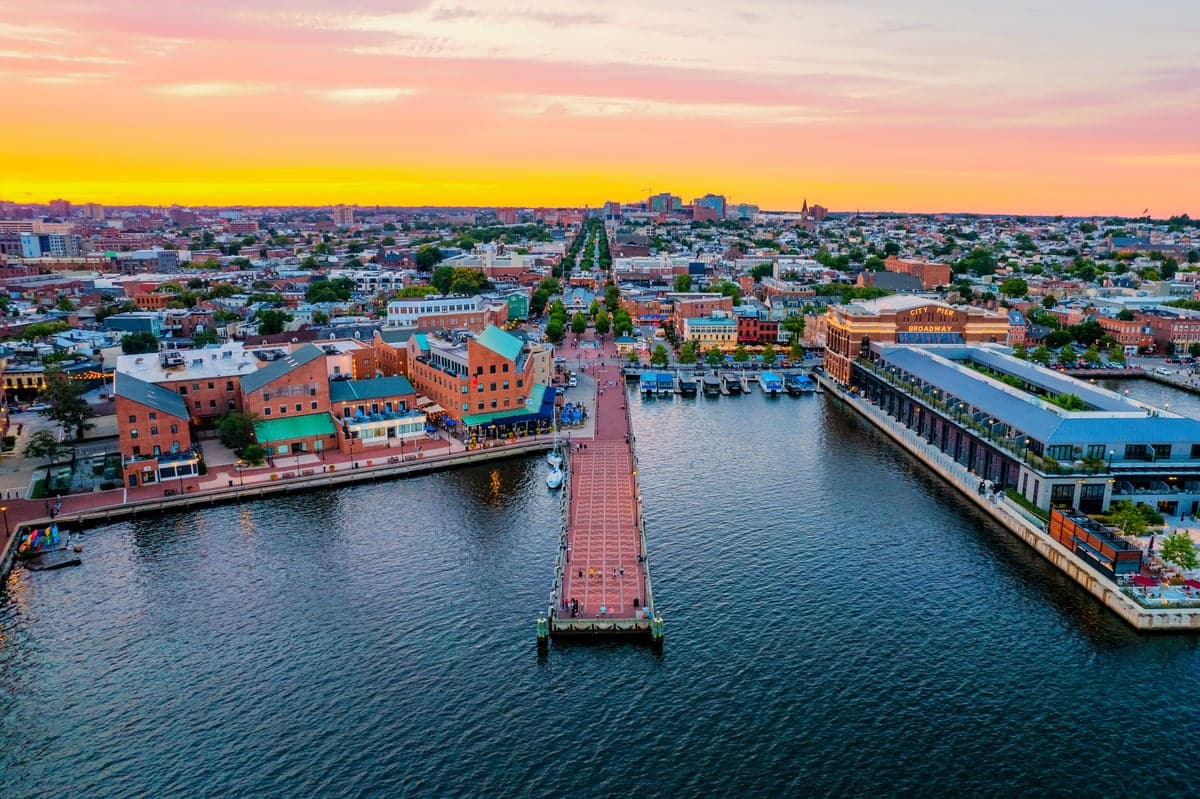
Photo: Wikipedia
Political ClimatePolitical Climate in Baltimore, MD
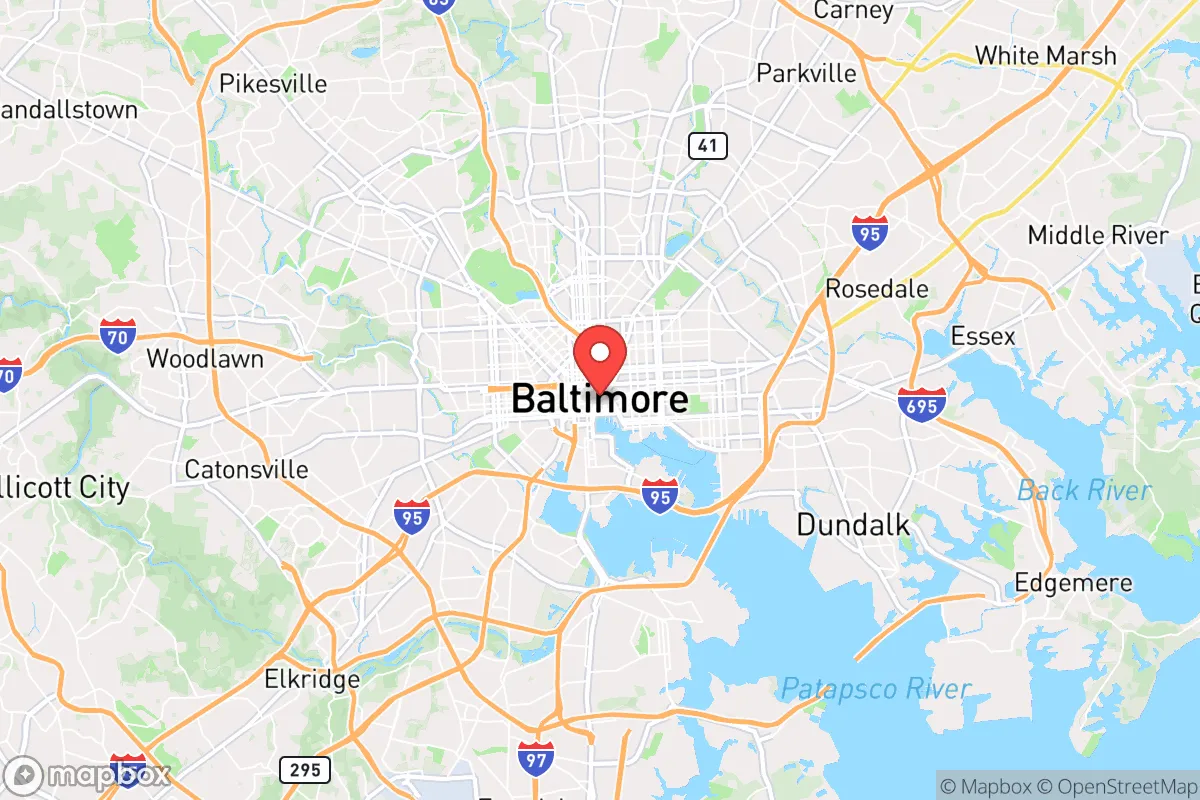
District shown is the primary district for this city’s centroid. Cities may span multiple districts.
Local Political AnalysisPolitical Analysis of Baltimore, MD
Baltimore is about as blue as it gets in Maryland, with a Cook PVI of D+31, meaning the city votes 31 points more Democratic than the national average. That’s not just a lean—it’s a lock. In the 2024 presidential election, Baltimore City gave Joe Biden over 87% of the vote, while the surrounding counties like Carroll and Harford went solidly red. But if you’ve lived here long enough, you know this wasn’t always the case. Back in the 1980s and 1990s, the city had a more moderate Democratic base, with a strong working-class, union-heavy, and socially conservative streak. Today, that’s been replaced by a progressive machine that’s increasingly comfortable with government overreach into personal freedoms—whether it’s mask mandates that lingered longer than most, strict business closures during COVID, or a city council that’s pushed for rent control and police reform that’s left many neighborhoods feeling less safe.
How it compares
Drive 30 minutes north to Towson or Lutherville, and you’ll hit Baltimore County, which is still reliably blue but with a more moderate, suburban flavor. Head west to Carroll County—places like Westminster or Sykesville—and you’re in deep red territory, where the local government pushes back on state mandates and keeps taxes lower. The contrast is stark: in Baltimore City, the mayor and city council have embraced a “sanctuary city” status, limiting cooperation with federal immigration enforcement, while Carroll County’s commissioners have passed resolutions opposing state gun control laws. Even within the metro area, the political divide is real. The city’s progressive tilt means higher property taxes (the city rate is over $2.20 per $100 of assessed value, compared to Carroll’s $1.00) and a regulatory environment that can feel stifling for small business owners. If you’re a conservative or even a moderate, you’ll find yourself in the minority here, and that minority is shrinking fast.
What this means for residents
For the average resident, the political climate translates into a few concrete realities. First, your tax dollars are going to fund programs you might not agree with—like the city’s $15 minimum wage for city contractors, or the expansion of the “Baltimore Children and Youth Fund,” which has faced criticism for lack of oversight. Second, your personal freedoms are increasingly subject to city council whims. In 2023, the council passed a bill requiring landlords to accept housing vouchers, effectively limiting a property owner’s right to choose tenants. There’s also been talk of a citywide plastic bag ban and restrictions on gas stoves in new construction—small things that add up to a feeling that government is in your business. Third, public safety is a constant concern. The city’s homicide rate remains among the highest in the nation, and the police department has been under a federal consent decree since 2017, which has led to reduced proactive policing. Many long-time residents will tell you they’ve seen the city change from a place where you could leave your doors unlocked to one where you check your surroundings before walking to the corner store.
On the cultural side, Baltimore has always had a distinct identity—blue-collar, proud, and fiercely independent. But the political shift has brought a new layer of activism that can feel performative. You’ll see “Defund the Police” signs in some neighborhoods, while others are begging for more patrols. The city’s leadership has doubled down on progressive policies, from the “Baltimore Green Network” to the “Complete Streets” initiative, which prioritizes bike lanes and pedestrian infrastructure over car traffic. For a conservative, it can feel like the city is being run by people who don’t share your values—and that’s unlikely to change anytime soon. The long-term trajectory points to even deeper blue dominance, as younger, more progressive residents move in and older, more moderate ones move out. If you’re considering a move here, just know what you’re signing up for: a city that’s politically monolithic, where your voice on issues like taxes, crime, and personal liberty will likely be drowned out by a chorus of progressive orthodoxy.

State Political ClimatePolitical Climate in Maryland
State Political AnalysisPolitical Environment in the State
Maryland has long been a solidly blue state, but its politics are far more complicated than the statewide vote totals suggest. The state hasn't voted for a Republican presidential candidate since George H.W. Bush in 1988, and Democrats hold a supermajority in the General Assembly. However, that dominant coalition is powered almost entirely by the Washington, D.C. suburbs and Baltimore City, while the rest of the state—particularly the Eastern Shore and Western Maryland—votes reliably red. Over the last 10-20 years, the state has drifted further left on social and economic policy, driven by rapid suburbanization and an influx of federal workers, even as rural areas have become more conservative in response.
Urban vs. rural divide
The political map of Maryland is a textbook case of the urban-rural split. The entire state's blue vote is concentrated in three counties: Montgomery County (just north of D.C.), Prince George's County (east of D.C.), and Baltimore City. These three jurisdictions alone cast roughly 40% of the state's vote and deliver margins of 70-80% for Democrats. In contrast, the rural counties—Garrett County in the far west, Carroll County northwest of Baltimore, and the entire Eastern Shore (e.g., Queen Anne's County, Talbot County)—routinely vote 60-70% Republican. The suburbs of Baltimore, like Howard County and Anne Arundel County, have trended blue over the past decade as professionals and federal contractors moved in. A notable exception is Harford County, northeast of Baltimore, which has held steady as a red-leaning suburban stronghold. The divide isn't just about party—it's about culture. In rural areas, you'll see Trump flags and "Don't Tread on Me" plates; in Montgomery County, you'll see "In This House We Believe" signs and Teslas.
Policy environment
Maryland's policy environment is aggressively progressive, and it shows in the tax code. The state has a progressive income tax that tops out at 5.75%, but counties add their own piggyback taxes, pushing the combined rate as high as 9.65% in places like Montgomery County. Property taxes are high, too, especially in the D.C. suburbs. The state has a strict regulatory posture on business, with a minimum wage that hit $15 an hour in 2024 and a paid family leave program set to launch in 2025. On education, Maryland spends more per pupil than almost any other state, but outcomes are wildly uneven—wealthy Montgomery County schools are among the best in the nation, while Baltimore City schools remain chronically underfunded and underperforming. Healthcare is dominated by the state's own exchange, and Maryland has expanded Medicaid aggressively. Election laws are among the most liberal in the country: no-excuse mail-in voting, same-day registration, and automatic voter registration are all law. For a conservative, the policy environment feels like a one-way ratchet toward bigger government and higher taxes.
Trajectory & freedom
Maryland is becoming less free by almost any measure, and the trend has accelerated since 2020. The most glaring example is gun rights: Maryland has some of the strictest gun laws in the nation, including a handgun permit system that requires "good and substantial reason" (effectively a ban on concealed carry for most people until the Supreme Court's Bruen decision in 2022 forced a loosening). Even after Bruen, the state passed a law banning firearms in "sensitive places" so broadly that it's being challenged in court. On parental rights, the state passed the Blueprint for Maryland's Future, which centralizes education policy and has been criticized for reducing local control over curriculum. In 2023, the legislature passed a law banning conversion therapy for minors and expanded gender identity protections in schools. Medical autonomy took a hit with the state's strict COVID-19 vaccine mandates for healthcare workers and school employees, which remain in place. Property rights are constrained by strict zoning laws in the D.C. suburbs that limit housing supply and drive up costs. The overall trajectory is clear: more regulation, higher taxes, and less room for individual choice.
Civil unrest & political movements
Maryland has seen its share of political flashpoints. The 2020 George Floyd protests in Baltimore and the D.C. suburbs were large and occasionally violent, with property damage in downtown Baltimore. The state is a sanctuary state for illegal immigrants, with a 2019 law (the Trust Act) that limits local law enforcement's cooperation with federal immigration authorities. This has been a major flashpoint in rural counties, where some sheriffs have publicly refused to comply. On the right, there's a small but vocal secession movement in Western Maryland and the Eastern Shore, with proposals to break away and form a new state called "Western Maryland" or "Liberty Maryland." These efforts have no real chance of success, but they reflect deep frustration. Election integrity has been a hot topic since 2020, with Republican activists raising concerns about the state's widespread mail-in voting system. In 2022, the state's new congressional map was struck down by a court as an unconstitutional gerrymander, but a new map was quickly drawn that still heavily favors Democrats. For a new resident, the most visible sign of the political divide is the sheer number of political signs and bumper stickers—you'll see far more Democratic messaging in the suburbs than in the rural areas.
Projection
Over the next 5-10 years, Maryland is likely to continue its leftward drift, but the pace may slow. The D.C. suburbs are growing faster than the rest of the state, and they're getting bluer. Montgomery County is projected to add another 100,000 residents by 2030, almost all of them in the Democratic column. Meanwhile, rural counties are losing population, which means their political influence is shrinking. However, there are countervailing trends. The remote work revolution has allowed some people to leave the expensive D.C. suburbs for cheaper rural areas, which could slow the blue tide. The state's high taxes and cost of living are also pushing some families to move to Pennsylvania, Delaware, or Virginia. If the Republican Party can ever figure out how to appeal to suburban voters without alienating its rural base, Maryland could become competitive in a decade or two—but that's a big if. For now, expect more of the same: higher taxes, more regulation, and a political culture that feels increasingly hostile to traditional values.
Bottom line for a new resident: If you're a conservative moving to Maryland, you need to be strategic about where you land. The rural counties—Garrett, Carroll, Harford, and the Eastern Shore—offer a much more aligned political and cultural environment, but you'll still be subject to state-level policies you likely disagree with. The D.C. suburbs are a non-starter for most conservatives, unless you're willing to pay a premium for top-tier schools and accept a blue political reality. Your vote in state elections will be largely symbolic, but your local vote in a red county can still matter. If you value low taxes, gun rights, and local control, Maryland is a tough sell—but if you have to be here for work, you can carve out a decent life in the right corner of the state. Just don't expect the political winds to shift in your favor anytime soon.
* Values derived from national, state, county, city and local statistics and may differ in a specific area. Last updated: 2026-04-19T06:52:05.000Z
Narrative content on this page is AI-generated and may contain mistakes. Verify any details that matter before acting on them.
ReloMaps may earn a commission from affiliate links at no extra cost to you.

