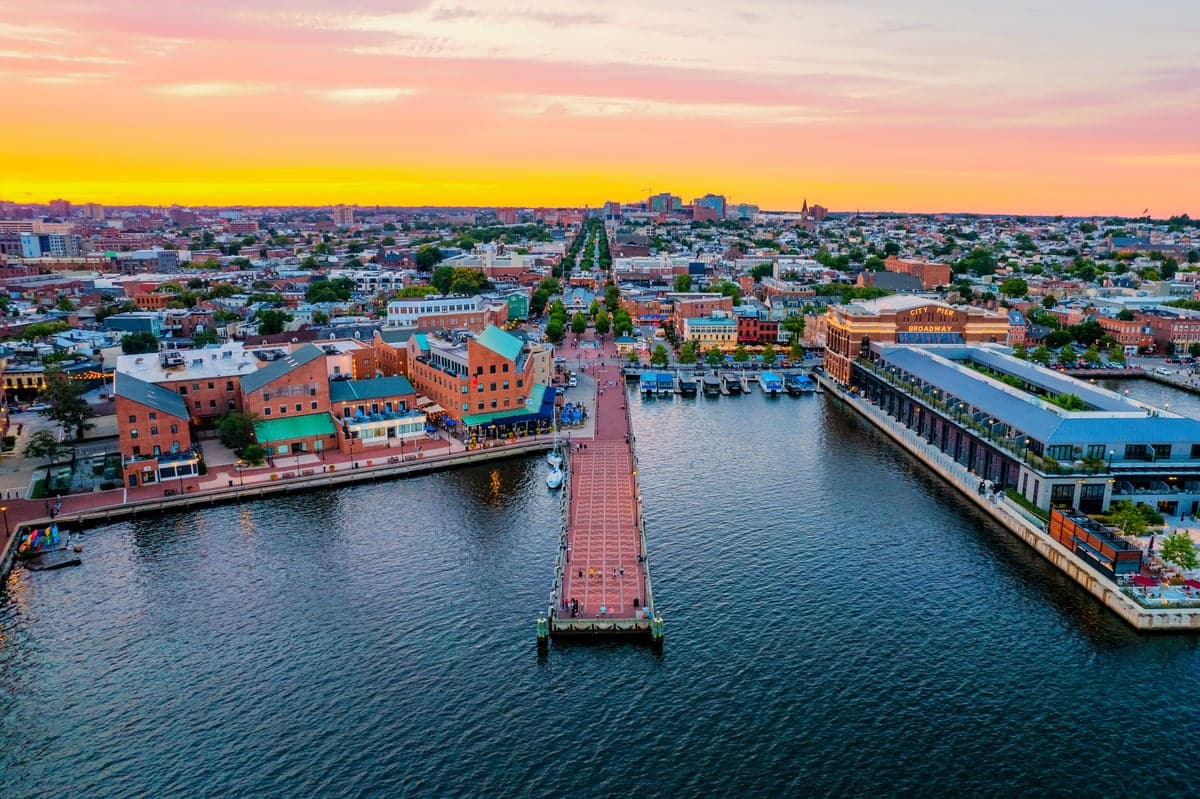
Photo: Wikipedia
Strategic Assessment of Baltimore, MD
High tactical risk. This location is likely close to major population centers, strategic targets, or sits in a high-disaster corridor. A retreat property and careful exit planning is required.
What does the Strategic Assessment tell us?
Our Strategic Assessment grades tactical survivability of an area. Major population centers, military targets, fallout zones, natural disasters, and border exposure all drive risk — lower exposure means a more defensible position in a crisis.
This is heavily inspired by Joel Skousen's Strategic Relocation book. Highly recommended you checkout the book ($)What does this tell us?
Our Strategic Assessment grades tactical survivability of an area. Major population centers, military targets, fallout zones, natural disasters, and border exposure all drive risk — lower exposure means a more defensible position in a crisis.
This is heavily inspired by Joel Skousen's Strategic Relocation book. Highly recommended you checkout the book ($)Strategic Pillars

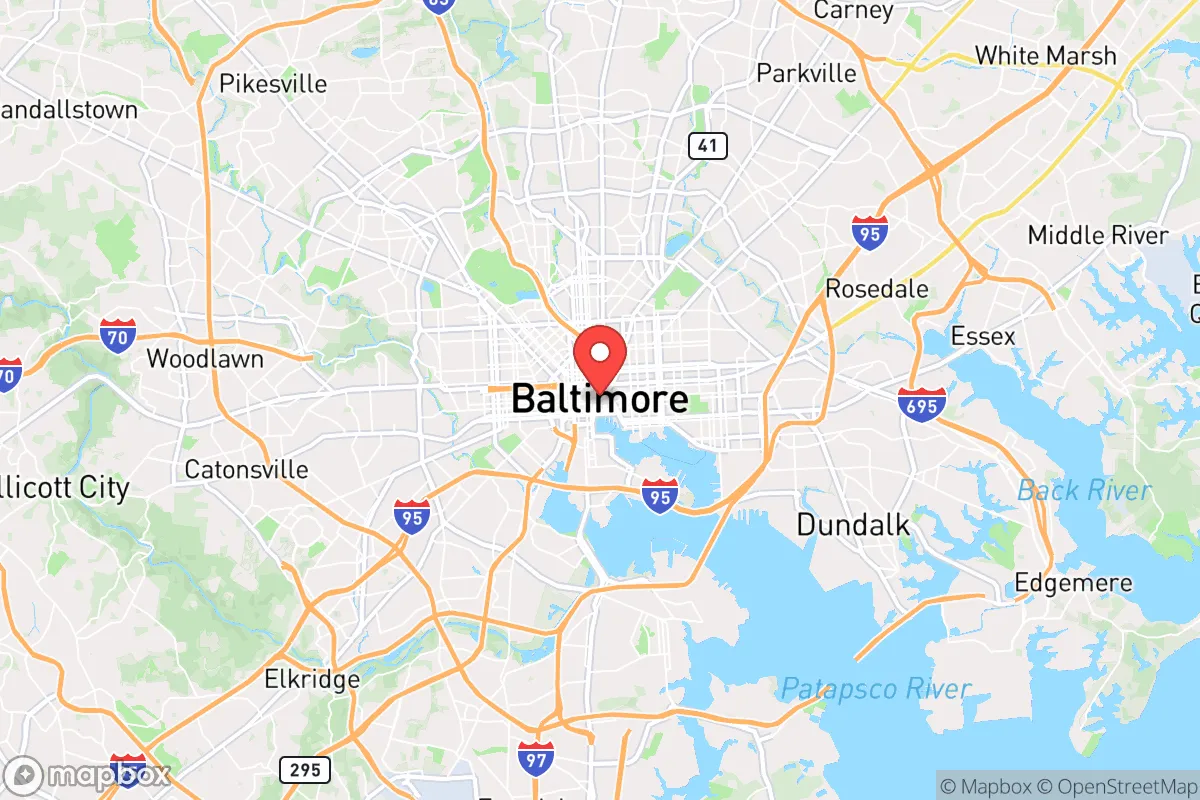
Key Distances
Regional Safe Places
Below is our recommended "safe zones" in Maryland and the surrounding area based on our strategic heuristics. For most people, it's unrealistic to live in a “safe zone” full-time due to work, family or other personal reasons. They tend to be more rural. However, many of these areas are perfect for second homes and retreat properties that double as a vacation home or even a short-term rental.
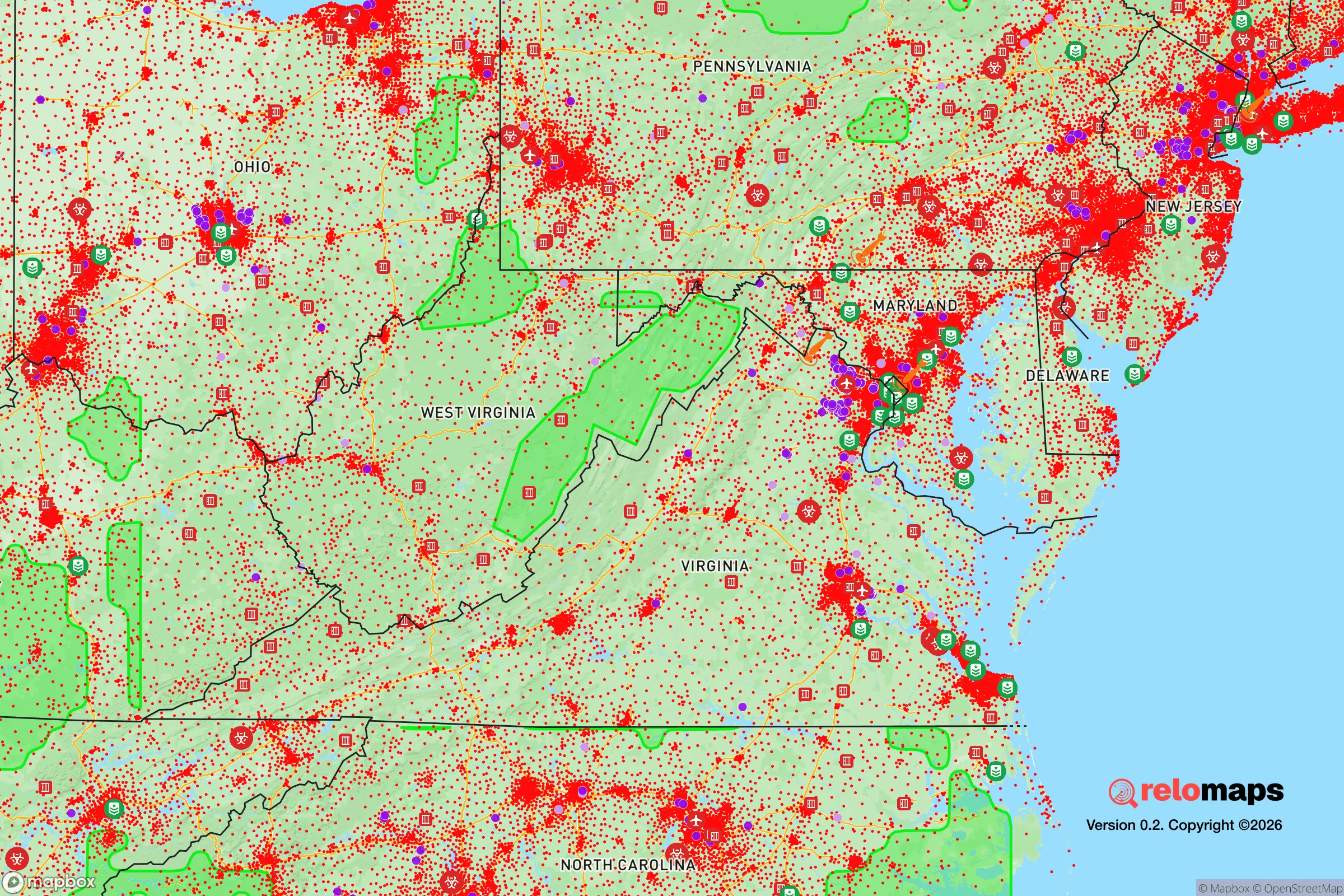
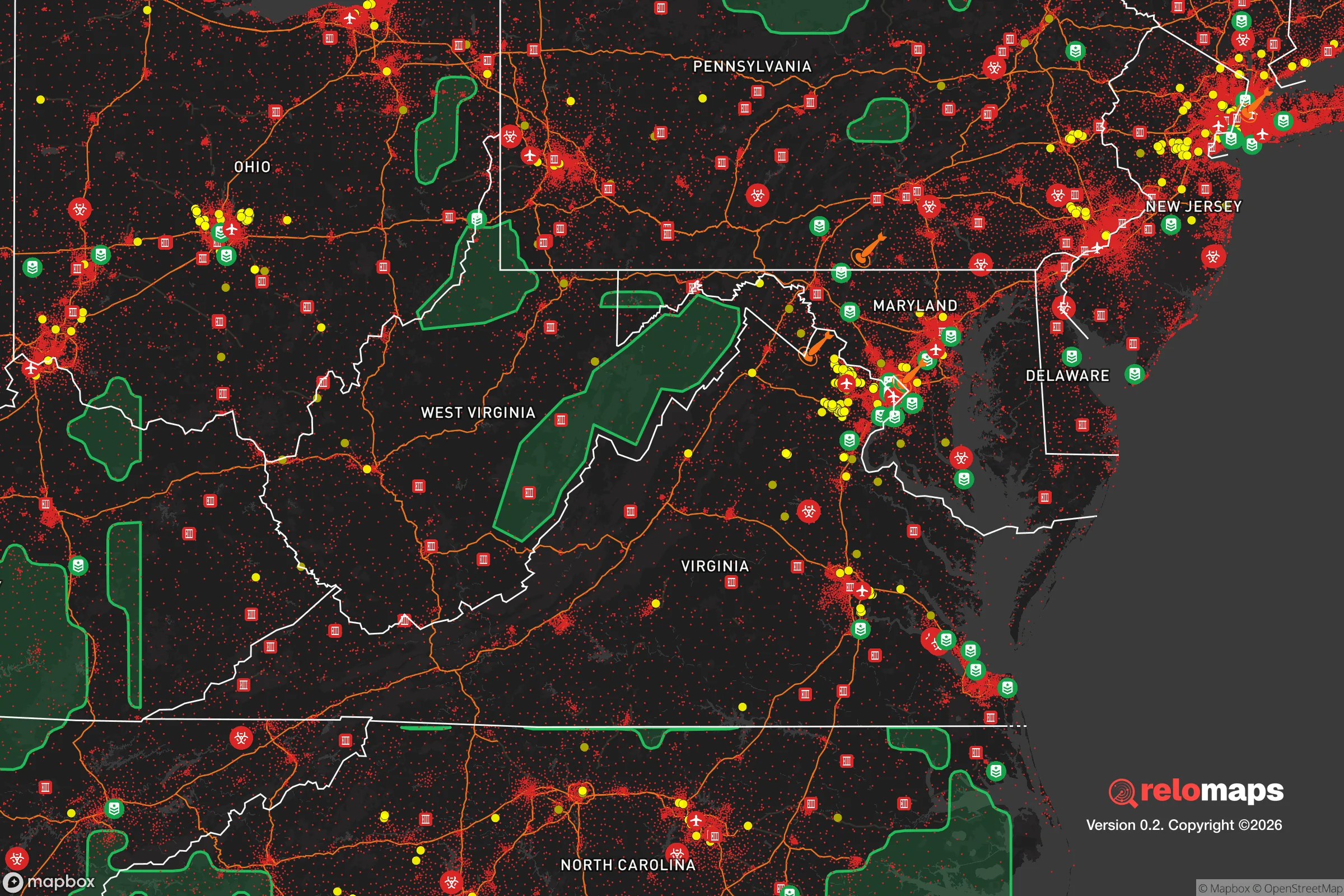


Important Note: For informational purposes only. This does not mean nothing bad ever happens in the green zones. Please use common sense. This is based on public data and modeled with AI. We tried to take a conservative approach but mistakes happen. We update this regularly as new information becomes available.
Solar Generator Recommendations
Backup power matters more here than in safer locations. We've picked three solar generators across budgets and capacity tiers — start with the budget unit if you only need a few essentials, or step up if you want to run a fridge and HVAC for days at a time.

Jackery Portable Power Station Explorer 300
Budget OptionPower on the Go: Weighing only 11 lbs, it's convenient to set up and store with book-sized foldable solar panels

BLUETTI Portable Power Station AC180
Designed for both indoor and outdoor scenarios, AC180 is highly capable as it has a robost capacity and continuous output power.

EF ECOFLOW DELTA Pro Ultra Power Station
Upgraded PickEcoFlow DELTA Pro Ultra is a whole-home energy system designed to grow with your family. Integrated with the Smart Home Panel 2, it scales to meet your evolving energy needs — keeping your home powered, intelligent, and secure through every stage of life.
We earn a commission, at no additional cost to you.
Strategic Assessment Analysis
Baltimore, Maryland, presents a deeply contradictory picture for the strategic relocator. While its location on the Chesapeake Bay and the I-95 corridor offers undeniable logistical advantages for supply and movement, the city itself is a high-risk environment for anyone prioritizing long-term security and self-sufficiency. For the conservative-minded prepper, Baltimore is less a destination and more a cautionary case study in urban fragility, though its surrounding region does offer some tactical considerations worth examining.
Geographic position and natural advantages for a strategic relocation
Baltimore sits at the head of the Patapsco River, a deep-water estuary that feeds into the Chesapeake Bay. This gives the area direct access to the Atlantic via the Chesapeake and Delaware Canal, making it a potential node for maritime resupply or evacuation in a crisis. The city itself is built on a series of hills and ridges, with the Inner Harbor area at sea level and neighborhoods like Hampden and Mount Washington rising to over 400 feet. That elevation is a minor defensive asset, but the real geographic advantage lies in the surrounding counties. Baltimore County, Harford County, and Carroll County to the north and west offer rolling farmland, forested watersheds, and the Liberty, Prettyboy, and Loch Raven reservoirs — a combined water supply that could sustain a dispersed population for weeks if the city’s treatment plants fail. The proximity to the Appalachian Mountains, roughly 60 miles west, provides a potential retreat corridor into less populated terrain. However, the city’s position on the Northeast megalopolis — within a three-hour drive of Washington, D.C., Philadelphia, and New York — means that any major disruption in those population centers will ripple directly into Baltimore. The I-95 and I-695 beltway system, while useful for movement, also funnels displaced populations and supply chain breakdowns straight into the metro area.
Risks, exposures, and proximity to fallout-relevant landmarks
Baltimore’s biggest liability for the prepper is its density and its proximity to high-value targets. The city proper packs roughly 585,000 people into 92 square miles, with a metro area of 2.8 million. In a mass casualty event — whether natural, pandemic, or civil unrest — that density becomes a force multiplier for chaos. The city has a well-documented history of civil unrest, most notably the 2015 Freddie Gray riots, which saw looting, arson, and a state of emergency declared. For the survivalist, that pattern is a red flag: Baltimore’s underlying social tensions and economic disparities mean that any breakdown in order will likely trigger localized violence before outside help arrives. More concerning is the proximity to critical infrastructure that could become fallout targets. The Port of Baltimore is a major shipping hub for automobiles and heavy machinery, and the I-95 tunnels and the Francis Scott Key Bridge (rebuilt after the 2024 collapse) are chokepoints that could be targeted in a conflict. The city is also within 40 miles of Fort Meade (NSA headquarters), Aberdeen Proving Ground (Army weapons testing), and the Pentagon’s satellite facilities in the D.C. area. In a war scenario, these are Tier 1 targets for missile or cyber attack. The fallout risk is not just nuclear — a chemical release from the port’s industrial facilities or a cyber-induced failure of the city’s aging water infrastructure could render large sections uninhabitable for weeks. For the relocator, being within the blast radius of these assets is a hard negative.
Practical resilience for a relocator: food, water, energy, and defensibility
For a single individual or family willing to live on the urban fringe, Baltimore’s practical resilience is a mixed bag. Water is the strongest point: the three major reservoirs in the northern suburbs hold over 60 billion gallons combined, and the city’s treatment plants have backup generators. But the distribution system is old — some pipes date to the 1800s — and a major break or contamination event could leave the city without potable water for days. A well on a property in Baltimore County or Harford County is a far more reliable bet. Food security is weak inside the city limits. Baltimore is a food desert for large swaths of the population, with limited grocery access in neighborhoods like Sandtown-Winchester and parts of East Baltimore. The city’s farmers’ markets and urban gardens are a niche resource, not a survival supply. For a relocator, the strategy is to live outside the city and drive in for work or supplies, but that creates a daily exposure to the I-95 and I-695 choke points. Energy is a concern: Baltimore Gas and Electric (BGE) has a mixed record on storm response, and the grid is vulnerable to both cyber attack and physical sabotage. Solar panels with battery storage are a wise investment here, especially in the sunnier western suburbs. Defensibility is the hardest factor. Baltimore’s row house neighborhoods are difficult to secure — narrow streets, shared walls, and limited sightlines. A single-family home in a suburban cul-de-sac in places like Timonium or Bel Air offers better perimeter control, but those areas are still within a 20-minute drive of the city’s potential flashpoints. For the serious prepper, the best option is a rural property in Carroll County or northern Harford County, where you can establish a defensible position with well water, septic, and a garden, while still being within an hour of the city’s hospitals and supply chains.
The strategic picture for Baltimore is clear: it is a high-risk, high-reward location for the conservative relocator who values preparedness. The city’s geographic assets — deep-water port, reservoir system, and proximity to retreat terrain — are real, but they are outweighed by the liabilities of density, civil unrest history, and proximity to high-value military and government targets. For the single individual or family who can afford to live in the outer ring of the metro area, with a self-sufficient property and a plan to bug out west if needed, Baltimore offers a base of operations with access to jobs and infrastructure. But for anyone seeking a low-profile, defensible, and stable environment to ride out the coming disruptions, this is not the place. The smart move is to treat Baltimore as a resource node, not a home base — and to have your exit route mapped before the first siren sounds.

* Values derived from national, state, county, city and local statistics and may differ in a specific area. Last updated: 2026-04-19T06:52:05.000Z
Narrative content on this page is AI-generated and may contain mistakes. Verify any details that matter before acting on them.
ReloMaps may earn a commission from affiliate links at no extra cost to you.

