 Popular
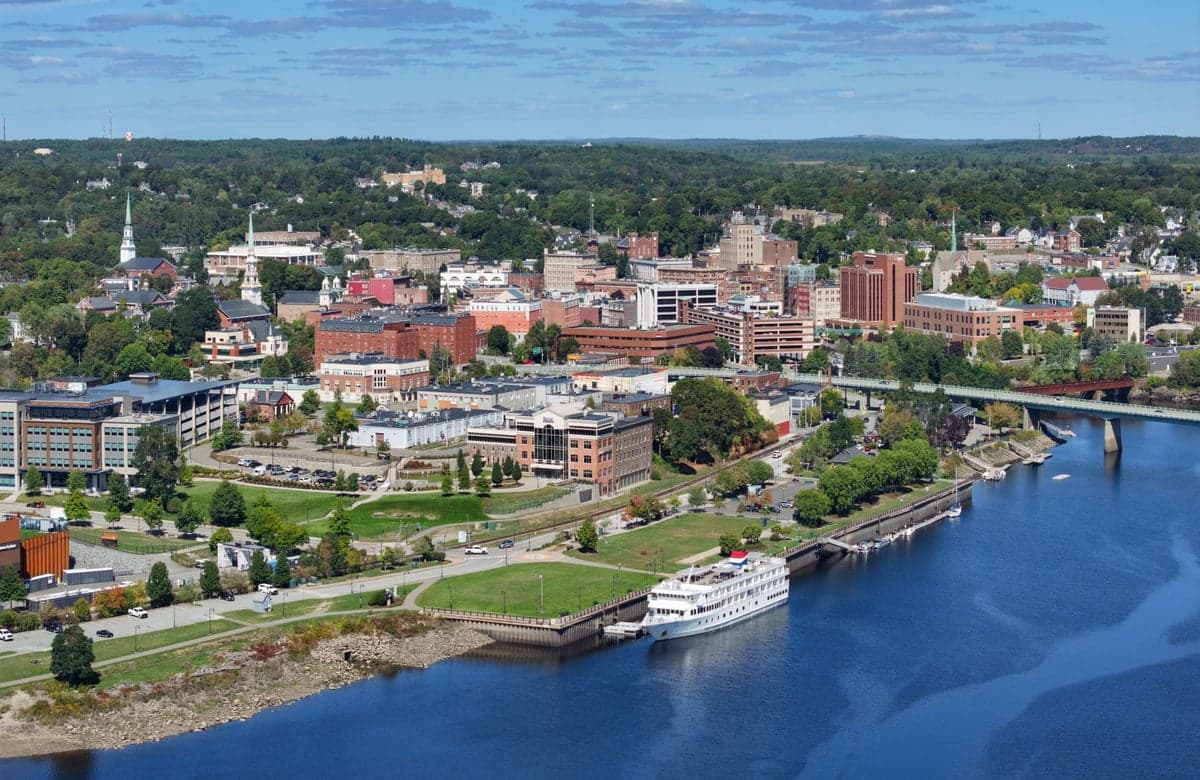
Photo: Wikipedia
Personal Sovereignty in Bangor, ME
Viable for self-reliance. Generally workable, though some barriers may limit total independence.
What does Personal Sovereignty tell us?
Personal Sovereignty measures your capacity for self-reliance and independence with minimal government friction. Higher scores mean fewer barriers between you and the way you want to live... but it assumes you have the space you need and good neighbors.
What does this tell us?
Personal Sovereignty measures your capacity for self-reliance and independence with minimal government friction. Higher scores mean fewer barriers between you and the way you want to live... but it assumes you have the space you need and good neighbors.
State Policy
Energy independence: Importer (30% of energy produced in-state)
Personal Liberty
Homesteading

Personal Liberty Analysis
For the individual or family prioritizing personal sovereignty—the ability to live, defend, and provide for oneself without excessive government interference—Bangor, Maine, presents a mixed but increasingly attractive picture. While Maine as a whole has drifted leftward on social issues, Bangor’s location in Penobscot County and its surrounding rural townships offer a practical buffer against the most aggressive forms of state overreach. The city itself is a regional hub, meaning you get access to infrastructure and healthcare without being trapped in a dense, high-regulation metro area. The key question for a survivalist or prepper is whether Bangor’s autonomy environment allows you to stockpile, build, and live by your own rules, and the answer is: it does, but with specific legal and economic caveats you need to know before moving.
Tax burden and regulatory posture: How Maine’s fiscal policies affect your independence
Maine’s tax burden is among the highest in the nation, ranking 8th overall in state and local tax collections as a percentage of income. This is a direct hit on your ability to retain the fruits of your labor. The state income tax is progressive, topping out at 7.15% for income over $58,050 (single filers), and the state sales tax is 5.5%, though it exempts groceries and prescription drugs. Property taxes in Bangor are a significant concern—the mill rate hovers around 20.0, meaning you’ll pay roughly $2,000 annually per $100,000 of assessed home value. This is higher than the national average and eats into funds you might otherwise allocate to supplies, land, or infrastructure. On the regulatory side, Maine has a reputation for environmental and land-use restrictions, but Bangor’s city government is more pragmatic than Portland or Augusta. Building permits are required, but the city’s zoning code allows for accessory dwelling units and home-based businesses with relative ease compared to larger New England cities. The state’s business climate is ranked poorly by organizations like the Tax Foundation, but for a self-reliant individual not running a large enterprise, the main drag is the property tax and income tax—not insurmountable, but a real cost of living in a state with low crime and abundant natural resources.
Self-defense and gun law specifics: What you can own and where you can carry
Maine is a “shall issue” state for concealed carry permits, and since 2015, it has allowed permitless (constitutional) carry for anyone 21 or older who is legally allowed to possess a firearm. This is a major win for personal sovereignty. You do not need a government permission slip to carry a concealed handgun in Bangor or anywhere else in the state. There is no state-level assault weapons ban, no magazine capacity limit, and no universal background check law beyond the federal standard. The state preempts local gun ordinances, meaning Bangor city council cannot pass its own restrictions that are stricter than state law. This is critical: you can own AR-15s, standard-capacity magazines, and suppressors (with a federal tax stamp) without worrying about local bans. The only notable restriction is that carrying in a courthouse or a school (K-12) is prohibited unless you have a specific exemption. For a prepper, this means you can maintain a robust personal armory and carry daily without bureaucratic hurdles. The state’s “red flag” law, passed in 2019, does allow law enforcement to petition for temporary firearm seizure based on a judge’s finding of “dangerousness,” which is a concern for those who distrust government overreach, but it is rarely used in Penobscot County compared to southern Maine. Overall, Bangor is a stronghold for Second Amendment rights within a state that has pockets of hostility.
Self-reliance and homesteading viability: Lot sizes, zoning, and off-grid feasibility
Bangor itself is an urbanized city of about 32,000 people, but its surrounding towns—like Hampden, Holden, and Orrington—offer rural zoning with minimum lot sizes of 1 to 2 acres, and some unincorporated townships allow 5+ acre parcels. This is where the real sovereignty play is. You can find land within 15 minutes of downtown Bangor for $5,000 to $15,000 per acre, depending on road access and utilities. Off-grid living is legally feasible: Maine has no state law prohibiting rainwater collection, composting toilets, or solar panel installation. The Maine Uniform Building and Energy Code applies to new construction, but if you build a “camp” (a seasonal dwelling under 200 square feet) or a tiny house on wheels, you can often bypass many permitting requirements. Zoning in unincorporated areas (called “plantations” or “townships”) is minimal to nonexistent. For a prepper, this means you can set up a self-sufficient homestead with a well, septic, solar array, and wood heat without fighting a planning board. The growing season is short (zone 5a), but cold-hardy crops and greenhouse techniques work well. Bangor’s location on the Penobscot River also provides a reliable water source and fishing. The biggest regulatory hurdle is the state’s shoreland zoning act, which restricts building within 250 feet of a water body—so avoid waterfront parcels if you want maximum freedom to build and clear land.
Personal liberties: Parental rights, medical autonomy, speech, and property
Maine’s political culture has shifted left on social issues, which is a concern for those prioritizing parental rights and medical autonomy. The state has a “right-to-repair” law for medical devices, but it also mandates vaccination for school attendance (with medical and religious exemptions available, though philosophical exemptions were removed in 2021). This is a red flag for parents who want full control over their children’s healthcare decisions. On the positive side, homeschooling is legal and relatively straightforward: you must submit a notice of intent and provide an annual assessment, but there is no state-mandated curriculum or testing requirement beyond basic reporting. Bangor has a strong homeschooling community, with several co-ops and support groups. Medical autonomy is more constrained: Maine has a state-run health insurance exchange and expanded Medicaid, and the state government has shown willingness to mandate treatments during public health emergencies. For those seeking to avoid government medical records or mandates, the rural areas outside Bangor offer more privacy, but the state’s reach is still present. Free speech is protected under the First Amendment, and Bangor has no local ordinances restricting political speech or assembly. Property rights are generally strong: Maine follows the “fee simple” ownership model, and there is no state-level inheritance tax (though there is a federal estate tax threshold). The biggest property concern is the state’s “public trust doctrine,” which can limit development on coastal and riverfront land, but this is less relevant in Bangor’s inland areas. For a survivalist, the property rights environment is solid, but the medical and educational mandates require careful navigation.
In the broader landscape of personal sovereignty, Bangor offers a unique balance: you get the low population density, abundant land, and strong gun rights of a rural red state, but you pay for it with higher taxes and a state government that is more interventionist on health and education than, say, Texas or New Hampshire. Compared to southern Maine or the Boston metro area, Bangor is a clear win for autonomy. Compared to northern New England states like New Hampshire (which has no income or sales tax and even looser gun laws), Bangor falls short on fiscal freedom. For the prepper or survivalist who values land, self-defense, and the ability to live off-grid, Bangor is a viable option—but you must be willing to accept the tax burden and stay vigilant about state-level mandates. The surrounding Penobscot County townships are where the real sovereignty lives, and that’s where you should focus your search if maximum independence is your goal.

* Values derived from national, state, county, city and local statistics and may differ in a specific area. Last updated: 2026-04-19T09:04:32.000Z
Narrative content on this page is AI-generated and may contain mistakes. Verify any details that matter before acting on them.
ReloMaps may earn a commission from affiliate links at no extra cost to you.

