Photo: Wikipedia
Demographics of Bantam, CT
Affluence Level in Bantam, CT
A below-average socioeconomic profile. Incomes, home values, and educational attainment trail the U.S., with higher poverty and unemployment.
People of Bantam, CT
Bantam, Connecticut, is a small, tightly-knit borough of 762 residents that remains overwhelmingly white (96.7%) and native-born, with a foreign-born population of 0.0%. Its character is defined by a quiet, rural-residential feel, a legacy of 19th-century industrial settlement, and a demographic stability that sets it apart from many other parts of Litchfield County. For those considering a move, Bantam offers a homogeneous, low-density community where the population has changed little in composition over the past half-century.
How the city was settled and grew
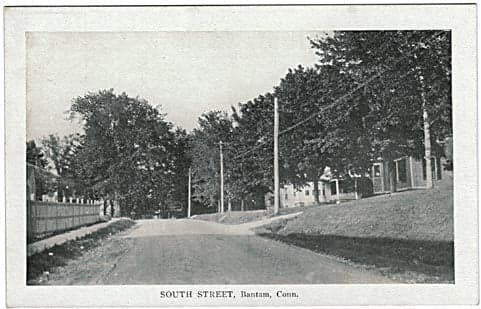
Bantam’s human history begins with its geography. The Bantam River and its falls provided water power that attracted early industrialists. In the early 19th century, the area was part of the larger town of Litchfield, but the construction of a dam and mills along the river spurred a distinct settlement. The Bantam Falls neighborhood, centered around the river’s drop, became the industrial core. The first major wave of population came from English and Scottish immigrants who arrived to work in the woolen mills and brass factories that defined the local economy. The Bantam Woolen Mill, established in the 1830s, drew skilled textile workers, and many of their descendants still live in the Borough Center district, where the original mill housing and company-built homes remain. By the late 19th century, a smaller wave of Irish laborers arrived to work on railroad construction and in the mills, settling in modest homes along South Street and Route 209. The borough was officially incorporated in 1915, cementing its identity as a distinct, self-governing community separate from Litchfield. Through the mid-20th century, Bantam remained a white, working-class enclave, with population growth tied directly to the health of its manufacturing base.
Modern era (post-1965)
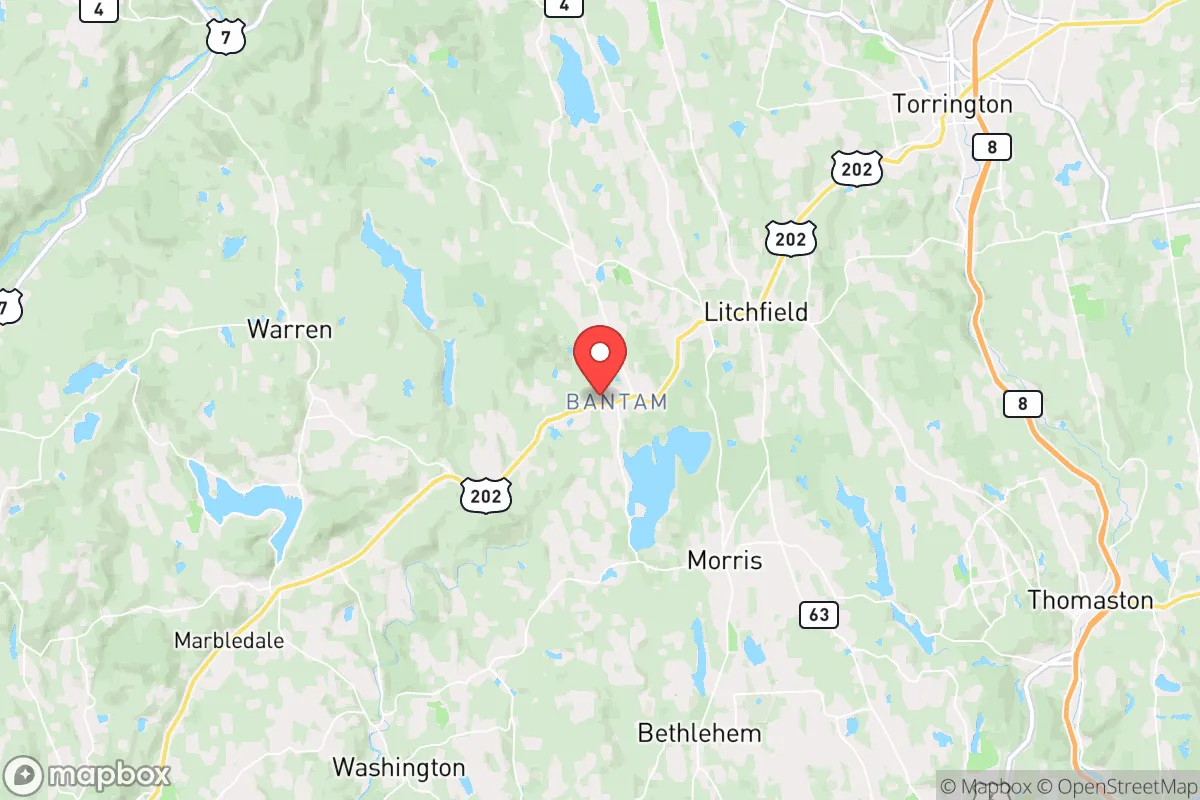
The post-1965 era brought little demographic change to Bantam. Unlike many Connecticut towns that saw significant suburbanization and immigration after the Hart-Cellar Act, Bantam’s population actually declined from its mid-century peak. The closure of the Bantam Woolen Mill in the 1970s removed the primary draw for new residents. The borough’s population today is 96.7% white, with a Hispanic share of just 2.9% and no recorded Black or East/Southeast Asian residents. The Indian-subcontinent population is a negligible 0.1%. The Bantam Lake area, a seasonal and year-round residential district, absorbed some domestic in-migration from other parts of Connecticut during the 1980s and 1990s, but these newcomers were overwhelmingly white and native-born. The North Bantam neighborhood, a quieter residential stretch along the lake’s northern shore, saw a modest influx of retirees and second-home buyers from New York and Fairfield County, but this did not alter the borough’s racial or ethnic makeup. The college-educated share stands at 22.7%, reflecting a population that is predominantly blue-collar or retired, with limited attraction for highly mobile professionals.
The future
Bantam’s population is likely to continue its slow decline or remain flat. With a foreign-born population of 0.0% and no significant immigrant gateway, the borough is not positioned for diversification. The aging housing stock and limited rental options in the Borough Center and Bantam Falls neighborhoods discourage in-migration by younger families. The Hispanic share, while small, may grow slightly as some families move from larger Litchfield County towns like Torrington, but this will remain a minor trend. The borough is homogenizing rather than tribalizing — it is becoming older, whiter, and more settled, with little new construction or development to attract new groups. The next 10-20 years will likely see a continued contraction of the school-age population and a rise in the median age, as the borough’s character as a quiet, stable, and demographically static community solidifies.
For someone moving in now, Bantam offers a predictable, low-diversity environment with deep local roots and a strong sense of place. It is a place where the population story is one of continuity, not change — a small, white, native-born borough that has largely resisted the demographic shifts reshaping much of Connecticut. This stability is its defining feature, for better or worse, and it is unlikely to alter course in the foreseeable future.

* Values derived from national, state, county, city and local statistics and may differ in a specific area. Last updated: 2026-04-30T00:35:56.000Z
Narrative content on this page is AI-generated and may contain mistakes. Verify any details that matter before acting on them.
ReloMaps may earn a commission from affiliate links at no extra cost to you.

