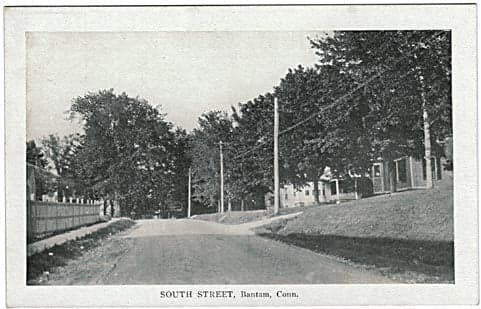
Photo: Wikipedia
Personal Sovereignty in Bantam, CT
Viable for self-reliance. Generally workable, though some barriers may limit total independence.
What does Personal Sovereignty tell us?
Personal Sovereignty measures your capacity for self-reliance and independence with minimal government friction. Higher scores mean fewer barriers between you and the way you want to live... but it assumes you have the space you need and good neighbors.
What does this tell us?
Personal Sovereignty measures your capacity for self-reliance and independence with minimal government friction. Higher scores mean fewer barriers between you and the way you want to live... but it assumes you have the space you need and good neighbors.
State Policy
Energy independence: Importer (5% of energy produced in-state)
Personal Liberty
Homesteading

Personal Liberty Analysis
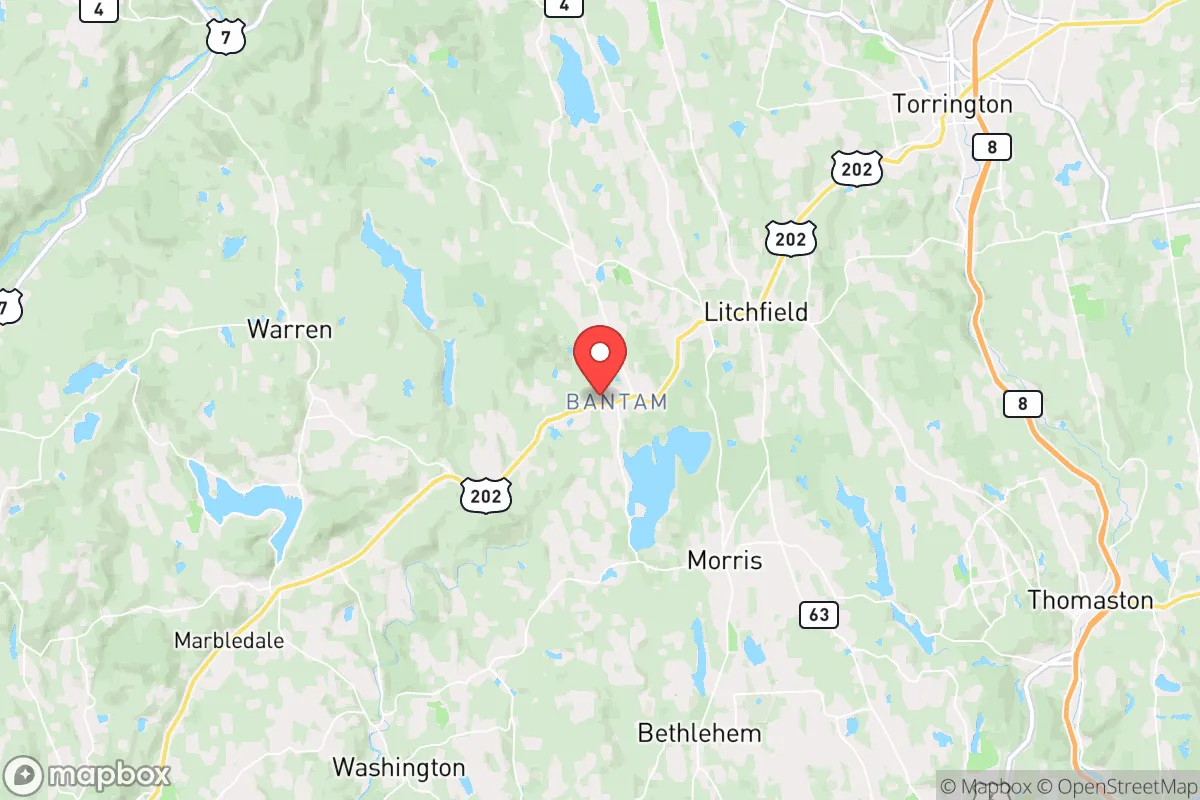
For the liberty-minded individual or family evaluating Bantam, Connecticut, personal sovereignty is a mixed bag defined by a sharp contrast between a relatively permissive local environment and a state-level apparatus that increasingly encroaches on self-reliance. Located in the rural Litchfield Hills, Bantam offers a degree of physical and social distance from the coastal, progressive strongholds that dominate state policy. However, you cannot escape the long arm of Hartford. The core tension here is that while your immediate neighbors may respect your right to live as you see fit, the state government has steadily eroded key freedoms—from how you can defend your home to how you can educate your children. For a survivalist or prepper, Bantam represents a strategic compromise: a quiet, low-density outpost with decent land access, but one that requires constant vigilance against state-level overreach into your personal affairs.
Tax burden and regulatory posture: How Connecticut’s fiscal grip affects your autonomy
Connecticut’s tax burden is among the highest in the nation, and Bantam residents are not immune. The state imposes a progressive income tax that can reach nearly 7%, a sales tax of 6.35%, and some of the highest property taxes in the country. For a prepper focused on financial independence, this is a direct drain on resources that could otherwise fund supplies, land improvements, or off-grid infrastructure. The regulatory posture is equally concerning. Connecticut has a notoriously complex permitting system for everything from building a shed to installing a solar array. The state’s Department of Energy and Environmental Protection (DEEP) maintains broad authority over land use, wetlands, and water rights, which can complicate any attempt to become truly self-sufficient. While Bantam’s local zoning is more lenient than in suburban towns, the state’s bureaucratic machinery means that any significant project—like drilling a well, installing a septic system, or building a root cellar—will likely require multiple approvals. This is not a jurisdiction where you can simply act; you must first ask permission.
Self-defense and gun law specifics: Navigating Connecticut’s restrictive firearms environment
For those who view the Second Amendment as a cornerstone of personal sovereignty, Connecticut is a hostile state. Bantam residents must comply with some of the nation’s strictest gun laws, including a ban on so-called "assault weapons," a 10-round magazine limit, and a requirement for a permit to purchase any firearm, which involves a background check, a safety course, and a waiting period. Open carry is effectively prohibited, and concealed carry permits are issued at the discretion of local authorities, though the state has moved toward "may-issue" standards that give officials broad leeway to deny. The state also maintains a registry of all firearm purchases, a clear infringement on privacy. For a prepper, this means that building a robust personal armory is legally constrained and bureaucratically burdensome. Self-defense in the home is legally recognized under the "castle doctrine," but Connecticut does not have a "stand your ground" law, meaning you have a duty to retreat if safely possible before using deadly force outside your home. This legal landscape forces a strategic calculus: Bantam’s rural setting reduces the likelihood of confrontation, but if the worst happens, the state’s legal system will not be on your side.
Self-reliance and homesteading viability: Lot sizes, zoning, and off-grid feasibility in Bantam
Bantam’s rural character offers genuine opportunities for self-reliance, but with important caveats. Many residential lots in the area are one to five acres, which is sufficient for a substantial garden, small livestock (chickens, goats, rabbits), and a modest orchard. Zoning is generally permissive for agricultural uses, and the town does not aggressively enforce the kind of suburban aesthetic codes found in wealthier Litchfield County towns. However, off-grid living is legally complicated. Connecticut requires all dwellings to be connected to the electrical grid unless you obtain a special exemption, and solar installations must be approved by the local building department and the utility company. Rainwater collection is legal but regulated, and drilling a private well requires a permit and testing. Composting toilets are allowed only with a state-approved system. The biggest hurdle is the state’s building code, which mandates specific insulation, egress, and structural standards that can make a low-cost, self-built cabin nearly impossible to permit legally. For the serious homesteader, Bantam is viable only if you are willing to work within the system—or operate discreetly on land that is already grandfathered for older uses.
Personal liberties: Parental rights, medical autonomy, speech, and property
On the spectrum of personal liberties, Connecticut ranks poorly for those who prioritize parental rights and medical autonomy. The state has mandatory vaccination laws for school attendance, with very limited religious or philosophical exemptions. During the COVID-19 pandemic, Connecticut was among the most aggressive states in imposing mandates, lockdowns, and school closures, and the legal framework that enabled those actions remains in place. Parental rights in education are also under pressure: the state has adopted curriculum standards that some parents view as ideologically driven, and there is no robust "parents’ bill of rights" to challenge school board decisions. Medical autonomy is similarly constrained; the state’s health department has broad authority to mandate treatments and restrict access to alternative medicine. Free speech is protected by the First Amendment, but Connecticut has enacted laws that restrict certain types of political speech, including campaign finance regulations and "hate speech" statutes that can be used to silence unpopular opinions. Property rights are perhaps the strongest liberty in Bantam, as the town has not adopted the kind of aggressive eminent domain or land-use restrictions seen in more urban areas. However, the state’s estate tax and property tax structure means that passing land to the next generation can be financially punishing.
In the final analysis, Bantam offers a fragile but real sanctuary for the liberty-minded individual—provided you are willing to fight for every inch of your autonomy. Compared to the coastal cities of Connecticut or the heavily regulated suburbs of Fairfield County, Bantam is a breath of fresh air. But compared to states like New Hampshire, Idaho, or Texas, it is a place where the state’s hand is heavy and ever-present. For the prepper or survivalist, the calculus is clear: Bantam’s low population density, decent land availability, and rural culture provide a foundation for self-reliance, but the state’s tax, regulatory, and legal environment will constantly test your resolve. If you are willing to navigate the bureaucracy and accept that some freedoms are legally off-limits, Bantam can work. If you demand absolute sovereignty, look elsewhere.

* Values derived from national, state, county, city and local statistics and may differ in a specific area. Last updated: 2026-04-30T00:35:56.000Z
Narrative content on this page is AI-generated and may contain mistakes. Verify any details that matter before acting on them.
ReloMaps may earn a commission from affiliate links at no extra cost to you.

