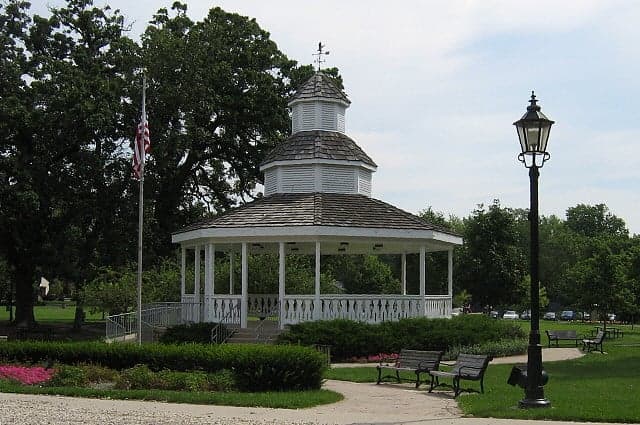
Photo: Wikipedia
Political ClimatePolitical Climate in Bartlett, IL
District shown is the primary district for this city’s centroid. Cities may span multiple districts.
Local Political AnalysisPolitical Analysis of Bartlett, IL
Bartlett, Illinois, sits in a political tug-of-war that’s gotten a lot more one-sided over the past decade. The area’s Cook Partisan Voting Index (PVI) of D+17 tells you the official story—this is solidly Democratic territory on paper—but if you’ve lived here as long as I have, you know that number doesn’t capture the whole picture. The village itself, especially the older neighborhoods and the folks who’ve been here since the 80s and 90s, used to lean a lot more purple, with a healthy conservative streak that kept things balanced. Now, with the steady creep of progressive policies from Cook County and the state legislature, that balance has tipped hard, and a lot of us feel like our voices are getting drowned out by the Chicago machine.
How it compares
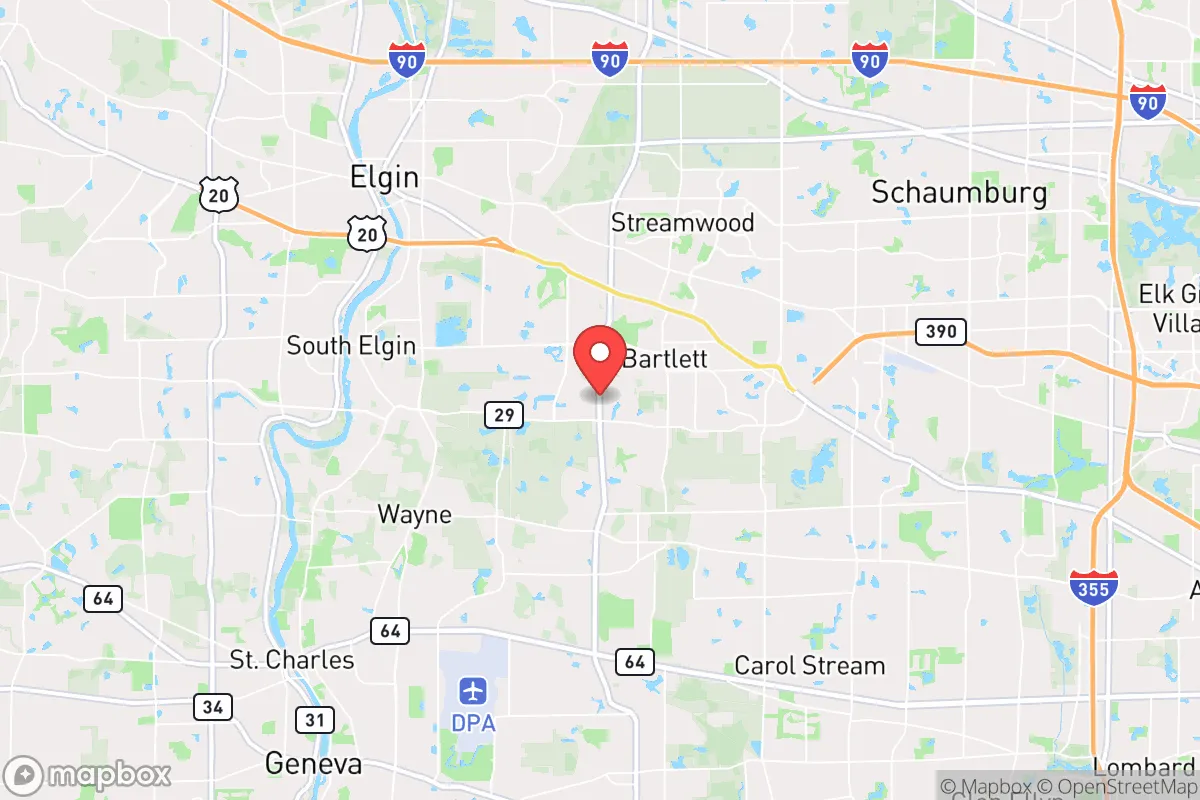
Drive ten minutes east to Hanover Park or Schaumburg, and you’re in deep-blue territory where the politics feel almost indistinguishable from downtown Chicago—higher taxes, more regulations, and a general acceptance of government expansion into daily life. Head west to Elgin or South Elgin, and you start to see a shift: those areas still vote blue on paper, but there’s a stronger independent streak, with more folks openly grumbling about property taxes and school mandates. The real contrast is if you go further southwest to places like St. Charles or Geneva in Kane County—those towns still have a noticeable conservative presence, with lower tax burdens and a more hands-off local government. Bartlett, stuck right in the middle, gets the worst of both worlds: Cook County’s tax appetite and a local board that’s increasingly aligned with Springfield’s progressive agenda. It wasn’t always this way—I remember when our village board meetings had real debate, not just rubber-stamping whatever came down from the county.
What this means for residents
For the average family here, the political climate translates directly into your wallet and your freedoms. Property taxes in Bartlett are among the highest in the region, thanks to Cook County’s insatiable spending, and you see very little pushback from local leaders to rein it in. School board decisions have gotten more ideological too—curriculum changes, diversity initiatives that sound good on paper but often come with mandates that leave parents feeling sidelined. The biggest red flag for me is the erosion of local control: state laws on everything from energy codes to zoning are preempting what used to be common-sense community decisions. If you value keeping your own business, your own property, and your own family’s choices out of the government’s crosshairs, Bartlett’s trajectory is concerning. The long-time residents who remember when this was a quiet, self-reliant town are either retiring out or moving to McHenry or Boone counties, where the tax bite is smaller and the government stays more out of your hair.
Culturally, Bartlett still has a strong sense of community—the Fourth of July parade, the farmers market, the local sports leagues—but the policy undercurrent is shifting fast. The village has embraced a lot of the progressive social agenda that you see in the inner suburbs: bike lanes that nobody asked for, density overhauls that change neighborhood character, and a general attitude that government knows best. For someone like me, who moved here to get away from the city’s overreach, it feels like the city followed us home. If the trend continues, I’d expect more conservative families to vote with their feet, and Bartlett will become just another bedroom community for Chicago’s political machine. It’s not there yet, but the writing’s on the wall.

State Political ClimatePolitical Climate in Illinois
State Political AnalysisPolitical Environment in the State
Illinois has been a reliably blue state for decades, but its political climate is far more complex than a simple partisan label suggests. The Democratic stronghold is driven almost entirely by the Chicago metro area, while the rest of the state—particularly downstate and the collar counties—has shifted rightward or remained deeply conservative. Over the last 20 years, the state has moved from a purple-leaning-blue battleground to a solidly Democratic state at the statewide level, but that masks a growing urban-rural chasm that has left many residents feeling politically isolated and overregulated.
Urban vs. rural divide
The political map of Illinois is a tale of two worlds. Chicago and its immediate suburbs account for roughly 65% of the state's population, and they vote overwhelmingly Democratic—often by margins of 70-80% in presidential elections. Cook County alone delivered over 1.3 million votes for Joe Biden in 2020, while the rest of the state went for Trump by a similar margin. The collar counties—DuPage, Lake, Kane, McHenry, and Will—have been trending blue, especially in suburban areas like Naperville and Arlington Heights, as educated professionals and transplants from Chicago move outward. Meanwhile, downstate regions like the Metro East (across from St. Louis), the Quad Cities, and the southern tip around Carbondale remain reliably Republican, with counties like Effingham, Jasper, and Wayne routinely voting 70%+ for GOP candidates. The divide is stark: drive 45 minutes west of Chicago and you hit rural areas where Trump flags fly from pickup trucks, while the city itself is a bastion of progressive politics. This geographic split means that state policy is almost entirely dictated by Chicago and its suburbs, leaving rural residents feeling like they have no real voice in Springfield.
Policy environment
Illinois’s policy environment is a textbook case of progressive governance that many conservatives find alarming. The state has the second-highest property tax burden in the nation, with an average effective rate of 2.07%—more than double the national average. The state income tax is a flat 4.95%, but there’s a constitutional amendment on the table to move to a progressive tax, which critics argue would allow lawmakers to raise rates on higher earners without a vote. Illinois is one of only a handful of states that does not have a right-to-work law, and union influence is pervasive, particularly in public-sector contracts. On education, the state has a universal school choice program for low-income students, but it’s limited compared to states like Florida or Arizona. The state’s gun laws are among the strictest in the nation: a 2023 law banned the sale of many semi-automatic firearms and high-capacity magazines, and the state requires a Firearm Owner’s Identification (FOID) card, which can take months to process. Election laws are also a flashpoint: Illinois has no voter ID requirement, allows same-day registration, and has automatic voter registration through the DMV—policies that conservatives argue invite fraud, though no widespread evidence has emerged. The state also has a sanctuary state law (the TRUST Act) that limits local law enforcement cooperation with federal immigration authorities, a policy that has drawn sharp criticism from conservative and rural communities.
Trajectory & freedom
Over the past decade, Illinois has become less free by nearly every measure conservatives care about. The 2023 gun ban (HB 5471) was a watershed moment, passing with no Republican votes and signed by Governor JB Pritzker. It effectively bans the sale of AR-15s and similar rifles, along with magazines over 10 rounds, and requires existing owners to register them with the state police—a process that has been plagued by technical glitches and legal challenges. On parental rights, the state passed a law in 2021 requiring schools to adopt policies that affirm LGBTQ+ students, which critics say undermines parental notification. The state also expanded abortion access in 2023, removing the requirement for parental notification for minors and allowing out-of-state patients to get care without restrictions. Property rights have been eroded by the state’s aggressive use of eminent domain for private development, particularly in Chicago. Meanwhile, the state’s pension crisis—unfunded liabilities exceed $140 billion—means that taxes are almost certain to rise further, eating into personal freedom through higher costs of living. The only bright spot for conservatives is that the state has not enacted a statewide rent control law, and property taxes, while high, are at least locally controlled.
Civil unrest & political movements
Illinois has seen its share of civil unrest, particularly in Chicago. The 2020 George Floyd protests in the city were among the largest in the nation, with widespread looting and property damage that led to a curfew and National Guard deployment. Since then, organized activist groups like the Chicago Teachers Union and the Illinois Network for Charter Schools have clashed over education policy, while the state’s sanctuary status has made it a flashpoint in the national immigration debate. In 2023, the city of Chicago saw a surge in migrant arrivals from Texas, straining shelters and leading to tensions between progressive leaders and working-class neighborhoods. On the right, the Illinois Republican Party has been fractured, with a libertarian-leaning wing pushing for lower taxes and gun rights, and a more populist faction focused on immigration and crime. There have been calls for secession from downstate counties—most notably in 2020, when several counties passed symbolic resolutions to explore leaving Illinois to form a new state, though nothing came of it. Election integrity remains a hot-button issue: in 2022, a Republican candidate for governor, Darren Bailey, campaigned heavily on claims of voter fraud in Chicago, but no major irregularities were proven. The state’s mail-in voting expansion during COVID has become a permanent feature, which conservatives view with suspicion.
Projection
Looking ahead 5-10 years, Illinois is likely to become more progressive and more expensive. Demographic trends are working against conservatives: the state’s population has declined for nine consecutive years, with most losses coming from downstate and rural areas, while Chicago’s population has stabilized. The collar counties are trending blue as younger, more diverse residents move in. The state’s pension crisis will force either massive tax hikes or severe service cuts—neither of which bodes well for personal freedom. A progressive income tax is likely to pass eventually, further squeezing high earners. On gun rights, the current ban will likely survive legal challenges, and further restrictions—like mandatory liability insurance for gun owners—are being discussed. The sanctuary state law is unlikely to be repealed, meaning Illinois will remain a magnet for immigration enforcement debates. For a conservative moving in now, the expectation should be that the state will continue to feel like an island of blue in a red Midwest, with higher taxes, stricter regulations, and a political culture that prioritizes collective action over individual liberty.
For a new resident, the bottom line is this: Illinois offers world-class infrastructure, cultural amenities, and a strong job market in Chicago and its suburbs, but it comes at the cost of high taxes, heavy regulation, and a political environment that is increasingly hostile to conservative values. If you value low taxes, gun rights, and local control, you will likely find yourself fighting an uphill battle in Springfield. If you can afford the cost and tolerate the politics, the state’s economic opportunities and natural beauty—from the Shawnee National Forest to the Lake Michigan shoreline—are undeniable. But don’t expect things to get better on the freedom front; the trajectory is clear, and it’s not heading in a conservative direction.
* Values derived from national, state, county, city and local statistics and may differ in a specific area. Last updated: 2026-04-30T00:16:39.000Z
Narrative content on this page is AI-generated and may contain mistakes. Verify any details that matter before acting on them.
ReloMaps may earn a commission from affiliate links at no extra cost to you.

