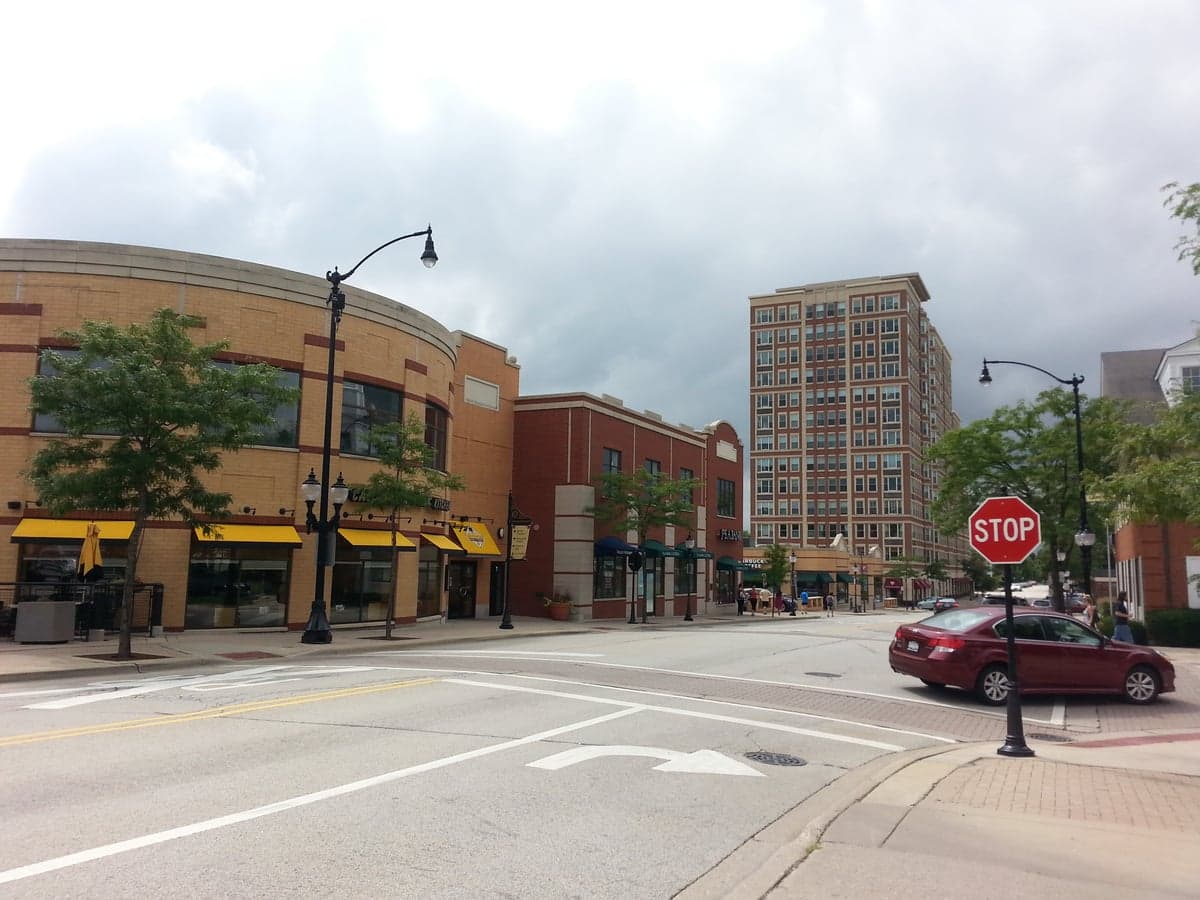
Photo: Wikipedia
Find The Best Places To Live
in Arlington Heights
PRO TIP! You can paste a Zillow or Redfin link to get info on that property.
What It's Like Living in Arlington Heights, IL
Arlington Heights has a way of feeling both settled and lively at the same time. It’s a classic Chicago suburb where the downtown train station still anchors the rhythm of the day, but the streets around it are filled with breweries, patios, and families walking dogs after dinner. With a population just over 76,000 and a median age of 42.7, it’s a place where people tend to stay put once they arrive—and for good reason.
Daily Rhythm: The Commute, the Schools, and the Weekend Pace
Most mornings here start with the Metra train. The average commute clocks in at about 28 minutes, which is manageable by Chicago standards, and the Arlington Park station drops you right into the city’s Northwest Side or downtown loop. But the real pulse of daily life is local. People shop at the Arlington Heights Farmers Market on Saturdays, grab coffee at Molly’s Cupcakes or Kafein, and run errands along Arlington Heights Road. The schools are a major gravitational force—District 214 and 25 are consistently strong, and the community calendar revolves around school events, sports, and parent networks. If you have kids or plan to, the schools are a genuine selling point, not just a checkbox.
Weekends often mean a trip to Busse Woods for a bike ride or a walk around the lake, or catching a show at the Metropolis Performing Arts Centre downtown. The downtown area itself is compact but walkable, with a mix of independent shops and national chains. It’s not a nightlife hub, but there are enough solid restaurants—like Mitsuwa Marketplace for Japanese groceries and ramen, or Pita Inn for quick Mediterranean—to keep you from feeling bored.
Sports & Community: High School Loyalty and Pro Proximity
Sports here are a big deal, but not in the way you might expect. There’s no major pro team in town, but the Chicago Bears used to train at Arlington Park, and the racetrack itself (now redeveloped) was a local landmark for decades. What really fires people up is high school sports. Arlington Heights Hersey and Prospect High School games draw real crowds, especially for football and basketball. If you move here, you’ll quickly learn which school your neighborhood feeds into—and you’ll hear about it at the grocery store. For pro sports, Chicago’s teams are a 30- to 40-minute drive or train ride away, so it’s easy to catch a Cubs game or a Bulls game without living in the city noise.
The community also rallies around the Arlington Heights Memorial Library, which is one of the busiest in the state, and the Frontier Days Festival every July—a week-long block party with carnival rides, live music, and a parade that feels like the whole town shows up. It’s the kind of event where you run into neighbors you haven’t seen since last summer.
What’s There to Do: Parks, Breweries, and the Occasional Surprise
Outdoor life is solid. Besides Busse Woods, there’s Lake Arlington for sailing and fishing, and the Arlington Lakes Golf Club for a round. The Arlington Park redevelopment is ongoing, but the area still has a few hidden gems like the Arlington Heights Historical Museum and the Chevy Chase Country Club (yes, that name). For nightlife, you’ll find Moretti’s for pizza and a beer, Hoppin’ Frog’s for a dive-bar feel, and Randall’s for a more upscale cocktail. The music scene is small but active—the Metropolis hosts local bands and comedy, and summer brings outdoor concerts to North School Park.
One cultural quirk: Arlington Heights has a noticeable Japanese influence thanks to the nearby Mitsuwa and a sizable Japanese expat community tied to corporate transfers. You’ll see Japanese bakeries and grocery stores that feel authentically Tokyo, not touristy. It adds a layer of diversity that many suburbs this size lack.
Pros and Cons of Living Here
- Pro: Low violent crime rate—37.3 per 100,000 residents, well below national averages. You can walk downtown at night without worry.
- Pro: Strong schools and a high percentage of college-educated residents (60.2%). The median household income of $118,532 reflects a stable, professional population.
- Pro: Excellent commuter access via Metra, plus proximity to O’Hare (about 15 minutes without traffic).
- Con: Cost of living index of 146—meaning it’s 46% above the national average. Median home value is $403,200, which is steep for a first-time buyer.
- Con: Winters are real. Snow removal is efficient, but the gray months from November to March can feel long. You’ll need a good coat and a shovel.
- Con: Traffic on Arlington Heights Road and Rand Road during rush hour can be frustrating, especially near the train station.
Overall, Arlington Heights works best for people who want a quiet, safe, well-run suburb with enough going on to avoid boredom. It’s not flashy, but it’s consistent—and for many, that’s exactly the point.

Similar small cities to Arlington Heights
* Values derived from national, state, county, city and local statistics and may differ in a specific area. Last updated: 2026-04-24T16:44:11.000Z
Narrative content on this page is AI-generated and may contain mistakes. Verify any details that matter before acting on them.
ReloMaps may earn a commission from affiliate links at no extra cost to you.

