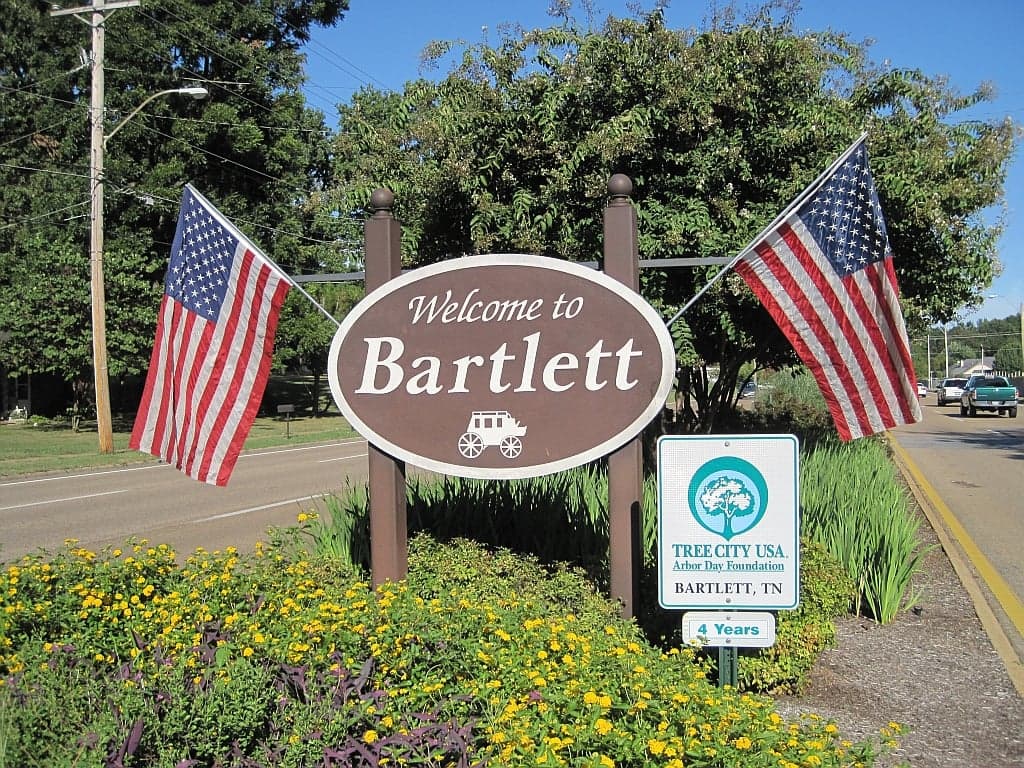
Photo: Wikipedia
Personal Sovereignty in Bartlett, TN
Viable for self-reliance. Generally workable, though some barriers may limit total independence.
What does Personal Sovereignty tell us?
Personal Sovereignty measures your capacity for self-reliance and independence with minimal government friction. Higher scores mean fewer barriers between you and the way you want to live... but it assumes you have the space you need and good neighbors.
What does this tell us?
Personal Sovereignty measures your capacity for self-reliance and independence with minimal government friction. Higher scores mean fewer barriers between you and the way you want to live... but it assumes you have the space you need and good neighbors.
State Policy
Energy independence: Importer (25% of energy produced in-state)
Personal Liberty
Homesteading

Personal Liberty Analysis
Bartlett, Tennessee offers a notably strong environment for personal sovereignty, particularly when measured against the encroaching regulatory and tax burdens found in many other parts of the country. As a suburb of Memphis within Shelby County, it benefits from Tennessee’s overall pro-liberty state framework—no state income tax, a robust preemption law for firearms, and a legal culture that generally respects property rights and parental authority. For the survivalist or prepper mindset, Bartlett represents a strategic compromise: proximity to urban resources and medical infrastructure, while still operating under a state government that has, to date, resisted many of the more aggressive federal overreach patterns seen in coastal states. The key question for anyone prioritizing autonomy is whether the local municipal and county governance in Bartlett adds friction or preserves the freedoms the state provides.
Tax burden and regulatory posture: How Tennessee’s fiscal policies support self-reliance
Tennessee’s tax structure is a major asset for anyone seeking to maximize personal financial sovereignty. The state has no state income tax on wages, which means every dollar earned stays in your pocket—no state-level confiscation of your labor. Property taxes in Bartlett are moderate, with Shelby County’s effective rate hovering around 1.2% of assessed value, which is reasonable compared to high-tax states like Illinois or New York. Sales tax is higher, at 9.75% combined state and local, but this is a consumption tax you can partially control through purchasing habits. Crucially, Tennessee has no estate or inheritance tax, allowing you to pass assets to the next generation without the state taking a cut. From a regulatory standpoint, Tennessee is a right-to-work state with minimal business licensing hurdles, and Shelby County’s zoning in Bartlett is generally permissive for home-based enterprises. The state also has a strong preemption law that prevents local governments from enacting their own stricter business or environmental regulations, meaning Bartlett cannot unilaterally impose burdens like plastic bag bans or energy efficiency mandates that would increase your cost of living. For the prepper, this translates to more disposable income for supplies, land improvements, and self-sufficiency investments.
Self-defense and gun law specifics: Tennessee’s permitless carry and castle doctrine in practice
Tennessee is one of the strongest Second Amendment states in the nation, and Bartlett residents enjoy the full benefit of that legal environment. Since 2021, Tennessee has had permitless carry (constitutional carry) for any law-abiding citizen aged 21 or older, allowing you to carry a handgun openly or concealed without a government-issued permit. For those who want reciprocity when traveling, a Tennessee enhanced handgun permit is still available and recognized by over 30 states. The state’s castle doctrine is unambiguous: there is no duty to retreat in your home, vehicle, or place of business, and you are legally presumed to have acted reasonably if you use deadly force against an unlawful intruder. Tennessee also has a strong “stand your ground” law that extends this protection to any place you have a legal right to be. Bartlett itself is a relatively low-crime suburb compared to Memphis proper, but proximity to higher-crime areas means that self-defense preparedness is not paranoid—it’s prudent. Local law enforcement in Bartlett is professional and generally supportive of gun rights, and there are no additional local firearm restrictions beyond state law. For the prepper, this means you can maintain a well-stocked armory without fear of local overreach, and you can train on your own property or at nearby ranges without bureaucratic interference.
Self-reliance and homesteading viability: Lot sizes, zoning, and off-grid feasibility in Bartlett
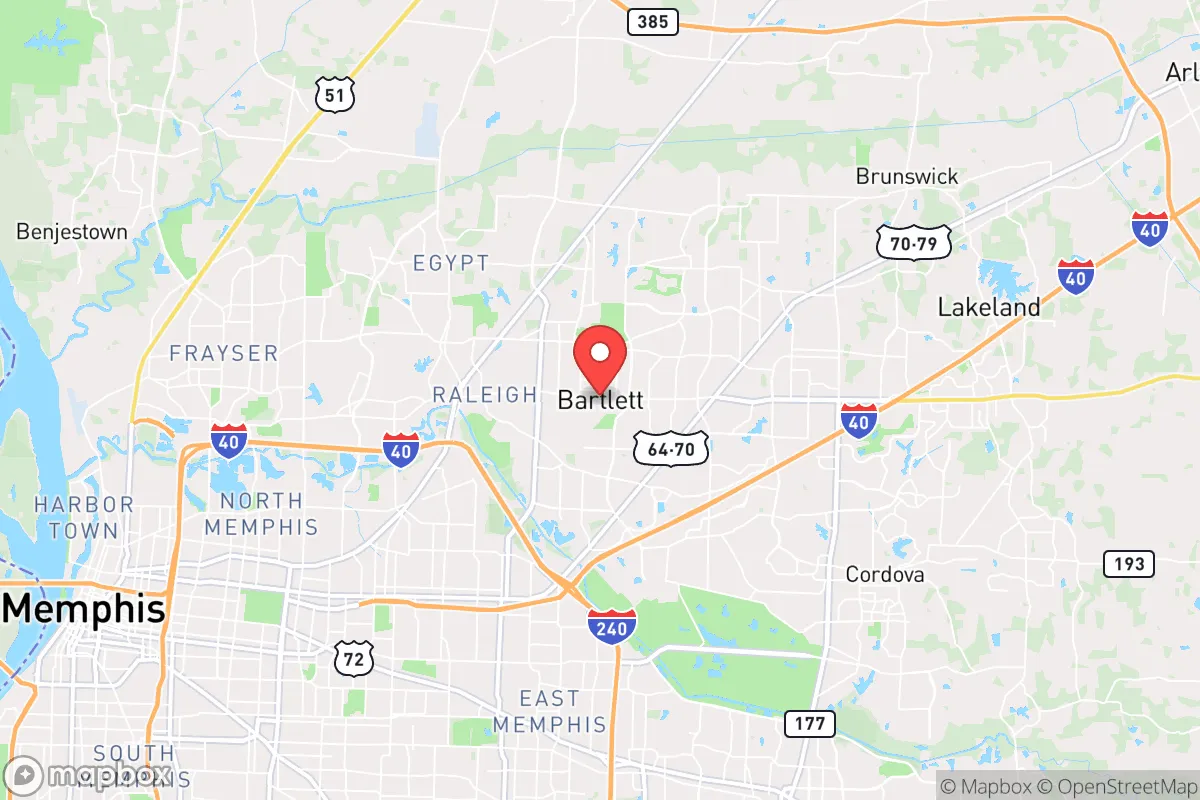
Bartlett is primarily a suburban community, which imposes some limits on full-scale homesteading but still offers viable options for self-reliance. Typical residential lot sizes range from 0.25 to 0.5 acres in established neighborhoods, though some newer developments and rural pockets on the outskirts offer 1-2 acre parcels. Zoning is generally single-family residential, with allowances for gardens, small livestock (chickens are permitted in many areas with restrictions), and rainwater collection. However, Bartlett’s municipal code does require connection to public water and sewer in most subdivisions, which limits true off-grid water independence. For those serious about off-grid living, the more rural areas of Fayette County to the east or Tipton County to the north offer larger parcels (5-20 acres) with fewer restrictions, while still being within a 30-minute drive of Bartlett’s amenities. Tennessee has no state-level ban on rainwater harvesting, and solar panels are permitted without excessive red tape. The state’s relatively mild climate allows for extended growing seasons, and there are active local gardening and prepper communities in the greater Memphis area. For the survivalist, Bartlett works best as a base of operations—a place to live with good schools and infrastructure while maintaining a secondary rural property for more intensive self-sufficiency projects.
Personal liberties: Parental rights, medical autonomy, speech, and property protections
Tennessee has been at the forefront of protecting parental rights in education and medical decisions. The state’s “Parental Bill of Rights” law (Tennessee Code Annotated § 49-6-7001) explicitly affirms that parents have the fundamental right to direct their child’s upbringing, education, and healthcare. This means no school can hide medical or mental health information from parents, and parental consent is required for any medical treatment. Tennessee also passed legislation in 2023 banning gender transition procedures for minors, which aligns with a conservative view of medical autonomy—the state is actively protecting children from irreversible medical decisions. On the medical freedom front, Tennessee has a broad religious exemption for vaccine mandates and does not require COVID-19 vaccines for school attendance or employment in most private settings. Speech protections are strong under the Tennessee Constitution, which explicitly protects “the right to speak, write, or print freely on any subject.” Property rights are also well-guarded: Tennessee has a strong eminent domain law that requires just compensation and limits takings for private economic development. Bartlett’s local government is generally responsive to citizen concerns, with city council meetings open to public comment. For the prepper concerned about government overreach, Tennessee’s legal framework provides a solid bulwark against many of the more invasive policies seen in blue states.
In the broader landscape of American personal sovereignty, Bartlett, Tennessee offers a compelling balance. It lacks the extreme libertarian environment of rural Alaska or New Hampshire’s “Live Free or Die” ethos, but it also avoids the crushing regulatory and tax burdens of California, New York, or Illinois. The state’s no income tax, strong gun rights, parental rights protections, and right-to-work status create a foundation that allows individuals and families to live with a high degree of autonomy. The primary trade-offs are the suburban nature of Bartlett itself—which limits off-grid potential and requires some compliance with municipal codes—and the proximity to Memphis, which has higher crime and more progressive local politics. For the strategic relocation-minded conservative, Bartlett works best as a hub: a safe, well-regulated suburb with excellent schools and infrastructure, from which you can exercise your freedoms in the broader Tennessee context. If your priority is maximum sovereignty with minimal government interference, you would look to rural Tennessee counties. But if you need the economic opportunities and social stability of a suburban environment while still living under a state government that respects your rights, Bartlett is a strong contender.

* Values derived from national, state, county, city and local statistics and may differ in a specific area. Last updated: 2026-09-21T19:02:21.000Z
Narrative content on this page is AI-generated and may contain mistakes. Verify any details that matter before acting on them.
ReloMaps may earn a commission from affiliate links at no extra cost to you.

