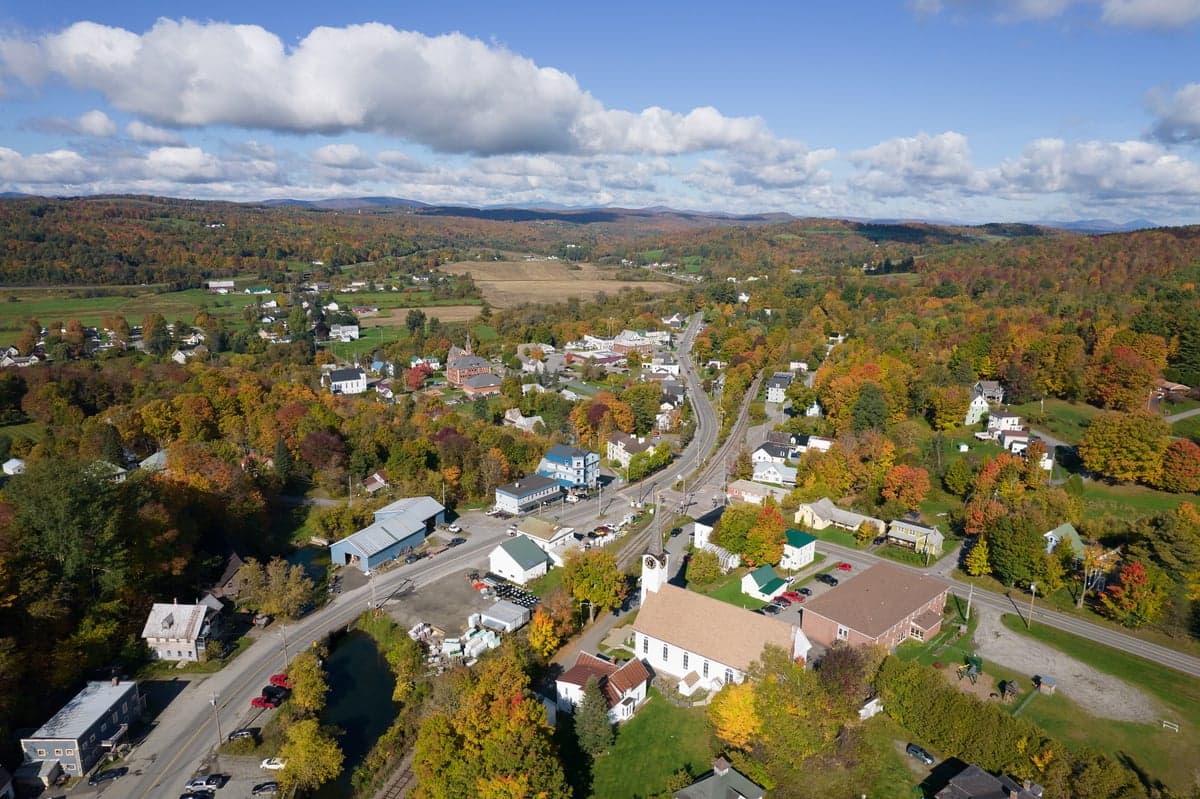
Photo: Wikipedia
Personal Sovereignty in Barton, VT
Moderate friction. Expect trade-offs in some aspect of personal liberty and independence.
What does Personal Sovereignty tell us?
Personal Sovereignty measures your capacity for self-reliance and independence with minimal government friction. Higher scores mean fewer barriers between you and the way you want to live... but it assumes you have the space you need and good neighbors.
What does this tell us?
Personal Sovereignty measures your capacity for self-reliance and independence with minimal government friction. Higher scores mean fewer barriers between you and the way you want to live... but it assumes you have the space you need and good neighbors.
State Policy
Energy independence: Importer (15% of energy produced in-state)
Personal Liberty
Homesteading

Personal Liberty Analysis
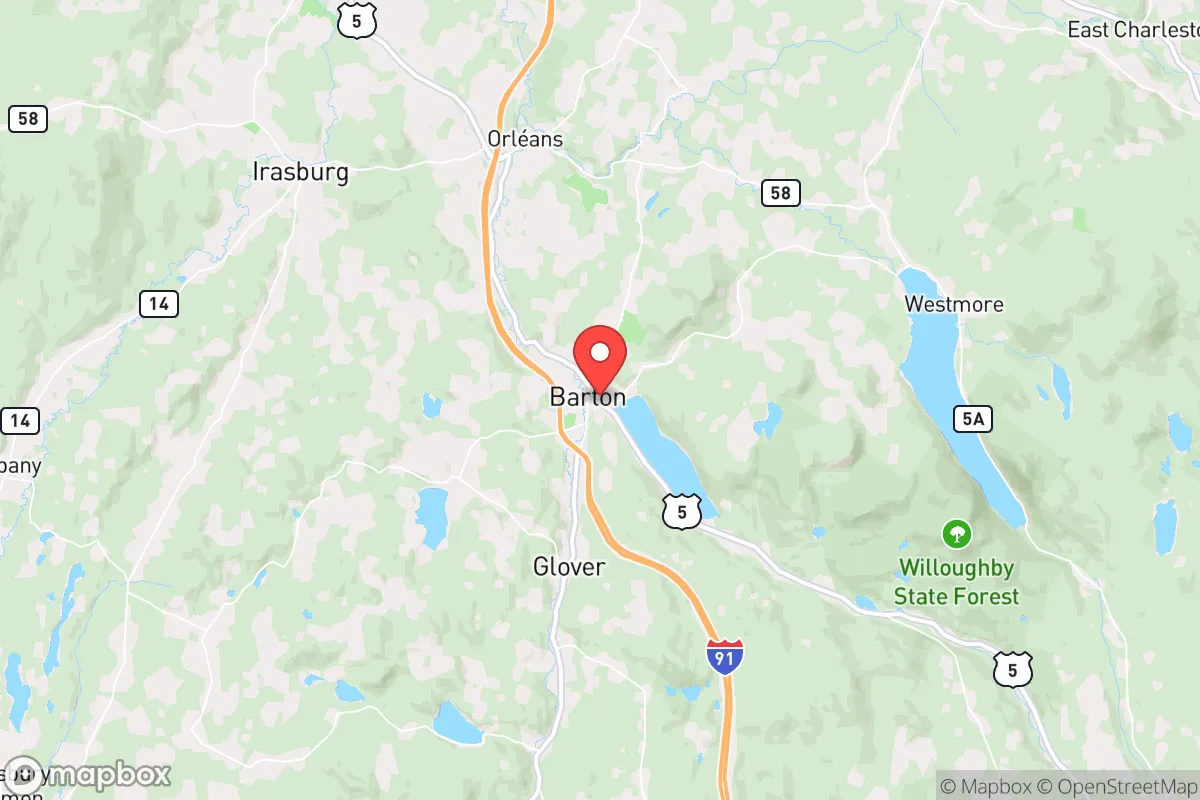
Barton, Vermont, offers a distinctive environment for personal sovereignty that balances rural independence with the constraints of a state government increasingly inclined toward progressive regulation. For the survivalist or prepper seeking a retreat from federal overreach, Barton’s low population density—roughly 1,000 residents in the village proper—and its location in Orleans County, where conservative values still hold sway in local governance, provide a foundation for self-directed living. However, Vermont’s statewide policies on taxation, healthcare mandates, and land use create friction points that require careful navigation. This analysis breaks down the key sovereignty factors for single individuals and parents considering relocation to this Northeast Kingdom town.
Tax burden and regulatory posture in Vermont’s Northeast Kingdom
Vermont’s tax climate is among the most aggressive in the nation, and Barton sits squarely within that framework. The state’s income tax ranges from 3.35% to 8.75%, with the top bracket kicking in at just $213,150 for single filers—a low threshold that captures many middle-class earners. Property taxes in Orleans County average around $2.50 per $100 of assessed value, one of the highest rates in the country, driven by school funding formulas that redistribute wealth from rural areas to wealthier districts. For a prepper focused on financial independence, this means a modest homestead can carry a $3,000–$5,000 annual tax bill before any improvements. Sales tax is 6%, but groceries and prescription drugs are exempt, which helps. The regulatory posture is equally burdensome: Vermont’s Act 250 land-use law requires state permits for any development that impacts 10+ acres or involves subdivision, effectively giving bureaucrats veto power over building a cabin or expanding a garden. Local zoning in Barton is less restrictive than in Chittenden County, but the state’s environmental regulations—including strict wetland buffers and stormwater rules—can delay or kill off-grid projects. For a conservative audience, this represents a clear case of government overreach into property rights, where the state prioritizes collective environmental goals over individual autonomy.
Self-defense and gun law specifics in a restrictive state
Vermont’s gun laws have shifted dramatically leftward since 2018, eroding what was once a haven for firearm owners. The state now requires universal background checks for all firearm sales, including private transfers, and bans magazines over 10 rounds for long guns and 15 rounds for handguns. Carrying a firearm in public requires a permit—Vermont is no longer a constitutional carry state—and the permitting process involves a background check, fingerprinting, and a $50 fee, with local sheriffs having discretion to deny. For the survivalist, this is a direct infringement on the Second Amendment. However, enforcement in Orleans County is lax compared to Burlington; local sheriffs are generally pro-Second Amendment and may issue permits with minimal hassle. Stand-your-ground laws do not exist in Vermont; the state imposes a duty to retreat if safely possible, which complicates self-defense scenarios on your own property. Castle doctrine applies only to your dwelling, not your yard or outbuildings. For parents, this means teaching children about firearm safety is legal, but storing guns in a locked safe is effectively mandated by liability concerns. The practical takeaway: Barton offers a lower-risk environment for gun ownership than southern Vermont, but the state’s legal framework is hostile to the prepper mindset. Stockpiling ammunition over the legal magazine capacity is a felony, so compliance is mandatory unless you’re willing to risk federal prosecution.
Self-reliance and homesteading viability: lot sizes, zoning, and off-grid feasibility
Barton’s rural character makes it one of the more viable spots in Vermont for self-reliance, but state regulations impose significant hurdles. Minimum lot sizes in the village are 0.5 acres, but outside the village, 2-acre lots are typical, and larger parcels of 10–50 acres are common for under $100,000. Zoning in Orleans County is minimal—no county-wide building codes—but the town of Barton enforces a floodplain overlay that restricts construction near the Barton River. Off-grid living is technically legal, but Vermont’s building code requires a permit for any structure over 200 square feet, and the state mandates connection to a wastewater system if one is available within 200 feet. Solar panels are permitted without special approval, but net metering is capped at 500 kW, and the state’s renewable energy goals mean you can’t disconnect from the grid entirely without a fight—the Public Utility Commission has ruled that off-grid homes must still pay a minimum monthly fee to cover grid maintenance. Rainwater collection is legal but limited to 50 gallons per day per household, and composting toilets require a state-approved system. For the prepper, this means you can raise chickens, keep bees, and grow a large garden without interference, but building a bunker or a fully independent homestead will require navigating Act 250 and local health department approvals. The soil in Barton is rocky and acidic, typical of the Northeast Kingdom, so raised beds or greenhouse growing is more practical than traditional row crops. Hunting and fishing are excellent—deer, turkey, and trout are abundant—and Vermont’s game laws are reasonable, with a $26 resident hunting license and a $20 fishing license.
Personal liberties: parental rights, medical autonomy, speech, and property
Vermont’s progressive tilt directly impacts personal liberties in ways that concern conservative parents and preppers. Parental rights are under active assault: the state’s 2023 law prohibits schools from notifying parents if a child changes their gender identity or pronouns, overriding parental authority in medical and social decisions. For a parent moving to Barton, this means you must be vigilant about what your child is taught in the local school—Orleans County’s schools are more conservative than the state average, but they must comply with state mandates on LGBTQ+ curriculum and critical race theory. Medical autonomy is similarly constrained: Vermont has a vaccine mandate for school attendance, with only narrow religious exemptions, and the state’s single-payer healthcare system (Green Mountain Care) imposes a 0.5% payroll tax on all workers. For the prepper, this means stocking your own medical supplies is legal, but the state can compel treatment in emergencies. Free speech is protected under the First Amendment, but Vermont’s hate speech laws are broad, and local ordinances in Barton prohibit “disorderly conduct” that could be used to silence political dissent. Property rights are the most concerning: Vermont’s “right to roam” law allows public access to private land for hunting and fishing unless it’s posted, and posting requires signs every 500 feet—a logistical nightmare for a large parcel. Eminent domain is aggressively used for conservation easements, and the state’s “Act 250” gives regulators power to deny development based on aesthetic or community impact. For a conservative audience, this is a clear pattern of government overreach into every aspect of life, from how you raise your children to how you use your land.
Overall, Barton offers a mixed sovereignty profile. It’s a better bet than most of Vermont for those seeking autonomy—lower taxes than Chittenden County, laxer enforcement of gun laws, and more affordable land for homesteading. But compared to states like New Hampshire or Texas, it falls short. The state’s tax burden, regulatory maze, and erosion of parental rights make it a place where you must be constantly vigilant against government intrusion. For the survivalist willing to fight for every inch of freedom, Barton provides a beautiful, low-crime base with strong community ties. For those seeking a true haven from overreach, look elsewhere in the Northeast Kingdom or across the border to New Hampshire, where no income tax and constitutional carry still hold.

* Values derived from national, state, county, city and local statistics and may differ in a specific area. Last updated: 2026-04-30T13:57:35.000Z
Narrative content on this page is AI-generated and may contain mistakes. Verify any details that matter before acting on them.
ReloMaps may earn a commission from affiliate links at no extra cost to you.

