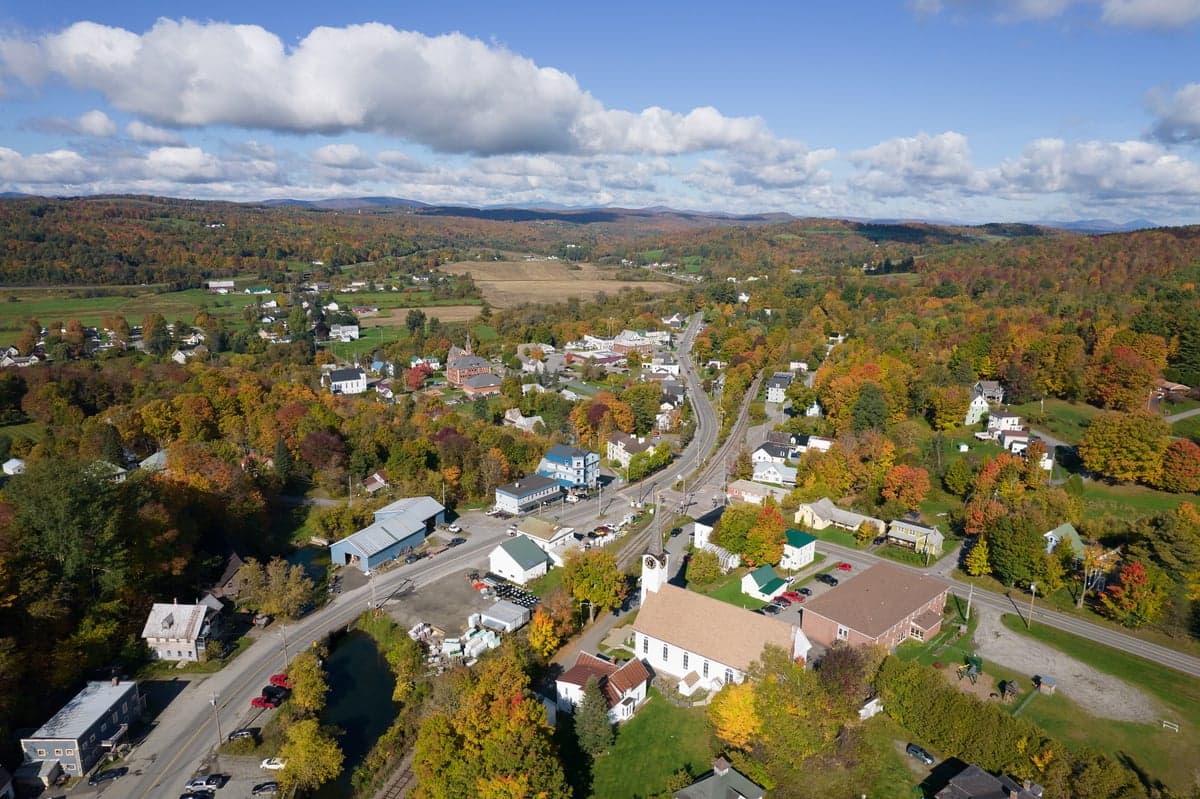
Photo: Wikipedia
Political ClimatePolitical Climate in Barton, VT
District shown is the primary district for this city’s centroid. Cities may span multiple districts.
Inherited from parent state — no local data available.
Local Political AnalysisPolitical Analysis of Barton, VT
Barton, Vermont, sits in the heart of Orleans County, and if you’ve been around here long enough, you’ve watched the political ground shift under your feet. The area now carries a Cook PVI of D+17, meaning it votes about 17 points more Democratic than the national average, which is a far cry from the independent, live-and-let-live spirit that used to define this corner of the Northeast Kingdom. Back in the 90s, you could have a reasonable conversation with your neighbor about taxes or logging without it turning into a debate on social engineering. Today, the local government and state-level policies are increasingly leaning into progressive ideology, and for those of us who value personal freedoms and limited government, it’s getting harder to recognize the place we grew up in.
How it compares
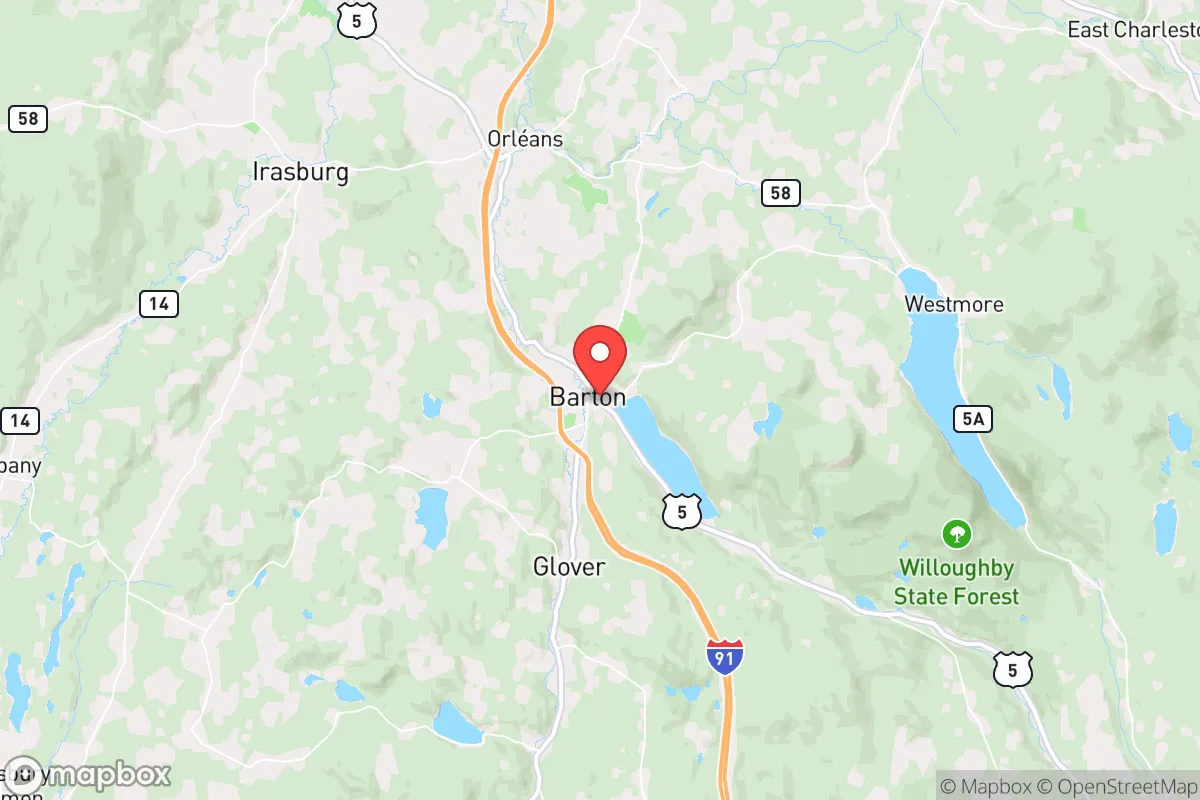
To understand Barton’s shift, you have to look at the towns around it. Drive 15 minutes south to Glover or 20 minutes west to Irasburg, and you’ll find communities that still vote more conservatively, often splitting tickets and rejecting the most aggressive state mandates. But Barton itself has become a kind of progressive outpost in the Northeast Kingdom. Compare it to Newport City to the north, which leans more moderate and has a stronger working-class identity, or St. Johnsbury to the south, which is also trending left but with a slower pace. The D+17 rating puts Barton in the same ballpark as Burlington suburbs, which is jarring when you remember this is a town of barely a thousand people. The state legislature’s recent pushes—on gun control, energy mandates, and land use restrictions—have been embraced by Barton’s local leadership, while surrounding towns often push back. It’s a real divide, and it’s not just political; it’s cultural.
What this means for residents
For folks who just want to be left alone to run a small business, hunt on their own land, or heat their home the way they see fit, the political climate here creates friction. Property taxes have climbed steadily to fund education and social programs that many residents didn’t vote for. The state’s push for renewable energy mandates has led to solar arrays and wind projects that some see as government overreach into private property rights. You’ll also notice a growing number of regulations on short-term rentals and building permits, which makes it harder for locals to earn extra income or pass down a family camp. The school system, while decent, is increasingly focused on social-emotional learning and diversity initiatives rather than the basics—a trend that worries parents who want their kids to get a solid, no-nonsense education. If you value personal autonomy and fiscal restraint, you’ll find yourself voting against the grain more often than not.
One of the biggest cultural distinctions here is the tension between the old-timers and the newcomers. A lot of folks moved up from southern New England during the pandemic, bringing urban sensibilities and a willingness to support higher taxes and stricter regulations. They’re nice enough, but they don’t always understand why a guy might want to keep a wood stove burning or park a truck on his lawn. The local economy—dairy farming, logging, and small trades—is being squeezed by state policies that favor environmentalism over industry. Looking ahead, if the trend continues, Barton could become a place where the cost of living and the loss of personal freedoms drive out the very people who built it. It’s not a crisis yet, but the writing’s on the wall for anyone paying attention.

State Political ClimatePolitical Climate in Vermont
State Political AnalysisPolitical Environment in the State
Vermont has long been a solidly blue state, but its political climate is far more complex than the national headlines suggest. The state’s Democratic lean is driven overwhelmingly by Chittenden County (Burlington, South Burlington) and a handful of college towns, while the rest of the state—especially the Northeast Kingdom and southern counties—holds a stubborn, independent-minded conservative streak. Over the last 20 years, the state has shifted from a moderate, fiscally conservative New England model to a progressive stronghold on social and environmental policy, though recent in-migration from out-of-state liberals has accelerated that trend. For a conservative-leaning individual or family, the key question is whether the state’s rural liberty ethos can survive the policy creep from Montpelier.
Urban vs. rural divide
The political map of Vermont is a tale of two landscapes. Chittenden County, home to Burlington and the University of Vermont, votes about 75% Democratic in statewide races and drives the state’s progressive agenda. Burlington itself is a classic college town—think bike lanes, local food co-ops, and a city council that passed a $15 minimum wage before the state did. South of Burlington, Shelburne and Williston are more moderate but still reliably blue. Meanwhile, the Northeast Kingdom (Caledonia, Essex, and Orleans counties) is the state’s most conservative region, where Trump won 60% of the vote in 2020. Towns like Newport and St. Johnsbury feel more like northern New Hampshire than Vermont’s progressive image. The Rutland area and Bennington County are swingier—Rutland City leans left, but the surrounding towns vote red. The divide isn’t just about party; it’s about culture. Rural Vermonters value self-reliance, low taxes, and minimal government interference, while the urban corridor sees government as a tool for social engineering.
Policy environment
Vermont’s policy environment is a mixed bag for conservatives. On the plus side, property taxes are high (the state has no sales tax, but property taxes fund schools and municipal services), and the income tax is progressive, topping out at 8.75%. The regulatory posture is heavy: Act 250, the state’s land-use law, requires permits for almost any development, which has stifled housing construction and driven up costs. Education policy is dominated by the Vermont Agency of Education, which mandates universal pre-K and has pushed for equity-focused curricula. School choice is limited—most kids attend their district public school, though a few towns have independent schools. Healthcare is a sore spot: Vermont’s Green Mountain Care system is a single-payer-lite model that has led to high premiums and long wait times for specialists. Election laws are among the most liberal in the nation—universal mail-in voting, same-day registration, and no voter ID requirement. For a conservative, the policy environment feels like a slow creep toward centralized control, with little room for local opt-outs.
Trajectory & freedom
Vermont is becoming less free by any measure of personal liberty. The most glaring example is gun rights: in 2023, the legislature passed Act 68, which bans the sale of many semi-automatic firearms, limits magazine capacity to 10 rounds, and raises the purchase age to 21. This came after Act 59 (2018) that created a “red flag” law allowing temporary confiscation without a hearing. On parental rights, the state passed Act 1 in 2024, which codifies gender-affirming care as a protected right for minors, overriding parental consent in some cases. Medical autonomy took a hit with Act 76 (2023), which mandates COVID-19 vaccines for school attendance without a religious exemption. Property rights are under pressure from Act 250 expansions that allow neighbors to challenge development on aesthetic grounds. Taxation is trending upward: the state’s Education Fund is projected to require a 5% property tax increase in 2025. For a conservative, the trajectory is clear: Montpelier is using every lever to expand government control over daily life.
Civil unrest & political movements
Vermont has a history of civil unrest that is both left- and right-wing. In 2020, Burlington saw weeks of Black Lives Matter protests that turned into property damage, leading the city council to defund the police by 30%—a move later partially reversed after a spike in violent crime. On the right, the Vermont Republican Party is small but vocal, with groups like the Vermonters for Liberty organizing against vaccine mandates and gun control. The state has a sanctuary state law (Act 48, 2017) that limits local cooperation with federal immigration enforcement, which has caused friction in border towns like Derby Line, where illegal crossings from Canada have increased. Election integrity is a flashpoint: after the 2020 election, the Vermont Secretary of State refused to audit ballots, citing cost, which fueled distrust in rural counties. A new resident would notice the tension between the progressive urbanites and the libertarian-leaning rural population, especially in town meetings where local control is debated.
Projection
Over the next 5-10 years, Vermont will likely become more progressive demographically. In-migration from New York, Massachusetts, and Connecticut—driven by remote work and a desire for rural beauty—is bringing in voters who support the current policy direction. The Burlington metro area is growing, while the Northeast Kingdom is shrinking. This means the legislature will continue to pass laws that expand government reach: expect a state-level wealth tax, stricter environmental regulations on farming, and possibly a ban on natural gas in new construction. For a conservative, the realistic outlook is that Vermont will become a high-cost, high-regulation state where personal freedoms are increasingly constrained. The rural towns will fight back, but they lack the population to stop the trend. If you move here now, expect to pay more in taxes, deal with more bureaucracy, and see your gun rights erode further.
Bottom line for a new resident: Vermont is a beautiful state with strong communities, but it is not friendly to conservative values. If you value low taxes, gun rights, parental control, and minimal government, you will find yourself fighting an uphill battle against Montpelier. The rural areas offer a slower pace and like-minded neighbors, but the state-level policies will continue to squeeze your freedom. Visit the Northeast Kingdom or Rutland County before you decide—but don’t expect the political climate to improve anytime soon.
* Values derived from national, state, county, city and local statistics and may differ in a specific area. Last updated: 2026-04-30T13:57:35.000Z
Narrative content on this page is AI-generated and may contain mistakes. Verify any details that matter before acting on them.
ReloMaps may earn a commission from affiliate links at no extra cost to you.

