 Popular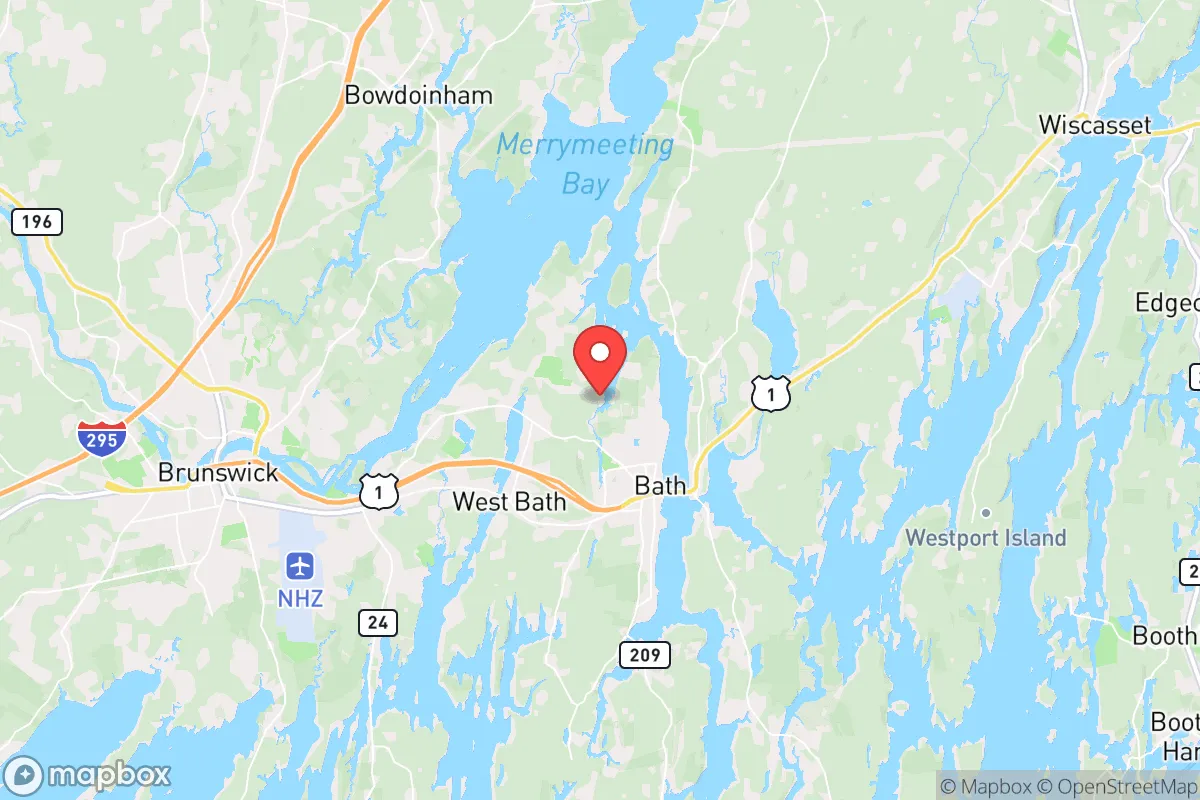
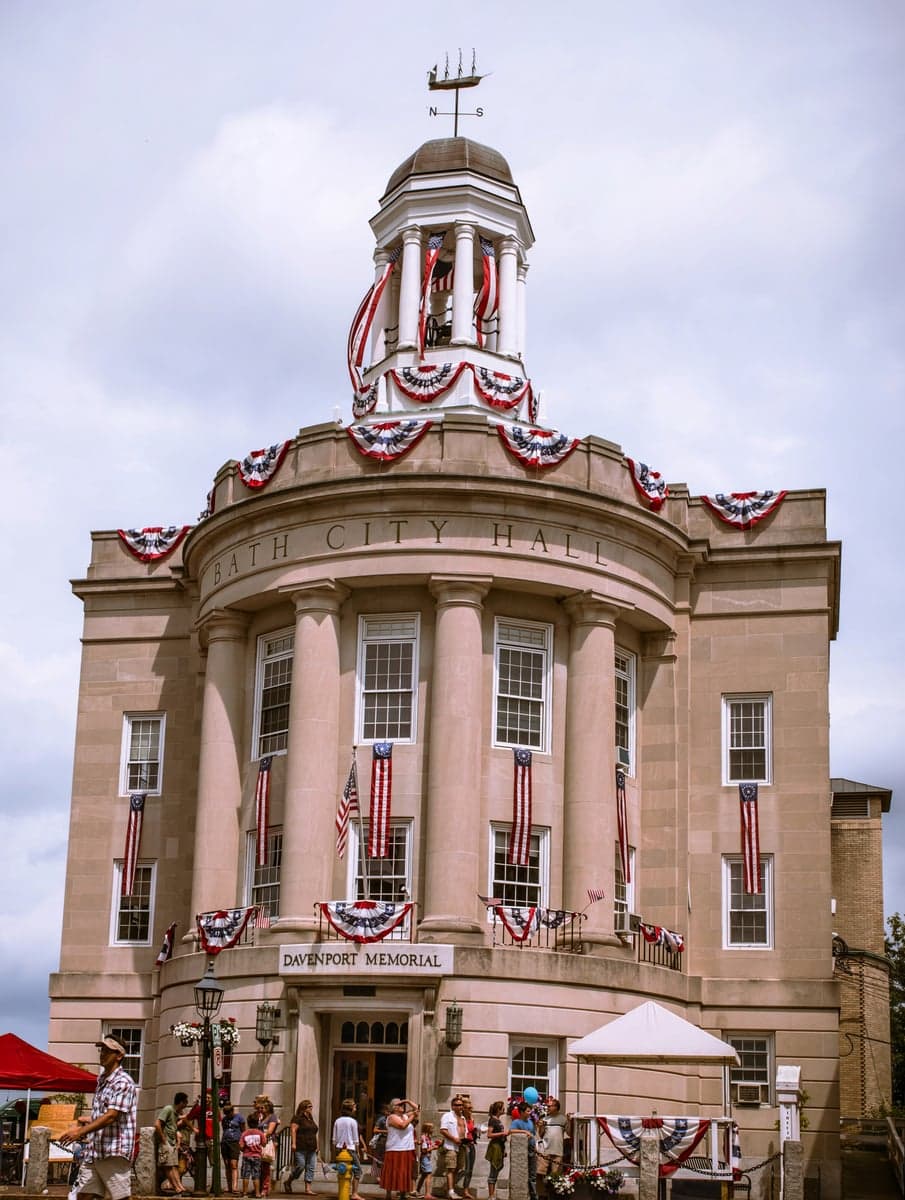
Photo: Wikipedia
Political ClimatePolitical Climate in Bath, ME
District shown is the primary district for this city’s centroid. Cities may span multiple districts.
Local Political AnalysisPolitical Analysis of Bath, ME
Bath, Maine, has a political climate that leans heavily to the left, with a Cook PVI of D+11, meaning it votes about 11 points more Democratic than the national average. This wasn't always the case. I remember when this town was a mix of shipyard workers, fishermen, and small business owners who mostly just wanted to be left alone. Over the last decade or so, the progressive influence has really taken hold, and it's not just about who you vote for anymore—it's about how that vote translates into local policies that can feel like they're creeping into your daily life.
How it compares
To really understand Bath, you have to look at what's around it. Drive 15 minutes north to Woolwich or 20 minutes east to Wiscasset, and you'll find towns that still lean more conservative, where people are skeptical of new regulations and higher taxes. Bath is the progressive hub in this part of Lincoln and Sagadahoc counties. The contrast is stark: while surrounding towns might debate keeping a low tax rate or pushing back on state mandates, Bath's city council has been more willing to embrace state-level progressive agendas, from zoning changes to energy mandates. It's a real island of blue in a sea of purple and red, and that isolation can make the local politics feel more intense.
What this means for residents
For someone who values personal freedoms and limited government, living in Bath means you're constantly watching for overreach. The local government has shown a tendency to get involved in things that used to be left to individuals and neighborhoods. You see it in the push for more restrictive land use ordinances, the emphasis on "equity" initiatives in public spaces, and a general attitude that the city knows better than you do about how to run your property or your business. The school board has also shifted, with curriculum choices that sometimes feel more focused on social ideology than on core academics. It's not a hostile environment, but it's one where you feel like you have to keep your head down if you hold traditional views, because the vocal majority is very comfortable with an expanding role for government.
Looking ahead, I don't see the trend reversing. The shipyard brings in a steady stream of new residents from more progressive areas, and the local Democratic party is well-organized. The long-term concern is that Bath will continue to adopt policies that make it harder for small businesses to operate and for families to live without constant government guidance. The property taxes are already high to support these initiatives, and there's little appetite for cutting back. If you're thinking of moving here, just know that the political climate is a real factor in daily life—it's not just an election-year thing. You'll be living in a community that is actively, and often enthusiastically, moving toward a more managed, progressive model, and that's something you'll have to decide if you can live with.

State Political ClimatePolitical Climate in Maine
State Political AnalysisPolitical Environment in the State
Maine has long been a political paradox—a state that votes blue in presidential elections but elects plenty of red-leaning governors and senators, and whose rural interior is deeply conservative while the coastal population centers pull left. Over the past 20 years, the state has shifted from a classic New England swing state to a reliably Democratic lean at the presidential level, but with a strong libertarian and independent streak that keeps things interesting. For a conservative considering relocation, the key takeaway is that Maine is not a monolithic blue state; it’s a place where your vote matters more than in most of New England, but where the policy direction in Augusta has been trending progressively, especially since 2018.
Urban vs. rural divide
The political map of Maine is a textbook case of the urban-rural split. The Portland metro area—including South Portland, Westbrook, and Scarborough—is the Democratic engine, delivering margins of 60-70% for statewide Democratic candidates. That’s where the money, transplants, and progressive activism concentrate. Bangor and Augusta are more moderate but still lean blue. The real conservative strongholds are the vast rural counties: Aroostook County in the north, Washington County down east, and Franklin and Oxford counties in the west. These areas vote Republican by 15-25 points in most races. The most telling example is Maine’s 2nd Congressional District, which flipped from Obama in 2012 to Trump in 2016 and 2020, and remains a toss-up—the only district in New England that consistently elects Republicans. That district covers the northern and eastern parts of the state, and its voters are deeply skeptical of the coastal elite’s agenda. If you’re looking for a place where your conservative values are the norm, towns like Presque Isle, Rumford, or Ellsworth feel a world away from Portland.
Policy environment
Maine’s state-level policy has taken a sharp progressive turn in recent years. The tax burden is high: the state has a progressive income tax with a top rate of 7.15%, and property taxes are among the highest in the nation, especially in rural areas where the tax base is thin. The regulatory posture is heavy—Maine has some of the strictest environmental regulations in the country, which directly impacts land use, forestry, and construction. On education, the state has moved toward universal pre-K and increased funding for public schools, but parental rights have become a flashpoint. In 2021, the legislature passed a law requiring schools to adopt policies that affirm transgender students’ identities, overriding parental notification in some cases—a move that sparked fierce backlash in rural districts. On healthcare, Maine expanded Medicaid under the Affordable Care Act via a 2017 ballot initiative, and the state now runs its own exchange. Election laws are relatively open: same-day voter registration, no-excuse absentee voting, and ranked-choice voting for federal and state offices (a system that has helped moderate Republicans in some races but hurt hardline conservatives). The overall policy environment is one where personal freedom is respected on some fronts (marijuana is legal, abortion is protected) but constrained on others (high taxes, strict land use, and a growing regulatory state).
Trajectory & freedom
Over the past five years, Maine has become less free in several key areas. The most concerning for conservatives is the erosion of parental rights. In 2021, the legislature passed LD 173, which prohibits schools from requiring parental notification when a student changes their gender identity or pronouns—effectively cutting parents out of the loop. This was followed by a 2023 law that expanded the state’s “conversion therapy” ban to include licensed professionals, which some conservatives argue restricts private counseling. On gun rights, Maine has historically been a shall-issue state with no permit required for concealed carry, but in 2023, after the Lewiston mass shooting, the legislature passed a 72-hour waiting period for gun purchases and expanded background checks for private sales—a significant shift for a state that prides itself on its hunting and outdoor culture. On the plus side, Maine has no sales tax on groceries or clothing, and property tax relief programs exist for seniors and veterans. But the trend is clear: the state government is expanding its reach into personal decisions, from education to firearms. The 2024 election saw Governor Janet Mills, a Democrat, win re-election with 55% of the vote, signaling that the progressive direction has majority support—but the margins are narrow enough that a single legislative session could flip the balance.
Civil unrest & political movements
Maine is not a hotbed of civil unrest, but there have been visible flashpoints. The Lewiston shooting in October 2023—the deadliest in state history—sparked intense debate over gun laws, with pro-Second Amendment groups like the Sportsman’s Alliance of Maine fighting a rear-guard action against new restrictions. The 2020 Black Lives Matter protests in Portland were large for the city’s size, drawing thousands, and led to calls to defund the police, though that movement fizzled. On the right, the “Maine Second Amendment” movement is active, with regular rallies at the State House. There’s also a growing “Maine independence” or “northern Maine secession” sentiment—a fringe but persistent idea that the rural 2nd District should break away from the coastal 1st District. This isn’t serious politically, but it reflects the deep cultural divide. Immigration politics are less heated than in border states, but Portland’s status as a sanctuary city has caused friction, with some rural towns passing resolutions opposing state-level sanctuary policies. Election integrity was a minor issue in 2020—Maine uses paper ballots and has strong audits, but the ranked-choice voting system has been criticized by some conservatives as confusing and prone to manipulation. Overall, the political atmosphere is civil compared to many states, but the cultural tension between the coast and the interior is palpable.
Projection
Over the next 5-10 years, Maine is likely to continue its slow drift leftward, driven by in-migration to the Portland area and the retirement of older, more conservative voters. The state’s population is aging faster than almost any other, and younger transplants tend to be more progressive. However, the 2nd District’s rural character is resilient—it’s not filling up with newcomers the way coastal Maine is. The wildcard is the state’s independent streak: Maine has a history of electing centrist governors like Paul LePage (a Republican) and Angus King (an independent senator), and the ranked-choice system can produce surprises. If the national Democratic Party continues to move left on cultural issues, Maine’s rural voters could become even more alienated, potentially flipping the 2nd District permanently red and making statewide races more competitive. For a conservative moving in now, expect to see continued battles over parental rights, gun laws, and taxes. The state will not become a deep-blue Massachusetts anytime soon, but the trend is toward more regulation and higher costs. The best bet for a conservative is to settle in a rural or exurban town where local government is still friendly to traditional values—places like Oxford, Lincoln, or Washington County—and be prepared to fight for those values at the state level.
Bottom line for a new resident: Maine offers a beautiful, safe, and relatively affordable place to live, with a strong sense of community and a proud independent tradition. But if you value low taxes, minimal government interference in your family and business, and strong Second Amendment protections, you’ll need to be politically active and choose your town carefully. The state is not hostile to conservatives, but it is trending in a direction that requires vigilance. If you’re willing to engage in the fight, Maine can still be a great home for a conservative family. If you want a place where your values are the default, look to the rural north and east—and keep an eye on Augusta.
* Values derived from national, state, county, city and local statistics and may differ in a specific area. Last updated: 2026-05-01T07:13:09.000Z
Narrative content on this page is AI-generated and may contain mistakes. Verify any details that matter before acting on them.
ReloMaps may earn a commission from affiliate links at no extra cost to you.

