Photo: Wikipedia
Demographics of Baton Rouge, LA
Affluence Level in Baton Rouge, LA
A low-income area with significant economic hardship. Household wealth and educational attainment are well below national averages.
People of Baton Rouge, LA
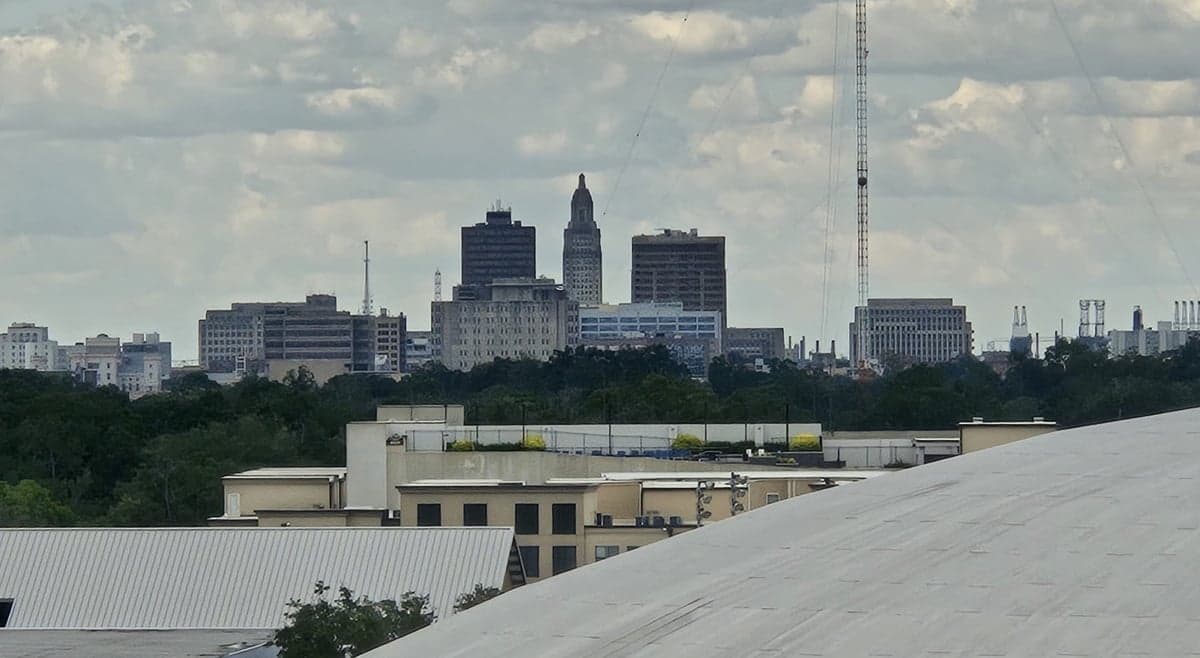
Today, Baton Rouge is a majority-Black city of 223,699 residents, shaped by distinct waves of French, Creole, Anglo-American, and African American migration. The city’s population is 50.9% Black, 34.9% White, 6.5% Hispanic, 2.9% East/Southeast Asian, and 0.7% Indian (subcontinent), with a foreign-born share of just 4.9% — well below the national average. Its identity is a blend of Deep South state-capital formality, petrochemical-industry pragmatism, and Louisiana’s unique French-Creole cultural substrate, concentrated in neighborhoods that still bear the marks of their founding populations.
How the city was settled and grew
Baton Rouge’s population history begins with the French, who established a military post and trading settlement on the bluffs of the Mississippi River in 1719. The original European settlers were French soldiers, trappers, and farmers, soon joined by enslaved Africans brought to work indigo and later sugar plantations. After the Louisiana Purchase (1803), Anglo-American planters from the Upper South moved in, shifting the city’s linguistic and political orientation toward English and slavery-based plantation agriculture. The founding of Louisiana State University in 1860 and the designation of Baton Rouge as the state capital in 1849 drew a small professional class of lawyers, clerks, and politicians. The historic Spanish Town neighborhood, laid out in the early 1800s, was originally home to working-class French and Spanish Creoles, while Beauregard Town, platted in 1806, attracted Anglo-American planters and merchants. The late 19th and early 20th centuries brought a second wave: German and Italian immigrants who settled near the riverfront and in the Mid City area, working in the growing petrochemical plants and the port. By 1940, Baton Rouge was roughly two-thirds White and one-third Black, with a small but established Creole community in neighborhoods like Old South Baton Rouge.
Modern era (post-1965)
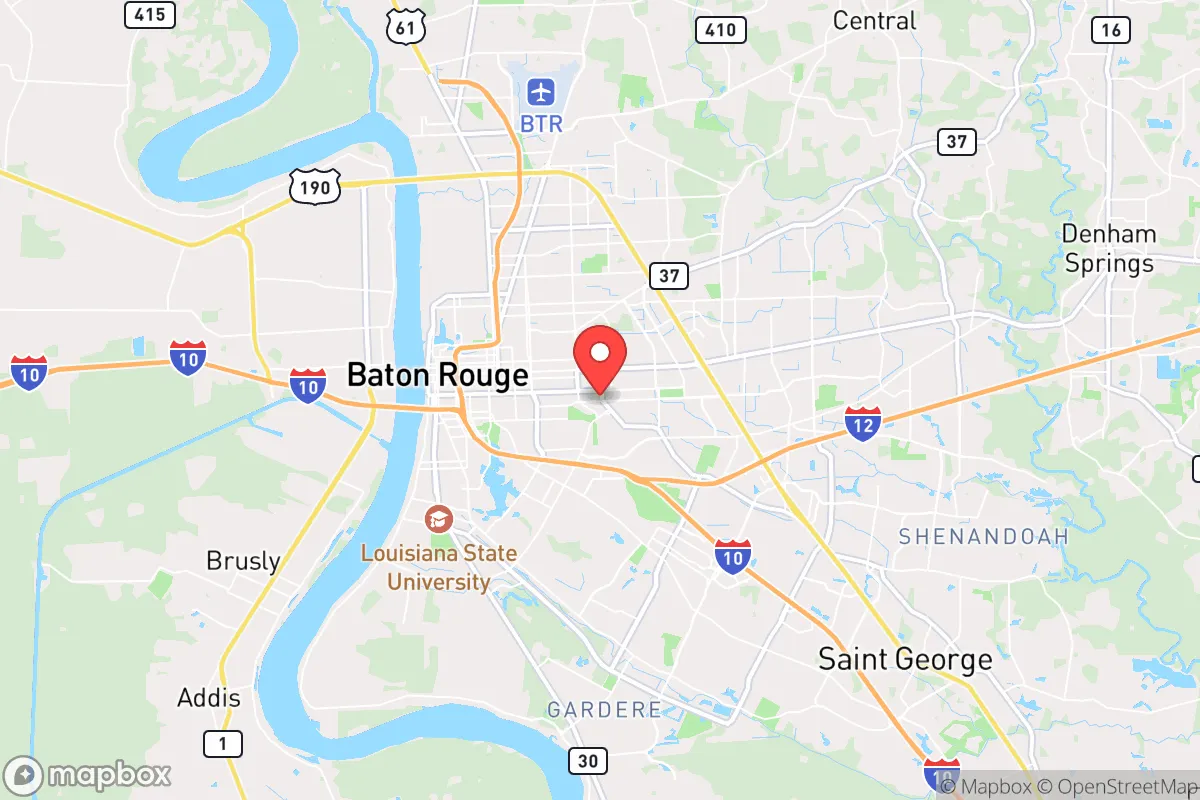
The post-1965 period reshaped Baton Rouge’s population dramatically. The 1965 Voting Rights Act and the end of legal segregation enabled Black political empowerment, but also accelerated White flight to suburban municipalities like Zachary, Central, and Prairieville. Between 1970 and 2020, the city’s White share fell from roughly 60% to 35%, while the Black share rose from 38% to 51%. The North Baton Rouge area — including neighborhoods like Scotlandville and Delmont Place — became overwhelmingly Black, home to Southern University (an HBCU) and a growing Black middle class. Meanwhile, the petrochemical corridor along the Mississippi River continued to draw workers, but the industry’s automation reduced the number of blue-collar jobs that had anchored earlier waves. Hispanic migration, mostly from Mexico and Central America, began in the 1990s, drawn by construction and service jobs; today’s 6.5% Hispanic population is concentrated in the Glen Oaks and Sherwood Forest areas. East/Southeast Asian communities — primarily Vietnamese and Filipino — arrived after the Vietnam War, settling near the Florida Boulevard corridor and establishing small business districts. The Indian-subcontinent population (0.7%) is a recent, small addition, largely professionals in medicine and engineering, with no single concentrated neighborhood. The foreign-born share has remained low (4.9%) because Baton Rouge lacks the gateway-city dynamics of Houston or New Orleans; most growth has come from domestic migration and natural increase.
The future
Baton Rouge’s population is slowly diversifying, but the dominant trend is the continued outmigration of White families to suburban parishes (Livingston, Ascension) and the gradual aging of the Black population in the urban core. The city’s overall population has been flat to slightly declining since 2020, as births are offset by net domestic outmigration. Hispanic and East/Southeast Asian communities are growing from a small base, but remain too small to dramatically shift the city’s racial balance. The Indian-subcontinent population is likely to grow modestly as LSU and the medical complex recruit specialized talent, but will remain a thin layer. The most likely scenario for the next 10–20 years is a city that becomes more heavily Black and more economically stratified, with affluent, largely White enclaves in the southeastern suburbs and a poorer, majority-Black urban core. Gentrification is limited to a few blocks near downtown and the LSU campus, but has not reshaped broad neighborhoods.
For someone moving in now, Baton Rouge is a city where racial and economic lines are deeply drawn by geography, and where the population is not growing rapidly. The city offers a strong sense of place and community for those who choose it, but it is not a melting pot — it is a place where distinct groups have settled into distinct neighborhoods and largely stayed there. The practical implication: your experience of Baton Rouge will be heavily shaped by which neighborhood you choose, and the city’s demographic future suggests that pattern will persist.

* Values derived from national, state, county, city and local statistics and may differ in a specific area. Last updated: 2026-04-23T05:02:58.000Z
Narrative content on this page is AI-generated and may contain mistakes. Verify any details that matter before acting on them.
ReloMaps may earn a commission from affiliate links at no extra cost to you.

