Photo: Wikipedia
Political ClimatePolitical Climate in Baton Rouge, LA
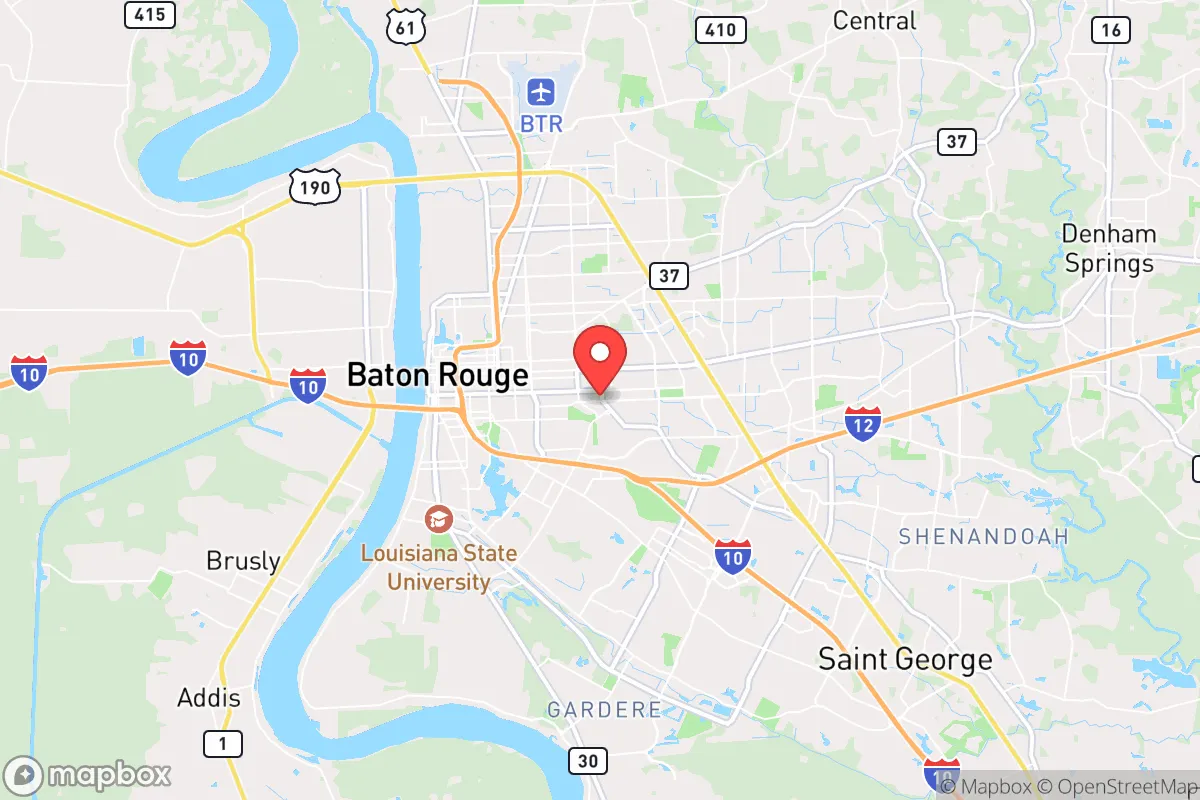
District shown is the primary district for this city’s centroid. Cities may span multiple districts.
Local Political AnalysisPolitical Analysis of Baton Rouge, LA
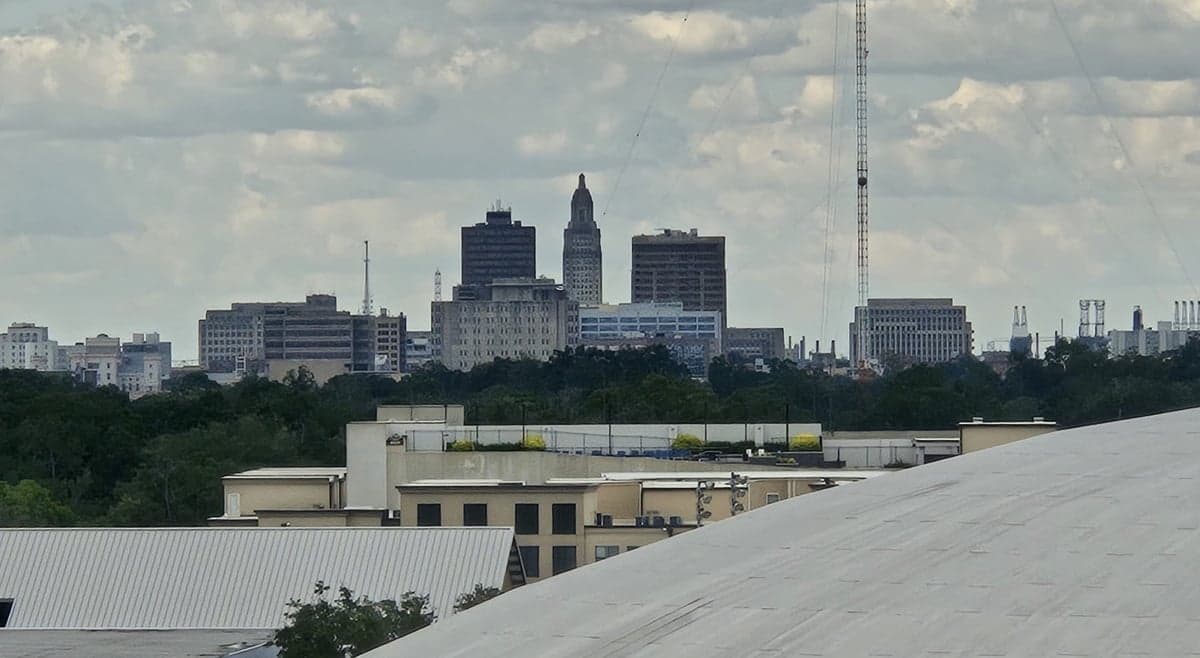
Baton Rouge has long been a political outlier in deep-red Louisiana, and honestly, it’s getting harder to recognize the place I grew up in. The city’s Cook PVI of D+8 tells you the official story—it leans Democratic—but the real picture is more complicated and, frankly, more concerning for anyone who values limited government and personal freedoms. Over the past decade, the parish has shifted noticeably leftward, driven by a growing state government footprint and an influx of out-of-state transplants tied to LSU and the petrochemical industry. Where Baton Rouge once balanced its blue-collar conservatism with a live-and-let-live attitude, today you see more top-down mandates and a creeping acceptance of progressive policies that would have been unthinkable here twenty years ago.
How it compares
Drive twenty minutes north to Zachary or Central, and you’re in a completely different world—those communities vote reliably Republican and still hold the line on taxes and regulations. Head east to Denham Springs in Livingston Parish, and you’ll find a conservative stronghold where the local government actively pushes back against Baton Rouge’s influence. The contrast is stark: while East Baton Rouge Parish has embraced a more activist local government, the surrounding parishes have doubled down on low taxes, school choice, and Second Amendment protections. Even within the city itself, the political divide is sharp—the southern part of town near LSU and the Garden District trends progressive, while the northern and eastern suburbs remain more traditional. This split means that city-wide elections often hinge on turnout from the university crowd and state employees, which is exactly why you see policies like the 2021 minimum wage hike and the push for “equity” initiatives that feel disconnected from the values of the working families who actually keep this city running.
What this means for residents
For folks who just want to be left alone, the practical effect is a slow erosion of local control. Property taxes have crept up, and the city-parish government has gotten more aggressive with zoning rules and business licensing requirements that make it harder for small shops and contractors to operate without a lawyer on speed dial. The school system is a prime example: instead of empowering parents with charter options or vouchers, the parish has doubled down on a centralized bureaucracy that consistently underperforms. If you’re a gun owner, you’ve seen the city council flirt with “safe storage” ordinances that sound reasonable but create a slippery slope toward registration. And on the cultural front, Baton Rouge has adopted the kind of DEI training and “inclusive” language mandates that would get you laughed out of a town hall in Prairieville. It’s not that Baton Rouge is a bad place to live—it’s that the political class here increasingly sees government as the solution to every problem, rather than a necessary evil that should stay out of your garage, your church, and your family’s decisions.
One thing that still sets Baton Rouge apart from places like New Orleans or Austin is that the conservative resistance here is quieter but real. You’ll still find plenty of folks who remember when the city was run by moderates who focused on potholes and drainage, not social engineering. The state legislature in the capitol building downtown still provides a check on the worst impulses of the city council, and the surrounding parishes act as a safety valve for families who want out. But if the current trajectory holds—more mandates, higher taxes, and a cultural shift that prioritizes activism over competence—I worry that Baton Rouge will lose the very character that made it a great place to raise a family. For now, it’s still possible to live here and keep your head down, but you have to be intentional about which neighborhood you choose and which local candidates you support. The fight for the soul of this city is far from over, but the ground is definitely shifting under our feet.

State Political ClimatePolitical Climate in Louisiana
State Political AnalysisPolitical Environment in the State
Louisiana has long been a reliably Republican state at the presidential level, voting for the GOP candidate by double digits in every election since 2008, but its state-level politics are far more complex, with a strong Democratic hold on local offices in New Orleans and Baton Rouge. The state’s overall partisan lean is solidly red, driven by a coalition of white working-class voters, rural conservatives, and evangelical Christians, but the past decade has seen a slow but steady rightward shift as suburban and exurban areas around major metros have hardened their Republican allegiance. The trajectory over the last 20 years is one of gradual consolidation for the GOP, though the state’s unique Cajun and Creole cultures, along with a history of populist Democrats, still create pockets of blue resistance that make Louisiana less monolithic than its Deep South neighbors like Mississippi or Alabama.
Urban vs. rural divide
The political map of Louisiana is a textbook study in the urban-rural split. New Orleans and its surrounding Orleans Parish are the state’s most reliably Democratic stronghold, delivering over 80% of the vote for Joe Biden in 2020, driven by a large African American population and a progressive white enclave. Baton Rouge, the state capital, is a battleground within a battleground: East Baton Rouge Parish has trended blue in recent cycles, but the city’s northern half is heavily Democratic while the southern suburbs like Prairieville and Gonzales are deeply red. The state’s third-largest metro, Lafayette, is a conservative anchor in Acadiana, with Lafayette Parish voting +20 points for Trump in 2020, though the city itself has a small but vocal liberal contingent centered around the University of Louisiana. The rural parishes—like Allen, Beauregard, and Washington—are the GOP’s base, often delivering 70-80% Republican margins, while the Mississippi River parishes like St. John the Baptist and St. James remain Democratic due to large Black populations. The key suburban shift has been in St. Tammany Parish, north of Lake Pontchartrain, which has transformed from a swing area in the 1990s to a rock-ribbed Republican stronghold today, mirroring trends in places like Mandeville and Covington.
Policy environment
Louisiana’s policy environment is a mixed bag for conservatives. On the plus side, the state has no personal property tax on vehicles or boats, and its homestead exemption shields the first $75,000 of a home’s value from parish property taxes, which keeps effective rates relatively low for homeowners. The state income tax is a flat 4.25% as of 2025, down from a progressive top rate of 6% in 2021, a win for fiscal conservatives. However, the state’s sales tax is high—averaging around 9.5% with local add-ons—and the overall tax burden is still above the national average. On regulation, Louisiana is a right-to-work state with a business-friendly tort reform system, but the state’s heavy reliance on oil and gas severance taxes means policy often bends toward industry interests. Education policy is a bright spot: the state has a robust school choice program, including the Louisiana Scholarship Program and a growing charter school sector in New Orleans, which has become a national model for reform. On healthcare, Louisiana expanded Medicaid under the Affordable Care Act in 2016, a decision that remains controversial among conservatives, but the state has not pursued further progressive expansions like a public option. Election laws are moderately secure: voter ID is required, but the state does not have strict absentee ballot restrictions, and early voting is available for two weeks. The biggest red flag for conservatives is the state’s high incarceration rate and the lingering influence of the “Louisiana Purchase”—the old Democratic machine that still controls many parish-level offices, particularly in the southern part of the state.
Trajectory & freedom
Louisiana has been moving in a decidedly more conservative direction on personal liberty over the last five years, but the pace is uneven. In 2024, the state passed a near-total abortion ban with no exceptions for rape or incest, aligning with the post-Dobbs landscape. Gun rights are strong: Louisiana is a constitutional carry state since 2021, meaning no permit is needed to carry a concealed firearm, and the state has preemption laws that prevent local governments from enacting their own restrictions. On parental rights, the state passed the “Parents’ Bill of Rights” in 2023, which requires schools to notify parents of any medical or mental health services offered to minors and prohibits classroom instruction on sexual orientation or gender identity in grades K-12. However, there are concerning trends: the state’s heavy reliance on federal disaster relief and its high poverty rate mean that government overreach is a constant threat, particularly through FEMA and HUD mandates after hurricanes. The biggest freedom issue is property rights: Louisiana’s unique civil law system, based on the Napoleonic Code, means that property disputes can be more complex than in common-law states, and the state’s generous homestead exemption has led to a patchwork of local tax policies that can surprise new residents. The state has also resisted Medicaid work requirements, a missed opportunity for conservatives, and the state’s public pension system remains underfunded, a ticking time bomb for future taxpayers.
Civil unrest & political movements
Louisiana has a history of civil unrest that is more tied to racial and economic tensions than ideological clashes. The most visible flashpoint in recent memory was the 2016 Baton Rouge protests following the shooting of Alton Sterling by police, which led to a week of demonstrations and a high-profile ambush that killed three law enforcement officers. That event still shapes political discourse in the capital, with a strong “Back the Blue” movement that has pushed for increased police funding and qualified immunity protections. On the right, the Louisiana Republican Party has been energized by the rise of the “Gumbo Coalition”—a mix of evangelical activists, gun rights advocates, and oil and gas interests—that has successfully pushed for the state’s conservative legislative agenda. Immigration politics are less heated than in border states, but the influx of migrants into New Orleans has sparked local debates, with the city declaring itself a “sanctuary city” in 2017, a move that was largely symbolic but still rankles conservatives in the suburbs. Election integrity has been a minor issue: Louisiana uses paper ballots and has a strong voter roll maintenance process, but the 2020 election saw no major controversies, and the state has not passed the kind of restrictive voting laws seen in Georgia or Texas. The most visible political movement is the “Coastal Restoration” lobby, which crosses party lines and has become a powerful force in state politics, pushing for billions in spending on levees and wetlands restoration—a rare issue that unites liberals and conservatives.
Projection
Over the next 5-10 years, Louisiana is likely to become more Republican, but the shift will be slow and uneven. The key demographic trend is the continued out-migration of young, educated liberals from New Orleans to cities like Austin and Houston, while retirees and remote workers from blue states are moving into suburbs like Mandeville, Covington, and the Northshore. This in-migration is overwhelmingly conservative, drawn by low housing costs and the state’s cultural conservatism. The biggest wildcard is the state’s vulnerability to hurricanes and climate change: repeated disasters could drive out population and strain state budgets, potentially forcing tax increases or cuts to services that could alienate the GOP base. The state’s Democratic Party is in a long-term decline, with no clear statewide leader after the retirement of Senator John Kennedy (a Republican) and the death of former Governor Kathleen Blanco. The most likely scenario is that Louisiana continues its rightward drift, with the GOP gaining control of more local offices in Baton Rouge and the New Orleans suburbs, while the city itself remains a blue island. For a conservative moving in now, the state will feel increasingly comfortable over the next decade, but the legacy of the old Democratic machine and the state’s fiscal challenges mean that vigilance on taxes and government spending will remain necessary.
For a new resident, the bottom line is that Louisiana offers a deeply conservative cultural environment with strong protections for gun rights, parental authority, and religious freedom, but it comes with a higher tax burden than other red states and a government that is still prone to corruption and inefficiency. If you’re looking for a place where your values are reflected in the laws and your neighbors, Louisiana delivers, but you’ll need to keep an eye on the state’s finances and the lingering influence of the old guard in Baton Rouge. The best bet is to settle in a suburban parish like St. Tammany or Livingston, where the politics are reliably red and the schools are strong, while avoiding the urban centers where progressive policies still hold sway.
* Values derived from national, state, county, city and local statistics and may differ in a specific area. Last updated: 2026-04-23T05:02:58.000Z
Narrative content on this page is AI-generated and may contain mistakes. Verify any details that matter before acting on them.
ReloMaps may earn a commission from affiliate links at no extra cost to you.

