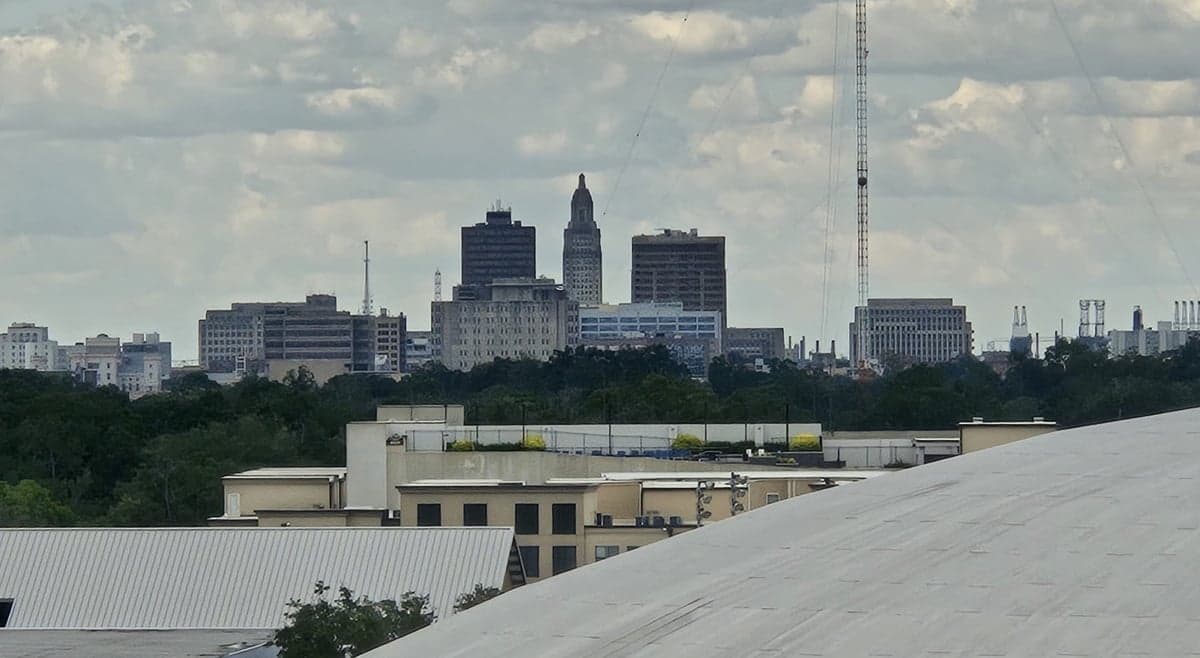
Photo: Wikipedia
Quality of Life in Baton Rouge, LA
A high quality of life with strong walkability, manageable living costs, healthy neighborhood signals, and solid amenity access.
What does Quality of Life tell us?
Quality of Life blends cost of living, nearby amenities, socioeconomic signals, and neighborhood character. City-level scores represent the whole municipality; individual neighborhoods can differ.
What does this tell us?
Quality of Life blends cost of living, nearby amenities, socioeconomic signals, and neighborhood character. City-level scores represent the whole municipality; individual neighborhoods can differ.
Cost of Living
14% below national average
The Real Cost of Living in Baton Rouge, LA for 2026
| Tier | Individual | Family (4) |
|---|---|---|
| Survival | $17k | $31k |
| Comfortable | $44k | $64k |
| Luxury | $90k+ | $140k+ |
| Elite (Top 5%) | $151k+ | $235k+ |
78%
The Area Signal
A metric tracking the socioeconomic signals of the area.
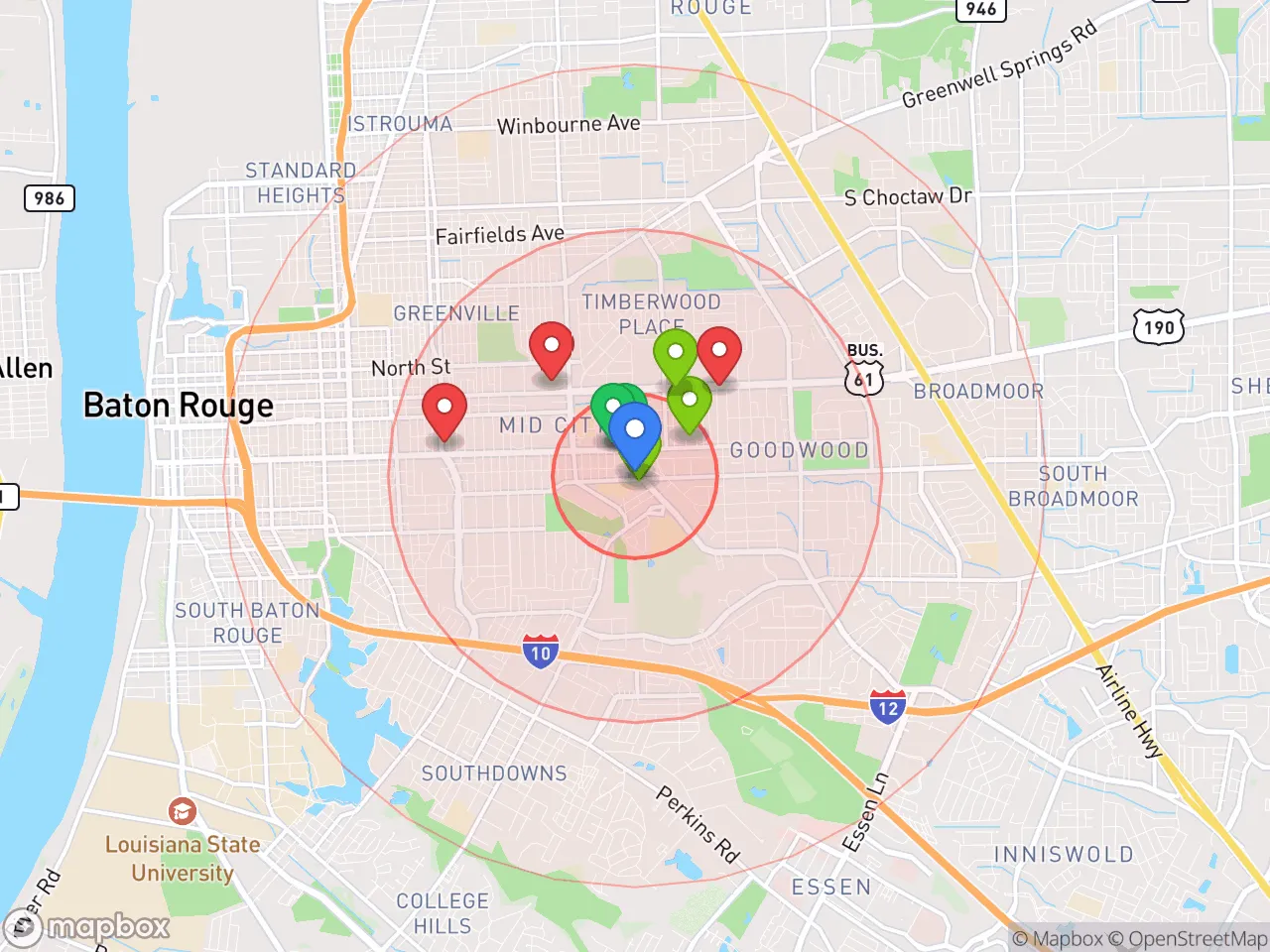
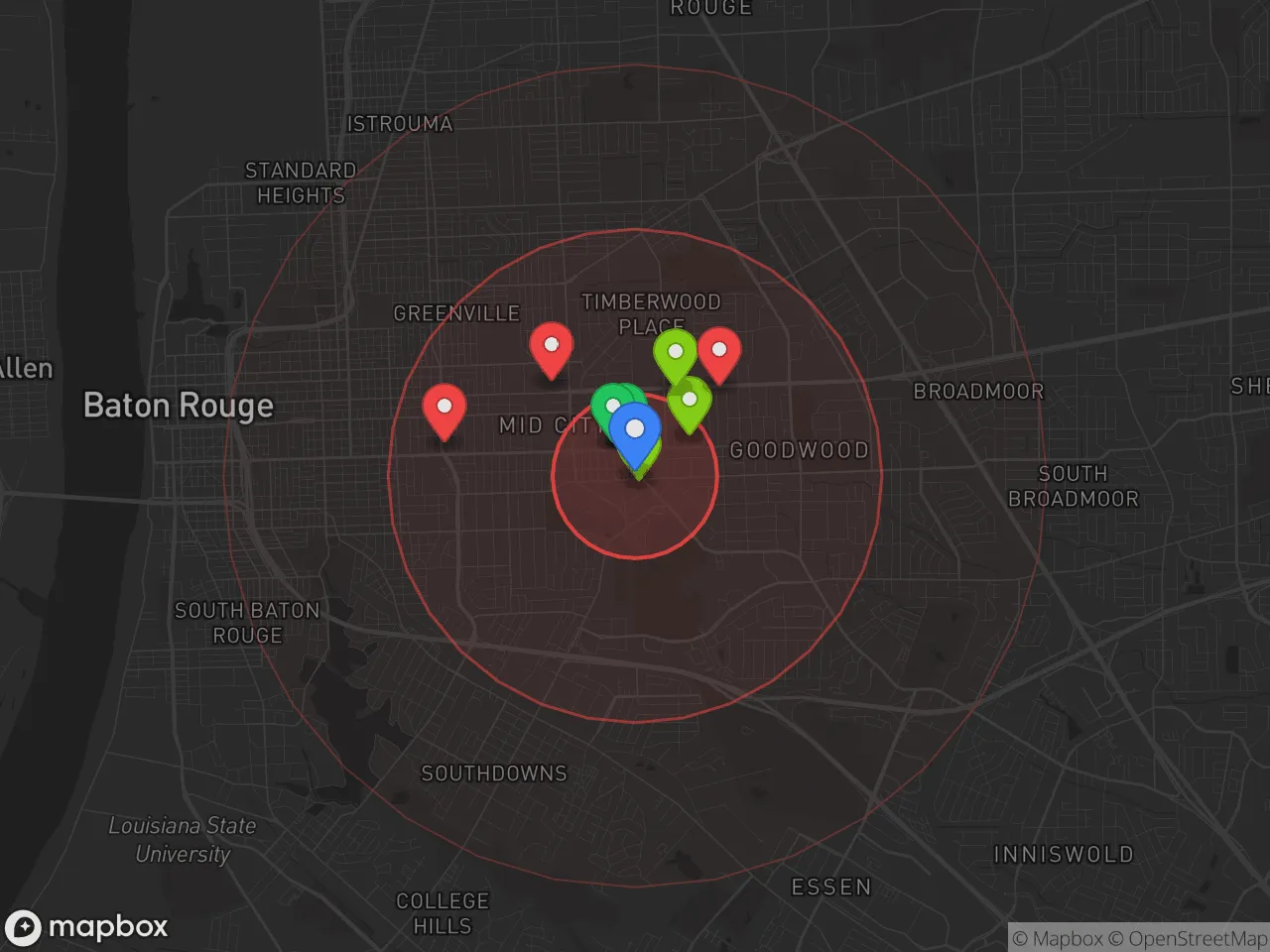
Hobbies
Explore the areaGroceries
7 within 10 miles
Gas
20 within 10 miles
Hospital
20 within 20 miles
Airport
IAH — George Bush Intercontinental
Post Office
USPS — Baton Rouge, LA
Critical Amenities
Quality-of-Life Analysis
Baton Rouge presents a quality-of-life profile that blends Southern capital-city amenities with a cost structure well below the national average, attracting a mix of state government employees, Louisiana State University (LSU) faculty and students, and petrochemical industry professionals. The metro area’s median household income of roughly $55,000 trails the U.S. median, yet the city’s overall cost of living index of 86 (14% below the national average) allows many residents to maintain a comfortable middle-class lifestyle. The population skews younger than the state average, driven by LSU’s enrollment of over 37,000 students, while the broader East Baton Rouge Parish includes established suburban enclaves like Zachary and Central that appeal to families seeking more space.
Cost of living, housing affordability, and how Baton Rouge compares to nearby cities
Baton Rouge’s affordability is a primary draw, with a cost of living index of 86 that undercuts both the national baseline and neighboring New Orleans (index ~95). The median home value sits at $224,500, roughly $60,000 below the national median, making homeownership accessible for dual-income households and young professionals. Median rent of $1,044 is similarly attractive, about $200 less than the U.S. average and significantly cheaper than comparable rents in New Orleans ($1,300+) or Lafayette ($1,100). The average commute of 21 minutes is notably shorter than the national average of 26 minutes, a practical advantage for workers commuting to downtown state offices, LSU’s campus, or industrial plants along the Mississippi River. However, property taxes are moderate at roughly 0.5% of assessed value, while Louisiana’s state income tax (flat 3% as of 2026) and sales tax (9.45% in East Baton Rouge Parish) add to the overall cost picture.
Amenities, schools, and what daily life is like for residents
Daily life in Baton Rouge revolves around a mix of cultural institutions, outdoor recreation along the Mississippi River, and a food scene anchored by Cajun and Creole cuisine. The city’s public school system, East Baton Rouge Parish Schools, has a graduation rate near 80%, though performance varies widely by school; top-rated magnet programs like Baton Rouge Magnet High School and highly regarded private schools (e.g., Episcopal High School, St. Joseph’s Academy) serve families who prioritize education. The LSU campus provides a major cultural anchor, hosting the LSU Museum of Art, the Rural Life Museum, and Division I athletics that draw weekend crowds. For outdoor life, the 5,000-acre Baton Rouge Zoo, the LSU Lakes walking trails, and the nearby Atchafalaya Basin offer recreation within a 20-minute drive. The city’s rhythm is slower than New Orleans but busier than smaller Louisiana towns, with a robust calendar of festivals (the Bayou Country Superfest, FestForAll) and a growing craft brewery scene. Traffic congestion on I-10 and I-12 is a noted pain point during peak hours, though the 21-minute average commute suggests most residents avoid the worst bottlenecks.
Baton Rouge is best suited for those who value affordability and Southern city amenities over top-tier public schools or ultra-low crime rates. Young professionals and families who can navigate the school choice landscape—or afford private education—will find a low cost of entry for homeownership and a commute that leaves time for weekend crawfish boils or LSU tailgates. Retirees on fixed incomes benefit from the low housing costs, while remote workers can leverage the cheap rent and fast internet (fiber available in many neighborhoods). Those seeking a vibrant nightlife or nationally ranked public schools may find the city lacking, but for residents who prioritize financial breathing room and a strong sense of place, Baton Rouge delivers a quality of life that punches above its cost.

Crime in Baton Rouge, LA
Crime rates similar to the national median for U.S. locations.
Violent CrimeViolent Crime Analysis
Property CrimeProperty Crime Analysis
Crime Analysis
Baton Rouge presents a complex safety landscape shaped by crime rates that significantly exceed national averages, though the picture varies sharply by neighborhood. The city's violent crime rate stands at 351.6 incidents per 100,000 residents, while property crime occurs at a rate of 1,418 per 100,000. These figures place Baton Rouge in a higher-risk category compared to both Louisiana state averages and the broader United States, a reality that prospective residents must weigh carefully when choosing a specific area to live.
Crime in context
To understand Baton Rouge's crime data, it is essential to compare it against benchmarks. The national violent crime rate in recent years has hovered around 380 per 100,000, meaning Baton Rouge's rate of 351.6 is slightly below that national figure but still elevated. However, the property crime rate of 1,418 per 100,000 is notably higher than the national average of approximately 1,954 per 100,000, indicating a lower property crime incidence than the U.S. overall. Within Louisiana, Baton Rouge's violent crime rate is roughly on par with other major cities like New Orleans and Shreveport, though property crime is somewhat lower. A critical factor influencing these numbers is the local justice system's approach. Baton Rouge, as part of East Baton Rouge Parish, has seen a shift toward progressive prosecutorial policies in recent years, including reduced cash bail for certain offenses and diversion programs for non-violent offenders. While these policies aim to reduce incarceration, they have been linked by critics to higher recidivism and a perception that repeat offenders face insufficient consequences, directly contributing to public safety concerns.
What residents experience
Daily life in Baton Rouge involves navigating a city where crime is not evenly distributed. The most common violent crimes are aggravated assault and robbery, with homicides concentrated in specific corridors such as the 70805 and 70802 ZIP codes. Property crime, particularly vehicle burglary and theft, is a widespread nuisance that affects both residential and commercial areas. Residents in neighborhoods like Garden District, Southdowns, and parts of Mid City report lower crime rates, while areas north of Florida Boulevard and near the Scotlandville community experience higher incidents. The presence of progressive district attorneys and judges in East Baton Rouge Parish has led to policies that some argue prioritize offender rehabilitation over public protection. For example, the parish's pretrial release program has been criticized for releasing individuals charged with violent crimes without adequate monitoring, a practice that directly increases the risk of reoffending while victims await justice. This ideological tilt in the justice system is a significant concern for anyone considering relocation, as it can lead to a revolving door for criminals and diminished deterrence.
Neighborhood-level variation is the most critical factor for safety in Baton Rouge. The city's safest areas—such as the areas around LSU's campus, the historic Spanish Town district, and newer developments in the southeast near Bluebonnet Boulevard—report crime rates well below the city average. Conversely, the 70805 ZIP code, which includes the Delmont Place and Melrose East neighborhoods, has a violent crime rate more than double the citywide figure. Prospective residents should consult local crime maps and speak with neighborhood associations to identify blocks with lower incident counts. Ultimately, while Baton Rouge's overall crime statistics are concerning, informed choices about specific neighborhoods can substantially mitigate risk, provided one accounts for the systemic challenges posed by the local justice system's progressive orientation.
* Values derived from national, state, county, city and local statistics and may differ in a specific area. Last updated: 2026-04-23T05:02:58.000Z
Narrative content on this page is AI-generated and may contain mistakes. Verify any details that matter before acting on them.
ReloMaps may earn a commission from affiliate links at no extra cost to you.

