 Popular
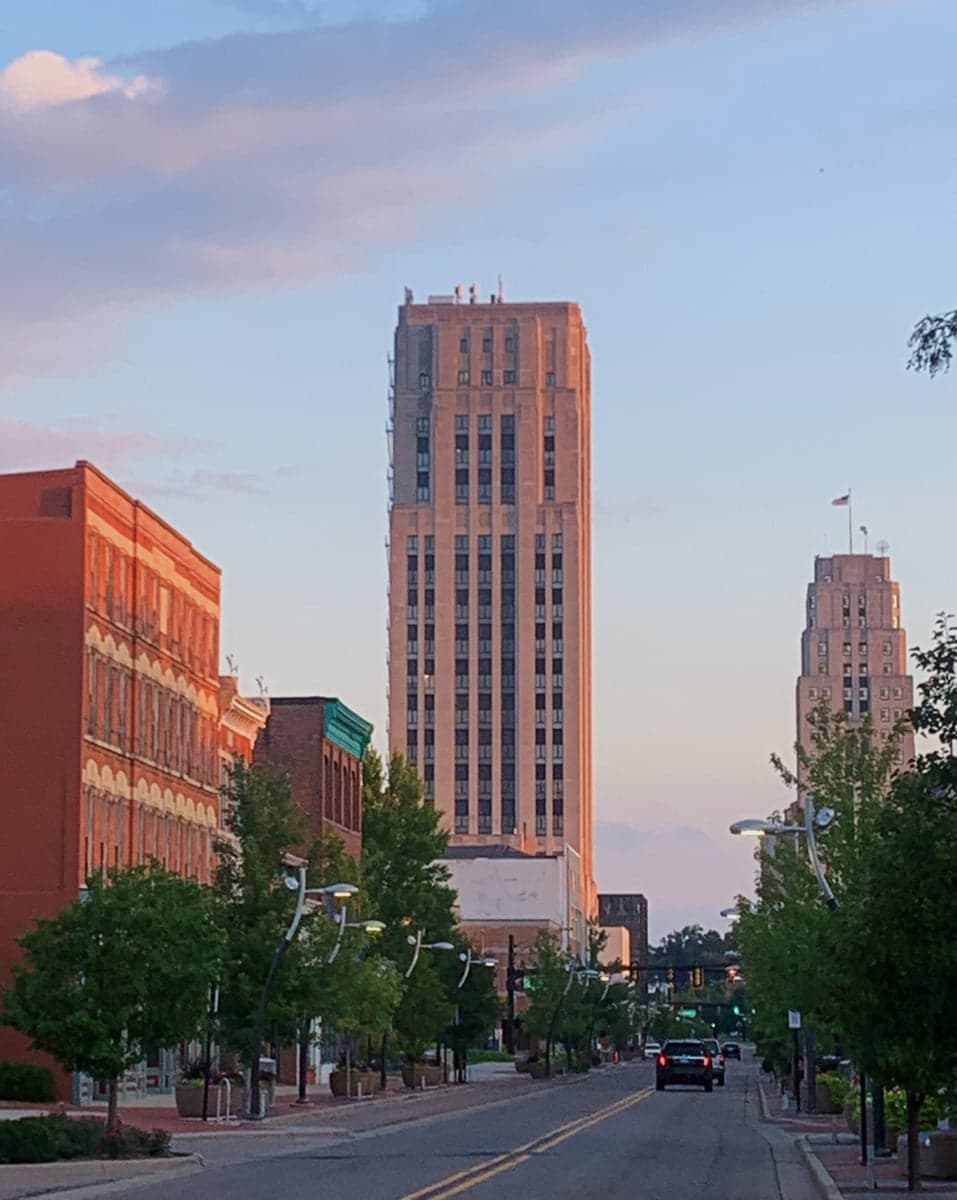
Photo: Wikipedia
Demographics of Battle Creek, MI
Affluence Level in Battle Creek, MI
A below-average socioeconomic profile. Incomes, home values, and educational attainment trail the U.S., with higher poverty and unemployment.
People of Battle Creek, MI
Battle Creek, Michigan, is a city of 52,392 residents shaped by industrial boom and subsequent decline, giving it a working-class, Midwestern character with notable racial and ethnic diversity relative to its region. The population is 62.8% white, 15.6% Black, 8.4% Hispanic, 4.1% East/Southeast Asian, and 0.6% Indian (subcontinent), with a foreign-born share of 4.0% and a college-educated rate of 22.1%. The city’s identity remains tied to its cereal-manufacturing heritage, but today it is a community grappling with population loss, aging infrastructure, and a growing need to attract new residents and employers.
How the city was settled and grew
Battle Creek’s original population was drawn by the fertile land of the Kalamazoo River valley and the promise of manufacturing. The city’s first major growth came in the 1850s with the establishment of the Seventh-day Adventist Church, which founded its headquarters here and attracted a religiously motivated wave of settlers. The real population explosion, however, began in the late 19th century with the rise of the cereal industry—specifically the Kellogg and Post companies. These factories drew waves of European immigrants, particularly German, Irish, and Polish workers, who settled in working-class neighborhoods like Bedford and Urbandale. By 1900, the city’s population had surged past 18,000, and by 1950 it peaked at nearly 49,000. The post-World War II era brought additional domestic migrants from the rural South, including Black families seeking industrial jobs in the cereal plants and related manufacturing. These families concentrated in the Post Addition and Washington Heights neighborhoods, forming the foundation of the city’s Black community.
Modern era (post-1965)
After the 1965 Hart-Cellar Act, Battle Creek saw modest but notable immigration from East and Southeast Asia, particularly Vietnamese and Filipino families who arrived as refugees and secondary migrants in the 1970s and 1980s. These communities settled primarily in the Lakeview and Urbandale areas, drawn by affordable housing and proximity to entry-level manufacturing jobs. The city’s Hispanic population, largely of Mexican origin, grew steadily from the 1990s onward, concentrated in the Bedford and Post Addition neighborhoods. Meanwhile, the Indian (subcontinent) population remains small at 0.6%, with families scattered rather than forming a distinct enclave. The most significant demographic shift since 1965 has been the decline of the white population—from over 80% in 1970 to 62.8% today—driven by suburban flight to surrounding towns like Springfield and Marshall, as well as outmigration to other states. The Black population has remained relatively stable as a share, but the city’s overall population has fallen from its 1960 peak of 49,000 to 52,392 today, reflecting deindustrialization and a shrinking tax base.
The future
Battle Creek’s population is projected to continue its slow decline, with the city losing roughly 1-2% of residents per decade. The white population is aging and shrinking, while the Hispanic and East/Southeast Asian shares are growing modestly through both immigration and higher birth rates. The Black population is plateauing, with younger families moving to suburbs or out of state. The city is tribalizing into distinct enclaves rather than homogenizing: Bedford remains predominantly white and working-class, Post Addition is heavily Black and Hispanic, and Lakeview has a visible East/Southeast Asian presence. The foreign-born share (4.0%) is below the national average, and immigration is unlikely to reverse population decline without a major economic catalyst. The next 10-20 years will likely see continued slow shrinkage, with the city becoming older, more Hispanic, and more economically stratified.
For someone moving in now, Battle Creek offers a low cost of living and a racially diverse, historically grounded community, but it is a city in demographic contraction. New residents should expect a place where neighborhoods retain distinct ethnic and economic identities, and where the overall population trend is downward. The city’s future depends on whether it can attract new industries and retain young families, but for now, it remains a quiet, affordable, and increasingly diverse Midwestern town shaped by its industrial past.

* Values derived from national, state, county, city and local statistics and may differ in a specific area. Last updated: 2026-05-04T07:51:01.000Z
Narrative content on this page is AI-generated and may contain mistakes. Verify any details that matter before acting on them.
ReloMaps may earn a commission from affiliate links at no extra cost to you.

