 Popular
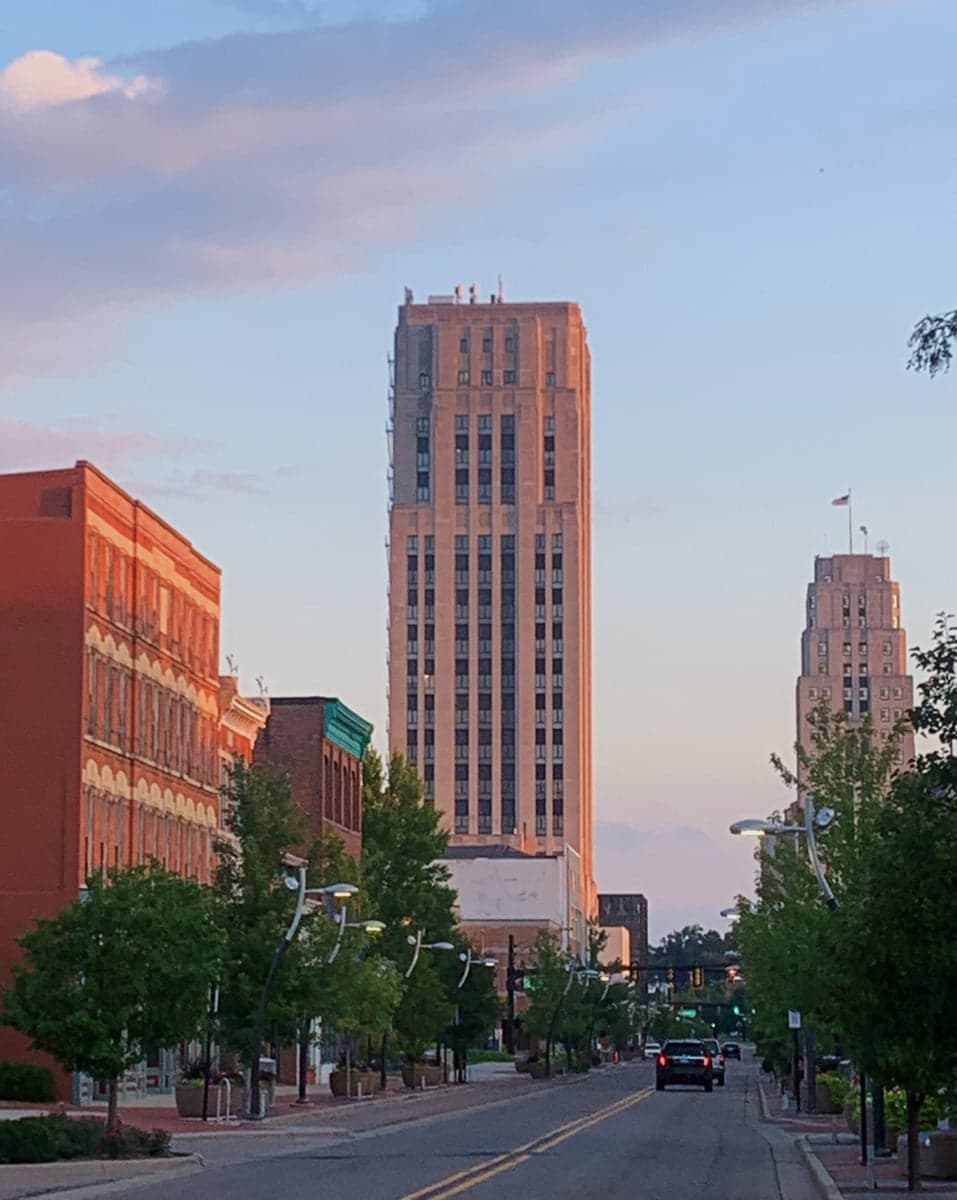
Photo: Wikipedia
Quality of Life in Battle Creek, MI
Above-average quality of iife. The area offers a reasonable cost of living, decent mobility, and a mix of neighborhood amenities.
What does Quality of Life tell us?
Quality of Life blends cost of living, nearby amenities, socioeconomic signals, and neighborhood character. City-level scores represent the whole municipality; individual neighborhoods can differ.
What does this tell us?
Quality of Life blends cost of living, nearby amenities, socioeconomic signals, and neighborhood character. City-level scores represent the whole municipality; individual neighborhoods can differ.
Cost of Living
34% below national average
The Real Cost of Living in Battle Creek, MI for 2026
| Tier | Individual | Family (4) |
|---|---|---|
| Survival | $15k | $28k |
| Comfortable | $25k | $37k |
| Luxury | $93k+ | $145k+ |
| Elite (Top 5%) | $112k+ | $174k+ |
141%
The Area Signal
A metric tracking the socioeconomic signals of the area.
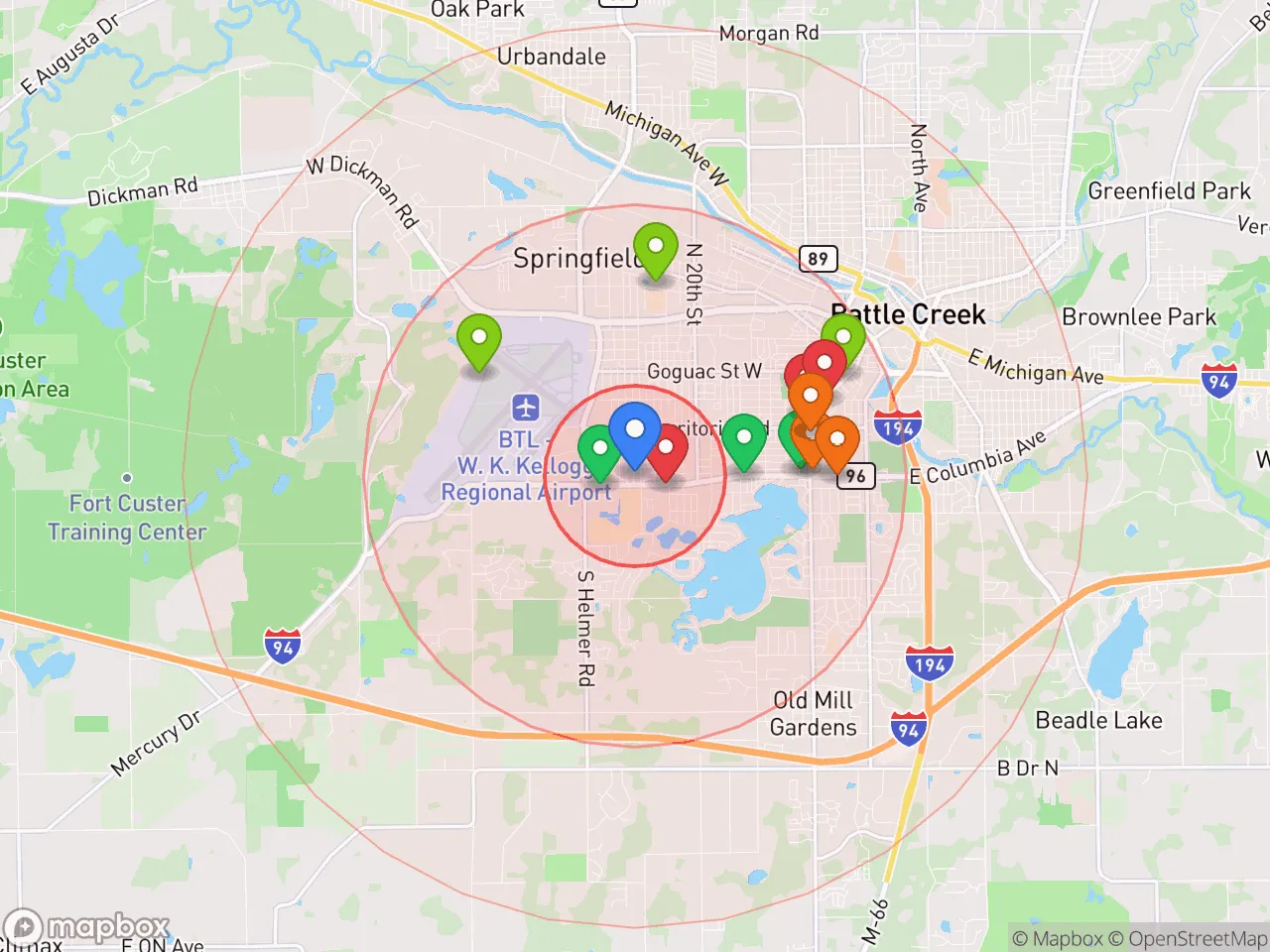
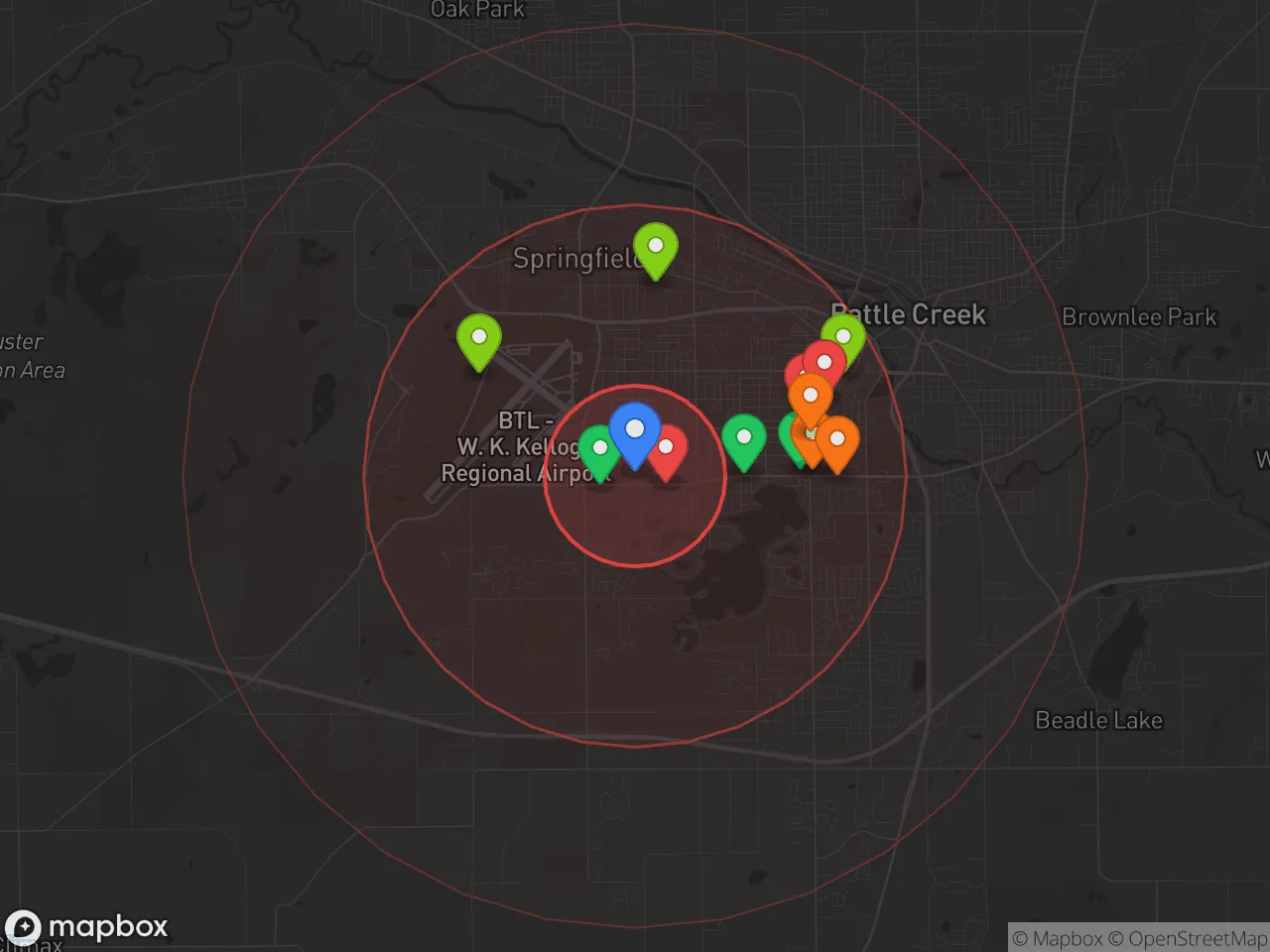
Hobbies
Explore the areaGroceries
5 within 10 miles
Gas
20 within 10 miles
Hospital
9 within 20 miles
Airport
DTW — Detroit Metropolitan Wayne County
Post Office
USPS — Battle Creek, MI
Critical Amenities
Quality-of-Life Analysis
Battle Creek, Michigan, offers a markedly lower cost of living than the national average, attracting a mix of retirees, manufacturing workers, and remote professionals seeking affordability. With a cost-of-living index of 66 (34% below the U.S. average), the city provides a financial cushion that allows residents to stretch their incomes further than in nearby Grand Rapids or Kalamazoo. The population skews older and more blue-collar than the state average, though a growing number of younger families are drawn by the area’s low housing prices and quiet, community-oriented lifestyle.
How affordable is Battle Creek compared to Kalamazoo and Grand Rapids?
Battle Creek’s housing market is among the most accessible in southwestern Michigan. The median home value sits at $127,600, roughly half the national median and significantly below Kalamazoo’s $190,000 and Grand Rapids’ $260,000. Median rent is $934 per month, making it feasible for single-income households and retirees on fixed budgets. The average commute of 18.9 minutes is notably shorter than the national average of 26 minutes, reducing transportation costs and freeing up time for family or leisure. Property taxes in Calhoun County average about 1.5% of assessed value, which is moderate for Michigan. While grocery and healthcare costs are also below national averages, residents should note that utility costs run slightly higher due to cold winters. Overall, a household earning $50,000 annually can live comfortably here, whereas the same income would feel tight in Grand Rapids.
What daily life is like for families and retirees in Battle Creek
Daily life in Battle Creek centers on a slower pace, with strong community ties and ample outdoor access. The city’s school system, Battle Creek Public Schools, has faced enrollment declines but offers specialized programs like the Battle Creek Area Math and Science Center. For families, the Leila Arboretum and Binder Park Zoo provide low-cost recreation, while the Kellogg Arena hosts minor-league hockey and concerts. Retirees benefit from the VA Medical Center and the Battle Creek Health System, which anchor local healthcare. Grocery shopping is concentrated along Capital Avenue SW, with national chains like Meijer and Aldi keeping prices low. The city lacks the nightlife of Ann Arbor or Grand Rapids, but its downtown farmers market (May–October) and the Sojourner Truth Trail along the Kalamazoo River offer regular community gathering points. Crime rates are higher than the national average, particularly property crime, so newcomers should research specific neighborhoods like Urbandale or Lakeview for lower incident rates.
Battle Creek is best suited for cost-conscious buyers, retirees on fixed incomes, and remote workers who prioritize affordability over urban amenities. Families with young children may find the school options limited compared to suburban districts, but the low housing costs allow for private school enrollment. The city’s industrial heritage—anchored by Kellogg’s and Post Foods—means stable employment in manufacturing and food processing, though white-collar job growth is slower than in nearby Kalamazoo. For those who value a low-stress commute, a strong sense of local history, and a dollar that stretches far, Battle Creek delivers a quality of life that larger Michigan cities cannot match at this price point.

Crime in Battle Creek, MI
Higher crime rates than 60% of comparable U.S. locations.
Violent CrimeViolent Crime Analysis
Property CrimeProperty Crime Analysis
Crime Analysis
Battle Creek, Michigan, reports a violent crime rate of 1,038.8 incidents per 100,000 residents and a property crime rate of 2,365 per 100,000, placing it among the higher-risk small cities in the Great Lakes region. These figures reflect a community where safety is a significant concern, particularly when compared to national averages and state benchmarks. The city’s location within the broader Kalamazoo-Battle Creek metropolitan area, combined with local justice system policies, contributes to a crime environment that residents and prospective movers should evaluate carefully.
Crime in context
Battle Creek’s violent crime rate is roughly 2.7 times the national average of about 380 per 100,000, while its property crime rate exceeds the U.S. median by approximately 25%. Within Michigan, Battle Creek’s violent crime rate is notably higher than the state average of roughly 450 per 100,000. The city’s property crime rate, while elevated, is closer to the Michigan average of around 1,800 per 100,000. These statistics place Battle Creek in a tier with other mid-sized industrial cities in the state, such as Saginaw and Flint, though its rates are lower than those cities’ most extreme figures. The presence of a progressive-leaning judicial philosophy in Calhoun County, which includes Battle Creek, has been associated with lenient sentencing and reduced pretrial detention, factors that critics argue contribute to higher recidivism and more offenders on the street.
What residents experience
For daily life in Battle Creek, the elevated violent crime rate means residents face a heightened risk of aggravated assault, robbery, and, less frequently, homicide. Property crimes such as burglary, larceny-theft, and motor vehicle theft are common concerns, particularly in areas near downtown and along major commercial corridors like Columbia Avenue and Capital Avenue. Many residents report that car break-ins and package thefts are routine occurrences, especially in neighborhoods with easy access to I-94. The city’s police department has implemented community policing initiatives and crime prevention programs, but resource constraints and the broader justice system’s approach—where progressive district attorneys may prioritize diversion over incarceration—can limit the deterrent effect. Residents often rely on neighborhood watch groups and private security measures, such as cameras and alarm systems, to supplement public safety efforts.
Neighborhood-level variation is significant in Battle Creek. Areas north of Michigan Avenue and west of the Kalamazoo River, including the downtown core and the Washington Heights neighborhood, tend to report higher concentrations of violent crime. In contrast, south-side neighborhoods like Urbandale and the Lakeview area generally experience lower crime rates, though property crime remains a concern citywide. The city’s overall safety profile is shaped by economic factors—poverty rates near 25% and a median household income below $40,000—as well as the justice system’s ideological leanings, which can undermine public confidence in accountability. Prospective residents should research specific blocks and consult local crime mapping tools before choosing a neighborhood.
* Values derived from national, state, county, city and local statistics and may differ in a specific area. Last updated: 2026-05-04T07:51:01.000Z
Narrative content on this page is AI-generated and may contain mistakes. Verify any details that matter before acting on them.
ReloMaps may earn a commission from affiliate links at no extra cost to you.

