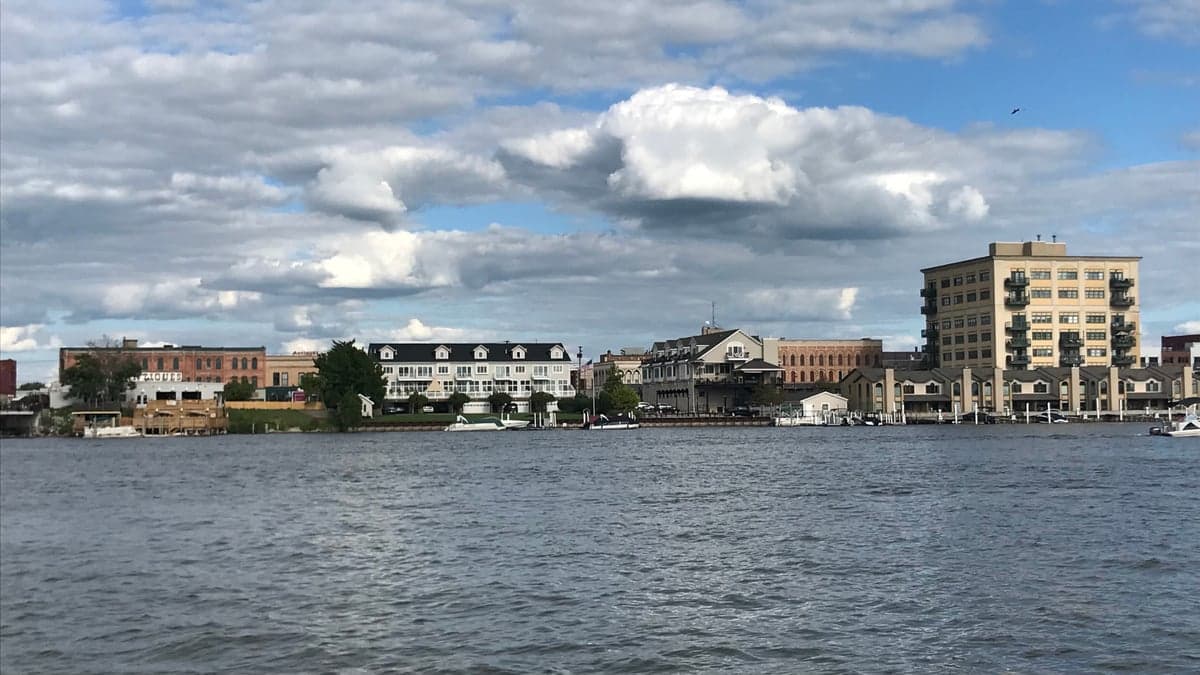
Photo: Wikipedia
Political ClimatePolitical Climate in Bay City, MI
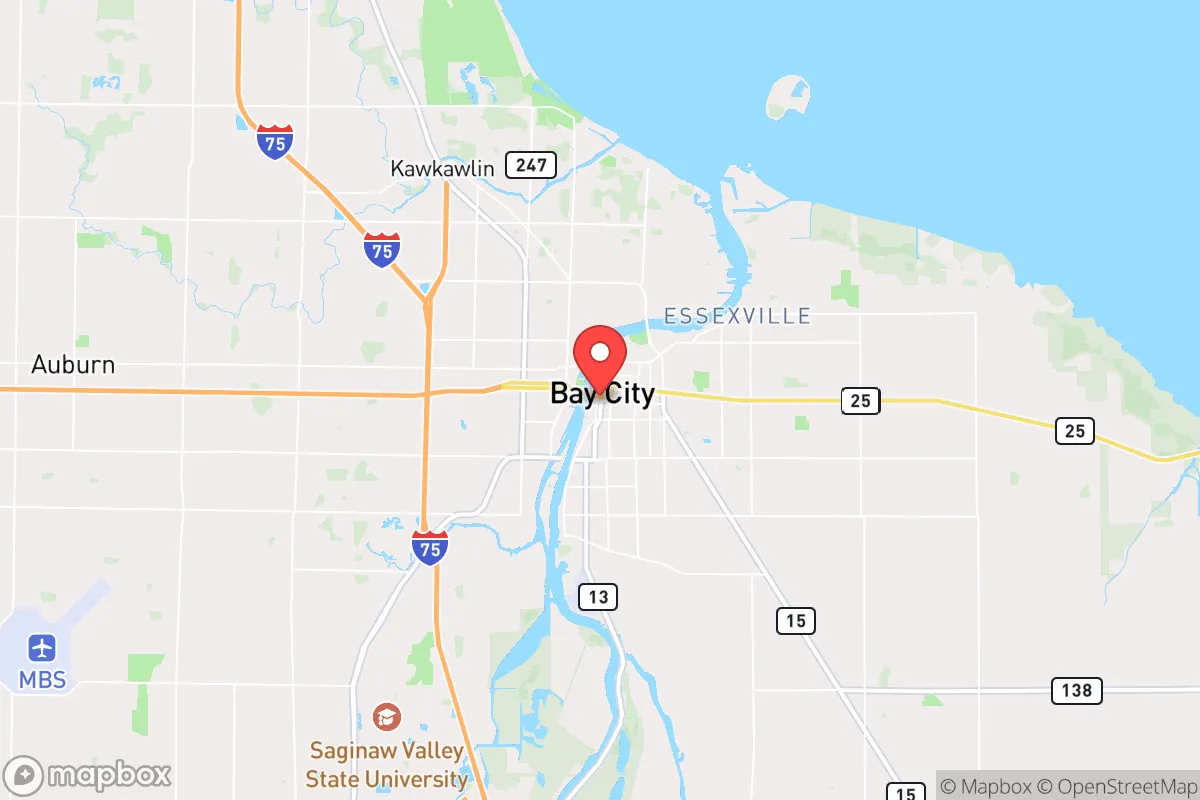
District shown is the primary district for this city’s centroid. Cities may span multiple districts.
Local Political AnalysisPolitical Analysis of Bay City, MI
Bay City, Michigan, sits in a political sweet spot that’s been shifting under our feet. With a Cook PVI of R+1, this community leans slightly Republican, but it’s a lean that’s been tested hard over the last decade. I’ve lived here long enough to remember when you could count on a straight-ticket conservative vote up and down the ballot. Now, you see more split-ticket voters, especially in the city proper, where younger transplants and new development are nudging things left. The surrounding towns—Essexville, Auburn, and even parts of Bangor Township—still hold the line with a more traditional, live-and-let-live conservatism. But Bay City itself? It’s a battleground, and the trajectory is concerning if you value limited government and personal freedoms.
How it compares
Drive 15 minutes south to Saginaw, and you’re in a solidly blue stronghold where progressive policies on taxes, zoning, and public spending are the norm. Head north to Midland, and you’ll find a more predictable conservative environment, thanks to Dow’s corporate influence and a stable, older population. Bay City sits right in the middle, politically and geographically. What makes it unique is the tension between the old guard—folks who remember when the city was a manufacturing hub and government kept its nose out of your business—and a growing cohort of activists pushing for more regulation, higher taxes, and social engineering. In the 2024 election, Bay County as a whole voted about 52% Republican for president, but the city itself was closer to 50-50. That’s a far cry from 20 years ago, when the county routinely went +10 or more for the GOP. The contrast with nearby rural towns like Pinconning or Standish, where conservative values are still the default, is stark.
What this means for residents
For the average Bay City resident who values personal freedom and low taxes, the political drift is a real red flag. The city council has debated everything from mask mandates to land-use restrictions that feel like government overreach into how you run your own property. Property taxes have crept up, and there’s constant chatter about new fees and ordinances—like stricter rental inspections or limits on short-term rentals—that chip away at your right to do what you want with your own home. The school board has also seen fights over curriculum and parental rights, with progressive members pushing for more centralized control. If you’re a conservative here, you’re not in hostile territory yet, but you’re definitely on the defensive. You have to stay engaged, show up to meetings, and vote in every local election, because the margins are razor-thin. The good news is that the county commission still leans conservative, so there’s a check on the city’s worst impulses. But that balance is fragile.
Culturally, Bay City still has a strong blue-collar, self-reliant vibe. People take pride in their hunting, fishing, and snowmobiling—activities that don’t need a government permit. The annual River Roar and the county fair are still big draws, and you’ll see more American flags than rainbow banners in most neighborhoods. But there’s a growing divide between the downtown area, which courts tourism and progressive aesthetics, and the outer wards where folks just want to be left alone. Long-term, I see the city continuing to purple up, especially if more state and federal money flows in for “revitalization” projects that come with strings attached. The real test will be the next census and redistricting. If Bay City’s political map gets gerrymandered to dilute the conservative vote, we could lose the R+1 lean entirely. For now, it’s still a place where a conservative can live comfortably, but you’ve got to keep one eye on the ballot box and the other on the city council agenda.

State Political ClimatePolitical Climate in Michigan
State Political AnalysisPolitical Environment in the State
Michigan has shifted from a reliably purple battleground to a state where Democrats now hold unified control of the governorship, legislature, and Supreme Court, a dramatic reversal from just a decade ago when Republicans dominated state government. The 2022 midterms saw Governor Gretchen Whitmer win re-election by nearly 11 points, while Democrats flipped both chambers of the legislature for the first time in 40 years, driven largely by massive turnout in Wayne County (Detroit), Washtenaw County (Ann Arbor), and Oakland County. This blue wave has accelerated a progressive policy agenda that many conservatives view as a direct threat to personal freedoms, parental rights, and economic liberty.
Urban vs. rural divide
The political map of Michigan is a study in stark contrasts. The southeastern corner—Detroit, Ann Arbor, and the inner-ring suburbs of Oakland and Macomb counties—generates the overwhelming Democratic margin, with Detroit alone delivering 95% of its vote to Democrats. Meanwhile, the western side of the state, from Grand Rapids north to Traverse City and the entire Upper Peninsula, has become a Republican stronghold. The most dramatic shift has been in Macomb County, a classic Reagan Democrat stronghold that voted for Trump in 2016 and 2020 but swung back to Whitmer in 2022, signaling that suburban voters are increasingly aligning with Democratic cultural and economic messaging. Conversely, rural counties like Missaukee, Oscoda, and Montmorency routinely vote 70-80% Republican, but their populations are too small to offset the metro Detroit machine. The city of Grand Rapids itself is now reliably blue, though its surrounding Kent County suburbs remain competitive, while Traverse City has become a liberal enclave in an otherwise red northern Michigan.
Policy environment
The policy landscape has shifted hard left since 2023. The Democratic trifecta repealed Michigan’s right-to-work law, which had been in place since 2012, and restored prevailing wage requirements, making it more expensive for private employers and contractors. They also passed a sweeping gun control package that includes universal background checks, safe storage requirements, and red flag laws—measures that gun rights advocates view as an infringement on the Second Amendment. On education, the state eliminated the requirement for high school students to pass the SAT or a state assessment to graduate, and expanded the “Grow Your Own” teacher program, which critics argue weakens academic standards. The 2023 repeal of the 1931 abortion ban codified abortion access up to fetal viability, and the state now mandates insurance coverage for contraception and abortion. Tax-wise, the corporate income tax rate was increased from 6% to 7.25%, and the retirement tax was partially reinstated for some seniors, though the state did expand the Earned Income Tax Credit. Election laws were also overhauled: Proposal 2 of 2022 enshrined nine days of early voting, automatic voter registration, and drop boxes into the state constitution, changes that conservatives argue reduce election security.
Trajectory & freedom
Michigan is unequivocally becoming less free from a conservative perspective. The 2023 legislative session was one of the most aggressive in the nation, with over 400 new laws passed. The repeal of right-to-work directly limits an individual’s freedom to choose whether to join or pay a union. The new gun laws impose storage requirements that critics say criminalize lawful gun owners. On parental rights, the state expanded the LGBTQ+ nondiscrimination law (the Elliott-Larsen Civil Rights Act) to include sexual orientation and gender identity, which some parents fear could override their authority in school settings. The “Clean Slate” law automatically expunges certain criminal records, which supporters call rehabilitative but opponents argue weakens public safety. Medical freedom took a hit with the reinstatement of vaccine mandates for healthcare workers, though the state stopped short of a general mandate. Property rights are under pressure from the new “land bank” authority that allows counties to seize tax-foreclosed properties more easily. The only bright spot for conservatives is that Michigan remains a constitutional carry state for firearms, and the state has not enacted a state-level income tax increase beyond the corporate rate hike.
Civil unrest & political movements
Michigan has been a flashpoint for political activism on both sides. The 2020 lockdown protests at the state capitol, where armed demonstrators opposed Governor Whitmer’s COVID-19 restrictions, drew national attention and led to the foiled “Wolverine Watchmen” kidnapping plot. Since then, grassroots conservative groups like the Michigan Conservative Coalition and the Michigan Freedom Fund have organized around school board elections, library board races, and local zoning disputes. The “parents’ rights” movement is particularly strong in suburban districts like Rochester, Novi, and Northville, where school board meetings have become battlegrounds over curriculum transparency and library content. On the left, the “Michigan for Abortion Rights” coalition successfully passed Proposal 3 in 2022, and groups like the Michigan Democratic Party’s “Turnout Michigan” have focused on mobilizing young voters and new residents from out of state. Immigration politics are less visible than in border states, but the “sanctuary city” debate has flared in Detroit and Ann Arbor, which limit cooperation with ICE. Election integrity remains a live issue: the 2020 audit in Antrim County, which initially showed a software error flipping votes, fueled ongoing distrust, though subsequent hand recounts confirmed Biden’s win. The 2024 election saw record early voting and mail-in ballots, with no major irregularities reported, but the structural changes to voting laws remain a point of contention.
Projection
Over the next five to ten years, Michigan’s political trajectory points toward continued Democratic dominance, driven by demographic trends. The state is losing population in rural areas while gaining in the urban core and inner-ring suburbs, particularly among younger, college-educated voters moving to Detroit, Ann Arbor, and Grand Rapids. The 2020 census cost Michigan one congressional seat, and the next reapportionment is likely to accelerate that loss. The Democratic trifecta is expected to hold through at least 2026, and if they maintain it, further progressive policies are likely: a state-level carbon tax, a public option for health insurance, and expanded collective bargaining rights for public employees. The Republican Party remains fractured between the “election integrity” wing and the traditional business-oriented faction, making it difficult to mount a statewide challenge. However, the 2024 election showed that rural and exurban counties are becoming even more Republican, meaning the state could become a “blue island” surrounded by red countryside. For a conservative moving in now, expect to live under a government that is actively expanding its reach into your wallet, your family decisions, and your Second Amendment rights, with little chance of a political reversal in the near term.
For a new resident, the bottom line is this: Michigan offers beautiful natural resources, a lower cost of living than coastal states, and a strong manufacturing and tech job market, but you will be living under a state government that is increasingly hostile to conservative values. If you value gun rights, school choice, low taxes, and minimal government interference, you will need to be politically active at the local level—school boards, city councils, and county commissions—to push back against the state-level agenda. The best bets for a conservative-friendly environment are the outer-ring suburbs of Grand Rapids (like Rockford or Caledonia), the Traverse City exurbs, or the Upper Peninsula, where local governance is more aligned with your values, even as the state government in Lansing pushes the opposite direction.
* Values derived from national, state, county, city and local statistics and may differ in a specific area. Last updated: 2026-04-19T05:50:32.000Z
Narrative content on this page is AI-generated and may contain mistakes. Verify any details that matter before acting on them.
ReloMaps may earn a commission from affiliate links at no extra cost to you.

