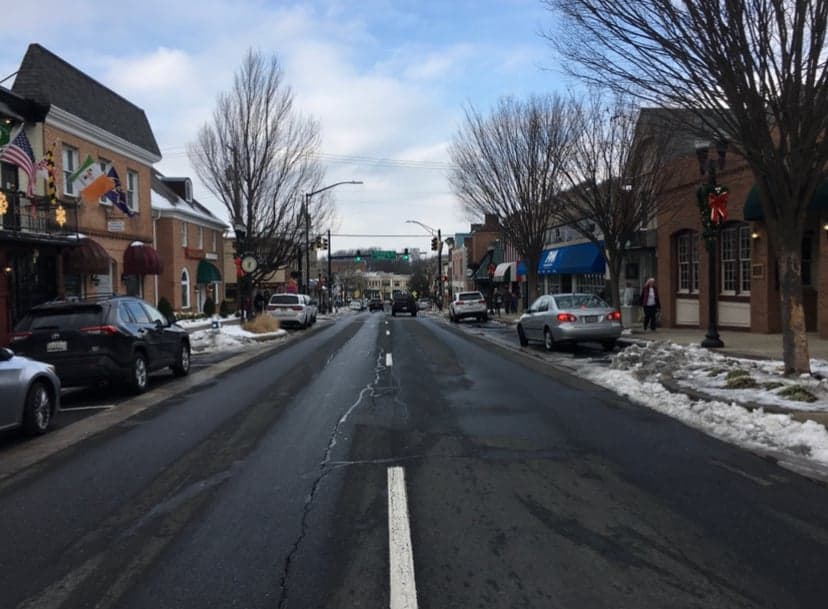
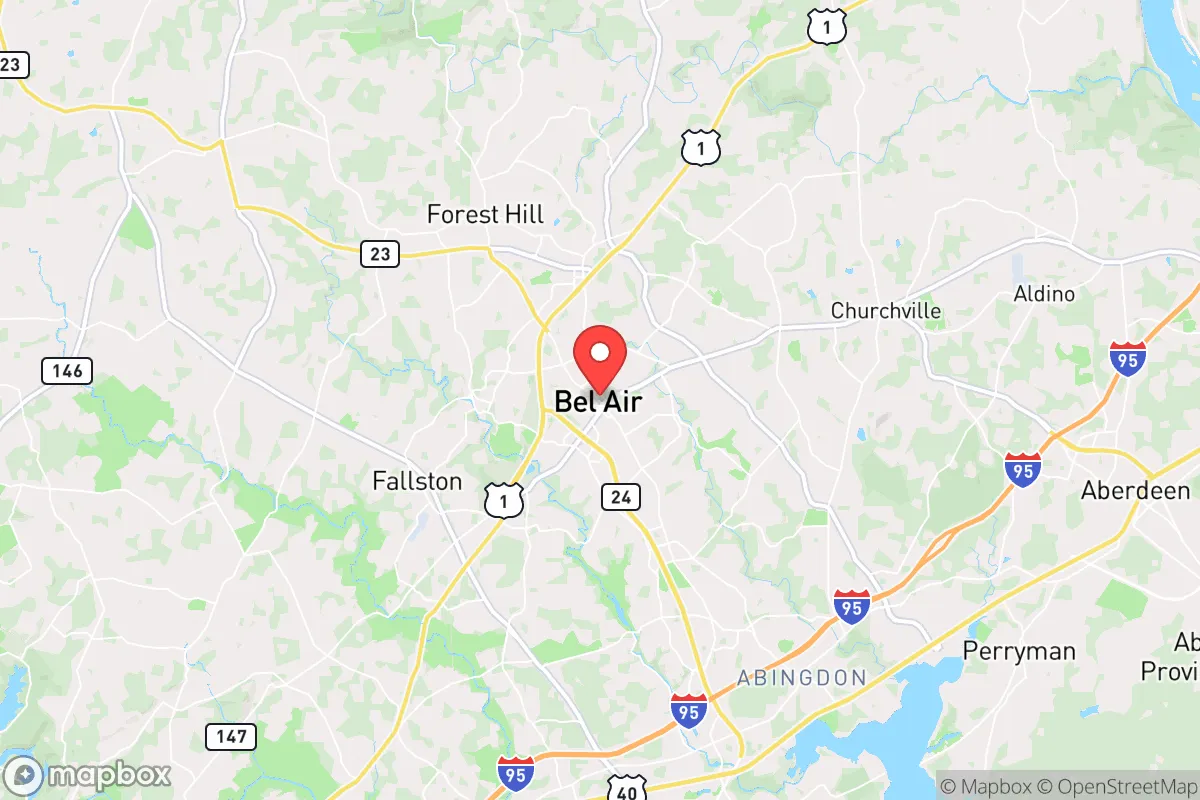
Photo: Wikipedia
Personal Sovereignty in Bel Air, MD
Moderate friction. Expect trade-offs in some aspect of personal liberty and independence.
What does Personal Sovereignty tell us?
Personal Sovereignty measures your capacity for self-reliance and independence with minimal government friction. Higher scores mean fewer barriers between you and the way you want to live... but it assumes you have the space you need and good neighbors.
What does this tell us?
Personal Sovereignty measures your capacity for self-reliance and independence with minimal government friction. Higher scores mean fewer barriers between you and the way you want to live... but it assumes you have the space you need and good neighbors.
State Policy
Energy independence: Importer (8% of energy produced in-state)
Personal Liberty
Homesteading

Personal Liberty Analysis
Bel Air, Maryland, offers a mixed bag for those prioritizing personal sovereignty, where a strong local culture of self-reliance and community resilience clashes with a state-level regulatory environment that leans heavily toward government oversight. For the survivalist or prepper, the town itself provides a relatively stable social fabric and a degree of autonomy in daily life, but the long-term viability of that sovereignty is directly constrained by the policies emanating from Annapolis and Washington D.C. The key is understanding that while your immediate neighbors may value independence, the legal and tax framework you operate under is designed to centralize control, making strategic planning essential for anyone serious about maintaining personal freedom.
Tax burden and regulatory posture for independent living
Maryland’s tax structure is a significant drag on personal sovereignty, ranking among the most burdensome in the nation. The state imposes a progressive income tax with rates up to 5.75%, and Harford County adds a local income tax of 3.06%, meaning a combined top marginal rate near 8.81% on earned income. Property taxes in Bel Air are moderate for the region, with a county rate around $1.08 per $100 of assessed value, but the state’s aggressive estate tax and high sales tax (6%) chip away at wealth accumulation and self-funded preparedness. The regulatory posture is equally concerning: Maryland has a reputation for extensive permitting requirements, strict environmental regulations that can complicate land use, and a general bureaucratic inertia that makes any independent project—from building a workshop to installing a solar array—a test of patience. For the prepper, this means that every dollar earned and every improvement made to your property is subject to layers of state oversight and taxation, reducing the capital available for self-sufficiency investments.
Self-defense and gun law specifics in Bel Air
On the surface, Bel Air is a gun-friendly community with a strong hunting and sport shooting tradition, but the state of Maryland imposes some of the most restrictive firearms laws in the country, directly undermining the right to self-defense. The state requires a Handgun Qualification License (HQL) to purchase a handgun, which involves a training course, fingerprinting, and a background check, creating a de facto waiting period and a government registry of handgun owners. Maryland also bans a wide range of “assault weapons” by name and feature, including popular AR-15 platforms, and limits magazine capacity to 10 rounds. Concealed carry is shall-issue, but the process is expensive and time-consuming, requiring an 8-hour training class, a separate application, and a background investigation. While local sheriffs in Harford County are generally supportive of Second Amendment rights, the state’s legal framework means that any defensive firearm you own is subject to a complex web of restrictions. For the survivalist, this creates a scenario where your ability to defend your home and family is legally constrained, and any future legislative action could further erode those rights.
Self-reliance and homesteading viability in Harford County
The potential for self-reliance in Bel Air is highly dependent on your specific location within the county. In the more rural areas outside the town center, you can find properties with one to five acres, which offer genuine opportunities for gardening, small-scale livestock (chickens, goats), and rainwater collection. Zoning in Harford County is generally permissive for agricultural uses on parcels of two acres or more, but the county’s Critical Area regulations near the Chesapeake Bay and its tributaries impose strict buffers and restrictions on land clearing, building, and even the use of fertilizers. Off-grid living is legally challenging: Maryland requires connection to the electrical grid for new construction in most areas, and while solar panels are allowed, net metering policies are complex and utility companies have significant control. Water wells are permitted on larger lots, but septic systems require county health department approval and regular inspections. For the serious homesteader, Bel Air offers a foundation, but you will be fighting a constant battle against state-level environmental and building codes that prioritize centralized infrastructure over individual independence.
Personal liberties: parental rights, medical autonomy, and free speech
Maryland’s political climate presents a direct challenge to several core personal liberties that conservatives and preppers value. Parental rights in education have been significantly eroded, with the state mandating comprehensive sex education that includes LGBTQ+ content and requiring school boards to adopt policies that can override parental notification on certain issues. Medical autonomy is also constrained: Maryland has a strict vaccine mandate for school attendance, and during public health emergencies, the governor has broad powers to compel treatment or isolation. Free speech is generally protected, but the state’s hate crime laws and social media regulations create a chilling effect for those who express dissenting views on controversial topics. Property rights are perhaps the most concerning: Maryland’s eminent domain powers are broad, and the state has a history of using them for economic development projects, not just public works. The combination of these factors means that in Bel Air, you may feel free in your home and community, but the state government holds significant power over your children’s education, your medical decisions, and even your land.
Overall, Bel Air represents a strategic compromise for the sovereignty-minded individual. The local community is resilient, the crime rate is low, and there is a tangible culture of self-reliance among many residents. However, the state of Maryland is a net negative for personal freedom, with high taxes, restrictive gun laws, and a regulatory environment that favors government control over individual initiative. Compared to areas in the Deep South or the Mountain West, where property rights are stronger and taxes are lower, Bel Air requires a more defensive posture—you must actively work to preserve your autonomy against a state government that is structurally opposed to it. For the prepper who can navigate these constraints, the area offers a stable base with good access to resources, but it is not a place where sovereignty is given; it must be constantly defended.

* Values derived from national, state, county, city and local statistics and may differ in a specific area. Last updated: 2026-04-22T00:59:38.000Z
Narrative content on this page is AI-generated and may contain mistakes. Verify any details that matter before acting on them.
ReloMaps may earn a commission from affiliate links at no extra cost to you.

