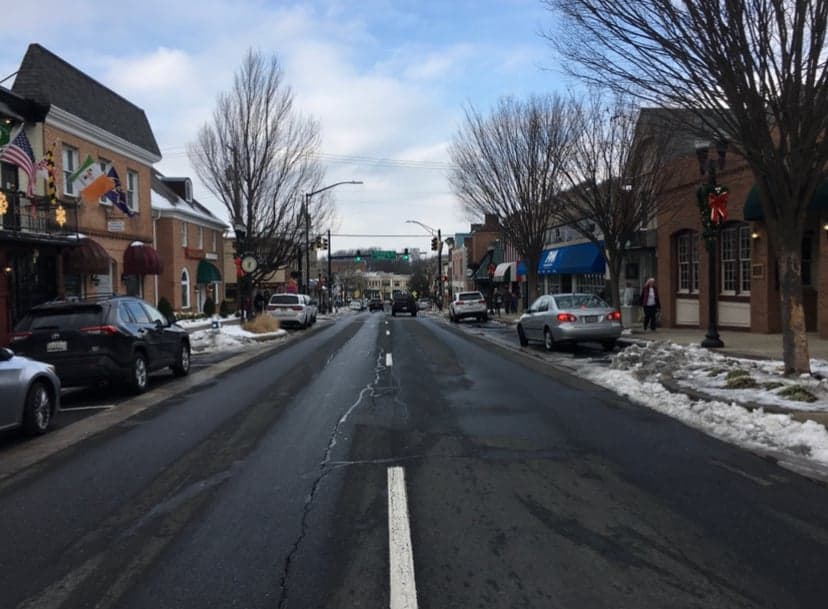
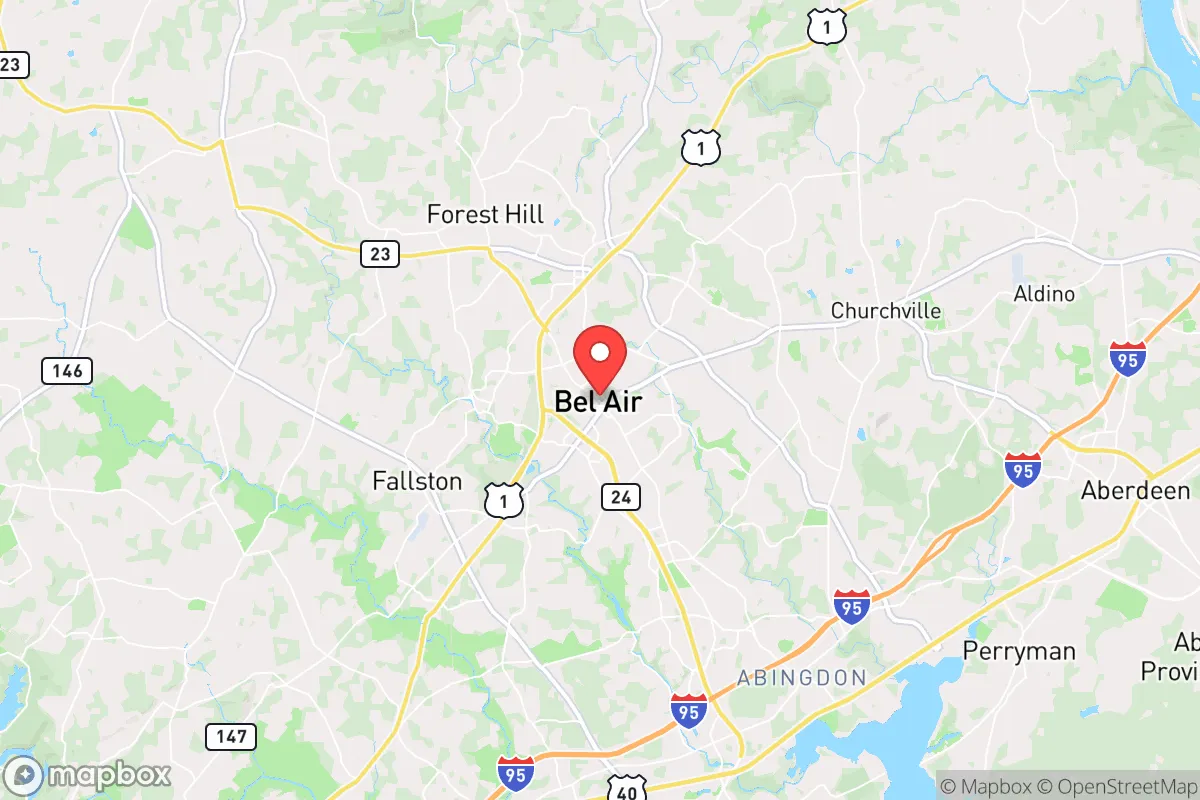
Photo: Wikipedia
Political ClimatePolitical Climate in Bel Air, MD
District shown is the primary district for this city’s centroid. Cities may span multiple districts.
Local Political AnalysisPolitical Analysis of Bel Air, MD
Bel Air, Maryland, has long been a reliably conservative stronghold in a state that trends increasingly blue, and its political DNA is still unmistakably center-right. The Cook PVI rating of R+8 tells you the fundamentals haven't flipped, but if you’ve lived here as long as I have, you’ve watched the character of that conservatism shift. It used to be a quiet, "keep the government out of my business" kind of place—fiscally cautious, socially traditional, and deeply skeptical of Annapolis overreach. Today, that same skepticism is sharper, more vocal, and increasingly focused on the erosion of local control and personal freedoms. The trajectory isn't a sudden lurch leftward, but a slow, grinding pressure from the state capital that makes you feel like you're constantly defending your own backyard.
How it compares
Drive ten miles south to Towson or fifteen miles southwest to downtown Baltimore, and you’ve entered a completely different political universe. Those areas vote reliably Democratic and embrace the progressive policy agenda that Bel Air residents largely view with suspicion—think stricter gun laws, higher property taxes, and mandates that feel like they come from people who’ve never set foot in a Harford County hardware store. Even nearby Aberdeen and Edgewood, while still more moderate than the city, have seen their politics drift leftward in recent cycles. Bel Air, by contrast, remains the anchor of the county's conservative vote. When you look at the county council and state delegate races, the candidates who win here are the ones who talk about cutting red tape, protecting Second Amendment rights, and pushing back against state-level mandates on everything from energy to education. The contrast isn't subtle—it’s a daily reminder that your vote matters more here precisely because it’s under constant assault from the outside.
What this means for residents
For the person living here, the political climate translates directly into how much freedom you actually feel day-to-day. The local government still leans toward a hands-off approach—zoning is relatively permissive, business licensing isn't a nightmare, and the sheriff’s office doesn’t treat law-abiding gun owners like potential criminals. But the tension is real. You see it in the school board meetings, where parents push back against curriculum changes that feel imported from Montgomery County. You feel it in the property tax bills, which creep up as the county tries to fund state-mandated programs without the state’s money. The biggest concern among long-time residents isn’t that Bel Air will turn blue overnight—it’s that the constant drip of progressive policy from Annapolis will slowly strangle the local character. That’s why local elections here feel more consequential than ever. The people who win school board, county council, and sheriff races are the ones who actually stand between you and a state government that seems to think it knows better than you do about how to raise your kids, run your business, or heat your home.
One cultural distinction that sets Bel Air apart is its stubborn, almost defiant sense of community self-reliance. You won’t find the kind of performative activism you see in the closer-in suburbs. Instead, you get a town that still rallies around its volunteer fire companies, its local sports leagues, and its small businesses. The policy fights that matter here are the ones that touch daily life: keeping the county’s rural zoning intact, resisting state pressure to adopt more restrictive housing mandates, and defending the right to carry a firearm without a permission slip from a bureaucrat. Looking ahead, the near-term future probably looks like more of the same—a holding action against state-level overreach. The long-term trajectory depends on whether enough like-minded people stay engaged and vote in every single local election, because the other side certainly does. If you value a place where the government stays out of your way and your voice actually counts, Bel Air is still one of the best bets in Maryland—but you’ve got to keep showing up to keep it that way.

State Political ClimatePolitical Climate in Maryland
State Political AnalysisPolitical Environment in the State
Maryland has long been a solidly blue state, but its political reality is far more complex than a simple partisan label suggests. The state’s overall lean is driven overwhelmingly by the Washington, D.C. suburbs and Baltimore City, while the rest of the state—particularly the Eastern Shore, Western Maryland, and southern counties—votes reliably Republican. Over the last 20 years, the Democratic coalition has strengthened as the D.C. suburbs have grown and diversified, but the rural-urban divide has also sharpened, creating a state that feels like two different countries depending on where you live.
Urban vs. rural divide
The political map of Maryland is a textbook example of the urban-rural split. The Baltimore-Washington corridor, including Montgomery County, Prince George’s County, and Baltimore City, accounts for roughly half the state’s population and delivers massive Democratic margins. In 2024, Montgomery County gave Joe Biden over 80% of the vote. Meanwhile, Garrett County in the far west and Carroll County north of Baltimore are reliably Republican, often voting 65-70% for the GOP candidate. The Eastern Shore counties like Queen Anne’s and Worcester are also solidly red, though the shore’s growth is slowly diversifying. The real battlegrounds are the suburban counties that ring the D.C. metro: Anne Arundel, Howard, and Frederick counties have trended blue over the past decade, but they still have significant conservative populations. Frederick County, for example, flipped from red to blue in the 2018 midterms and has stayed there, but the county’s rural western half remains deeply conservative.
Policy environment
Maryland’s policy environment is heavily shaped by its Democratic supermajority in the General Assembly and a governor who, even when Republican (like Larry Hogan, 2015-2023), has limited veto power. The state has a progressive income tax structure with rates up to 5.75% for most earners, plus a local piggyback tax that pushes the effective top rate over 7% in some counties. Property taxes are high, especially in the D.C. suburbs, and the state’s estate tax exemption is only $5 million, far lower than the federal level. On education, Maryland spends more per pupil than almost any other state, but outcomes vary wildly—wealthy Montgomery County schools are among the best in the nation, while Baltimore City schools struggle. The state has a strong regulatory posture on environmental issues, including a strict Clean Energy Standard and a ban on fracking. On healthcare, Maryland operates an all-payer rate-setting system for hospitals, which keeps costs relatively stable but limits competition. Election laws are among the most liberal in the country: no-excuse mail-in voting, same-day registration, and automatic voter registration are all in place. For a conservative, the policy environment feels like a one-way ratchet toward bigger government and higher taxes, with little room for local control.
Trajectory & freedom
Maryland’s trajectory over the past decade has been toward less personal freedom in several key areas. The state passed the Firearm Safety Act of 2013, which banned assault weapons and limited magazine capacity, and in 2024 it passed a law requiring a permit to purchase a handgun, effectively ending the “Gunshine State” reputation. On parental rights, the state’s Blueprint for Maryland’s Future education reform includes a heavy emphasis on social-emotional learning and diversity, equity, and inclusion (DEI) initiatives, which many conservatives see as sidelining academic rigor and parental input. Medical autonomy took a hit with the state’s strict COVID-19 mandates, which were among the longest-lasting in the nation. On property rights, the state’s Smart Growth policies and county-level zoning have made it difficult to build new housing, driving up costs and limiting individual choice. The one bright spot for freedom advocates was the 2023 repeal of the state’s “good and substantial reason” requirement for concealed carry permits, following the Supreme Court’s Bruen decision. But overall, the trend is toward more regulation and less individual discretion.
Civil unrest & political movements
Maryland has seen its share of political flashpoints. The 2015 Baltimore riots following the death of Freddie Gray were a national story and left deep scars, particularly in the city’s relationship with the state government. The Black Lives Matter movement has a strong presence in Baltimore and the D.C. suburbs, with regular protests and advocacy. On the right, the Maryland State Rifle and Pistol Association and local Second Amendment groups are active, particularly in rural counties. Immigration politics are a live wire: Maryland is a sanctuary state, with state law prohibiting local law enforcement from cooperating with federal immigration authorities in most cases. This has led to tensions in counties like Harford and Carroll, where local sheriffs have tried to push back. Election integrity has been a recurring issue, with the state’s widespread mail-in voting system drawing criticism from conservatives who point to irregularities in the 2020 and 2022 cycles. The Maryland Republican Party has been internally divided between moderates and Trump-aligned activists, which has limited its ability to capitalize on these issues.
Projection
Over the next 5-10 years, Maryland is likely to become more Democratic, not less. The D.C. suburbs continue to grow, driven by federal employment and tech jobs, while rural counties are losing population. The state’s high cost of living and tax burden are pushing some conservatives to move to Pennsylvania, Delaware, or West Virginia, accelerating the partisan shift. However, the state’s political geography is not static: Frederick County could become a swing county if its rural population organizes, and the Eastern Shore’s growth from D.C. expats could dilute its red character. For a conservative moving in now, the realistic expectation is that the state will remain under one-party Democratic control, with policies that trend left on taxes, regulation, and social issues. The best bet for a conservative household is to target a red county like Carroll or Garrett, where local government is more aligned with their values, even if state-level politics are unfavorable.
For a new resident, the bottom line is that Maryland offers a high quality of life in many respects—good schools, strong job markets, and natural beauty—but it comes with a political environment that is actively hostile to many conservative priorities. If you value low taxes, gun rights, and local control, you will find yourself swimming against the current. If you can afford the cost and are willing to fight for your values at the local level, there are still communities where you can thrive. But don’t expect the state to change direction anytime soon.
* Values derived from national, state, county, city and local statistics and may differ in a specific area. Last updated: 2026-04-22T00:59:38.000Z
Narrative content on this page is AI-generated and may contain mistakes. Verify any details that matter before acting on them.
ReloMaps may earn a commission from affiliate links at no extra cost to you.

