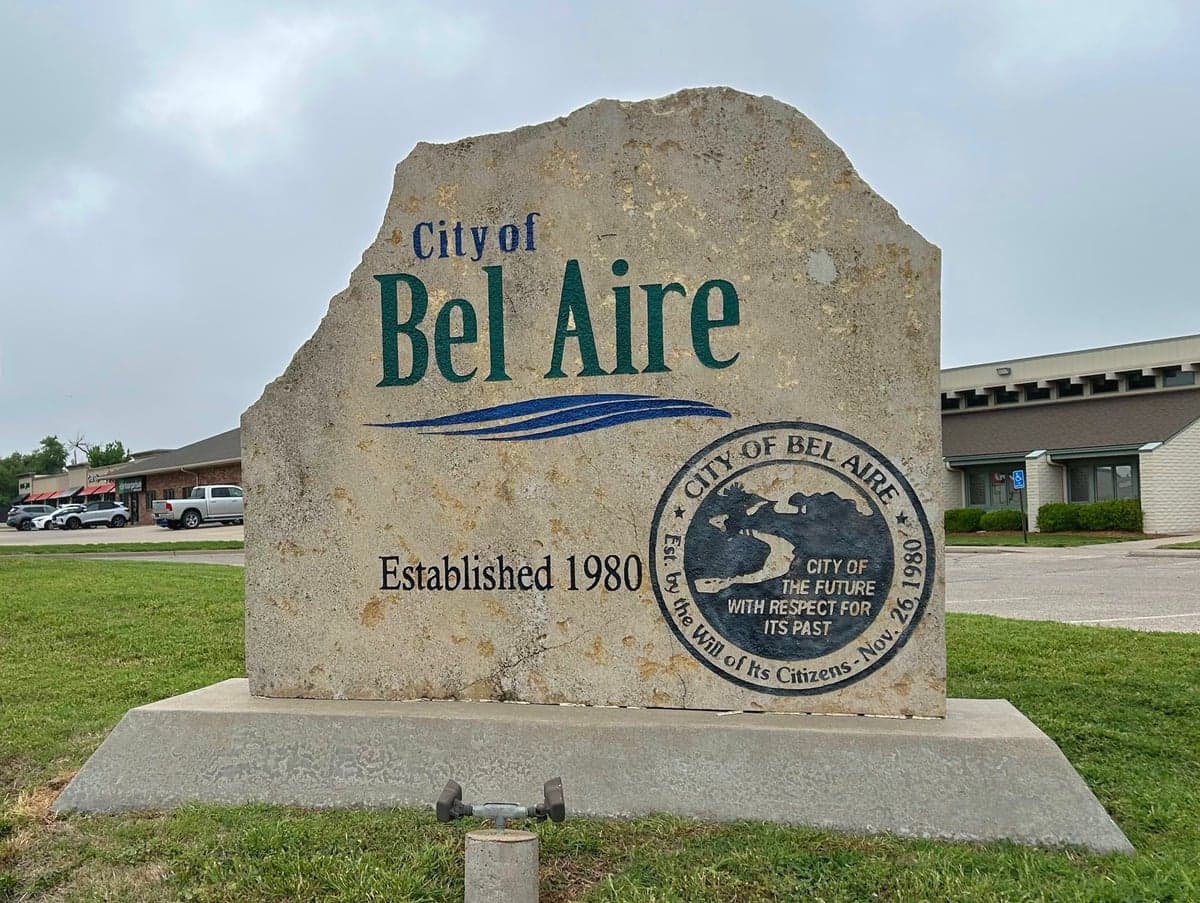
Photo: Wikipedia
Political ClimatePolitical Climate in Bel Aire, KS
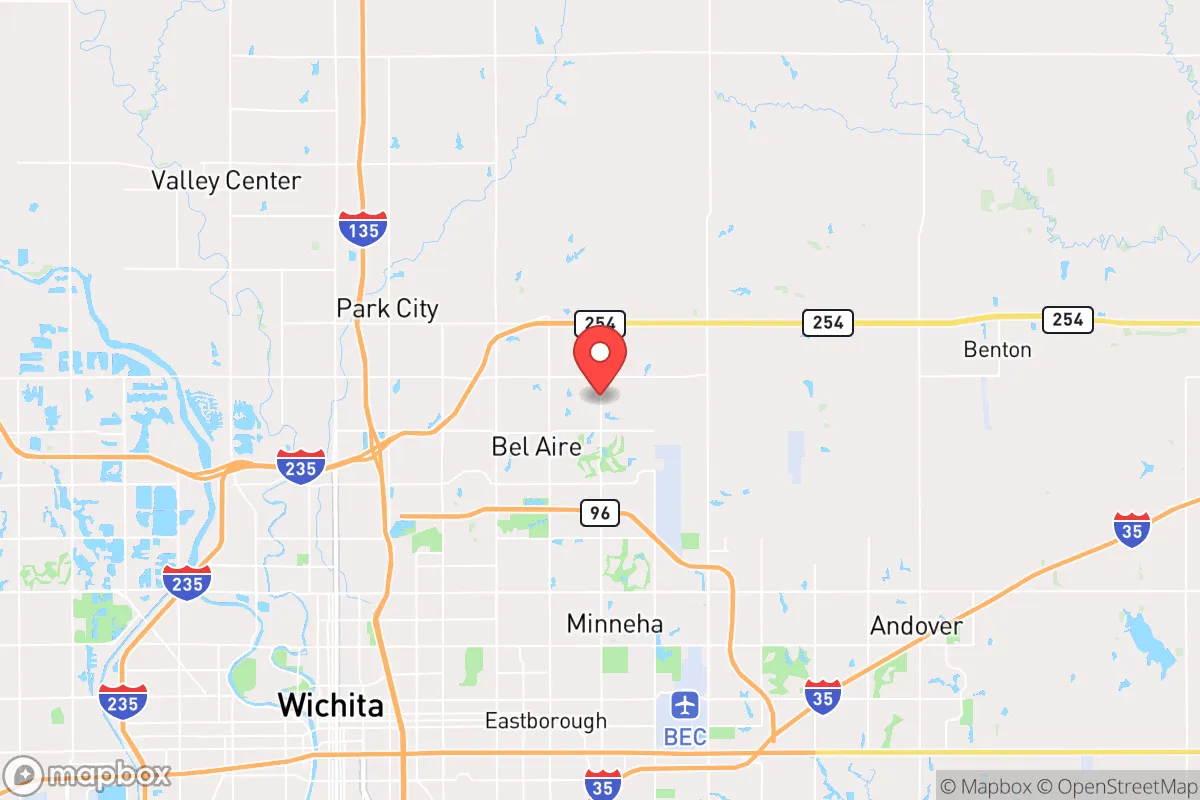
District shown is the primary district for this city’s centroid. Cities may span multiple districts.
Local Political AnalysisPolitical Analysis of Bel Aire, KS
Bel Aire has always been a solidly conservative community, and that hasn't changed. The Cook PVI of R+12 tells you what you need to know — this isn't a swing town. We've voted reliably Republican for as long as I can remember, and the trajectory is holding steady. While some parts of Sedgwick County have started to drift left, especially closer to downtown Wichita, Bel Aire has stayed the course. You don't see the same kind of progressive activism here that you'd find in, say, the College Hill neighborhood or around Delano. It's a place where people still believe in limited government and personal responsibility, and that's reflected in every local election I've followed.
How it compares
Compared to the state of Kansas as a whole — which sits at R+9 — Bel Aire is noticeably more conservative. That three-point gap might not sound huge, but in practice it means our local politics are a step to the right of even the statewide average. While the state legislature has its share of moderate Republicans and a few Democrats from places like Johnson County, Bel Aire's city council and school board races tend to attract candidates who are unapologetically conservative. We don't have the same kind of suburban drift you see in Overland Park or Lenexa, where fiscal conservatism sometimes gets watered down by social liberalism. Here, the emphasis stays on low taxes, Second Amendment rights, and keeping government out of your daily life. The contrast with Wichita proper is even sharper — Wichita's city council has leaned more progressive in recent years, pushing things like non-discrimination ordinances that some of us see as government overreach into private business decisions.
What this means for residents
For folks living here, the political climate translates into a pretty straightforward daily experience. You're not going to run into heavy-handed zoning rules or aggressive code enforcement that tells you what you can do with your own property. The schools reflect community values — there's no push for critical race theory or gender ideology in the curriculum, and parents still have a real say. Property taxes are kept in check because the city council isn't looking to fund grand social programs. If you're worried about government creeping into your personal freedoms — whether it's vaccine mandates, business closures, or restrictions on firearm ownership — Bel Aire is a safe harbor. The long-term outlook is stable, too. New development is happening, but it's mostly single-family homes and small businesses, not the kind of dense, transit-oriented projects that tend to bring more progressive voters. I don't see the political character of this town changing much in the next decade.
One cultural distinction worth noting: Bel Aire has a strong sense of local identity that resists being absorbed into the broader Wichita metro's politics. You'll see "Keep Bel Aire Bel Aire" signs during election season, and that's not just nostalgia — it's a deliberate choice to maintain a community where conservative values are the norm. Neighboring towns like Park City and Kechi lean conservative too, but none quite as consistently as Bel Aire. If you're looking for a place where your rights aren't up for debate and the government stays out of your way, this is it. Just don't expect it to change anytime soon — and that's exactly how most of us want it.

State Political ClimatePolitical Climate in Kansas
State Political AnalysisPolitical Environment in the State
Kansas is a solidly Republican state with a Cook PVI of R+9, but don't let that single number fool you — the political landscape here is more layered than a prairie sunset. Over the past 20 years, the state has swung from a conservative tax-cutting experiment under Sam Brownback to a more moderate, divided government under Governor Laura Kelly, while the legislature remains firmly in GOP hands. The real story is the growing tension between the deep-red rural counties and the increasingly purple suburbs of Johnson County, with places like Lawrence and parts of Wichita providing a persistent blue counterweight. If you're considering a move here, understanding this split is key to picking the right town and knowing what battles are coming next.
Urban vs. rural divide
The political map of Kansas is a textbook case of the urban-rural chasm. The western two-thirds of the state — places like Dodge City, Garden City, and Hays — vote Republican by margins that often exceed 70%. These are agricultural and energy communities where conservative values on guns, taxes, and family are baked into daily life. Meanwhile, the Kansas City suburbs — Overland Park, Olathe, Lenexa, and Shawnee in Johnson County — have been trending toward the center, and in some precincts, even flipping blue in presidential years. Johnson County alone holds nearly a fifth of the state's population, and its shift from solid red to competitive purple has made statewide races tighter. Wichita (Sedgwick County) leans Republican but is less reliable than the rural west, while Lawrence (Douglas County) is the state's liberal stronghold, home to the University of Kansas and a reliably Democratic vote. Topeka, the capital, is a mixed bag — working-class and government-heavy, it often votes more moderately than the surrounding rural areas. The divide isn't just about party; it's about culture, economics, and how much trust people place in local versus state control.
Policy environment
Kansas's policy environment has been a roller coaster. The Brownback tax cuts of 2012 slashed income taxes to a flat rate, aiming to spur growth, but the resulting budget shortfalls led to school funding crises and a bipartisan tax hike reversal in 2017. Today, the state has a progressive income tax structure (three brackets, top rate 5.7%) and a relatively low sales tax of 6.5%, though local add-ons can push it higher. The regulatory posture is generally business-friendly, especially in rural areas, but local governments in Johnson County and Lawrence have imposed stricter zoning and environmental rules that some see as overreach. On education, school choice is limited but growing — charter schools exist but are not widespread, and homeschooling is popular and lightly regulated. The state board of education has seen conservative majorities that have pushed for transparency in curriculum and parental rights. Healthcare: Medicaid expansion remains blocked by the legislature despite Governor Kelly's repeated efforts, a win for limited-government advocates. Election laws are solid: voter ID is required, and the state has a clean voter roll maintenance process, though controversies over the now-defunct Interstate Voter Registration Crosscheck program (pushed by former Secretary of State Kris Kobach) still linger. Overall, the policy environment is a mixed bag — conservative on fiscal and social issues in law, but with a moderate governor who can veto the most aggressive bills.
Trajectory & freedom
On personal freedom, Kansas has seen both expansions and concerning encroachments. The good: constitutional carry (permitless concealed carry) became law in 2015, and the state has strong preemption laws that prevent cities like Lawrence from enacting their own gun bans. Parental rights were bolstered in 2023 with the passage of the Women's Bill of Rights (SB 180), which defines sex based on biology and restricts transgender athletes in school sports — a move that resonated with many conservative families. The legislature also passed a Parents' Bill of Rights (HB 2056) requiring schools to notify parents about curriculum and medical services. On the flip side, the Kelly administration's use of executive orders during COVID — including mask mandates and business restrictions — raised alarms about government overreach, though those have since expired. Medical autonomy: vaccine passports were banned by the legislature in 2021, a win for personal choice. Property rights remain strong, with no statewide rent control and limited eminent domain abuse. The trajectory is cautiously positive: the legislature continues to push back against federal overreach, passing a Second Amendment Preservation Act in 2024 that attempts to nullify federal gun laws. But the growing influence of Johnson County's suburban voters could shift the balance toward more moderate or even progressive policies in the next decade.
Civil unrest & political movements
Kansas isn't known for large-scale civil unrest, but there have been flashpoints. Abortion protests have been relatively muted since the Dobbs decision, though Lawrence and Johnson County saw some rallies. Immigration politics are a live wire in western Kansas, where meatpacking plants in Dodge City and Garden City have drawn a significant Hispanic workforce. The state passed a "No Sanctuary City" law in 2019, requiring local law enforcement to cooperate with federal immigration authorities — a move that drew pushback from some city councils but was widely supported in rural areas. Election integrity remains a hot topic: the 2020 audit of Johnson County's election results (requested by a conservative group) found no widespread fraud, but the controversy fueled ongoing distrust. Organized activist movements include the Kansas Republican Assembly (a conservative grassroots group) and, on the left, the Kansas chapter of Indivisible. The most visible flashpoint for a new resident would likely be local school board meetings, where battles over curriculum, library books, and transgender policies have been intense, especially in Johnson County suburbs like Olathe and Shawnee. These are the front lines of the culture war in Kansas.
Projection
Over the next 5-10 years, Kansas is likely to become more politically competitive, but not overwhelmingly so. The key driver is demographic change: Johnson County is growing faster than the rest of the state, attracting newcomers from blue states like California and Colorado who bring more moderate or liberal voting habits. Rural counties continue to lose population, which could dilute the GOP's rural base. However, the legislature is gerrymandered to protect Republican majorities, and the state's cultural conservatism runs deep outside of the KC suburbs. Expect continued battles over education (school choice expansion, curriculum transparency), tax policy (pressure to return to a flat tax), and local control (cities like Lawrence pushing back on state preemption). The 2026 governor's race will be a bellwether: if a conservative Republican wins, the trajectory will lean toward more freedom-oriented policies; if Kelly or a moderate holds the seat, expect more gridlock. For a conservative mover, the safest bet is to choose a rural or small-town location where the political culture aligns with your values, or to be prepared to engage in local politics if you settle in Johnson County. The state is not trending hard left, but the purple is spreading.
Bottom line for a new resident: Kansas remains a good bet for conservatives who value low taxes, gun rights, and local control — but you need to pick your spot carefully. The rural west and central plains are as red as ever, while the Kansas City suburbs are increasingly contested ground. If you're moving for a job in Overland Park or Lenexa, expect to encounter a more diverse political environment and possibly some progressive local policies. If you want the full Kansas experience — wide-open spaces, strong community, and minimal government interference — look to towns like Hays, Dodge City, or Manhattan. Either way, the state's political future will be shaped by the tension between its rural heart and its suburban edge, and your vote will matter more here than in a deep-blue state.
* Values derived from national, state, county, city and local statistics and may differ in a specific area. Last updated: 2026-05-14T18:57:24.000Z
Narrative content on this page is AI-generated and may contain mistakes. Verify any details that matter before acting on them.
ReloMaps may earn a commission from affiliate links at no extra cost to you.

