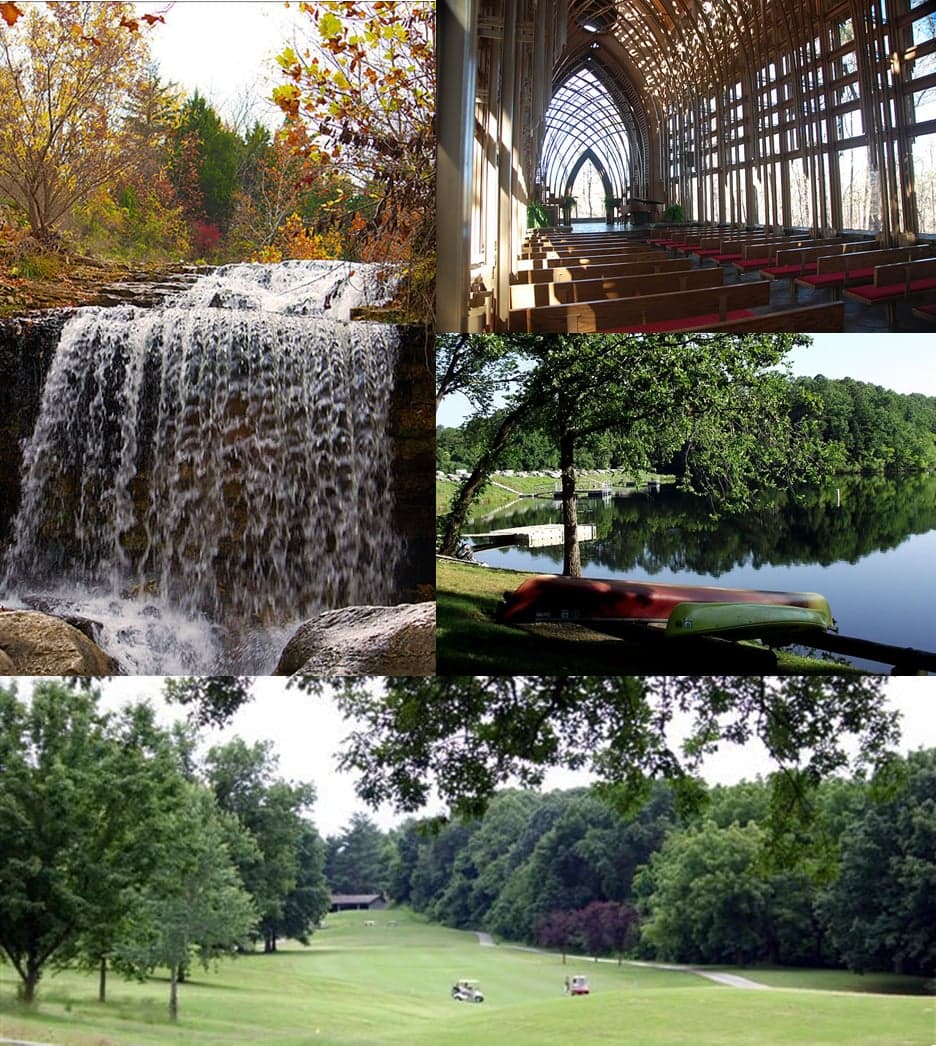
 Popular
Photo: Wikipedia
Political ClimatePolitical Climate in Bella Vista, AR
District shown is the primary district for this city’s centroid. Cities may span multiple districts.
Local Political AnalysisPolitical Analysis of Bella Vista, AR
Bella Vista, Arkansas, is a rock-ribbed conservative community, and that’s not just talk—the area’s Cook Partisan Voting Index (PVI) of R+13 puts it among the most reliably Republican corners of Northwest Arkansas. That number means the district votes about 13 points more Republican than the national average, and in practice, it’s felt in everything from local school board meetings to county commission races. If you’ve lived here a while, you’ve watched the place hold steady even as Bentonville and Fayetteville have drifted leftward over the past decade. The trajectory here isn’t toward purple; it’s a slow, stubborn deepening of red, driven by retirees and families who moved here specifically to escape the politics of places like California or Illinois.
How it compares
Drive 15 minutes south to Bentonville, and you’ll feel the difference immediately. Bentonville’s downtown has that hip, bike-lane, craft-coffee vibe that leans moderate-to-liberal, especially among the younger transplants working at Walmart’s corporate campus. Fayetteville, another 20 minutes south, is the bluest spot in the region—home to the University of Arkansas and a reliably Democratic voting bloc. Bella Vista, by contrast, is where people go when they want less of that. Neighboring Rogers and Pea Ridge are also conservative, but Bella Vista’s retiree-heavy demographic (over 40% of residents are 65+) makes it the most consistently Republican. In the 2024 primaries, Bella Vista precincts turned out for the most conservative candidates by wide margins, while Bentonville’s precincts split more evenly. It’s not a culture war here—it’s a culture consensus.
What this means for residents
For folks who value personal freedoms and want government to stay out of their lives, Bella Vista is a breath of fresh air. Property taxes are low (Benton County’s millage rate is among the lowest in the state), and there’s no city income tax. The local government is small and hands-off—zoning is minimal, and you’ll see plenty of RVs, boats, and workshop sheds in driveways without anyone complaining. The school board elections here are quiet affairs, usually uncontested, and the curriculum stays traditional. That said, there’s a growing concern among long-time residents about outside pressure. As Northwest Arkansas booms economically, some worry that progressive policies from Fayetteville or even Little Rock could trickle up—things like stricter environmental regulations on the lakes or diversity mandates in local hiring. So far, Bella Vista’s city council has held the line, but it’s something to keep an eye on.
Culturally, Bella Vista stands apart from its neighbors in a few key ways. The town was originally a retirement community built around seven lakes and two golf courses, and that legacy still shapes the vibe—quiet, orderly, and deeply suspicious of change. You won’t find a bustling nightlife or a farmer’s market with kombucha stalls; what you’ll find is a lot of pickup trucks, church parking lots full on Sunday mornings, and a genuine sense that people here look out for each other. The biggest policy distinction is the town’s relationship with the Bella Vista Property Owners Association, which manages the lakes and amenities. It’s a quasi-governmental body that some residents feel has too much power, but efforts to rein it in have been slow. If you’re moving here, understand that the political climate isn’t just about voting—it’s about a way of life that prizes independence, low taxes, and a government that remembers its place. That’s not changing anytime soon, and most of us hope it never does.

State Political ClimatePolitical Climate in Arkansas
State Political AnalysisPolitical Environment in the State
Arkansas has been a reliably red state for decades, with a strong Republican lean that has only deepened since the early 2000s. The state hasn't voted for a Democratic presidential candidate since Bill Clinton's 1996 re-election, and the GOP now holds every statewide office, both U.S. Senate seats, and supermajorities in the state legislature. The shift has been dramatic: as recently as 2008, Democrats still controlled the state House and held both Senate seats, but a combination of cultural realignment and in-migration from other conservative states has cemented a solidly conservative coalition. The 2024 presidential election saw Donald Trump carry Arkansas by roughly 60-38%, a margin that reflects the state's current political center of gravity.
Urban vs. rural divide
The political map of Arkansas is a textbook case of the urban-rural split. The state's two major population centers—Little Rock (Pulaski County) and Fayetteville (Washington County)—are the only reliably blue or purple areas. Pulaski County, home to the capital, voted for Joe Biden in 2020 and has trended leftward as the city's professional class and minority populations have grown. Washington County, driven by the University of Arkansas and the corporate presence of Walmart in nearby Bentonville, has become a competitive swing county, though it still leans slightly Republican in most races. Outside these two islands, the state is deeply red. The Arkansas Delta, once a Democratic stronghold due to its large Black population, has seen white voters flee the party, while the Ozark and Ouachita mountain regions—places like Harrison, Mountain Home, and Hot Springs—are among the most conservative areas in the country. Benton County, home to Walmart's headquarters, is a fascinating case: it's rapidly growing and becoming more diverse, but it remains solidly Republican, with Trump winning it by 20 points in 2024. The rural counties of the south and east, like Mississippi County and Chicot County, are poorer and more racially diverse, but even they have shifted rightward in recent cycles.
Policy environment
Arkansas's policy environment is aggressively conservative, with a focus on low taxes, limited regulation, and cultural traditionalism. The state has a flat income tax of 4.4% (down from 7% in 2015), and the legislature has passed multiple rounds of cuts with the goal of eventually eliminating the income tax entirely. Sales tax is around 6.5% at the state level, but local add-ons can push it to 10% or higher in some cities. Property taxes are low by national standards, averaging about 0.6% of assessed value. On education, the state has embraced school choice: the LEARNS Act of 2023 created a universal school voucher program that allows any family to use state funds for private or homeschool expenses. This was a major win for parental rights advocates, though it remains controversial among rural districts worried about funding. Healthcare policy is mixed: Arkansas expanded Medicaid under the private option model, but the state has also imposed work requirements and is one of the most restrictive on abortion, banning the procedure at conception with no exceptions for rape or incest. Election laws have tightened: voter ID is required, and the state purged over 40,000 inactive voters from the rolls in 2024. The state also passed a law banning ranked-choice voting and limiting ballot drop boxes, moves that election integrity advocates praised but voting rights groups criticized.
Trajectory & freedom
On the whole, Arkansas is moving toward more personal freedom in most areas that matter to conservatives, though there are some concerning trends. The LEARNS Act is a landmark expansion of educational freedom, giving parents real control over where their children learn. Gun rights are robust: Arkansas is a constitutional carry state, meaning no permit is needed to carry a concealed firearm, and the state has preempted local gun ordinances. In 2023, the legislature passed a law prohibiting any state or local enforcement of federal gun regulations that don't exist under state law—a direct challenge to federal overreach. Property rights are strong, with no state income tax on capital gains and a right-to-farm law that protects agricultural operations from nuisance lawsuits. However, there are warning signs. The state's Medicaid expansion, while pragmatic, has created a large government program that some worry could be a foothold for progressive healthcare policies. Additionally, the state's growing reliance on federal funds—about 40% of the state budget comes from Washington—creates a vulnerability if the federal government ever tries to impose conditions on that money. The biggest freedom concern is the state's criminal justice system: Arkansas has one of the highest incarceration rates in the country, and the governor's push for "tough on crime" sentencing reforms has led to longer sentences for nonviolent offenses, which some see as government overreach.
Civil unrest & political movements
Arkansas has been relatively quiet on the civil unrest front compared to states like Oregon or Minnesota, but there have been flashpoints. The most visible was the 2020 Black Lives Matter protests in Little Rock, which saw some property damage and clashes with police, but were far smaller and less violent than in larger cities. The state has also seen a growing "constitutional sheriff" movement, particularly in rural counties like Baxter County and Carroll County, where sheriffs have publicly stated they will not enforce any federal gun or vaccine mandates. Immigration politics are less heated here than in border states, but the legislature passed a law in 2023 requiring all employers to use E-Verify, and there have been local controversies over the resettlement of refugees in Springdale and Rogers. Election integrity remains a hot topic: the 2022 secretary of state race saw a hardline conservative win on a platform of "cleaning up the rolls," and there are ongoing lawsuits over the state's voter purge process. A new resident would notice that political activism here is more grassroots and church-based than in coastal states—you'll see "Let's Go Brandon" flags on pickup trucks and yard signs for local school board races, but not the kind of street-level confrontations common in Portland or Austin.
Projection
Over the next 5-10 years, Arkansas is likely to become even more conservative, but with some important nuances. The state's population is growing slowly (about 1% per year), and the growth is concentrated in the northwest corridor—Bentonville, Fayetteville, Rogers, and Springdale. This area is attracting both conservative transplants from California and Texas and younger, more moderate professionals drawn by the tech and logistics jobs. If this trend continues, the northwest could become a swing region, potentially making statewide races more competitive. However, the rural areas are emptying out, and the Delta is losing population, which means the political map will become even more skewed toward the conservative northwest and the shrinking rural base. The state's Republican supermajority is unlikely to be threatened, but there could be internal fights between the establishment wing (pro-business, pro-Walmart) and the populist wing (anti-establishment, culture-war focused). The biggest wildcard is the state's budget: if the income tax is eliminated, the state will become heavily dependent on sales tax and federal funds, which could lead to budget crises during economic downturns. For a new resident, the bottom line is that Arkansas will remain a safe haven for conservative values—low taxes, school choice, gun rights, and limited government—but the culture in the northwest will become more suburban and less rural over time, which may or may not be what you're looking for.
For someone moving to Arkansas, the practical takeaway is this: you'll find a state that largely leaves you alone, with low taxes, strong property rights, and a government that respects your right to live as you see fit. The schools are improving thanks to the voucher program, the cost of living is low, and the people are generally friendly and self-reliant. Just be aware that the political climate is not monolithic—the northwest is becoming more diverse and moderate, while the rural areas remain deeply traditional. If you're looking for a place where your values are the norm and the government isn't constantly in your business, Arkansas is a solid bet. Just keep an eye on the budget and the criminal justice system, which are the two areas where government overreach could creep back in.
* Values derived from national, state, county, city and local statistics and may differ in a specific area. Last updated: 2026-04-23T02:29:47.000Z
Narrative content on this page is AI-generated and may contain mistakes. Verify any details that matter before acting on them.
ReloMaps may earn a commission from affiliate links at no extra cost to you.

