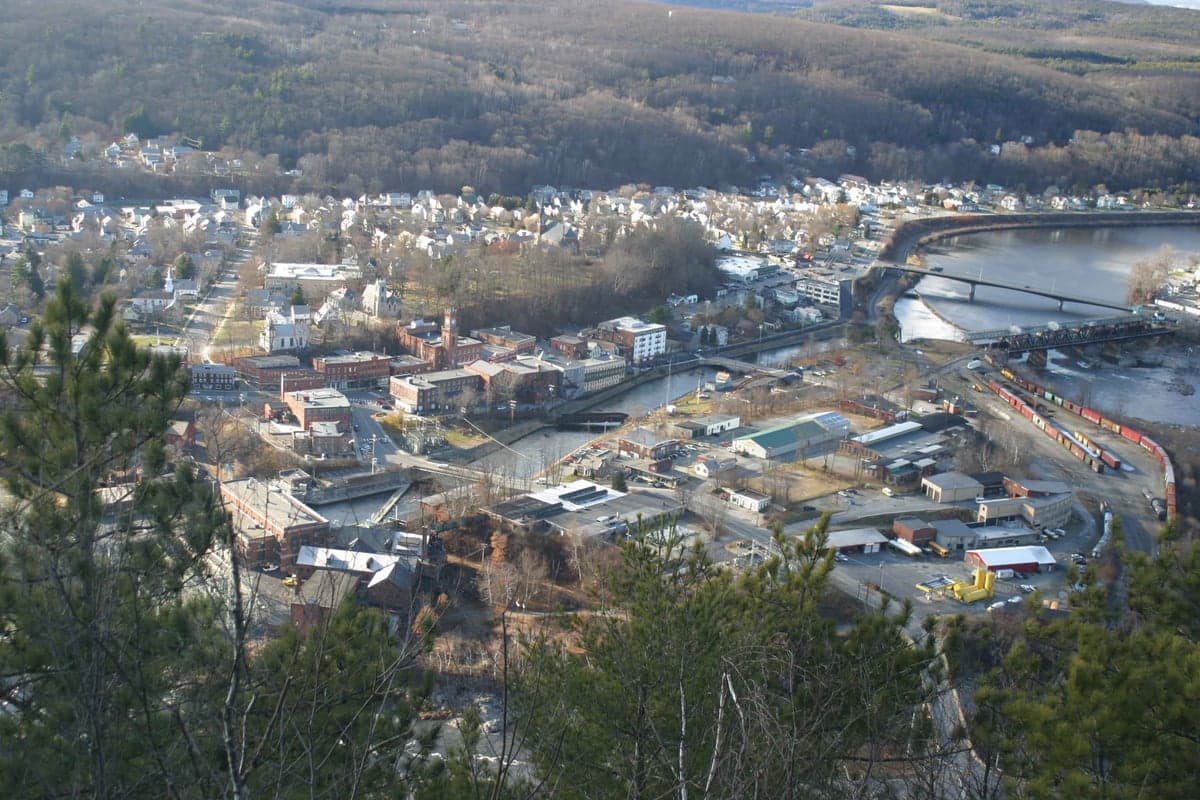
Photo: Wikipedia
Personal Sovereignty in Bellows Falls, VT
Moderate friction. Expect trade-offs in some aspect of personal liberty and independence.
What does Personal Sovereignty tell us?
Personal Sovereignty measures your capacity for self-reliance and independence with minimal government friction. Higher scores mean fewer barriers between you and the way you want to live... but it assumes you have the space you need and good neighbors.
What does this tell us?
Personal Sovereignty measures your capacity for self-reliance and independence with minimal government friction. Higher scores mean fewer barriers between you and the way you want to live... but it assumes you have the space you need and good neighbors.
State Policy
Energy independence: Importer (15% of energy produced in-state)
Personal Liberty
Homesteading

Personal Liberty Analysis
Bellows Falls, Vermont, presents a complex sovereignty picture for the conservative-leaning individualist or prepper. While the town itself is a small, walkable village with a strong sense of local community, it sits within a state that has aggressively expanded government authority into personal freedoms, particularly regarding medical mandates, firearms, and property rights. For those seeking maximum autonomy, Bellows Falls offers a mixed bag: a relatively low cost of living and a rural-adjacent setting, but under the thumb of a state government that has shown little hesitation in overriding local and individual decision-making. The key question is whether the town's small-scale, hands-off local culture can buffer the reach of Montpelier's increasingly interventionist policies.
Tax burden and regulatory posture for individuals and small businesses
Vermont's tax burden is among the highest in the nation, and Bellows Falls residents are not exempt. The state imposes a progressive income tax with a top marginal rate of 8.75%, and property taxes are notoriously high, driven largely by school funding formulas. For a single individual or family, this means a significant portion of income is redirected to state programs, many of which fund initiatives that run counter to a conservative worldview. The regulatory environment is equally challenging. Vermont has some of the strictest land-use and environmental regulations in New England, administered through Act 250, a state-level permitting process that can delay or block even modest construction projects. For a prepper looking to build a root cellar, install a solar array, or erect a workshop, the permitting hurdles can be substantial. Small businesses face a thicket of state mandates, including paid family leave, a $15+ minimum wage, and strict labor laws. While the town of Rockingham (which contains Bellows Falls) has a more pragmatic local government, the state's regulatory posture is a clear negative for anyone prioritizing economic self-determination.
Self-defense and gun law specifics in a restrictive state
This is a critical area of concern. Vermont, once a bastion of gun rights, has enacted some of the most restrictive firearm laws in the country since 2018. The state now has universal background checks, a ban on "large capacity" magazines (over 10 rounds for long guns, 15 for handguns), a ban on bump stocks, and a "red flag" law that allows for the temporary seizure of firearms based on a complaint, without a criminal conviction. There is no state preemption of local gun ordinances, meaning Bellows Falls or Rockingham could theoretically pass their own restrictions, though they have not done so as of 2026. For the prepper or self-defense-minded individual, this is a major red flag. Stockpiling standard-capacity magazines is illegal, and the red flag law creates a vulnerability for anyone who has a dispute with a neighbor or family member. Concealed carry is shall-issue, but the state's restrictive climate means that even legal gun owners face a higher risk of legal entanglement. The only saving grace is that Vermont's rural culture still respects firearms for hunting and sport, but the legal landscape is actively hostile to the concept of armed self-defense as a fundamental right.
Self-reliance and homesteading viability: lot sizes, zoning, and off-grid feasibility
Bellows Falls itself is a dense village with small lots, making traditional homesteading difficult within the immediate town limits. However, the surrounding Rockingham area and nearby towns like Westminster and Grafton offer larger parcels of land, often with few zoning restrictions beyond state-level Act 250 oversight. Lot sizes of 2-10 acres are common and affordable by national standards, with prices often under $100,000 for raw land. Off-grid living is legally possible but practically challenging. Vermont has strict building codes that apply even to remote structures, and the state's energy regulations make it difficult to disconnect from the grid entirely. Solar panels are permitted, but net metering rules are complex. Rainwater collection is legal but regulated. For a serious prepper, the land is available and cheap, but the state's regulatory appetite means that true off-grid independence requires navigating a bureaucratic maze. The local culture in the Bellows Falls area is more live-and-let-live than in the state's more progressive enclaves like Burlington, but the state's long arm reaches into the countryside.
Personal liberties: parental rights, medical autonomy, speech, and property
This is where the sovereignty picture darkens considerably. Vermont has been a national leader in expanding state authority over families and individuals. The state has a universal school choice system, which is a positive for parents, but it also mandates comprehensive sexuality education and has removed parental opt-out provisions for certain curricula. Medical autonomy has been severely eroded: Vermont had some of the strictest COVID-19 mandates in the nation, including vaccine requirements for healthcare workers and school staff, and the state legislature has shown a willingness to mandate vaccines for school attendance. The state also has a "physician-assisted suicide" law and broad abortion access, which may or may not align with a reader's values. Property rights are under constant pressure from Act 250 and state-level conservation easements. Free speech is protected by the First Amendment, but the state's political culture is overwhelmingly progressive, meaning that expressing conservative or dissenting views can lead to social ostracism or professional repercussions. For the individualist, the cumulative effect is a state that actively works to reduce personal sovereignty in favor of collective, government-directed outcomes.
In the broader context of New England, Bellows Falls offers a relatively affordable entry point into a region with strong natural resources and a resilient local community. However, compared to states like New Hampshire (which has no income tax, no sales tax, and far fewer gun restrictions) or even more rural parts of New York, Vermont's sovereignty score is low. For the prepper or conservative individualist, Bellows Falls is a place where you can buy cheap land and find a like-minded community, but you will be fighting the state government every step of the way on taxes, guns, medical choices, and property rights. It is a location for those who are willing to engage in a long-term defensive battle for their freedoms, not for those seeking a haven of autonomy. The town's charm and affordability are real, but they come with the heavy price of living under one of the most interventionist state governments in the nation.

* Values derived from national, state, county, city and local statistics and may differ in a specific area. Last updated: 2026-04-30T02:21:45.000Z
Narrative content on this page is AI-generated and may contain mistakes. Verify any details that matter before acting on them.
ReloMaps may earn a commission from affiliate links at no extra cost to you.

