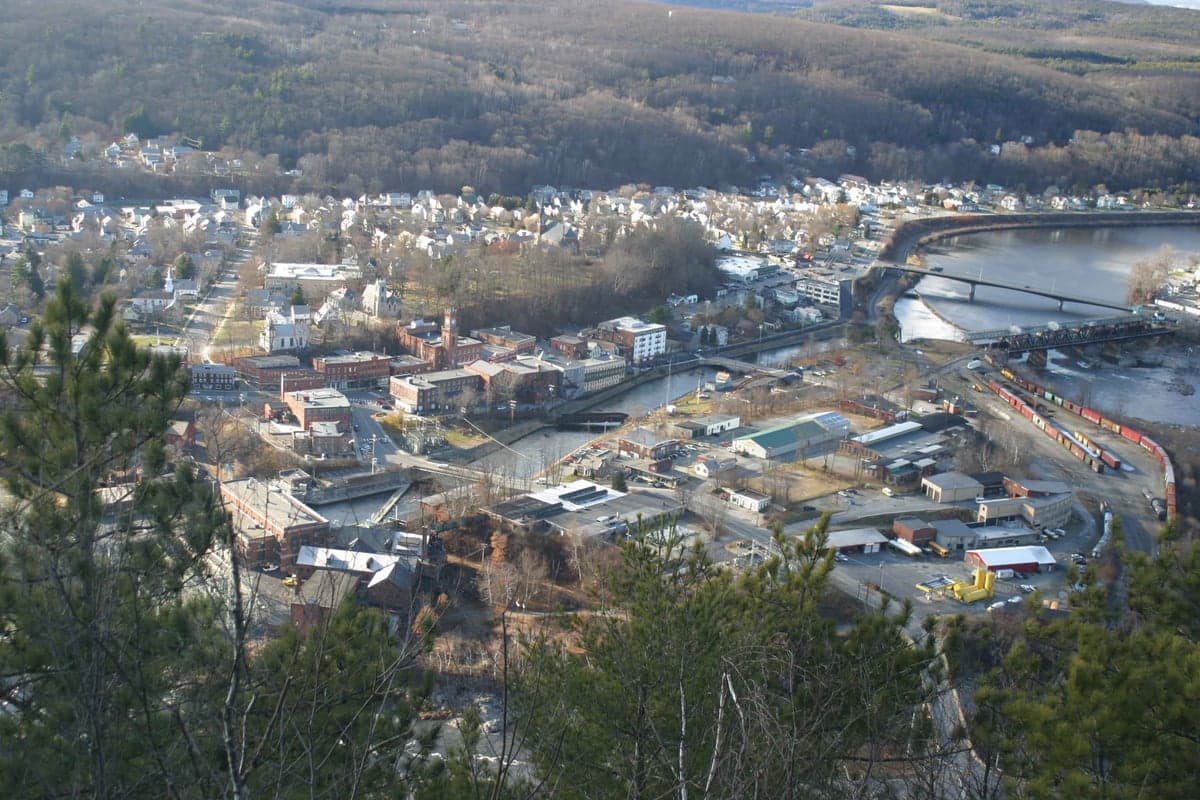
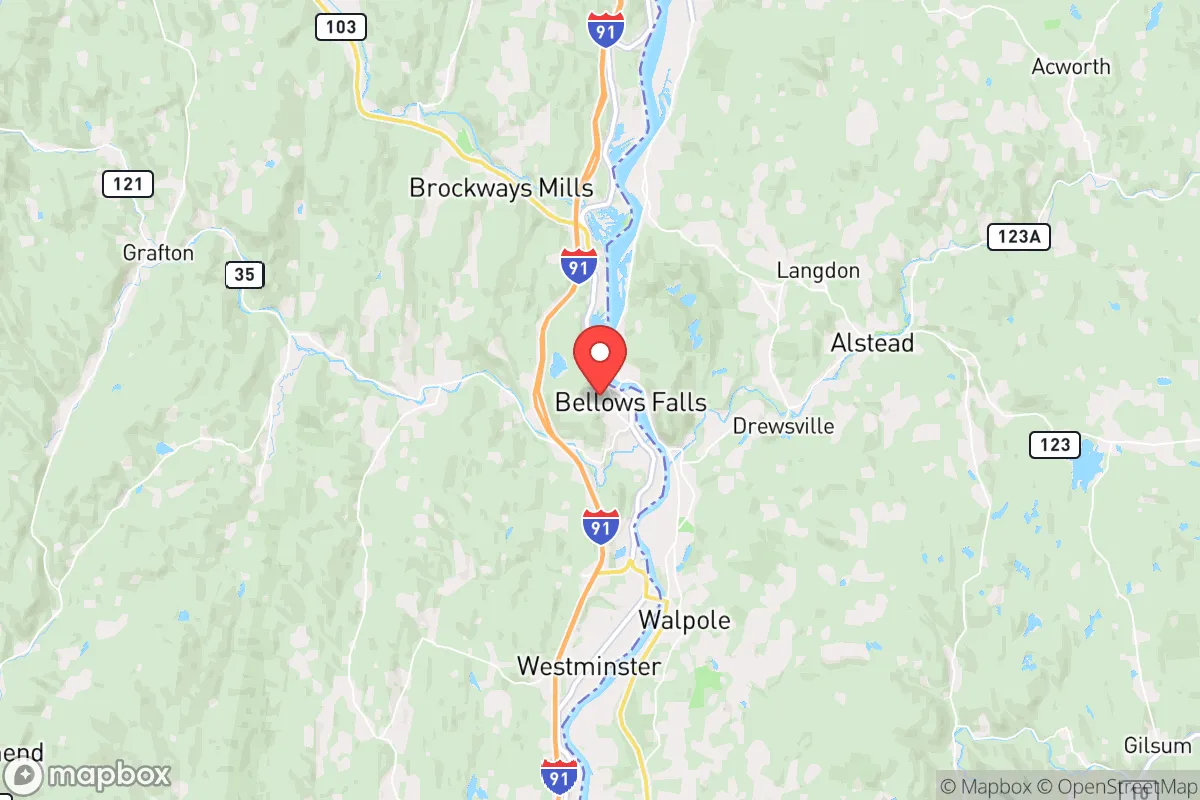
Photo: Wikipedia
Quality of Life in Bellows Falls, VT
Above-average quality of iife. The area offers a reasonable cost of living, decent mobility, and a mix of neighborhood amenities.
What does Quality of Life tell us?
Quality of Life blends cost of living, nearby amenities, socioeconomic signals, and neighborhood character. City-level scores represent the whole municipality; individual neighborhoods can differ.
What does this tell us?
Quality of Life blends cost of living, nearby amenities, socioeconomic signals, and neighborhood character. City-level scores represent the whole municipality; individual neighborhoods can differ.
Cost of Living
20% below national average
The Real Cost of Living in Bellows Falls, VT for 2026
| Tier | Individual | Family (4) |
|---|---|---|
| Survival | $17k | $32k |
| Comfortable | $34k | $50k |
| Luxury | $80k+ | $123k+ |
| Elite (Top 5%) | $94k+ | $145k+ |
109%
The Area Signal
A metric tracking the socioeconomic signals of the area.
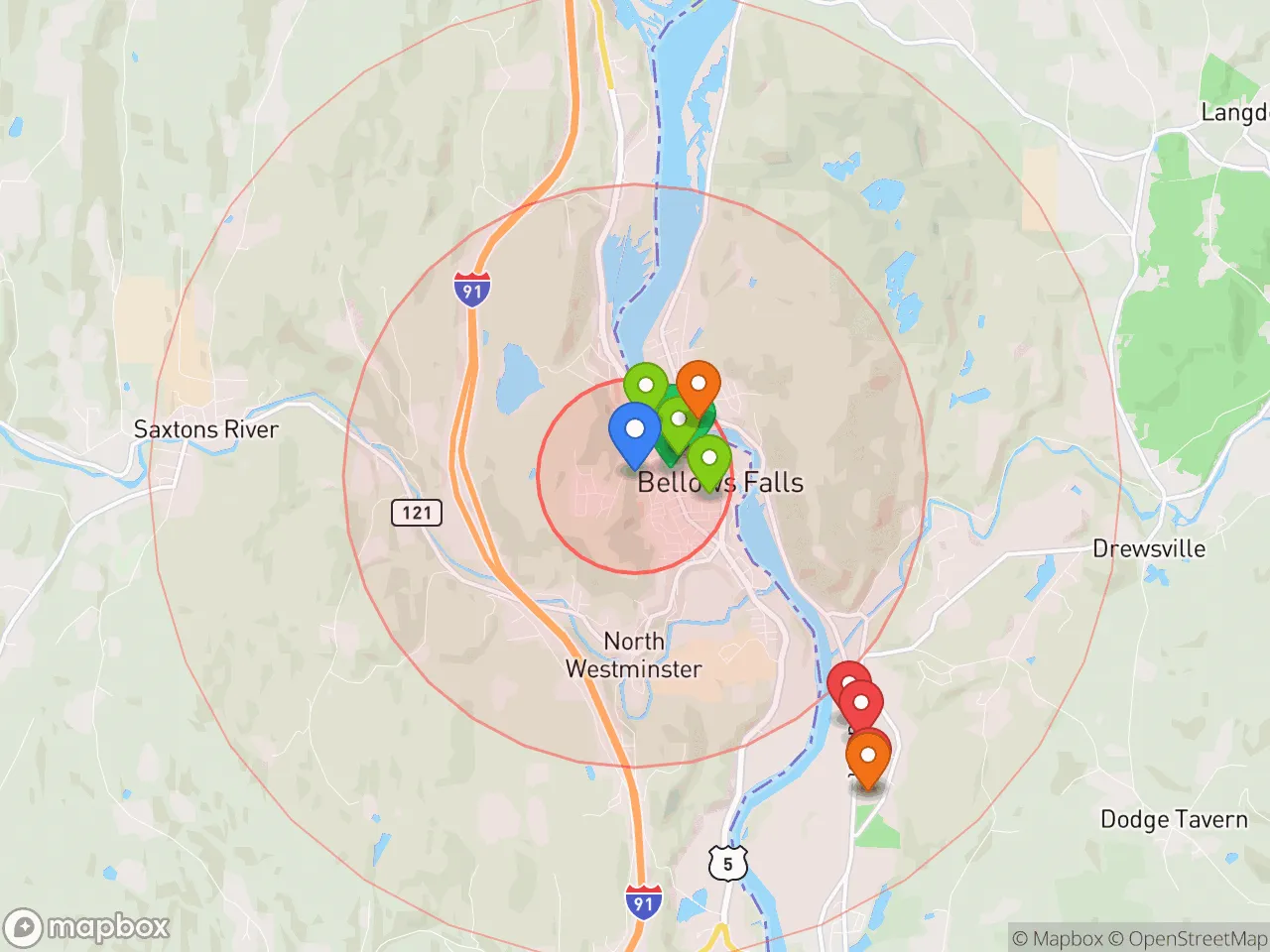
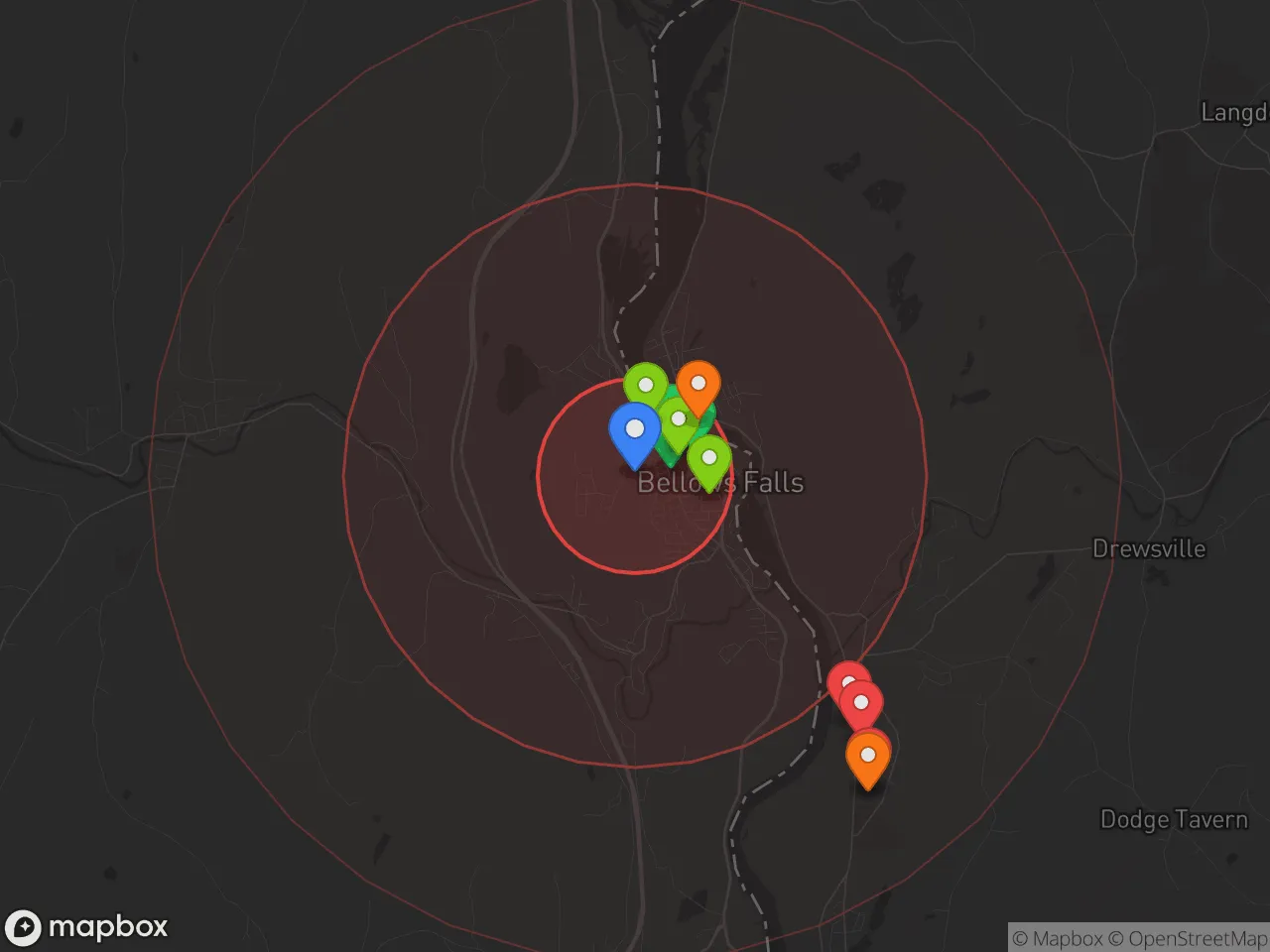
Hobbies
Explore the areaGroceries
1 within 10 miles
Gas
6 within 10 miles
Hospital
5 within 20 miles
Airport
PDX — Portland International Jetport
Post Office
USPS — Bellows Falls, VT
Critical Amenities
Quality-of-Life Analysis
Bellows Falls, Vermont, presents a notably affordable quality of life relative to much of New England, with a cost of living index of 80 (20% below the U.S. average) that attracts a mix of remote workers, artists, and families seeking a slower pace without the premium price tag of southern Vermont towns like Brattleboro or Manchester. The village's population of roughly 3,000 is a blend of long-standing working-class residents, newcomers renovating historic homes, and a small but active creative community drawn by the low rents and the scenic Connecticut River setting. Median household income hovers around $45,000, reflecting a less affluent demographic than the state average, but the low housing costs allow for a lifestyle that would be out of reach in pricier regions.
Cost of living, housing, and affordability compared to nearby towns
Housing is the primary driver of Bellows Falls' affordability. The median home value of $176,000 is roughly half the Vermont state median of $350,000 and significantly undercuts nearby Brattleboro (median ~$290,000) and Keene, New Hampshire (median ~$330,000). Median rent sits at $1,071, which is about 30% lower than the state average and makes the village one of the most accessible rental markets in Windham County. The average commute of 23 minutes is short by regional standards—many residents work locally in retail, healthcare, or the town's small manufacturing base, while others commute to Springfield (15 minutes) or Claremont, NH (20 minutes). Utility costs are on par with the rest of Vermont, which is higher than the national average due to heating oil dependence, but the overall COL index of 80 means a household earning $50,000 here has roughly the same purchasing power as one earning $62,500 in a typical U.S. city.
Local amenities, schools, and the daily rhythm of village life
Daily life in Bellows Falls centers on the compact downtown along the Rockingham Meeting House and the historic train station. The village has a walkable main street with a co-op grocery store, a pharmacy, a few casual restaurants (e.g., The Works Bakery & Cafe), and the Bellows Falls Farmers Market (June–October). For broader shopping and services, residents drive 15 minutes to the retail strip in Walpole, NH, or 25 minutes to Brattleboro. The Bellows Falls Union High School serves grades 7–12 with an enrollment of about 400 and a student-teacher ratio of 11:1; its graduation rate is roughly 85%, slightly below the state average of 90%. Elementary students attend Central Elementary School in town. Outdoor recreation is a major draw: the Connecticut River offers fishing, kayaking, and the 1.5-mile Bellows Falls Canal Trail, while the nearby Green Mountain National Forest provides hiking and skiing within a 45-minute drive. The village lacks a hospital—the nearest emergency room is 20 minutes away in Springfield—but has a small health center for primary care.
Bellows Falls is best suited for cost-conscious buyers, remote workers, and retirees who value low housing costs and a quiet, walkable village over urban amenities or high-end dining. Families should weigh the below-average school metrics against the affordability and short commutes, while artists and entrepreneurs may find the cheap studio space and small-town community appealing. The trade-off is limited job diversity, a modest tax base, and a slower pace that can feel isolating for those accustomed to larger cities. For anyone prioritizing financial breathing room and a historic New England setting, however, Bellows Falls delivers a quality of life that punches above its price point.

Crime in Bellows Falls, VT
Lower crime rates than 88% of comparable U.S. locations.
Violent CrimeViolent Crime Analysis
Property CrimeProperty Crime Analysis
Crime Analysis
Bellows Falls, Vermont, presents a mixed safety profile, with violent crime rates significantly below national averages but property crime rates that exceed both state and national benchmarks. The village's overall crime index is 15. laudable for its low violent crime, yet the elevated property crime figure warrants attention from prospective residents. The local justice system, operating under Vermont's progressive criminal justice reforms, has faced criticism for prioritizing offender rehabilitation over public safety, a factor that may contribute to the area's property crime challenges.
Crime in context
Bellows Falls reports a violent crime rate of 110 incidents per 100,000 residents, which is roughly one-third of the national average of 380 per 100,000 and well below Vermont's state rate of 170 per 100,000. This makes the village statistically safer than many rural and urban areas nationwide for violent offenses like assault, robbery, and homicide. However, property crime tells a different story. The rate of 843.1 per 100,000 is nearly double the national average of 455 per 100,000 and significantly higher than Vermont's state average of 640 per 100,000. The disparity is largely driven by thefts, including larceny and burglary, which are more common in the village's compact, walkable downtown. Critics argue that Vermont's progressive district attorneys, who often favor diversion programs and reduced sentencing for nonviolent offenders, may inadvertently embolden repeat property criminals, as recidivism rates for theft-related offenses remain stubbornly high in the region.
What residents experience
Daily life in Bellows Falls is generally safe from violent confrontation, but residents frequently report concerns about property security. Car break-ins, package thefts, and vandalism are the most common complaints, particularly in the village center and near the train station. The Rockingham Police Department, which serves Bellows Falls, has a visible presence but limited resources, with only a handful of officers on patrol per shift. Community policing efforts have been hampered by a lack of funding and the broader challenges of Vermont's justice system, where progressive policies like bail reform and decriminalization of certain offenses have led to a perception that property crimes are not taken seriously. For example, a 2023 report from the Vermont Department of Public Safety noted that over 60% of property crime arrests in Windham County resulted in no jail time, a statistic that frustrates many long-term residents.
Neighborhood-level variation
Safety in Bellows Falls varies notably by neighborhood. The historic downtown area, centered around Rockingham Street and the Square, sees the highest concentration of property crime due to foot traffic and commercial activity. In contrast, residential streets like Atkinson Street and the outlying areas near the Saxtons River tend to have lower incident rates, with residents reporting fewer break-ins and a stronger sense of community watch. The village's proximity to Interstate 91 also makes it a target for transient property crime, as offenders can easily pass through. For those considering a move, homes in the northern and eastern parts of the village, away from the commercial core, generally offer a quieter, safer living environment, though no area is immune to the region's property crime trends.
* Values derived from national, state, county, city and local statistics and may differ in a specific area. Last updated: 2026-04-30T02:21:45.000Z
Narrative content on this page is AI-generated and may contain mistakes. Verify any details that matter before acting on them.
ReloMaps may earn a commission from affiliate links at no extra cost to you.

