 Popular
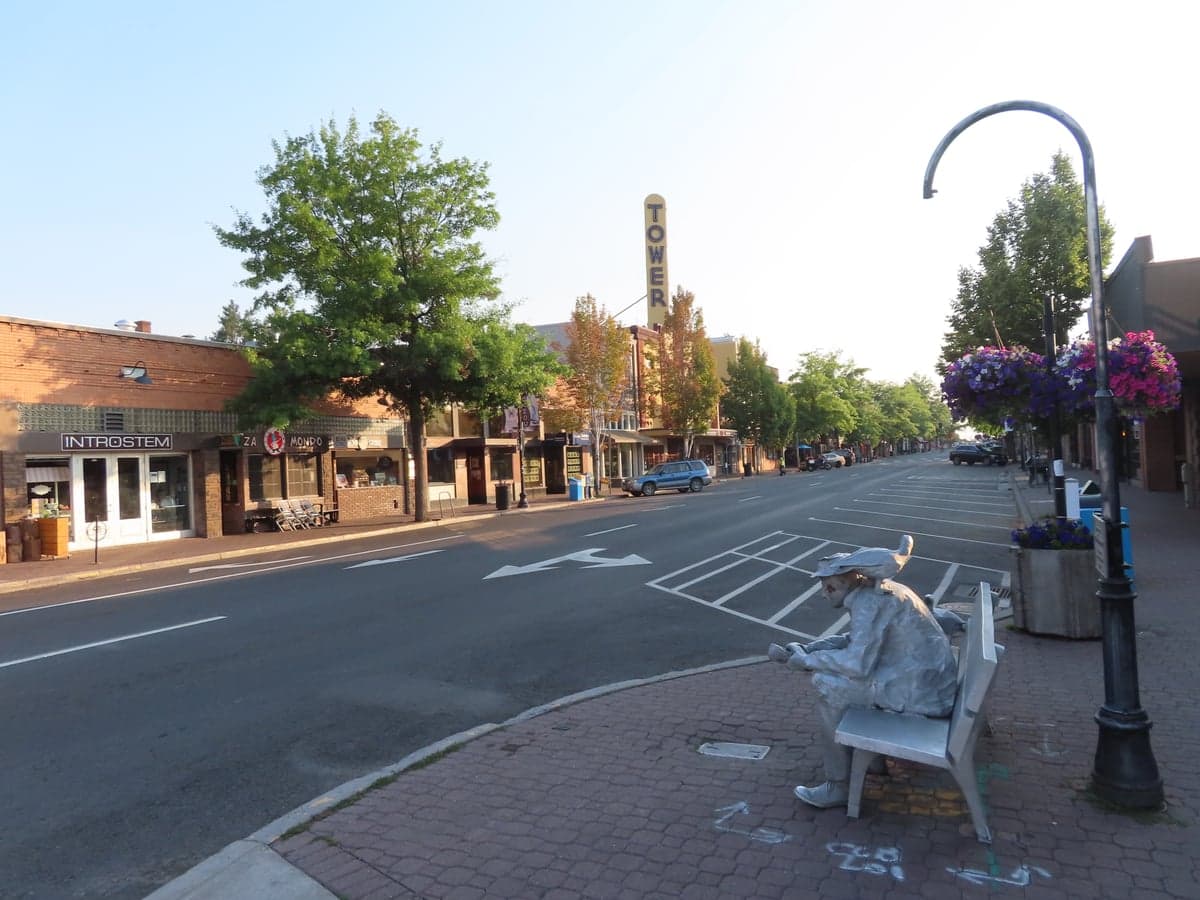
Photo: Wikipedia
Personal Sovereignty in Bend, OR
Viable for self-reliance. Generally workable, though some barriers may limit total independence.
What does Personal Sovereignty tell us?
Personal Sovereignty measures your capacity for self-reliance and independence with minimal government friction. Higher scores mean fewer barriers between you and the way you want to live... but it assumes you have the space you need and good neighbors.
What does this tell us?
Personal Sovereignty measures your capacity for self-reliance and independence with minimal government friction. Higher scores mean fewer barriers between you and the way you want to live... but it assumes you have the space you need and good neighbors.
State Policy
Energy independence: Importer (35% of energy produced in-state)
Personal Liberty
Homesteading

Personal Liberty Analysis
Bend, Oregon, presents a complex picture for those prioritizing personal sovereignty. While the city itself leans heavily progressive, the surrounding Deschutes County and the broader Central Oregon region offer a more mixed environment where a determined individual can carve out significant autonomy. The key is understanding that Bend is a blue island in a redder county, meaning local city ordinances often clash with the more liberty-minded culture found just outside the city limits. For a survivalist or prepper, the strategic calculation involves leveraging the region's natural resources and lower-density areas while navigating a state government that has increasingly centralized control over personal choices.
Tax burden and regulatory posture in Deschutes County
Oregon has no state sales tax, which is a direct benefit for anyone making large purchases of gear, supplies, or equipment. However, the trade-off is a state income tax that ranks among the highest in the nation, with a top marginal rate of 9.9% on income over $125,000 for single filers. Property taxes in Deschutes County are moderate compared to the Portland metro area, but they are not low—expect around 1% of assessed value annually, with assessments capped at 3% growth per year under Measure 50. The regulatory posture is where the friction really shows. Bend's city government has aggressively pursued land-use restrictions, urban growth boundaries, and building codes that make it expensive and time-consuming to develop property. For someone wanting to build a self-sufficient homestead or a workshop, the city's permitting process is a significant obstacle. Outside city limits, Deschutes County is more permissive, but state-level land-use laws (Goal 3 and Goal 4) still heavily restrict what you can do on rural land, particularly regarding accessory dwellings, commercial activity, and resource extraction. The net effect is that Bend itself is a high-tax, high-regulation environment, but the surrounding county offers a slightly more breathing room for those willing to navigate the bureaucracy.
Self-defense and gun law specifics in Oregon
Oregon's firearm landscape has shifted dramatically in recent years, and Bend sits squarely in the middle of that tension. The state passed Measure 114 in 2022, which requires a permit to purchase a firearm, a completed background check at the point of sale, and a ban on magazines holding more than ten rounds. As of early 2026, the law remains in legal limbo—enjoined by a state court ruling but still being litigated. This means the practical reality on the ground is uncertain. Bend's local sheriff's office and police department have generally been supportive of Second Amendment rights, but the city council has passed resolutions supporting stricter gun control. For a prepper, the key takeaway is that Oregon is not a constitutional carry state; you need a concealed handgun license (CHL) to carry concealed, and the process is straightforward but requires a class and a fee. Open carry is legal without a permit in most areas, but it's prohibited in Portland and other cities that have passed local ordinances. Bend itself has not banned open carry, but the cultural climate is hostile to visible firearms. For self-defense at home, no special permit is needed for a firearm kept in the residence. The magazine ban, if ultimately upheld, would be a major blow to anyone relying on standard-capacity rifles for home defense or preparedness. The bottom line: Bend is a place where you can legally own firearms, but the political and legal environment is actively hostile to that right, and you should expect continued erosion.
Self-reliance and homesteading viability in Central Oregon
The viability of a self-reliant lifestyle in Bend depends almost entirely on where you buy land. Inside the city limits, lot sizes are small—typically 5,000 to 10,000 square feet—and zoning codes prohibit keeping livestock like chickens, goats, or pigs in most residential zones. The city also restricts rainwater harvesting to 1,000 gallons per property without a permit, and off-grid living is effectively illegal because the city requires connection to municipal water and sewer. Move outside the urban growth boundary, and the picture changes. Deschutes County allows rural residential zoning on parcels as small as 5 acres, and on those you can keep livestock, build a shop, and install solar panels. However, Oregon's state building code requires a septic system and a permitted well for any habitable structure, which adds $20,000–$40,000 to the upfront cost. Off-grid solar is legal and common, but net metering policies are less favorable than in states like Texas or Arizona. The growing season is short—about 90 days—and the high desert climate means irrigation is mandatory for any serious gardening. For a prepper, the realistic path is to buy 5–20 acres in the county, invest in a well and solar, and accept that you'll still be dependent on the grid for some things. The region's wildfire risk is also a serious consideration; insurance costs have spiked, and some carriers have stopped writing policies in high-risk zones. Self-reliance here is possible but expensive and requires significant capital upfront.
Personal liberties in Bend: parental rights, medical autonomy, and speech
On parental rights, Oregon is one of the most progressive states in the nation. The state has passed laws that allow minors to consent to certain medical treatments without parental notification, including reproductive health services and gender-affirming care. This is a major concern for conservative parents who want to maintain authority over their children's medical decisions. The state also mandates comprehensive sex education in public schools, and Bend-La Pine Schools have implemented policies that prioritize student privacy over parental notification regarding gender identity. For parents who want to opt out, the process is cumbersome and often requires legal action. On medical autonomy, Oregon has legalized physician-assisted suicide (Death with Dignity Act) and has a robust medical marijuana program, but recreational cannabis is also legal. The state's vaccine mandates for school attendance are among the strictest in the country, with no personal or philosophical exemption—only medical and religious exemptions are allowed, and the religious exemption has been narrowed by court rulings. Free speech is protected under the Oregon Constitution, which has stronger protections than the First Amendment in some areas, but Bend's local government has passed ordinances that restrict speech in public forums, including limits on protesting outside abortion clinics and restrictions on camping in public spaces that effectively target homeless individuals. Property rights are heavily constrained by state land-use laws; you cannot simply build what you want on your land without going through a lengthy permitting process. The overall picture is one of a state that has centralized authority over family, medical, and property decisions, with Bend's local government amplifying those restrictions rather than resisting them.
Compared to states like Idaho, Montana, or Texas, Bend offers significantly less personal sovereignty across nearly every metric. The tax burden is higher, gun rights are more restricted, parental authority is weaker, and property rights are heavily regulated. However, for someone who is determined to live in the Pacific Northwest for family, career, or environmental reasons, the Deschutes County area is one of the better options within Oregon. The key is to avoid living inside Bend city limits and instead focus on the unincorporated areas or smaller towns like Redmond or Prineville, where the regulatory climate is more permissive and the culture is more aligned with self-reliance. If you are willing to pay the premium for land, navigate the permitting process, and accept the state-level restrictions, you can build a reasonably sovereign life in Central Oregon. But if maximum autonomy is your primary goal, you will find better options elsewhere in the country.

* Values derived from national, state, county, city and local statistics and may differ in a specific area. Last updated: 2026-05-02T13:58:17.000Z
Narrative content on this page is AI-generated and may contain mistakes. Verify any details that matter before acting on them.
ReloMaps may earn a commission from affiliate links at no extra cost to you.

