Photo: Wikipedia
Demographics of Berea, KY
Affluence Level in Berea, KY
A below-average socioeconomic profile. Incomes, home values, and educational attainment trail the U.S., with higher poverty and unemployment.
People of Berea, KY
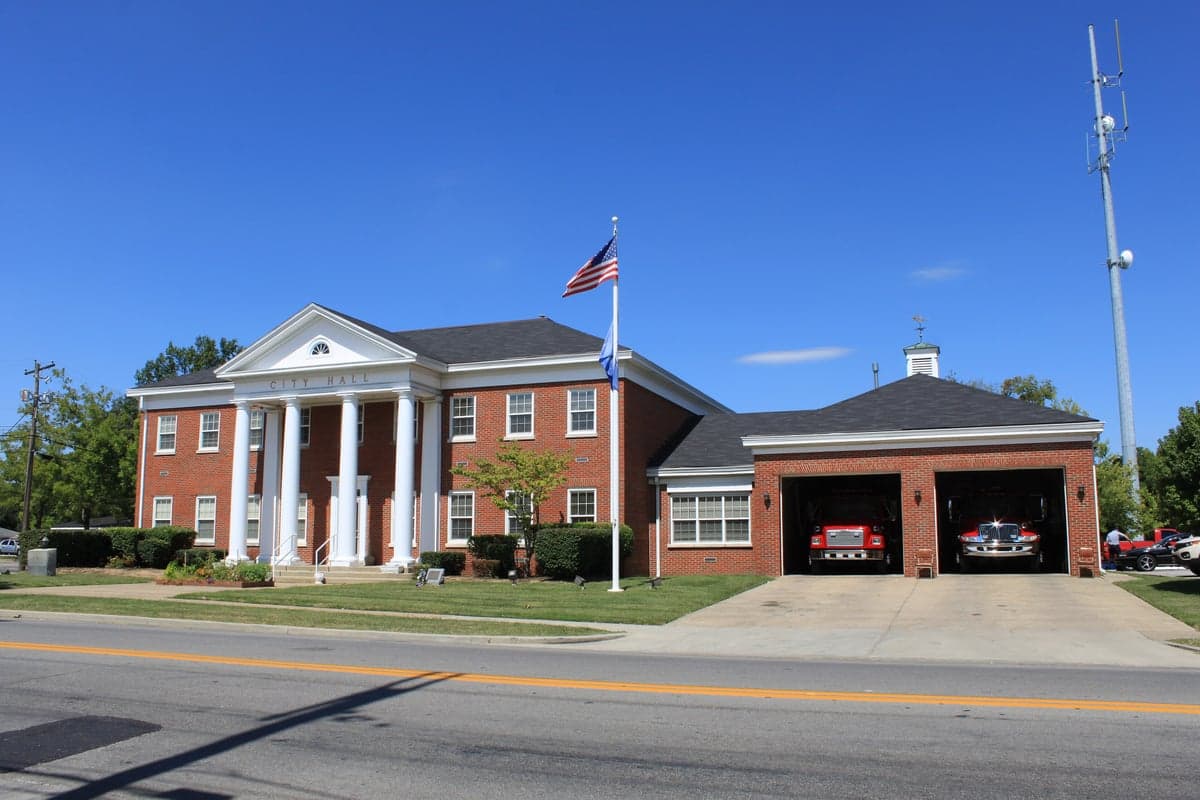
The people of Berea, Kentucky, today number 15,557, forming a predominantly white (88.4%) and college-educated (27.0%) community with a notably small foreign-born population (1.3%). The city’s identity is shaped by its historic role as a center for Appalachian education and crafts, giving it a character that is both culturally progressive and demographically stable. Unlike many Kentucky towns, Berea’s population is dense for its size, with a walkable downtown and a strong sense of place rooted in Berea College’s influence. The city remains overwhelmingly native-born, with Hispanic residents (4.4%) and Black residents (2.8%) forming the largest minority groups, while East/Southeast Asian (0.5%) and Indian subcontinent (0.2%) communities are very small.
How the city was settled and grew
Berea was founded in 1853 by abolitionist minister John G. Fee, who established Berea College as an interracial and coeducational institution—a radical act in antebellum Kentucky. The earliest settlers were a mix of white Appalachian families from surrounding Madison and Rockcastle counties, drawn by the promise of affordable land along the Louisville & Nashville Railroad, and free Black families seeking education and community. The historic College Square neighborhood, centered on the campus, became the heart of this founding population, with faculty and students living in modest homes near the college. By the late 19th century, Berea’s crafts movement—weaving, woodworking, and pottery—attracted skilled artisans, many of whom settled in the Old Town district along Jefferson Street. The city’s population grew steadily through the early 20th century, reaching about 5,000 by 1950, as the college expanded and the railroad brought commerce. The Farristown neighborhood, originally a separate African American settlement founded by formerly enslaved people after the Civil War, was annexed into Berea in the 1920s and remains a historically Black enclave today.
Modern era (post-1965)
After the 1965 Hart-Cellar Act, Berea saw minimal immigration due to its inland location and lack of industrial jobs—the foreign-born share remains just 1.3%, far below the national average. Instead, domestic in-migration drove change. From the 1970s through the 1990s, Berea attracted retirees and counterculture-leaning newcomers drawn to the college’s liberal arts reputation and the city’s low cost of living. These arrivals settled in newer subdivisions like Berea Hills and Walnut Meadow, which expanded the city’s footprint east of US-25. The Hispanic population grew modestly, from under 1% in 1990 to 4.4% today, with families concentrated in the West Berea area near the industrial park, where light manufacturing and landscaping jobs are available. The Black population declined from its historic peak in Farristown—now about 2.8% citywide—as younger generations moved to larger cities. The college’s ongoing commitment to diversity has kept Berea more racially integrated than surrounding Madison County, but the city remains overwhelmingly white and native-born.
The future
Berea’s population is projected to grow slowly, reaching roughly 17,000 by 2040, driven by continued college enrollment and retirement migration from the Midwest. The city is not homogenizing into a single culture but rather tribalizing into distinct enclaves: the College Square area remains liberal and academic, while newer subdivisions like Berea Hills attract conservative-leaning families and retirees. The Hispanic community is growing but plateauing, as many families are second-generation and assimilating into the broader white population—intermarriage rates are high. The East/Southeast Asian and Indian communities are too small to form distinct neighborhoods, likely remaining scattered. The Black population in Farristown is aging, with younger residents moving away, though the college’s recruitment of Black students may slow the decline. For a newcomer, Berea is becoming a stable, low-growth college town where the biggest demographic story is not diversity but the persistence of its Appalachian and college-rooted identity.
For a conservative-leaning mover, Berea offers a safe, predominantly white community with a strong civic fabric and low crime, but with a noticeable liberal enclave around the college. The city is not diversifying rapidly, so the cultural character will remain familiar to those from the Upper South or Midwest. The key trade-off is between the college’s progressive influence and the surrounding county’s conservative politics—a balance that makes Berea a unique but stable choice for relocation.

* Values derived from national, state, county, city and local statistics and may differ in a specific area. Last updated: 2026-04-21T09:24:13.000Z
Narrative content on this page is AI-generated and may contain mistakes. Verify any details that matter before acting on them.
ReloMaps may earn a commission from affiliate links at no extra cost to you.

