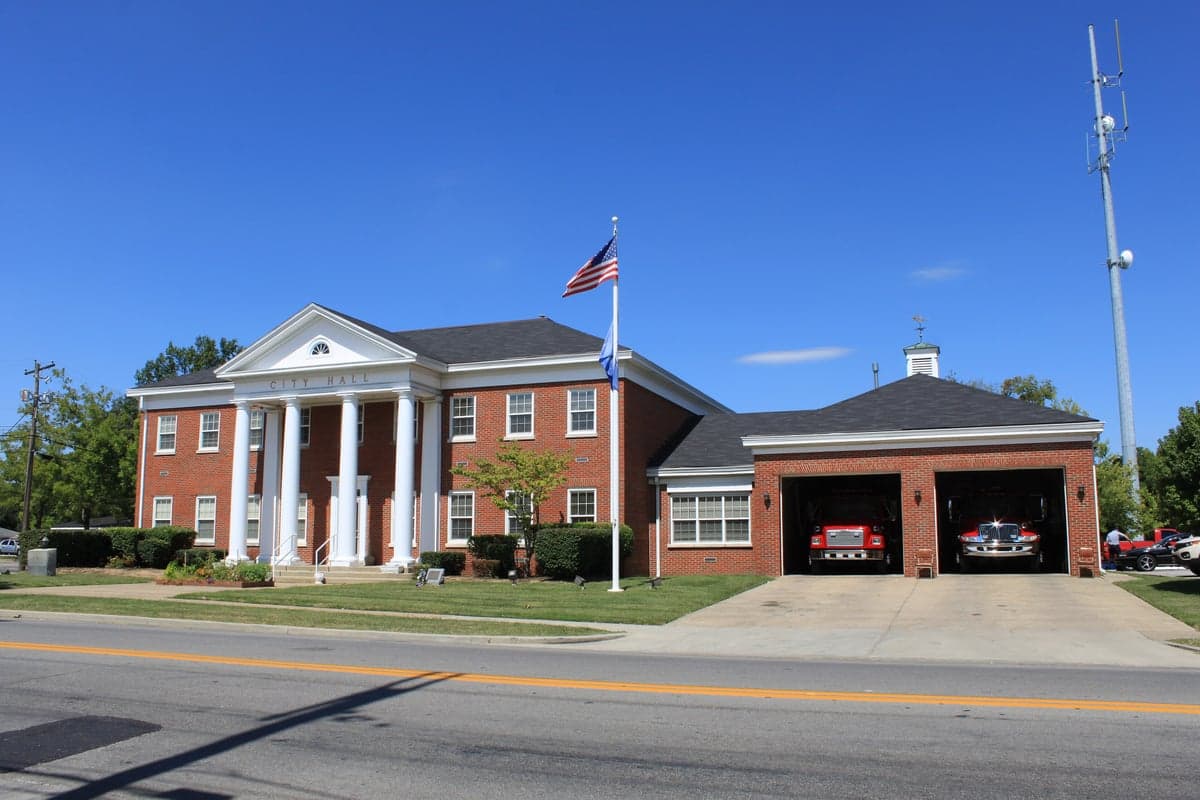

Photo: Wikipedia
Political ClimatePolitical Climate in Berea, KY
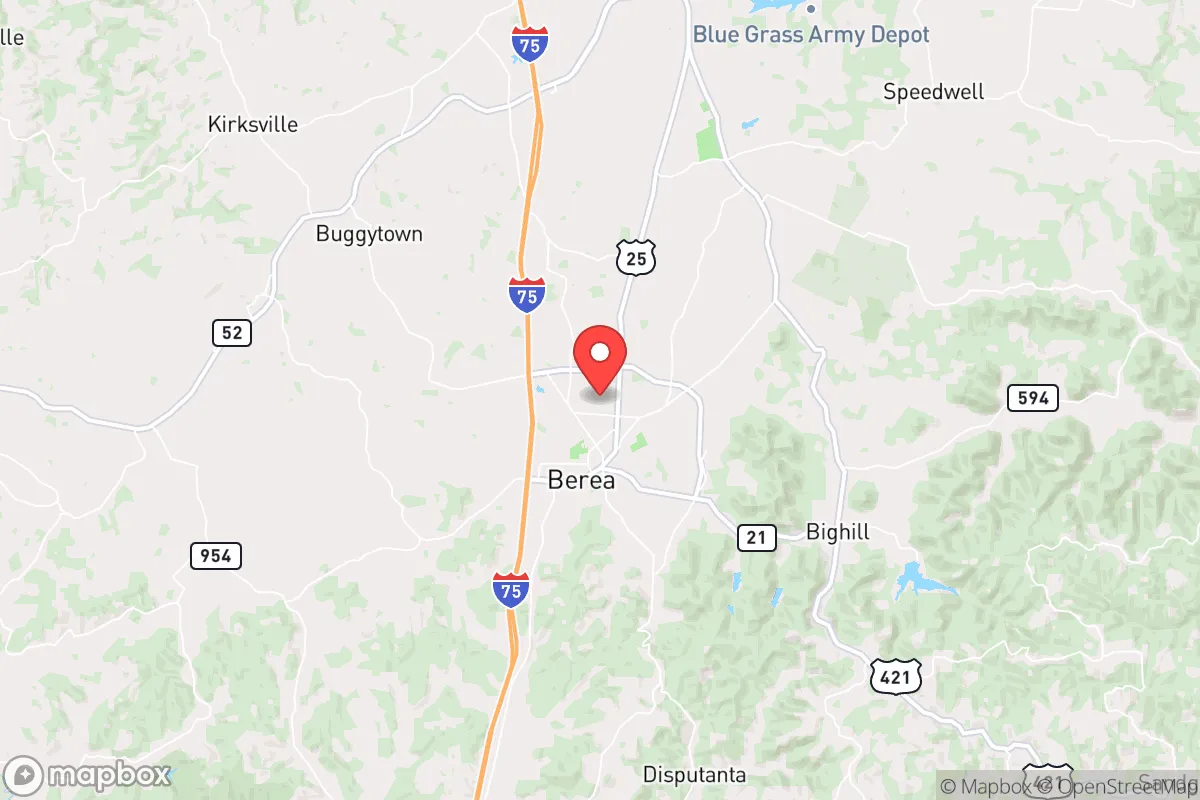
District shown is the primary district for this city’s centroid. Cities may span multiple districts.
Local Political AnalysisPolitical Analysis of Berea, KY
Berea, Kentucky, sits in a county that leans reliably conservative, with a Cook PVI of R+7, meaning the area votes about seven points more Republican than the national average. That’s a solid red baseline, but if you’ve lived here as long as I have, you know the political climate isn’t quite as simple as that number suggests. The town itself has a quirky, artsy, college-town vibe thanks to Berea College, which brings in a more progressive-leaning crowd than you’d find in the surrounding farm country. So while the county as a whole votes red, the local city council and school board races can get a little more interesting, with a noticeable push in recent years toward progressive policies that don’t always sit well with folks who value personal freedom and limited government.
How it compares
Drive twenty minutes north to Richmond, and you’ll find a similar story—Madison County is R+7 too, but Richmond’s growth has brought in more out-of-state transplants and Eastern Kentucky University students, making it a bit more purple than Berea. Head south to Mount Vernon or London, and the politics get noticeably more conservative, with those areas voting closer to R+15 or R+20. The real contrast, though, is with Lexington, about 40 minutes north. Lexington’s Fayette County is a deep blue island in a red sea, and you can feel the difference in everything from local ordinances to the general attitude toward government regulation. In Berea, we still value the idea that the government should stay out of your business—your property, your health choices, your kids’ education—but you can see the creeping influence of Lexington-style thinking in some of the newer city council proposals, like zoning changes that feel more like control than common sense.
What this means for residents
For the average family or retiree here, the political climate means you’ve got a decent buffer against the kind of overreach you see in bigger cities. Property taxes stay low, there’s no city income tax, and the local government generally takes a hands-off approach to things like business licensing and home-based enterprises. That said, the last few years have brought some concerning shifts. The school board, for instance, has seen debates over curriculum transparency and parental rights that would have been unthinkable a decade ago. In 2023, a proposal to adopt a diversity, equity, and inclusion framework for the local schools was narrowly defeated after a vocal pushback from parents who saw it as government-mandated ideology. That’s the kind of fight you’ll see more of if the progressive trend continues. For now, though, most residents still enjoy the freedom to live their lives without a lot of bureaucratic hassle—your neighbor’s politics are his own business, and that’s how we like it.
Culturally, Berea stands out for its strong tradition of craftsmanship and self-reliance, which fits right in with a conservative worldview. The Berea College student body adds a layer of activism that can feel out of step with the town’s roots, but the college itself is a major employer and landowner, so its influence on local policy is real. One policy distinction worth noting: Berea is a “wet” city in a dry county, meaning you can buy alcohol here but not in most of the surrounding areas. That’s a practical example of local control—the city made its own choice, and the county didn’t override it. Looking ahead, the long-term trend depends on who moves in. If growth continues to bring folks from blue states looking for cheaper land, we could see more pressure on the traditional hands-off approach. But for now, Berea remains a place where you can still raise a family, run a small business, and keep the government out of your living room—if we stay vigilant.

State Political ClimatePolitical Climate in Kentucky
State Political AnalysisPolitical Environment in the State
Kentucky has been a reliably red state for decades, but its conservatism is of a particular, populist strain—culturally traditional and skeptical of federal overreach, yet historically tolerant of expansive government programs like Medicaid expansion and generous public pensions. The state voted for Donald Trump by +26 points in 2020 and +30 points in 2024, a shift rightward that mirrors the broader realignment of working-class, non-college voters. However, the political picture is more nuanced than the presidential margins suggest: the state has a Democratic governor (Andy Beshear, elected in 2019 and re-elected in 2023) and a supermajority Republican legislature that has increasingly clashed with the executive branch. Over the past 20 years, Kentucky has moved from a competitive purple state—it voted for Bill Clinton twice and Al Gore once—to a solidly red one, driven by the collapse of Democratic support in rural areas and the exurbs of Louisville and Lexington.
Urban vs. rural divide
The political map of Kentucky is a textbook case of the urban-rural chasm. The two major metros—Louisville (Jefferson County) and Lexington (Fayette County)—are the only reliably blue anchors, with Louisville voting +15 for Biden in 2020 and Lexington +12. These cities are home to the state’s universities, healthcare systems, and a growing professional class that leans left on social issues. But the rest of the state is deeply red. The Northern Kentucky suburbs of Cincinnati—places like Fort Thomas and Independence—have shifted rightward over the past decade, with Campbell and Boone counties now voting +25 to +30 Republican. The Bowling Green area (Warren County) is a conservative stronghold, voting +35 for Trump, driven by a mix of manufacturing workers and a large, politically active Christian community. The Eastern Kentucky coal counties—Pike, Perry, Harlan—were once Democratic strongholds but now vote +50 to +60 Republican, a dramatic flip that began in the 2000s over cultural issues and coal policy. The Louisville exurbs like Shelbyville (Shelby County) and Mount Washington (Bullitt County) are among the fastest-growing and most conservative areas in the state, with Bullitt County voting +45 for Trump. The only real political tension is between the blue urban islands and the red rural sea, with the state legislature drawing increasingly aggressive maps to dilute Louisville and Lexington’s influence.
Policy environment
Kentucky’s policy environment is a mixed bag for conservatives. On the positive side, the state has a flat income tax that is being phased down from 5% to 4% by 2026, with a goal of elimination. There is no state property tax, and sales tax is a modest 6%. The state is a right-to-work state and has a constitutional carry law (permitless concealed carry, enacted in 2019). However, the state also has a Medicaid expansion under the Affordable Care Act, which covers over 400,000 Kentuckians—a program that the Republican legislature has tried to reform but not repeal, due to its popularity in rural areas. Education policy is a flashpoint: the state has a school choice program (the Education Opportunity Account Act, passed in 2022 but struck down by the state Supreme Court in 2023), and the legislature is pushing for a constitutional amendment to allow public funds for private schools. Election laws are moderately restrictive: voter ID is required, early voting is limited to three days, and no-excuse absentee voting was ended after 2020. The state has a near-total abortion ban (trigger law after Dobbs, with no exceptions for rape or incest), which has become a major political issue. The legislature also passed a transgender sports ban (HB 108, 2022) and a parental rights in education bill (SB 150, 2023), which restricts discussion of sexual orientation in elementary schools and requires schools to notify parents of any changes in a child’s mental or physical health.
Trajectory & freedom
Kentucky is moving in a decidedly more conservative direction on most fronts, but with some concerning caveats. On the freedom side, the state has expanded gun rights significantly: constitutional carry (2019), preemption of local gun ordinances (2021), and a “Second Amendment Sanctuary” resolution (2020). Parental rights were strengthened with SB 150 (2023), which gives parents more control over their children’s education and medical decisions. Property rights were bolstered by a 2022 law limiting eminent domain for private economic development. However, the state has also seen government overreach in the form of a 2021 law that bans local governments from enacting any form of rent control—a pro-market move, but one that limits local autonomy. More concerning for some conservatives is the state’s COVID-era response: Governor Beshear imposed some of the strictest lockdowns in the country (closing churches and businesses), and the legislature responded by passing laws limiting the governor’s emergency powers (SB 1, 2021). The state also has a medical marijuana program (legalized in 2023, but not yet operational), which is a freedom-expanding move that many conservatives support. The biggest freedom concern is the state’s pension crisis: Kentucky has one of the most underfunded public pension systems in the country, which could lead to future tax increases or service cuts—a form of fiscal coercion that limits future freedom.
Civil unrest & political movements
Kentucky has seen its share of political flashpoints. The Breonna Taylor protests in Louisville in 2020 were among the largest and most violent in the country, leading to two deaths, hundreds of arrests, and a lasting rift between the city’s progressive activists and the state’s conservative legislature. The legislature responded with a “Back the Blue” bill (HB 320, 2021) that increased penalties for rioting and blocking highways. The Rural/Urban Muster in Frankfort in 2020 saw armed protesters (including the Kentucky State Militia) demonstrate against lockdowns, a sign of the state’s strong libertarian streak. Immigration politics are relatively quiet, as Kentucky has a small foreign-born population (4%), but the legislature passed a bill in 2023 requiring local law enforcement to cooperate with ICE. There is a small but vocal secessionist movement in Eastern Kentucky (the “State of Franklin” proposal), but it has no serious political traction. Election integrity was a major issue after 2020, with the legislature passing a law to purge voter rolls and require signature verification for absentee ballots. The most visible political movement is the Christian conservative network, which is highly organized and influential in the legislature, particularly through the Kentucky Family Foundation. A new resident would notice the prevalence of “In God We Trust” signs in public buildings and the near-total absence of visible progressive activism outside of Louisville and Lexington.
Projection
Over the next 5-10 years, Kentucky is likely to become more conservative, but also more internally divided. The in-migration pattern is mixed: the state is attracting some retirees and remote workers from high-tax states like California and Illinois, but these newcomers tend to settle in the blue metros (Louisville, Lexington) or the conservative exurbs (Shelbyville, Mount Washington). The rural areas are losing population, which will further concentrate political power in the suburbs and exurbs. The Republican supermajority in the legislature is likely to continue pushing for a flat income tax elimination, school choice, and further restrictions on abortion and transgender rights. The Democratic governor is a wild card: Beshear is term-limited in 2027, and the next governor will almost certainly be a Republican, which will accelerate the conservative agenda. The biggest risk is the pension crisis, which could force a tax increase or service cuts that would alienate the base. The state is also vulnerable to federal policy shifts: if the federal government restricts coal or imposes carbon taxes, Eastern Kentucky’s economy could collapse further, leading to more out-migration and political radicalization. Overall, a new resident moving to Kentucky in 2026 should expect a state that is steadily moving right, with a strong cultural conservatism, low taxes, and a growing emphasis on parental rights and gun freedom—but also a state that is fiscally fragile and politically polarized between its blue cities and red countryside.
For a conservative individual or family considering relocation, Kentucky offers a strong alignment with traditional values, low taxes, and a growing economy in the exurbs and suburbs. The state’s gun laws are among the most permissive in the country, and the parental rights movement is winning concrete victories. However, you should be aware of the pension liability and the potential for future tax increases, as well as the cultural divide between the blue cities and the red countryside. If you’re looking for a place where your values are reflected in state law and where you can live with minimal government interference, Kentucky is a solid choice—just avoid Louisville and Lexington if you want to avoid the progressive politics that dominate those cities.
* Values derived from national, state, county, city and local statistics and may differ in a specific area. Last updated: 2026-04-21T09:24:13.000Z
Narrative content on this page is AI-generated and may contain mistakes. Verify any details that matter before acting on them.
ReloMaps may earn a commission from affiliate links at no extra cost to you.

