Photo: Wikipedia
Quality of Life in Berea, KY
A high quality of life with strong walkability, manageable living costs, healthy neighborhood signals, and solid amenity access.
What does Quality of Life tell us?
Quality of Life blends cost of living, nearby amenities, socioeconomic signals, and neighborhood character. City-level scores represent the whole municipality; individual neighborhoods can differ.
What does this tell us?
Quality of Life blends cost of living, nearby amenities, socioeconomic signals, and neighborhood character. City-level scores represent the whole municipality; individual neighborhoods can differ.
Cost of Living
33% below national average
The Real Cost of Living in Berea, KY for 2026
| Tier | Individual | Family (4) |
|---|---|---|
| Survival | $13k | $24k |
| Comfortable | $35k | $51k |
| Luxury | $93k+ | $144k+ |
| Elite (Top 5%) | $110k+ | $170k+ |
111%
The Area Signal
A metric tracking the socioeconomic signals of the area.
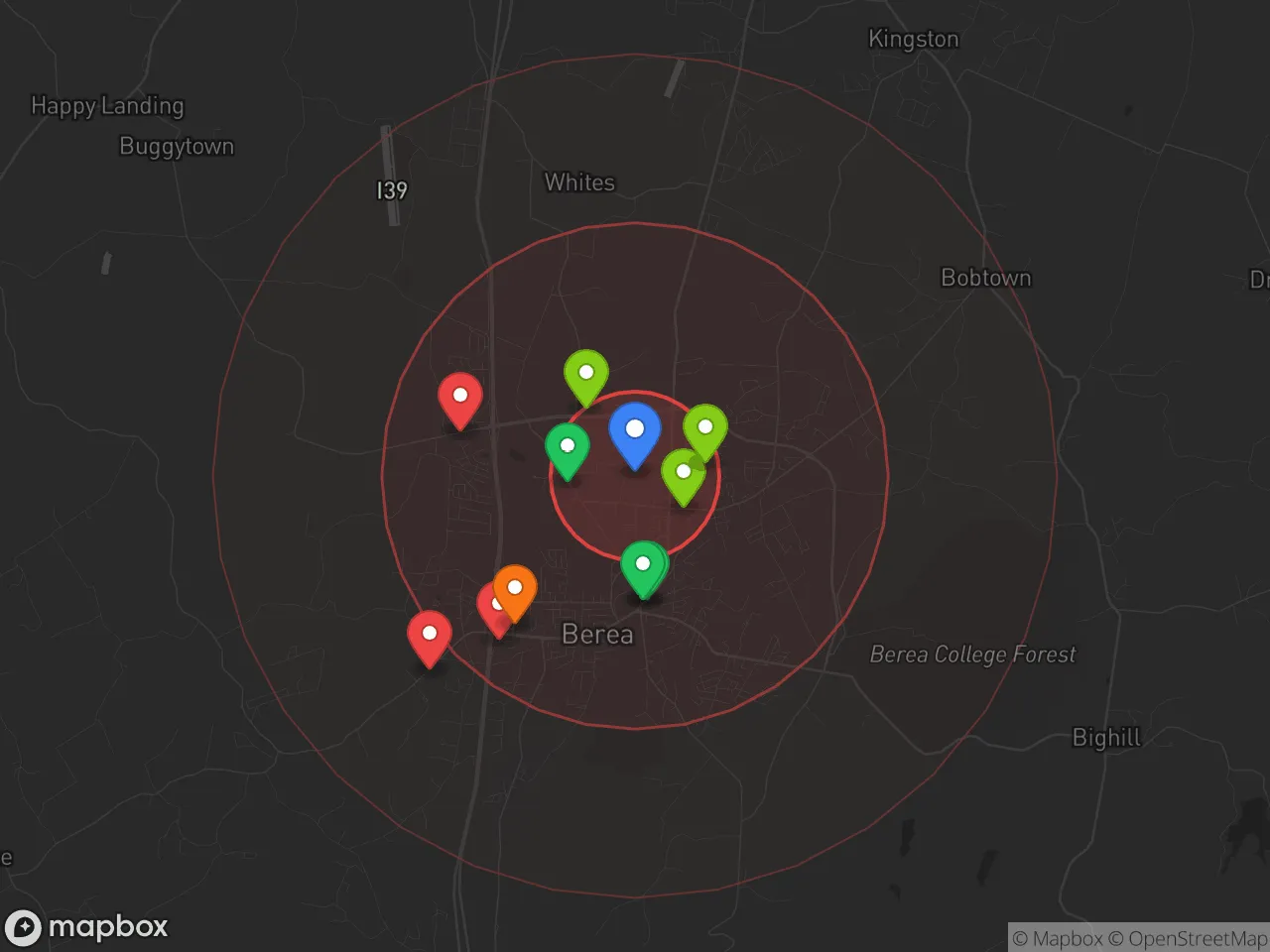
Hobbies
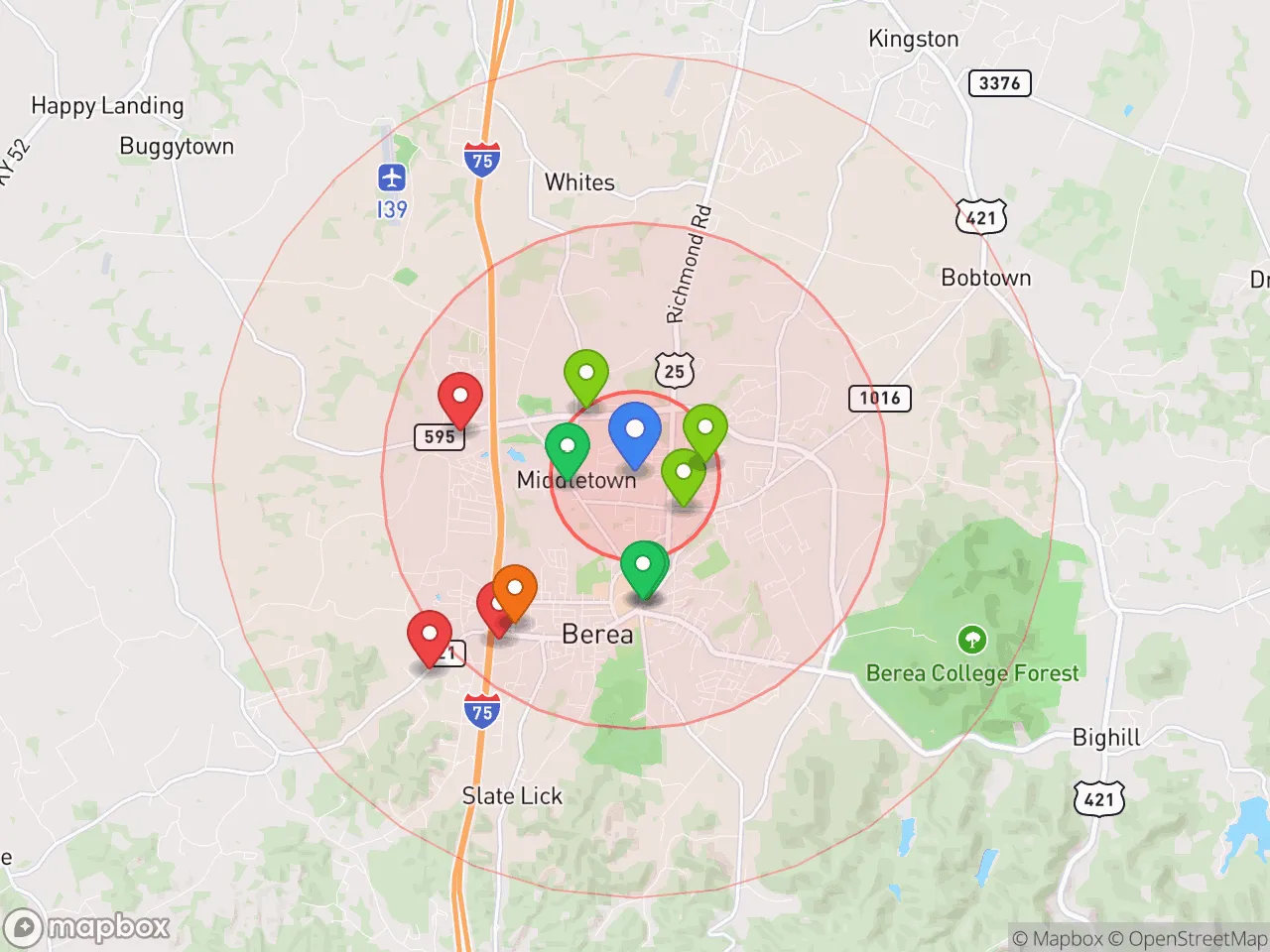
Explore the areaGroceries
3 within 10 miles
Gas
16 within 10 miles
Hospital
5 within 20 miles
Airport
BNA — Nashville International
Post Office
USPS — Berea, KY
Critical Amenities
Quality-of-Life Analysis
Berea, Kentucky, offers a notably affordable quality of life that attracts a mix of artists, academics, and families seeking a slower pace without sacrificing cultural depth. With a cost of living index of 67 (33% below the U.S. average), the city provides financial breathing room that is increasingly rare in the broader Bluegrass region. The population skews educated and civic-minded, anchored by Berea College’s work-study ethos and a strong local craft tradition, creating a community that values sustainability, hands-on skills, and neighborly connection over commercial sprawl.
How housing costs and everyday expenses compare to Lexington and Richmond
Berea’s affordability is its most defining quality-of-life feature. The median home value sits at $178,000, roughly half the national median and significantly lower than Lexington’s median of about $275,000. Renters also benefit, with a median rent of $806 — well below the state average of $950. This low barrier to entry means a single-income household or a retiree on a fixed budget can secure a detached home or a downtown apartment without stretching finances. The average commute of 24.6 minutes is slightly longer than the national average (26 minutes), reflecting that many residents drive to jobs in Richmond (15 minutes east) or Lexington (40 minutes north) for higher wages. However, the trade-off is clear: lower housing costs offset the fuel and vehicle wear, and the commute itself passes through scenic rural corridors rather than congested interstates. Property taxes in Madison County are moderate, and no local sales tax surcharge applies, keeping everyday expenses predictable.
What daily life is like for families, creatives, and remote workers
Daily life in Berea revolves around its walkable downtown, Berea College’s campus, and the surrounding natural landscape. The city’s public schools, part of the Madison County school system, include Berea Community School (K-12), which consistently earns above-average ratings for student-teacher ratios and arts programming. For families, the Berea City Pool, the Berea College Forestry Outreach Center, and the 7-mile-long Berea College Forest trail system provide low-cost recreation. The city lacks a major hospital — the nearest full-service emergency room is Baptist Health Richmond, 12 miles away — but urgent care clinics cover routine needs. Grocery shopping is served by a local Kroger and a farmers market (April–October) that features produce from the college’s sustainable agriculture program. Remote workers benefit from reliable fiber-optic internet through local provider BereaNet, with speeds up to 1 Gbps, making the city a viable base for telecommuting. The arts scene is unusually robust for a town of 16,000: the Berea College Crafts program, the Kentucky Artisan Center, and monthly Gallery Walks draw visitors and sustain a creative class that values handmade goods over chain retail.
Berea is best suited for people who prioritize community engagement, outdoor access, and financial stability over urban nightlife or high-end shopping. Retirees on fixed incomes, artists and craftspeople, college faculty and staff, and families seeking a safe, affordable environment for raising children will find the city’s rhythm appealing. Those who require a major airport within 30 minutes, a diverse restaurant scene, or a large employer beyond education and manufacturing may find the trade-offs limiting. For the right resident, however, Berea delivers a rare combination of low cost, cultural richness, and genuine small-town character that is increasingly difficult to find in the Bluegrass region.

Crime in Berea, KY
Generally safer than 69% of comparable U.S. locations.
Violent CrimeViolent Crime Analysis
Property CrimeProperty Crime Analysis
Crime Analysis
Berea, Kentucky, reports a violent crime rate of 120.1 per 100,000 residents and a property crime rate of 552.4 per 100,000, positioning it as a notably safer community than both the national average and many similarly sized towns in the Bluegrass region. These figures place Berea well below the U.S. violent crime benchmark of roughly 380 per 100,000 and under the national property crime rate of approximately 1,950 per 100,000. The city's low crime profile is a consistent draw for families and retirees seeking a quiet, college-town atmosphere with minimal public safety concerns.
Crime in context
When compared to state and national data, Berea's crime statistics are significantly lower across both major categories. The city's violent crime rate of 120.1 per 100,000 is less than one-third of the national average and roughly half the Kentucky state average of about 230 per 100,000. Property crime in Berea, at 552.4 per 100,000, is also well below the Kentucky state average of approximately 2,100 per 100,000 and the national figure. This favorable comparison is largely attributed to the city's stable economic base anchored by Berea College, a strong sense of community, and a local police department that maintains proactive community policing strategies. Unlike larger metropolitan areas in Kentucky—such as Louisville or Lexington—where progressive prosecutorial policies have been linked to higher recidivism and softer sentencing, Berea's justice system operates with a more traditional, victim-centered approach that prioritizes accountability and public safety.
What residents experience
Residents of Berea generally describe the city as safe and walkable, with most crime being non-violent and opportunistic in nature. The most common incidents reported are thefts from vehicles, minor vandalism, and occasional shoplifting, particularly near the commercial corridor along Interstate 75. Violent crime is rare and typically involves individuals who know each other, rather than random attacks on strangers. The presence of Berea College, with its own campus security force, further enhances safety in the central and southern parts of town. Daily life for families includes letting children play in front yards, walking to local parks like the Berea City Park, and feeling secure during evening events on the historic College Square. The city's low crime rate is a key factor in its reputation as one of the safest small towns in Kentucky.
Neighborhood-level variation in Berea is minimal but worth noting. The area immediately surrounding the college campus and the historic downtown district consistently report the lowest crime incidents, benefiting from high foot traffic and consistent police patrols. Some isolated pockets near the interstate exits and along the US-25 corridor see slightly higher rates of property crime, particularly vehicle break-ins. Overall, however, Berea lacks the pronounced high-crime zones found in larger cities, and the entire community benefits from a unified, low-crime environment. For those relocating, any neighborhood within city limits offers a level of safety that is well above both state and national norms.
* Values derived from national, state, county, city and local statistics and may differ in a specific area. Last updated: 2026-04-21T09:24:13.000Z
Narrative content on this page is AI-generated and may contain mistakes. Verify any details that matter before acting on them.
ReloMaps may earn a commission from affiliate links at no extra cost to you.

