 Popular
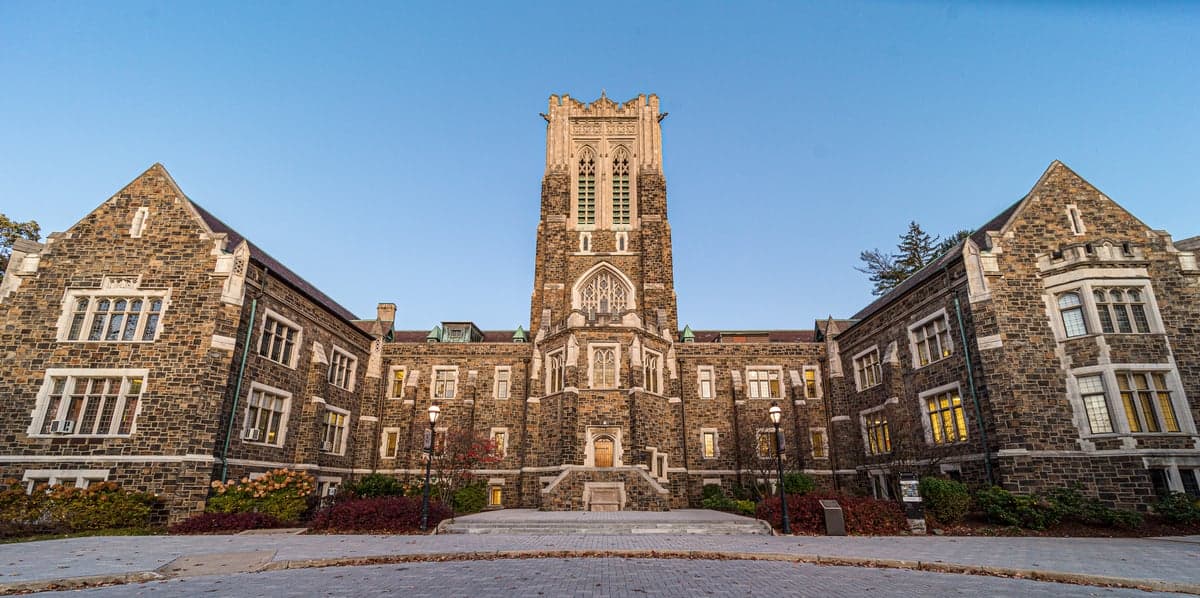
Photo: Wikipedia
Demographics of Bethlehem, PA
Affluence Level in Bethlehem, PA
A middle-class area roughly in line with national averages across income, home values, education, and employment.
People of Bethlehem, PA
The people of Bethlehem, Pennsylvania today form a dense, mid-sized city of 77,069 residents with a distinctly working-class character rooted in industrial history but reshaped by modern immigration. The city is notably more diverse than its Lehigh Valley neighbors, with a Hispanic population of 29.4% that has become the primary driver of population stability, while the white non-Hispanic share stands at 55.3%. Bethlehem’s identity is a blend of old ethnic enclaves—German, Irish, Italian, and Eastern European—overlaid with a growing Puerto Rican and Dominican presence, giving it a blue-collar, family-oriented feel that appeals to conservative-leaning residents seeking affordable housing and community institutions.
How the city was settled and grew
Bethlehem’s population story begins in 1741 with Moravian missionaries from Central Europe, who founded the settlement as a religious commune along the Lehigh River. These German-speaking Moravians built the Historic Moravian District (now a UNESCO World Heritage candidate), laying out a planned community of stone buildings and communal farms. The industrial revolution transformed Bethlehem after 1857, when the Bethlehem Iron Company (later Bethlehem Steel) opened along the river. This drew a massive wave of immigrants: first Irish and German laborers in the 1860s-1880s, then Southern and Eastern Europeans—Italians, Slovaks, Poles, and Hungarians—between 1890 and 1920. These groups settled in distinct neighborhoods: Italians concentrated in South Bethlehem (still known for its Italian social clubs and St. Anthony’s Church), while Eastern Europeans clustered in North Bethlehem near the steel plants, building tight-knit parishes like Ss. Cyril and Methodius. By 1910, Bethlehem’s population had surged past 50,000, nearly all tied to steel. The Great Depression and World War II paused immigration, but the post-war boom (1945-1960) brought a second wave of domestic migrants—Appalachian whites and African Americans from the South—who settled in Southside Bethlehem near the mills, creating a racially mixed working-class corridor.
Modern era (post-1965)
The 1965 Hart-Celler Act and the collapse of Bethlehem Steel (final closure in 2003) reshaped the city’s population dramatically. The steel industry’s decline triggered white flight to suburban townships like Bethlehem Township and Hanover Township, leaving older neighborhoods like West Bethlehem and Southside with aging housing stock and lower property values. Into this vacuum came a surge of Hispanic immigration, primarily from Puerto Rico (U.S. citizens, not subject to immigration quotas) and later the Dominican Republic and Mexico. By 2020, the Hispanic share had grown from under 5% in 1980 to 29.4%, concentrated heavily in South Bethlehem (east of the Lehigh River) and the Fountain Hill border area, where bodegas, Spanish-language churches, and Hispanic-owned businesses now dominate commercial strips. The Asian population (East/Southeast Asian, 2.4%) is small but visible, with Vietnamese and Chinese families settling in West Bethlehem near Lehigh University, often drawn by tech and education jobs. The Indian subcontinent population (0.8%) remains tiny, clustered near the university and hospital. The Black population (8.4%) is largely native-born, descended from the post-war Southern migration, and remains concentrated in Southside and public housing developments. The foreign-born share is just 5.3%, low for a city this diverse, because most Hispanic growth comes from U.S.-born Puerto Ricans and second-generation families.
The future
Bethlehem’s population is heading toward a Hispanic-majority future, likely within 15-20 years, as the white non-Hispanic cohort ages and the Hispanic population is younger and has higher birth rates. The city is not homogenizing but rather tribalizing into distinct enclaves: South Bethlehem is becoming overwhelmingly Hispanic (over 60% in some census tracts), while West Bethlehem and North Bethlehem remain predominantly white and older. The Asian and Indian communities are growing slowly, plateauing due to high housing costs near Lehigh University. The Black population is stable but not growing, as younger Black families move to cheaper suburbs like Allentown or Phillipsburg. The key wildcard is redevelopment: the former Bethlehem Steel site (Bethlehem Works) is being converted into a casino, entertainment district, and luxury apartments, which could attract young professionals and empty-nesters, slowing white flight. However, this development is unlikely to reverse the Hispanicization of South Bethlehem, as new housing is priced above what most working-class Hispanic families can afford. For a conservative-leaning mover, Bethlehem offers a stable, family-oriented environment with strong Catholic and evangelical church networks, but the political culture is shifting leftward as Hispanic voters grow—Lehigh County voted +2 Democratic in 2024, a swing from its 2016 lean.
Bethlehem is becoming a majority-minority city with a resilient blue-collar ethos, where old ethnic neighborhoods are being replaced by Hispanic enclaves, but the city’s core identity—rooted in church, family, and hard work—remains intact. For someone moving in now, the key choice is neighborhood: West Bethlehem offers stability and schools, while South Bethlehem offers affordability and cultural vibrancy but higher crime rates. The city is not in decline, but it is in transition, and the next decade will determine whether it becomes a thriving Hispanic-majority hub or a segregated, struggling post-industrial town.

* Values derived from national, state, county, city and local statistics and may differ in a specific area. Last updated: 2026-05-01T20:55:24.000Z
Narrative content on this page is AI-generated and may contain mistakes. Verify any details that matter before acting on them.
ReloMaps may earn a commission from affiliate links at no extra cost to you.

