 Popular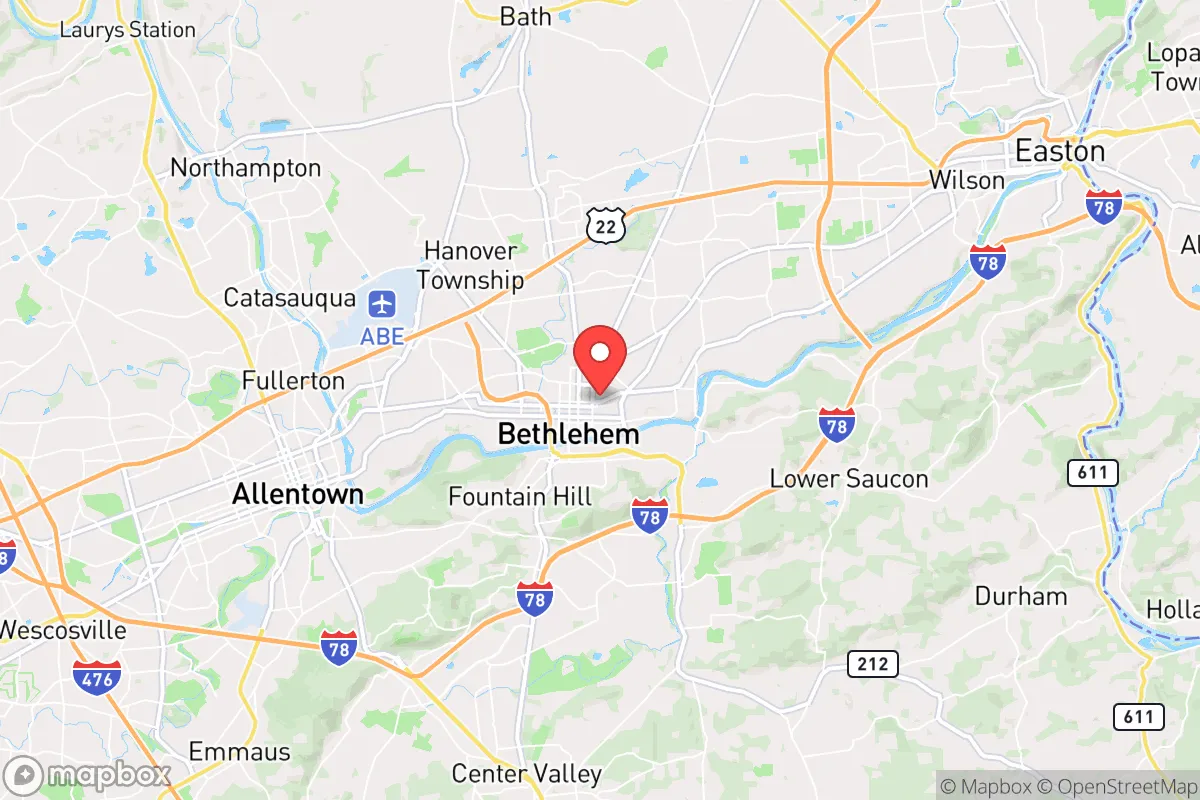
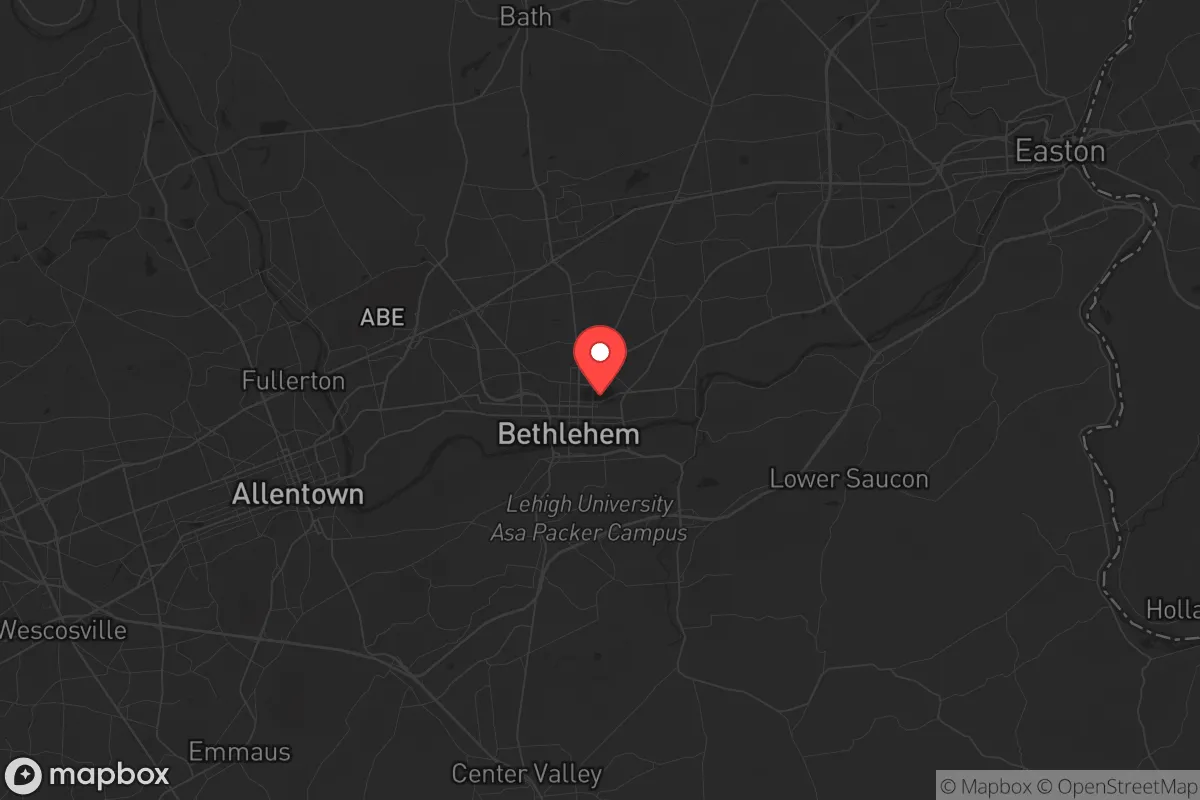
Photo: Wikipedia
Strategic Assessment of Bethlehem, PA
Multiple tactical vulnerabilities. Population density, target proximity, or disaster risk are likely compounding. A retreat property and exit planning is required.
What does the Strategic Assessment tell us?
Our Strategic Assessment grades tactical survivability of an area. Major population centers, military targets, fallout zones, natural disasters, and border exposure all drive risk — lower exposure means a more defensible position in a crisis.
This is heavily inspired by Joel Skousen's Strategic Relocation book. Highly recommended you checkout the book ($)What does this tell us?
Our Strategic Assessment grades tactical survivability of an area. Major population centers, military targets, fallout zones, natural disasters, and border exposure all drive risk — lower exposure means a more defensible position in a crisis.
This is heavily inspired by Joel Skousen's Strategic Relocation book. Highly recommended you checkout the book ($)Strategic Pillars

Key Distances
Regional Safe Places
Below is our recommended "safe zones" in Pennsylvania and the surrounding area based on our strategic heuristics. For most people, it's unrealistic to live in a “safe zone” full-time due to work, family or other personal reasons. They tend to be more rural. However, many of these areas are perfect for second homes and retreat properties that double as a vacation home or even a short-term rental.
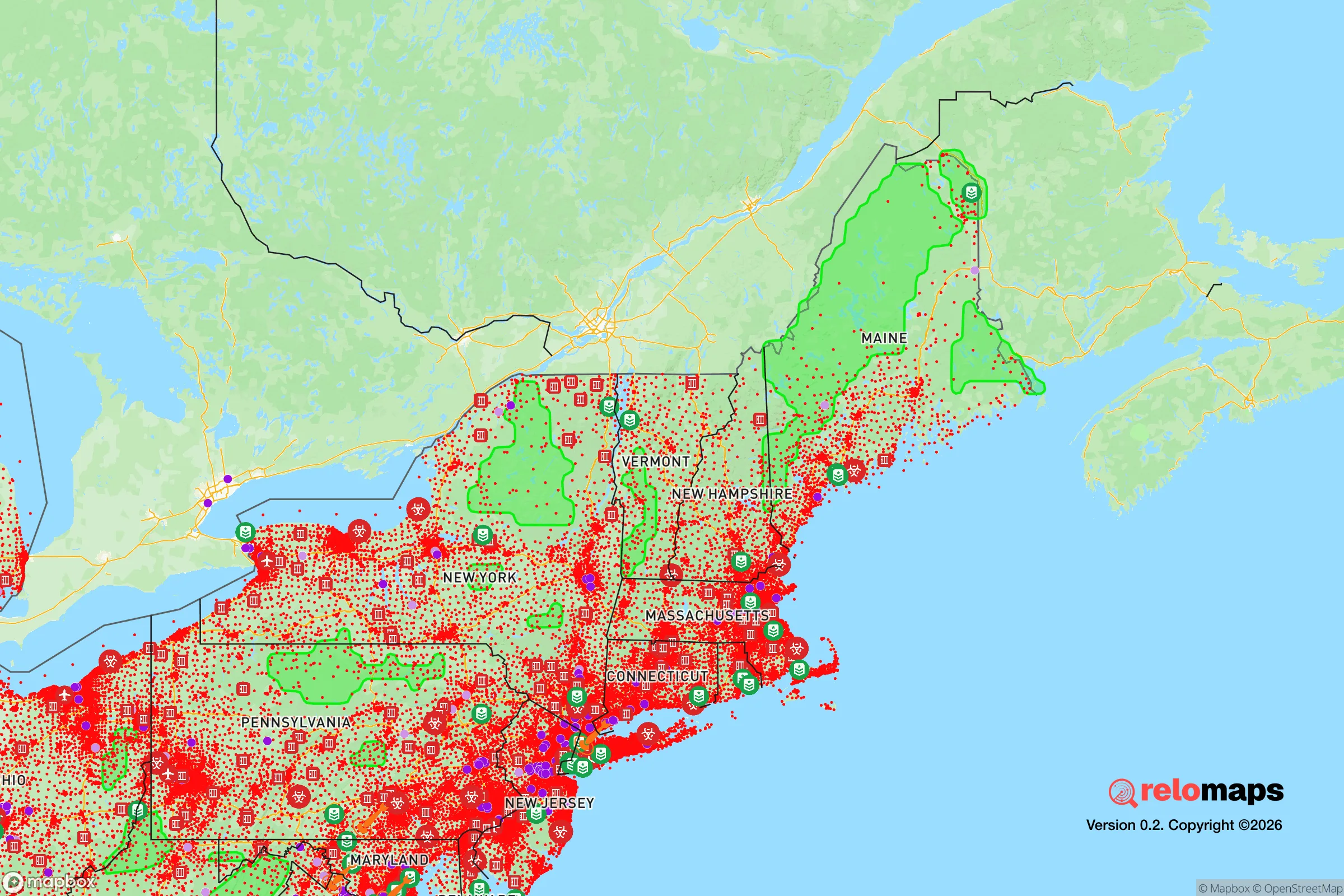
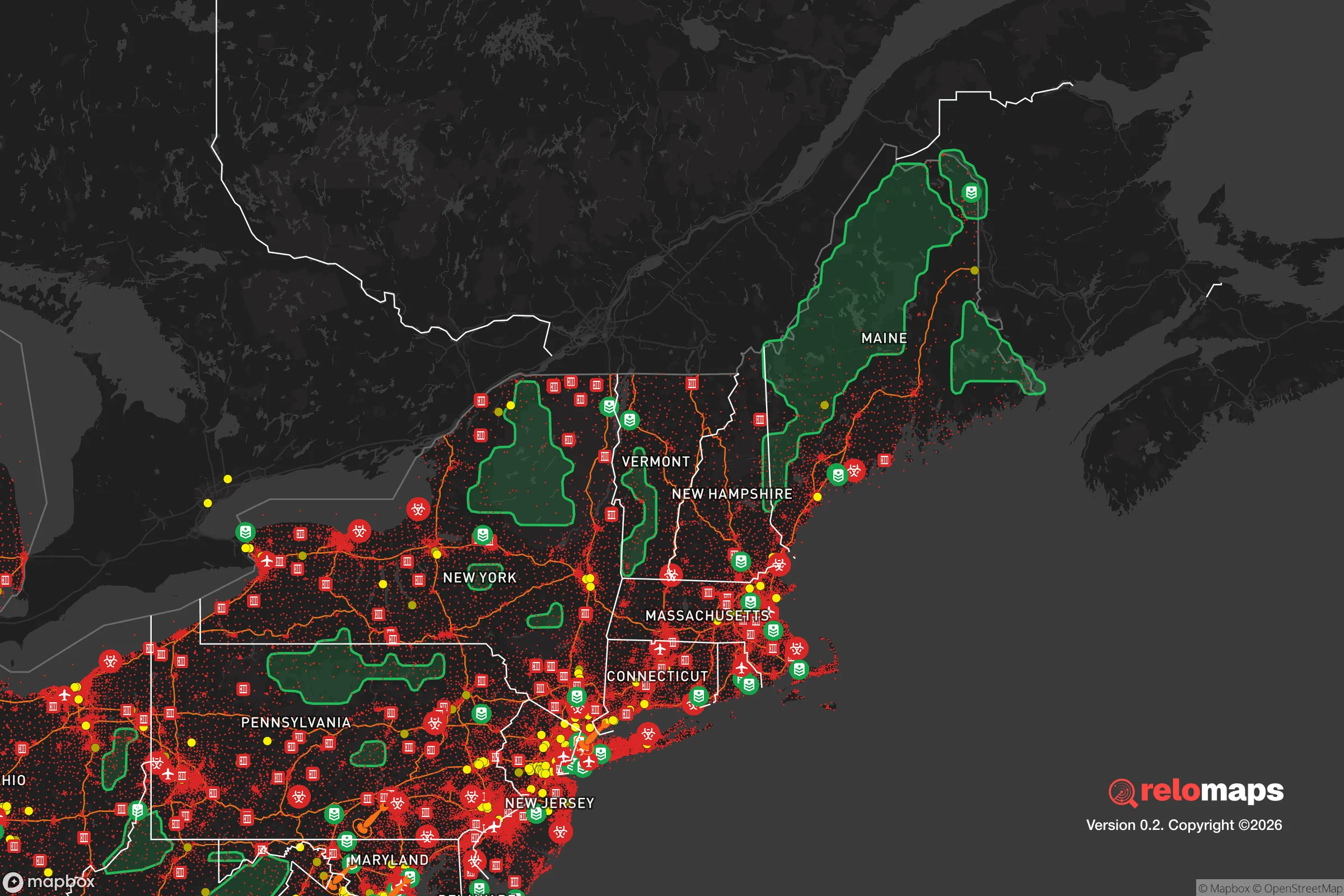


Important Note: For informational purposes only. This does not mean nothing bad ever happens in the green zones. Please use common sense. This is based on public data and modeled with AI. We tried to take a conservative approach but mistakes happen. We update this regularly as new information becomes available.
Solar Generator Recommendations
Backup power matters more here than in safer locations. We've picked three solar generators across budgets and capacity tiers — start with the budget unit if you only need a few essentials, or step up if you want to run a fridge and HVAC for days at a time.

Jackery Portable Power Station Explorer 300
Budget OptionPower on the Go: Weighing only 11 lbs, it's convenient to set up and store with book-sized foldable solar panels

BLUETTI Portable Power Station AC180
Designed for both indoor and outdoor scenarios, AC180 is highly capable as it has a robost capacity and continuous output power.

EF ECOFLOW DELTA Pro Ultra Power Station
Upgraded PickEcoFlow DELTA Pro Ultra is a whole-home energy system designed to grow with your family. Integrated with the Smart Home Panel 2, it scales to meet your evolving energy needs — keeping your home powered, intelligent, and secure through every stage of life.
We earn a commission, at no additional cost to you.
Strategic Assessment Analysis
Bethlehem, Pennsylvania, sits at a strategic crossroads that offers both genuine resilience advantages and significant exposure risks for those thinking long-term about security and self-sufficiency. Its location in the Lehigh Valley, roughly 50 miles north of Philadelphia and 70 miles west of New York City, places it within a buffer zone that is close enough to access major markets and infrastructure but far enough to avoid the immediate blast radius and chaos of a metropolitan collapse. The city’s industrial past—home to Bethlehem Steel—has left behind a legacy of robust infrastructure, rail connectivity, and a workforce accustomed to heavy industry, which translates into a more self-reliant local economy than many bedroom communities. For a conservative-leaning relocator assessing civic stability and disaster preparedness, Bethlehem presents a mixed picture: solid geographic positioning with real natural advantages, but also proximity to high-value targets and population centers that could become liabilities in a crisis.
Geographic position and natural advantages for long-term security
Bethlehem’s location in the Lehigh Valley is its strongest card for resilience. The city sits at the confluence of the Lehigh River and the Monocacy Creek, providing a reliable freshwater source that is less contested than in arid regions. The surrounding terrain is a mix of rolling hills, forested ridges, and fertile farmland—the Lehigh Valley is part of the Great Appalachian Valley, which historically served as a natural corridor for movement and agriculture. This means that even if supply chains falter, the area has a higher potential for local food production than many suburban sprawls. The nearby Pocono Mountains to the north offer a natural barrier and a potential retreat zone, while the Delaware River to the east provides another water source and a boundary against uncontrolled movement from the coast. The region’s moderate climate, with four distinct seasons but no extreme drought or hurricane risk, reduces the likelihood of weather-related disruptions that could compound other crises. For a relocator, the key takeaway is that Bethlehem is not a coastal flood zone, not a wildfire-prone area, and not dependent on a single water source—all of which are baseline requirements for a defensible long-term location.
Risks, exposures, and proximity to fallout-relevant landmarks
The most serious downside for Bethlehem is its proximity to high-value targets and population centers that could become epicenters of unrest or disaster. Philadelphia and New York City are both within a two-hour drive, and the I-78 and I-476 corridors that connect them to the Lehigh Valley are obvious chokepoints for evacuation or supply movement. In a mass casualty event—whether from a terrorist attack, grid failure, or civil unrest—these highways would likely become impassable, and Bethlehem could see a surge of refugees from the east. The city itself is not a primary target for a nuclear strike, but it lies within the fallout plume zone of potential targets like the Philadelphia Naval Shipyard, the New York financial district, or the Limerick Generating Station (a nuclear power plant about 40 miles southeast). The Lehigh Valley International Airport and the numerous industrial facilities along the Lehigh River—including chemical plants and warehouses—are secondary risks for accidents or targeted disruptions. Additionally, Bethlehem’s population of roughly 75,000, combined with the broader Lehigh Valley’s 680,000 residents, means that in a crisis, the area could become crowded quickly, straining local resources. For a prepper, the calculus is that Bethlehem is not a remote bug-out location; it is a semi-urban hub that requires a plan for both staying put and evacuating if the situation deteriorates.
Practical resilience for a relocator: food, water, energy, and defensibility
For a single individual or family looking to establish a resilient household in Bethlehem, the practical considerations are mixed but manageable with preparation. Water is not a major concern: the Lehigh River is a reliable surface water source, and the city’s municipal supply comes from the Lehigh River and several reservoirs, but a personal well or rainwater catchment system is advisable for independence. The region’s average annual rainfall of about 45 inches supports off-grid water collection. Food security is above average for a northeastern city. The Lehigh Valley has a strong agricultural base—dairy, corn, soybeans, and livestock—and there are numerous farmers’ markets, CSAs, and local farms within a 20-minute drive. The Bethlehem Farmers’ Market operates year-round, and the surrounding towns like Hellertown and Coopersburg have active agricultural communities. For long-term storage, the area’s moderate humidity requires careful pest management, but basements and root cellars are common in older homes. Energy resilience is a weak point. The grid in the Lehigh Valley is part of the PJM Interconnection, which has seen strain during extreme weather events (e.g., Hurricane Sandy in 2012, the 2021 winter storms). Natural gas is widely available for heating, but a solar array with battery backup is a smart investment, as the region gets about 200 sunny days per year—not ideal for solar, but workable with sufficient panel capacity. Defensibility is situational. Bethlehem’s historic downtown is dense and walkable, with narrow streets and stone buildings that could be secured, but the suburban sprawl to the south and west is more vulnerable. The city’s topography—situated on a hill above the river—offers some natural vantage points, but it is not a fortress. For a relocator, the best strategy is to choose a property on the outskirts, near farmland and forest, with good sightlines and multiple egress routes. The nearby Blue Mountain and Appalachian Trail provide wilderness corridors for retreat if needed.
The overall strategic picture for Bethlehem is that it is a viable but not ideal location for a conservative-leaning prepper. Its strengths—reliable water, agricultural access, moderate climate, and industrial infrastructure—make it a better bet than most coastal or urban alternatives. Its weaknesses—proximity to major targets, population density, and grid dependency—mean that it requires active preparation, not passive relocation. A relocator who buys a home with a well, installs solar panels, stocks a year’s worth of food, and builds a network with like-minded locals in the surrounding rural areas (like Upper Saucon Township or Lower Nazareth Township) can create a solid base. But anyone expecting Bethlehem to be a safe haven without effort is misreading the map. The city is a strategic node, not a sanctuary. For those willing to put in the work, it offers a realistic middle ground between isolation and access. For those looking for a turnkey retreat, the Poconos or central Pennsylvania would be a better bet. Bethlehem is for the relocator who wants to be prepared without disappearing—someone who understands that resilience is a process, not a destination.

* Values derived from national, state, county, city and local statistics and may differ in a specific area. Last updated: 2026-05-01T20:55:24.000Z
Narrative content on this page is AI-generated and may contain mistakes. Verify any details that matter before acting on them.
ReloMaps may earn a commission from affiliate links at no extra cost to you.

