 Popular
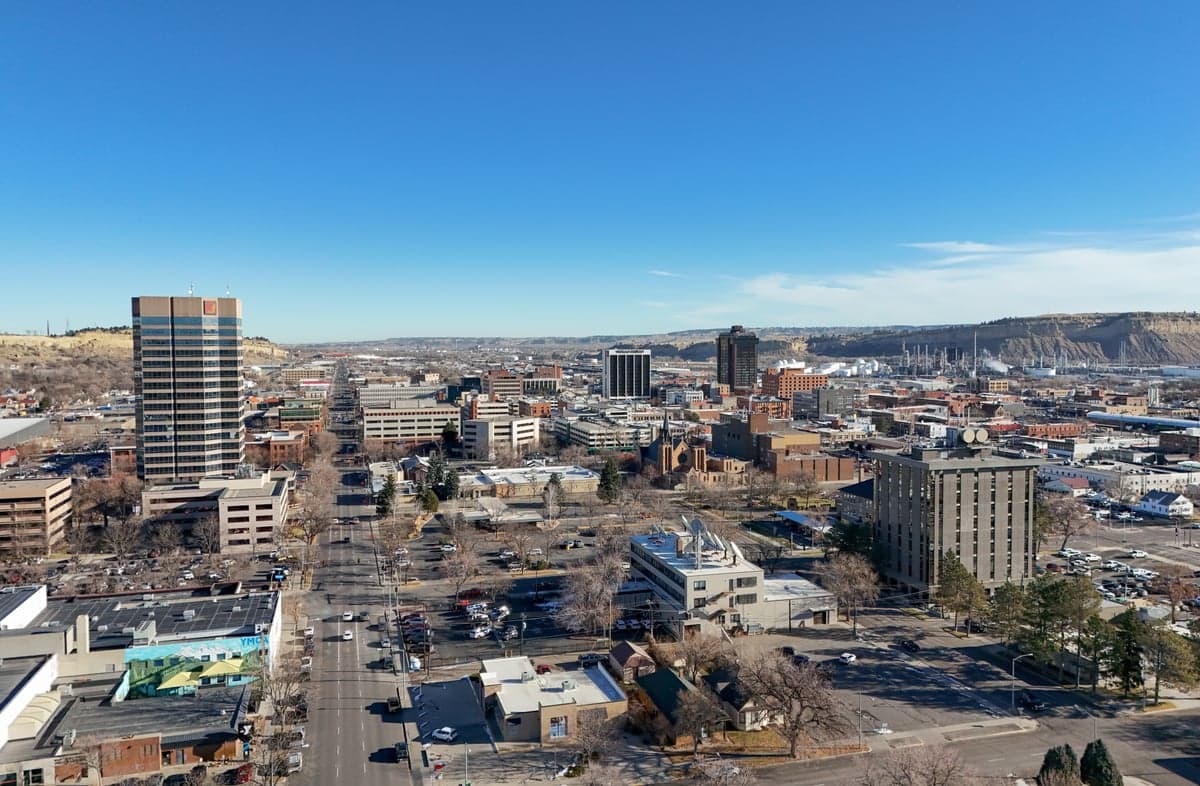
Photo: Wikipedia
Strategic Assessment of Billings, MT
Workable tactical position. Some exposure to population density or targets, but generally defensible in a crisis.
What does the Strategic Assessment tell us?
Our Strategic Assessment grades tactical survivability of an area. Major population centers, military targets, fallout zones, natural disasters, and border exposure all drive risk — lower exposure means a more defensible position in a crisis.
This is heavily inspired by Joel Skousen's Strategic Relocation book. Highly recommended you checkout the book ($)What does this tell us?
Our Strategic Assessment grades tactical survivability of an area. Major population centers, military targets, fallout zones, natural disasters, and border exposure all drive risk — lower exposure means a more defensible position in a crisis.
This is heavily inspired by Joel Skousen's Strategic Relocation book. Highly recommended you checkout the book ($)Strategic Pillars

Key Distances
Regional Safe Places
Below is our recommended "safe zones" in Montana and the surrounding area based on our strategic heuristics. For most people, it's unrealistic to live in a “safe zone” full-time due to work, family or other personal reasons. They tend to be more rural. However, many of these areas are perfect for second homes and retreat properties that double as a vacation home or even a short-term rental.
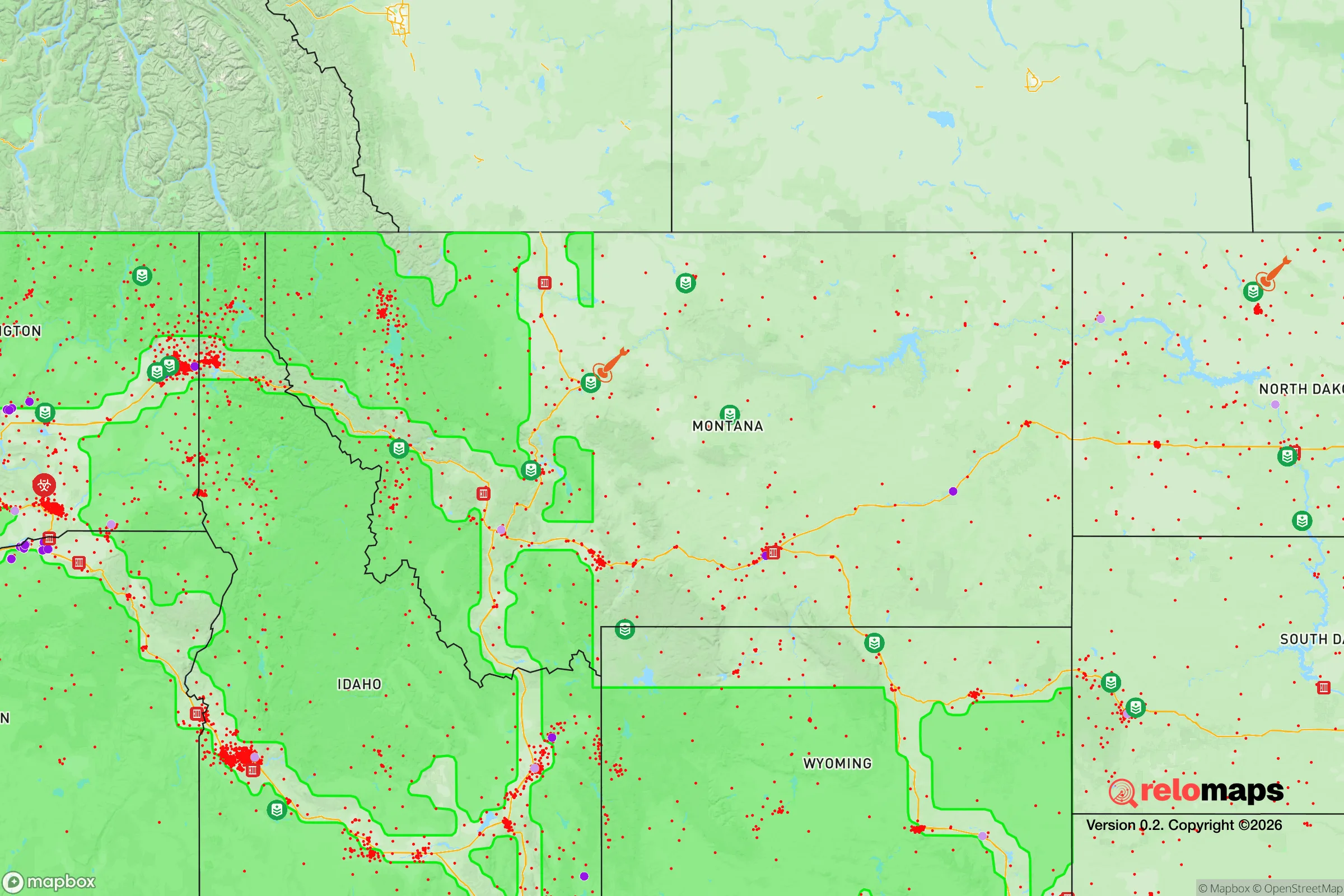


Important Note: For informational purposes only. This does not mean nothing bad ever happens in the green zones. Please use common sense. This is based on public data and modeled with AI. We tried to take a conservative approach but mistakes happen. We update this regularly as new information becomes available.
Solar Generator Recommendations
Backup power matters more here than in safer locations. We've picked three solar generators across budgets and capacity tiers — start with the budget unit if you only need a few essentials, or step up if you want to run a fridge and HVAC for days at a time.

Jackery Portable Power Station Explorer 300
Budget OptionPower on the Go: Weighing only 11 lbs, it's convenient to set up and store with book-sized foldable solar panels

BLUETTI Portable Power Station AC180
Designed for both indoor and outdoor scenarios, AC180 is highly capable as it has a robost capacity and continuous output power.

EF ECOFLOW DELTA Pro Ultra Power Station
Upgraded PickEcoFlow DELTA Pro Ultra is a whole-home energy system designed to grow with your family. Integrated with the Smart Home Panel 2, it scales to meet your evolving energy needs — keeping your home powered, intelligent, and secure through every stage of life.
We earn a commission, at no additional cost to you.
Strategic Assessment Analysis
Billings, Montana, offers a compelling mix of resilience and strategic depth for those looking to weather potential societal disruptions, but it’s not without its own set of vulnerabilities. As the largest city in a state known for its independent streak, Billings acts as a regional hub for commerce, healthcare, and logistics, which provides a buffer against the kind of rapid collapse that might hit more isolated towns. Its location along the Yellowstone River and near major interstate and rail corridors gives it a logistical advantage, but that same connectivity also makes it a potential target or chokepoint in a crisis scenario. For a relocator with a prepper mindset, the key is understanding how this city’s strengths and weaknesses align with your specific risk tolerance and preparedness goals.
Geographic position and natural advantages for long-term survival
Billings sits in a unique geographic pocket that offers both protection and access. The city is nestled against the Rims, a series of sandstone cliffs that provide a natural defensive barrier to the north, while the Yellowstone River cuts through the south, offering a reliable water source. The surrounding landscape is a mix of high plains and foothills, which means you’re not in a floodplain or a wildfire corridor, though fire risk exists in the nearby national forests. The region’s elevation (around 3,100 feet) and semi-arid climate mean winters are cold but manageable, and summers are dry, reducing the risk of crop-killing humidity or mold in stored supplies. The area’s agricultural base is a major plus: Montana is a top producer of wheat, barley, and beef, and the Yellowstone Valley has fertile soil for small-scale farming. For a relocator, this means you’re within a few hours’ drive of some of the most remote, defensible land in the lower 48, while still having access to a city with two hospitals, a regional airport, and a rail yard that could be critical for moving supplies in a grid-down scenario.
Risks, exposures, and proximity to fallout-relevant landmarks
The biggest strategic downside to Billings is its role as a regional hub, which makes it a potential magnet for population displacement during a crisis. If a major event hits the West Coast or the Front Range, Billings could see a surge of refugees fleeing along I-94 and I-90, straining local resources. The city itself is not near any major nuclear power plants—the closest is the now-decommissioned Fort St. Vrain in Colorado, about 400 miles away—but it sits within 200 miles of Malmstrom Air Force Base near Great Falls, which is a primary ICBM field. That’s a double-edged sword: Malmstrom’s missile silos are a potential first-strike target in a nuclear exchange, and while Billings is far enough to avoid direct blast effects, fallout patterns could be unpredictable depending on wind direction. More immediately, the city’s oil refineries (Billings has two, including the Phillips 66 refinery) and the rail lines carrying Bakken crude from North Dakota are high-value targets for sabotage or accident. A derailment or refinery fire could contaminate the air and water for miles. On the civic unrest front, Billings has a relatively low crime rate compared to cities of its size, but it’s not immune to the same social tensions playing out nationally. The presence of a sizable homeless population and a growing drug problem (meth and fentanyl) means that local law enforcement and social services are already stretched thin, which could become a liability if things get worse.
Practical resilience for a relocator: food, water, energy, and defensibility
For someone serious about self-sufficiency, Billings offers a decent baseline but requires active preparation. The city’s water supply comes from the Yellowstone River, treated at the Billings Water Treatment Plant, which is a single point of failure—if that plant goes down, you’re looking at a boil-water order or worse. A well on private property outside city limits is a far better bet, and the water table in the area is generally good, though you’ll need to drill deep (200-400 feet) in some spots. Food security is better than most places: the surrounding agricultural region means local farmers’ markets and bulk grain suppliers are available, and the city has several large grocery chains that could serve as supply points in the early stages of a crisis. But don’t count on them lasting long—preppers should have at least a six-month supply of staples stored. Energy is a mixed bag. Billings gets its electricity from a mix of coal (the nearby Colstrip plant, though it’s winding down), natural gas, and hydro from the Yellowstone River. The grid is reasonably stable, but a major winter storm or cyberattack could knock it out for days. Solar is viable here—the region gets over 200 sunny days a year—but you’ll need battery storage to handle the long winter nights. Defensibility is where Billings falls short for urban preppers. The city is spread out, with multiple entry points along interstates and highways, making it hard to secure. The better play is to buy land in one of the surrounding counties (Stillwater, Carbon, or Yellowstone County itself) within a 30- to 45-minute drive of Billings, where you can have acreage, a well, and a defensible perimeter while still being close enough to the city for medical emergencies or supply runs. The Rims themselves offer some natural choke points, but they’re not a practical defensive line for a small group.
The overall strategic picture for Billings is one of cautious optimism for the prepared relocator. It’s not a bug-out paradise like the Idaho panhandle or the Montana wilderness, but it’s a functional hub that gives you options. You get the benefits of a regional economy—jobs, healthcare, infrastructure—without the existential risks of a coastal megacity or a target-rich environment like Denver or Seattle. The key is to treat Billings as a base of operations, not a final redoubt. Have a plan to bug in for the first 72 hours of a crisis, then bug out to a more remote property if the situation deteriorates. The city’s location on the Yellowstone River and its rail connections mean it will be a node for whatever recovery efforts come after a major event, which could be either a lifeline or a liability depending on how things shake out. For the conservative-minded individual or family looking to stack the odds in their favor, Billings is a solid B+ choice—good enough to work with, but only if you’re willing to put in the work to make it resilient.

* Values derived from national, state, county, city and local statistics and may differ in a specific area. Last updated: 2026-04-19T06:53:26.000Z
Narrative content on this page is AI-generated and may contain mistakes. Verify any details that matter before acting on them.
ReloMaps may earn a commission from affiliate links at no extra cost to you.

