 Popular
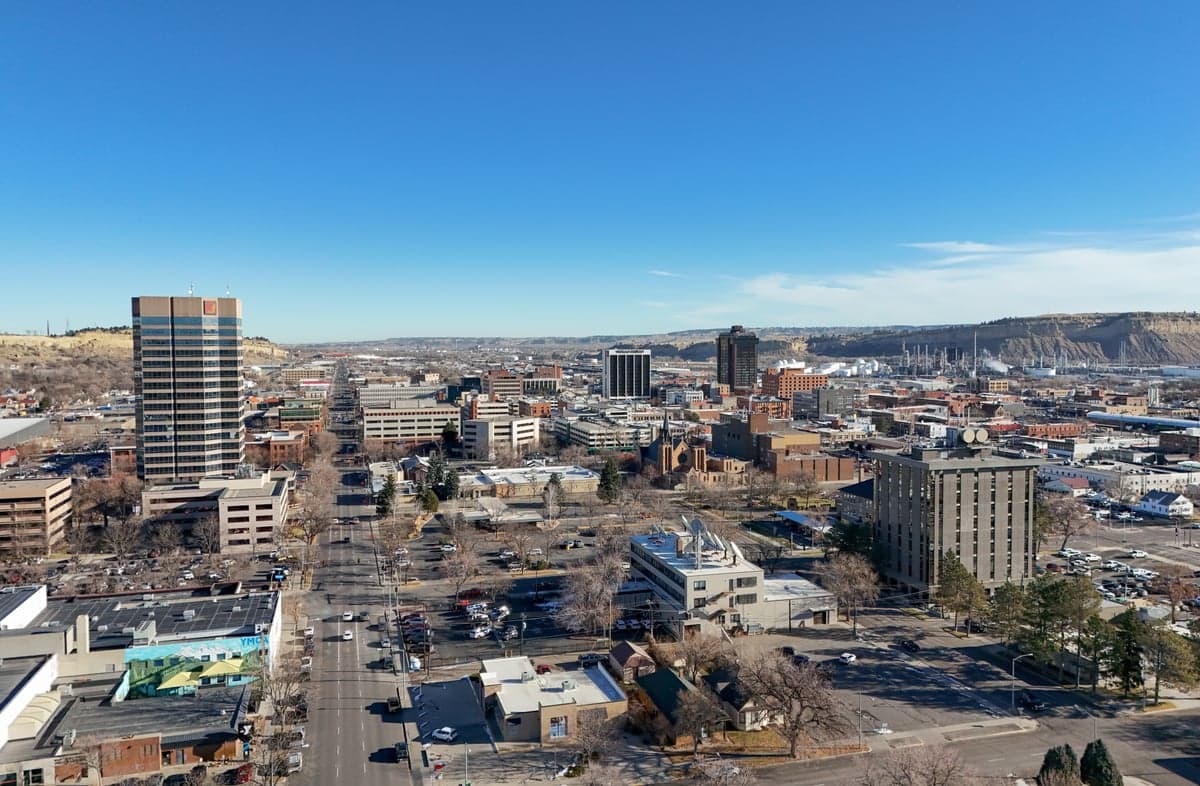
Photo: Wikipedia
Quality of Life in Billings, MT
A high quality of life with strong walkability, manageable living costs, healthy neighborhood signals, and solid amenity access.
What does Quality of Life tell us?
Quality of Life blends cost of living, nearby amenities, socioeconomic signals, and neighborhood character. City-level scores represent the whole municipality; individual neighborhoods can differ.
What does this tell us?
Quality of Life blends cost of living, nearby amenities, socioeconomic signals, and neighborhood character. City-level scores represent the whole municipality; individual neighborhoods can differ.
Cost of Living
1% above national average
The Real Cost of Living in Billings, MT for 2026
| Tier | Individual | Family (4) |
|---|---|---|
| Survival | $18k | $33k |
| Comfortable | $61k | $89k |
| Luxury | $130k+ | $201k+ |
| Elite (Top 5%) | $159k+ | $246k+ |
81%
The Area Signal
A metric tracking the socioeconomic signals of the area.


Hobbies
Explore the areaGroceries
4 within 10 miles
Gas
0 within 10 miles
Hospital
3 within 20 miles
Airport
SLC — Salt Lake City International
Post Office
USPS — Billings, MT
Critical Amenities
Quality-of-Life Analysis
Billings, Montana, presents a quality of life defined by middle-class stability and a pragmatic, outdoors-oriented population. With a cost of living index of 101—essentially on par with the national average—the city attracts a mix of healthcare professionals, energy sector workers, and families seeking a balance between urban amenities and access to the Rocky Mountain frontier. The median household income hovers around $60,000, supporting a community where financial strain is less acute than in many Western boomtowns, though affordability pressures are rising.
Cost of living, housing affordability, and how Billings compares to nearby areas
Billings remains one of the more affordable larger cities in the Mountain West, though the gap is narrowing. The median home value of $311,800 is roughly $50,000 below the national median and significantly cheaper than Bozeman (median over $700,000) or Missoula (over $500,000). Renters fare well too: the median rent of $1,097 is about $200 below the U.S. average, making it feasible for single-income households and young professionals. However, prices have risen roughly 35% since 2020, outpacing local wage growth. Compared to nearby smaller towns like Laurel or Hardin, Billings commands a premium of 10–15% for housing, but offers a far deeper job market and retail base. The average commute of 16.7 minutes is a standout advantage—well below the national average of 26 minutes—meaning residents spend less time in traffic and more time on daily errands or recreation.
What daily life is like for families: schools, amenities, and local rhythm
Daily life in Billings revolves around a compact, car-dependent layout with a walkable downtown core along Montana Avenue. The city’s public school system, Billings Public Schools, serves roughly 16,000 students across 22 elementary schools, 4 middle schools, and 3 high schools. Senior High and West High are the largest, with graduation rates around 85%—slightly below the state average but improving. For families, the ZooMontana and the Yellowstone Art Museum provide cultural anchors, while the nearby Beartooth Mountains (90 minutes southwest) offer world-class hiking and skiing. The retail scene is anchored by the Rimrock Mall and a growing number of local breweries and farm-to-table restaurants along the historic downtown. Healthcare is a major strength: Billings Clinic and St. Vincent Healthcare are two of the largest employers in the state, providing specialist care that draws patients from a 500-mile radius. The city’s rhythm is slower than Denver or Salt Lake City, but faster than most Montana towns—weekends often blend farmers markets, river access on the Yellowstone, and high school sports.
Billings is best suited for people who value short commutes, affordable housing, and immediate access to outdoor recreation without sacrificing urban services. It works well for healthcare and energy professionals, remote workers who need reliable internet (fiber is expanding), and families who want a safe, mid-sized city with a strong sense of community. Those seeking a vibrant nightlife or a walkable urban core may find it limited, but for residents who prioritize financial stability and proximity to the Rockies, Billings offers a compelling, grounded quality of life.

Crime in Billings, MT
Higher crime rates than 63% of comparable U.S. locations.
Violent CrimeViolent Crime Analysis
Property CrimeProperty Crime Analysis
Crime Analysis
Billings, Montana, reports a violent crime rate of 759.6 incidents per 100,000 residents and a property crime rate of 2,495.7 per 100,000, figures that place the city well above both state and national averages. These statistics indicate that while Billings is not a high-crime metropolis, it faces significant public safety challenges relative to its size and location in the generally safer state of Montana. The city’s status as the state’s largest population and economic hub contributes to these elevated rates, but local justice system policies also play a role in the overall safety picture.
Crime in context
Billings’ violent crime rate is roughly double the national average of approximately 380 per 100,000, and its property crime rate exceeds the U.S. average of about 1,950 per 100,000. Compared to the rest of Montana, which has a statewide violent crime rate near 400 per 100,000, Billings is an outlier. Yellowstone County, where Billings sits, accounts for a disproportionate share of the state’s reported offenses. Property crime, particularly theft and vehicle break-ins, is the most common concern, with rates that are 28% higher than the national average. These numbers reflect a community where both opportunistic and more serious crimes are more frequent than in surrounding rural areas or smaller Montana cities like Bozeman or Missoula.
What residents experience
Residents and visitors in Billings frequently report property crime as a daily annoyance, with car prowls and package thefts common in neighborhoods near downtown and the Heights. Violent crime, while less frequent, is concentrated in specific areas and often tied to disputes or substance abuse. The local justice system, influenced by progressive prosecutorial policies in Yellowstone County, has drawn criticism for prioritizing diversion and reduced sentencing for repeat offenders. Critics argue that this approach, while intended to reduce incarceration, leads to higher recidivism and more criminals on the street, undermining public confidence. For example, property crime offenders may receive deferred prosecution, allowing them to re-offend without meaningful consequences, which frustrates victims and law enforcement alike.
Neighborhood-level variation is notable. The downtown core and areas along the interstate corridor see higher rates of both violent and property crime, while outlying subdivisions like the West End and Lockwood report lower incidents but still face occasional theft. Residents in the South Side and North Park areas should exercise heightened caution, particularly at night. Overall, Billings demands a proactive approach to personal safety—locking vehicles, securing homes, and staying aware of surroundings—more so than most Montana communities. The combination of elevated crime rates and a justice system perceived as lenient means that readers should be concerned about the trajectory of public safety in the Magic City.
* Values derived from national, state, county, city and local statistics and may differ in a specific area. Last updated: 2026-04-19T06:53:26.000Z
Narrative content on this page is AI-generated and may contain mistakes. Verify any details that matter before acting on them.
ReloMaps may earn a commission from affiliate links at no extra cost to you.

