 Popular
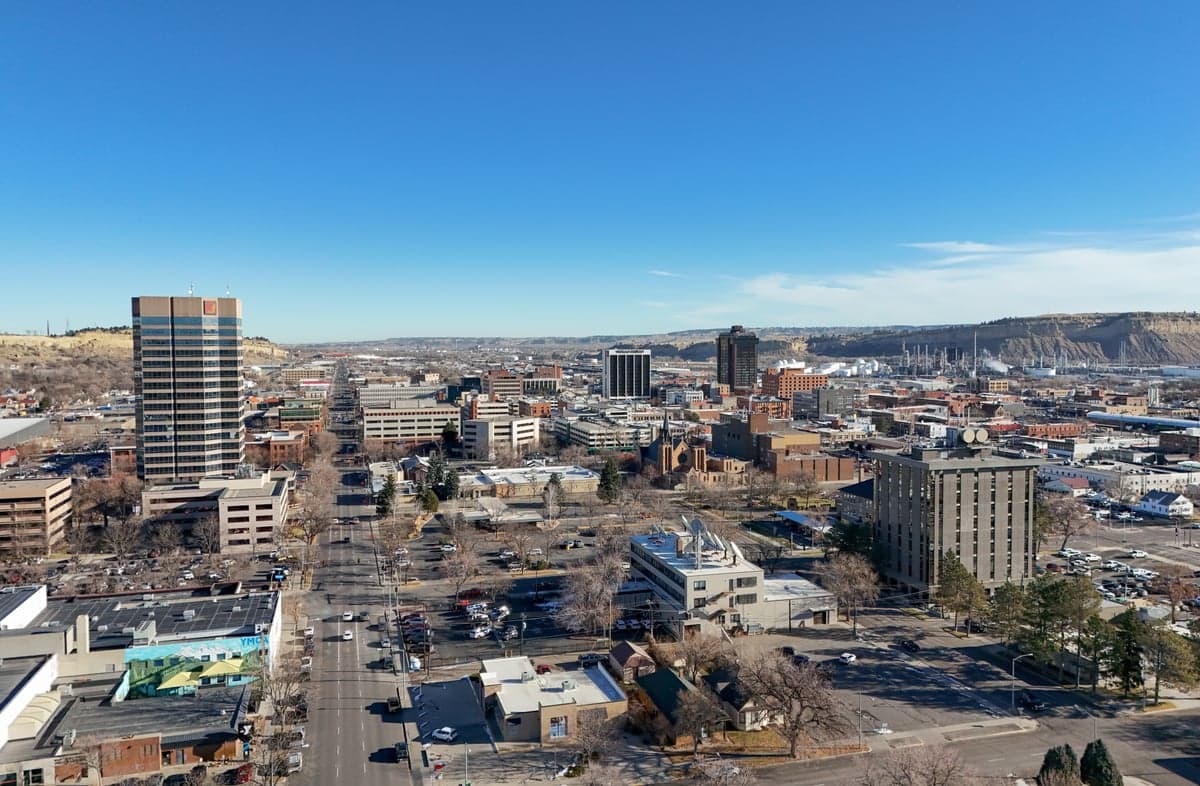
Photo: Wikipedia
Political ClimatePolitical Climate in Billings, MT
District shown is the primary district for this city’s centroid. Cities may span multiple districts.
Local Political AnalysisPolitical Analysis of Billings, MT
Billings, Montana, has long been a reliably conservative stronghold, and that hasn’t changed much despite some national trends. The Cook PVI rating of R+15 tells you the real story: this is a place where traditional values and limited government aren’t just talking points, they’re the default setting for most folks. You’ll see it in the local elections, the school board meetings, and the general attitude that government should stay out of your business and your backyard. While places like Bozeman and Missoula have drifted noticeably leftward in recent years, Billings has held its ground, and that’s a big part of why a lot of people still feel comfortable raising a family or running a business here.
How it compares
Drive an hour west to Bozeman, and you’ll feel the difference immediately—it’s become a magnet for out-of-state transplants bringing big-city politics with them. Missoula is even further gone, with a city council that’s openly progressive and a tax base that seems to think money grows on trees. Billings, by contrast, still feels like the real Montana. The surrounding towns like Laurel, Hardin, and even smaller spots like Worden and Shepherd lean even more conservative, creating a solid buffer of like-minded communities. The contrast is stark: in Yellowstone County, you’re not dealing with the same kind of activist-driven policy pushes you see in the western part of the state. The local government here is more focused on keeping taxes low, protecting property rights, and not getting in the way of the energy and agriculture sectors that keep the lights on.
What this means for residents
For someone living here, the political climate translates into a lot of practical freedoms that are getting harder to find elsewhere. You’re not constantly looking over your shoulder for new regulations on your home business, your hunting gear, or how you heat your house. The school system, while not perfect, hasn’t been taken over by the kind of ideological curriculum battles you hear about in Portland or Seattle. Property taxes are still manageable compared to what you’d pay in a blue state, and the local sheriff’s office isn’t in the business of enforcing federal overreach. That said, there’s a growing concern among long-time residents that the same forces pushing change in Bozeman are starting to trickle east. You see it in the occasional zoning fight or a city council candidate who talks about “equity” and “sustainability” in ways that sound an awful lot like government overreach dressed up in nice language.
What daily life is like for families
Day to day, the conservative tilt means you can still have a conversation with your neighbor without worrying about getting into a political fight. The local churches are full, the 4-H clubs are active, and the rodeo is still a bigger deal than any protest march. For families, this means kids grow up in an environment where personal responsibility and hard work are still the expected path. The biggest cultural distinction is probably the lack of that constant, low-grade political tension you feel in more progressive cities. People here are generally friendly and practical, and they’d rather talk about the weather, the hunting season, or the local high school football team than argue about national politics. That’s a rare thing these days, and it’s worth holding onto.
Looking ahead, the long-term trajectory is a bit of a mixed bag. The energy sector—oil, gas, and coal—is still the backbone of the local economy, and that keeps a lot of the political pressure on the side of common sense and limited regulation. But the influx of remote workers and retirees from places like California and Colorado is slowly changing the voter rolls. If you’re paying attention, you can see the early signs of the same kind of zoning battles and tax hikes that have already hollowed out other Western towns. The hope is that Billings’ sheer size and its deep-rooted conservative culture will act as a firewall. But it’s not a given. The best defense is staying involved, voting in every local election, and keeping an eye on any proposal that sounds like it’s trying to “fix” something that isn’t broken.

State Political ClimatePolitical Climate in Montana
State Political AnalysisPolitical Environment in the State
Montana has long been a reliably Republican state at the presidential level, voting for the GOP candidate in every election since 1968 except for 1992. However, the state’s political identity is more complex than a simple red-state label, with a strong libertarian streak and a deep distrust of federal overreach. Over the last 10-20 years, the dominant coalition has shifted from a mix of conservative ranchers and union-aligned Democrats to a more solidly Republican, culturally conservative base, driven by in-migration from states like California and Washington. While the state remains deeply red, the nature of that conservatism is evolving, creating new tensions between long-time residents and newcomers, particularly in fast-growing areas like Bozeman and Missoula.
Urban vs. rural divide
The political map of Montana is a textbook example of the urban-rural split. The state’s two largest cities, Billings and Missoula, anchor opposite ends of the political spectrum. Missoula, home to the University of Montana, is a progressive stronghold that consistently votes blue, with Democrats often winning by double digits in county-level races. Billings, the largest city, leans Republican but is more moderate, with a significant business and energy sector that favors fiscal conservatism. The real engine of the GOP’s dominance is the vast rural expanse—counties like Blaine, Phillips, and Valley routinely deliver 70-80% of their votes for Republican candidates. The Gallatin Valley, anchored by Bozeman, is a fascinating battleground: it was once reliably red, but rapid growth from out-of-state transplants has made it a purple county, with Democrats making gains in recent cycles. Meanwhile, smaller towns like Kalispell and Whitefish in the Flathead Valley show a similar dynamic, with Whitefish trending left and Kalispell staying solidly conservative. The divide isn’t just about geography—it’s about lifestyle and values, with rural Montanans viewing urban centers as out of touch with their way of life.
Policy environment
Montana’s policy environment is a mixed bag for conservatives. On the plus side, the state has no sales tax, a flat income tax rate of 6.75% (recently reduced from a progressive structure), and relatively low property taxes compared to the national average. The regulatory posture is generally business-friendly, especially in the energy and agriculture sectors. However, the state has seen a concerning trend toward government overreach in recent years. The 2023 session saw the passage of a strict “red flag” law (HB 322) that allows for temporary seizure of firearms from individuals deemed a threat, a move that alarmed many gun rights advocates. On education, Montana has a robust school choice movement, with the passage of a tax credit scholarship program in 2023, but the state’s public schools remain heavily unionized and resistant to reform. Healthcare policy is a flashpoint: the state expanded Medicaid under the Affordable Care Act in 2015, a decision that many conservatives view as a step toward government-run healthcare. Election laws have been tightened, with voter ID requirements and restrictions on ballot harvesting, but the state still allows same-day voter registration, which some see as a vulnerability. Overall, the policy environment is a tug-of-war between traditional libertarian values and the creeping influence of progressive ideology, particularly in the state’s growing urban centers.
Trajectory & freedom
The trajectory of freedom in Montana is a cause for concern among conservatives. While the state has long been a bastion of personal liberty, recent legislation has chipped away at that reputation. The most alarming trend is the erosion of Second Amendment rights. The 2023 “red flag” law (HB 322) is a direct threat to due process, allowing a judge to order the seizure of firearms based on a complaint without the accused being present. This is a clear overreach that would have been unthinkable a decade ago. On the positive side, Montana has passed strong parental rights legislation, including a 2021 law requiring parental notification for any medical procedure on a minor, and a 2023 law banning gender-affirming care for minors. The state also passed a “Right to Try” law for experimental treatments, and has resisted federal mandates on vaccine passports. Property rights remain strong, with no state-level zoning mandates, though local governments in places like Bozeman and Missoula are increasingly imposing growth restrictions that drive up housing costs. Taxation is trending in the right direction, with the flat tax reduction and a recent property tax rebate for homeowners. However, the overall trajectory is mixed: the state is becoming more free in some areas (parental rights, school choice) but less free in others (gun rights, healthcare mandates). The key battleground is the influx of new residents who bring their politics with them, often supporting more government intervention in the name of “safety” or “equity.”
Civil unrest & political movements
Montana is not known for widespread civil unrest, but there have been notable flashpoints. The most visible is the ongoing conflict over public lands and federal management. The “Sagebrush Rebellion” has deep roots here, with groups like the Montana Land Alliance pushing for state control of federal lands. In 2021, there were protests in Helena over the Biden administration’s pause on oil and gas leasing, with ranchers and energy workers rallying against federal overreach. On the left, the “Yellowstone to Yukon” conservation initiative has sparked heated debates, with rural residents viewing it as a land grab by environmentalists. Immigration politics are less heated than in border states, but there is growing concern over illegal immigration, particularly in agricultural areas. The state has no sanctuary cities, and local law enforcement generally cooperates with federal immigration authorities. Election integrity has been a major issue since 2020, with the state legislature passing a series of reforms to tighten voting laws, though Democrats have challenged these in court. The most visible political movement is the “Montana Freedom Caucus,” a group of hardline conservatives in the state legislature who have pushed for tax cuts, gun rights, and school choice. Their influence has grown, but they often clash with more moderate Republicans, particularly on budget issues. Overall, the political climate is tense but not volatile, with most conflicts playing out in the legislature and the courts rather than on the streets.
Projection
Looking ahead 5-10 years, Montana is at a crossroads. The state is growing faster than almost any other in the nation, with a population increase of over 10% since 2020. This growth is overwhelmingly driven by in-migration from blue states like California, Oregon, and Washington. These newcomers tend to be more educated, wealthier, and more progressive than the native population, and they are concentrated in the state’s urban centers—Bozeman, Missoula, and Whitefish. This demographic shift is already turning once-reliable red counties purple, and if the trend continues, Montana could become a swing state within a decade. The 2024 election will be a key test: if Democrats can flip a congressional seat or make gains in the state legislature, it will signal a fundamental shift. However, the rural vote remains deeply entrenched, and the state’s political geography makes it difficult for Democrats to win statewide without a strong moderate candidate. The most likely scenario is a slow, grinding polarization: urban areas become more blue, rural areas become more red, and the state’s politics become more contentious. For a conservative moving in now, the key takeaway is that Montana is still a red state, but it’s a red state under siege. The fight for the soul of the state is just beginning, and the outcome will depend on whether the new arrivals assimilate into Montana’s culture of freedom or try to remake it in the image of the places they left.
For a new resident, the bottom line is this: Montana offers a high degree of personal freedom, low taxes, and a strong sense of community, but those benefits are under threat. The state is still a great place for conservatives who value independence and self-reliance, but it’s not immune to the progressive trends sweeping the nation. If you’re moving here, get involved in local politics, join a local Republican club, and be prepared to fight to keep Montana the Last Best Place. The state’s future depends on people like you who are willing to stand up for the principles that made it great.
* Values derived from national, state, county, city and local statistics and may differ in a specific area. Last updated: 2026-04-19T06:53:26.000Z
Narrative content on this page is AI-generated and may contain mistakes. Verify any details that matter before acting on them.
ReloMaps may earn a commission from affiliate links at no extra cost to you.

