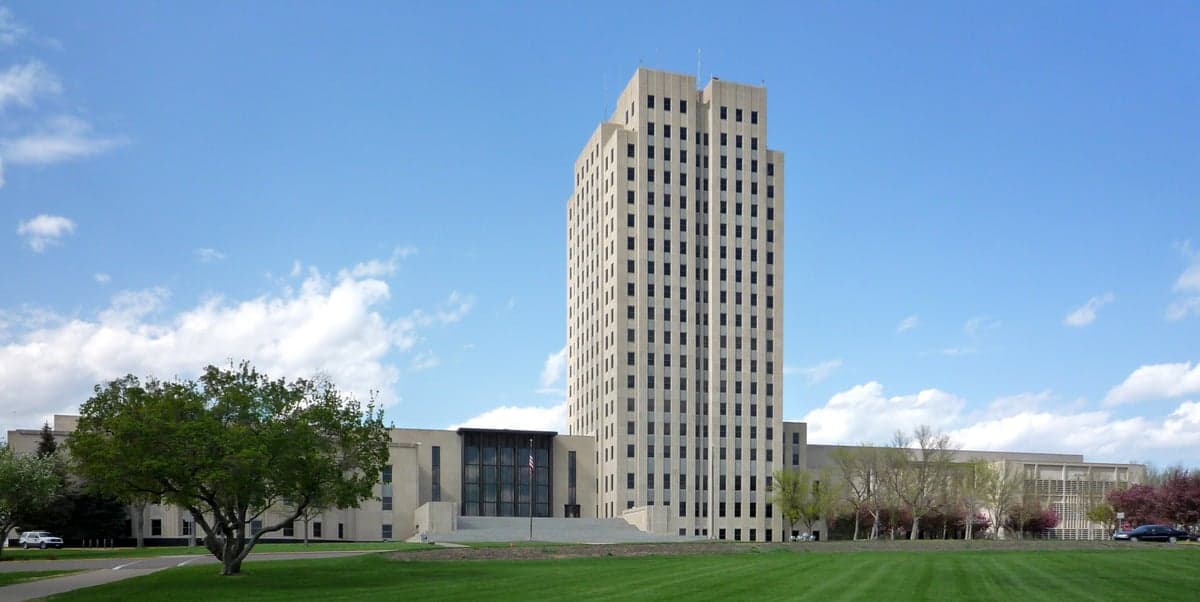
Photo: Wikipedia
Political ClimatePolitical Climate in Bismarck, ND
District shown is the primary district for this city’s centroid. Cities may span multiple districts.
Inherited from parent state — no local data available.
Local Political AnalysisPolitical Analysis of Bismarck, ND
Bismarck is about as solidly conservative as it gets in North Dakota, and honestly, that’s been a big part of its appeal for folks who value personal freedoms and want to keep government out of their daily lives. The Cook PVI of R+18 tells you the math straight up—this isn’t a swing area; it’s a place where Republican candidates routinely win by double digits, and the local culture reflects that. But if you’ve been around here as long as I have, you’ve seen the winds start to shift, even if slowly, and it’s worth keeping an eye on.
How it compares
Compared to the rest of the state, Bismarck is actually a bit more moderate than some of the rural outposts to the west and north. Places like Watford City or Williston are even more conservative, driven by oil patch libertarianism and a strong “leave us alone” attitude. On the flip side, Fargo and Grand Forks, especially near the university campuses, have been trending more progressive in recent years—you’ll see more yard signs for Democrats and more talk about “equity” initiatives in local government. Bismarck sits in a sweet spot: it’s conservative, but not as isolated as the small towns, and it hasn’t yet seen the same level of progressive activism that’s creeping into the eastern cities. The surrounding counties, like Burleigh and Morton, are reliably red, but Mandan just across the river has a slightly more working-class, blue-collar conservative vibe that’s a little less polished than Bismarck’s state-government crowd.
What this means for residents
For the most part, living in Bismarck means you’re not constantly fighting overreach from local officials. Property taxes are reasonable, zoning is fairly light, and there’s a general sense that the government trusts you to make your own choices—whether that’s about homeschooling, carrying a firearm, or running a small business without a dozen permits. That said, there are some warning signs. The state legislature has seen a few bills in recent years that try to centralize more control in the capital, which is ironic given that Bismarck is the capital. Things like mask mandates during the pandemic were a flashpoint—local leaders mostly resisted them, but there was pressure from health officials that felt like a preview of what could come if the political balance tips. The real concern for long-time residents is the slow trickle of people moving in from more progressive states, drawn by jobs in energy or healthcare, who bring different ideas about what “community” means. It’s not a flood yet, but you see it in local school board races and city council meetings where suddenly there’s debate about things that used to be settled—like parental rights or spending priorities.
Culturally, Bismarck still holds onto a strong sense of independence. The annual fair, the hunting culture, the number of churches per capita—it all reinforces a community that values tradition and personal responsibility. But there’s a quiet tension between the old guard and the newcomers, especially around issues like land use and environmental regulations. The oil boom brought money and jobs, but it also brought federal oversight and a lot of outside pressure to change how things are done. If you’re thinking about moving here, know that you’ll find plenty of neighbors who share your concerns about government overreach, but also that the fight to keep Bismarck from drifting toward the progressive policies of the coasts is an ongoing one. It’s still a great place to raise a family if you want freedom from bureaucracy, but don’t take it for granted—stay involved, vote in local elections, and keep an eye on those school board meetings.

State Political ClimatePolitical Climate in North Dakota
State Political AnalysisPolitical Environment in the State
North Dakota has long been one of the most reliably Republican states in the nation, with a deep-rooted conservative culture that has only solidified over the past two decades. The state hasn’t voted for a Democratic presidential candidate since Lyndon B. Johnson in 1964, and in 2024, Donald Trump carried it by a staggering 20 points. The dominant coalition is a mix of rural agricultural interests, energy-sector workers from the Bakken oil fields, and a growing population of conservative-leaning transplants fleeing higher-tax states. Over the last 10-20 years, the state has shifted even further right, driven by an influx of workers to places like Williston and Watford City and a simultaneous exodus of younger, more moderate residents from the eastern cities. This isn’t a purple state flirting with blue—it’s a deep red stronghold that’s only getting redder.
Urban vs. rural divide
The political map of North Dakota is starkly divided between a handful of small urban centers and the vast, conservative countryside. The state’s largest city, Fargo, in Cass County, is the most moderate area—it voted for Trump by only 12 points in 2024, compared to the statewide 20-point margin. Fargo’s growth, fueled by North Dakota State University and a diversifying tech and healthcare economy, has brought in a slightly more libertarian-leaning, business-friendly crowd, but it’s still solidly Republican. Bismarck, the capital in Burleigh County, is a conservative stronghold where Trump won by 25 points, driven by state government workers and energy industry lobbyists. The real action is out west: Minot, Williston, and Dickinson are the epicenters of the oil boom, and they vote like it—Trump carried Williams County (Williston) by 45 points. These areas are overwhelmingly white, blue-collar, and fiercely independent, with a strong distrust of federal overreach. The rural counties in the central and western parts of the state, like McKenzie and Dunn, routinely deliver 80%+ Republican margins. The only real exception is the Turtle Mountain and Fort Berthold reservations, which lean Democratic due to tribal politics, but their populations are small and don’t shift the statewide balance.
Policy environment
North Dakota’s policy environment is a conservative dream, with low taxes, minimal regulation, and a strong emphasis on individual liberty. There is no state income tax—a huge draw for movers from high-tax states like California or New York. Property taxes are moderate, averaging around 0.9% of home value, and the state has a robust oil tax fund that keeps budgets stable without squeezing residents. The regulatory posture is aggressively pro-business, especially in energy and agriculture—permitting for oil drilling is streamlined, and there are no state-level climate mandates. On education, the state has a strong school choice movement: the North Dakota Choice Ready Scholarship program and a growing number of charter schools give parents options, though rural districts still dominate. Healthcare is a mixed bag—the state expanded Medicaid under the Affordable Care Act in 2013, a move that rankled some conservatives, but there’s been no push for a state-run system. Election laws are solid: voter ID is required, same-day registration is allowed but with strict ID rules, and there’s no widespread mail-in voting abuse. The state legislature is firmly Republican, with a supermajority in both chambers, meaning progressive policy proposals rarely get a hearing.
Trajectory & freedom
North Dakota is trending more free in most respects, especially on gun rights and parental autonomy. In 2023, the legislature passed HB 1340, which eliminated the requirement for a permit to carry a concealed firearm—constitutional carry is now the law. The state also passed SB 2030 in 2021, which prohibits any government entity from enforcing federal gun laws that violate the Second Amendment, a clear nullification stance. On parental rights, the Parents’ Bill of Rights (SB 2206) was enacted in 2023, requiring schools to notify parents of any medical or mental health services provided to their children and to get consent before discussing gender identity. Medical autonomy took a hit in 2024 when the legislature passed a near-total abortion ban, with exceptions only for rape, incest, and life of the mother—a move that expanded government control over personal medical decisions, which some conservatives see as overreach. Property rights are strong, with no state-level zoning mandates and a robust Right to Farm law protecting agricultural operations from nuisance lawsuits. Taxation is trending downward: the state cut the corporate income tax rate from 4.31% to 3.5% in 2023. The only concerning trend is a slight uptick in federal dependency—North Dakota receives more federal dollars per capita than most states, which could lead to future strings attached.
Civil unrest & political movements
North Dakota has seen its share of political flashpoints, most notably the Dakota Access Pipeline protests at the Standing Rock Reservation in 2016-2017. That was a massive, months-long occupation that drew activists from across the country, leading to clashes with law enforcement and a heavy National Guard presence. The state government, led by then-Governor Doug Burgum, stood firm in support of the pipeline, and the protests eventually fizzled. Since then, there’s been a quieter but persistent undercurrent of tribal sovereignty activism, particularly around voting access and land rights on the reservations. On the right, the North Dakota Republican Party has seen a factional split between establishment conservatives and more populist, anti-establishment figures—the latter group successfully pushed for the state’s Measure 2 in 2022, which would have imposed term limits on the legislature, though it was struck down by the state Supreme Court. Immigration politics are relatively calm—the state has a small immigrant population, mostly in Fargo’s meatpacking plants, and there’s no sanctuary city movement. Election integrity is a hot topic: in 2024, the legislature passed HB 1273, which requires all ballots to be hand-counted in precincts with fewer than 1,000 voters, a move that sparked debate but passed along party lines. A new resident won’t see daily protests, but they’ll notice a strong, quiet culture of self-reliance and a wariness of outside influence.
Projection
Over the next 5-10 years, North Dakota is likely to become even more conservative, driven by two key trends: continued in-migration from blue states and the aging of the state’s small liberal-leaning population. The oil boom in the Bakken is maturing, but new technologies like enhanced oil recovery and lithium extraction from brine are keeping the energy sector alive, drawing workers to Williston and Watford City. These newcomers are overwhelmingly conservative, often fleeing high taxes and crime in places like California and Illinois. Meanwhile, Fargo’s growth is slowing, and its moderate influence is being diluted by the surrounding rural counties. The state’s population is projected to grow modestly, but it’s aging—the median age is 35.7, and younger residents often leave for college and don’t return. This means the electorate will skew older and more conservative. Expect further tax cuts, more school choice expansion, and a continued pushback against federal mandates. The only wild card is the state’s reliance on federal oil and gas revenue—if the federal government tightens regulations, it could strain the budget. But for now, North Dakota is on a trajectory to be one of the freest states in the union, with a government that stays out of your business.
For a new resident, the bottom line is this: North Dakota offers a political environment where your rights are respected, your taxes are low, and your voice matters. You won’t find the culture wars of coastal cities here—just a straightforward, live-and-let-live attitude that values hard work and personal responsibility. If you’re moving from a high-tax, high-regulation state, you’ll feel the difference immediately. Just be prepared for long winters and a slower pace of life—the trade-off is worth it.
* Values derived from national, state, county, city and local statistics and may differ in a specific area. Last updated: 2026-04-19T09:11:23.000Z
Narrative content on this page is AI-generated and may contain mistakes. Verify any details that matter before acting on them.
ReloMaps may earn a commission from affiliate links at no extra cost to you.

