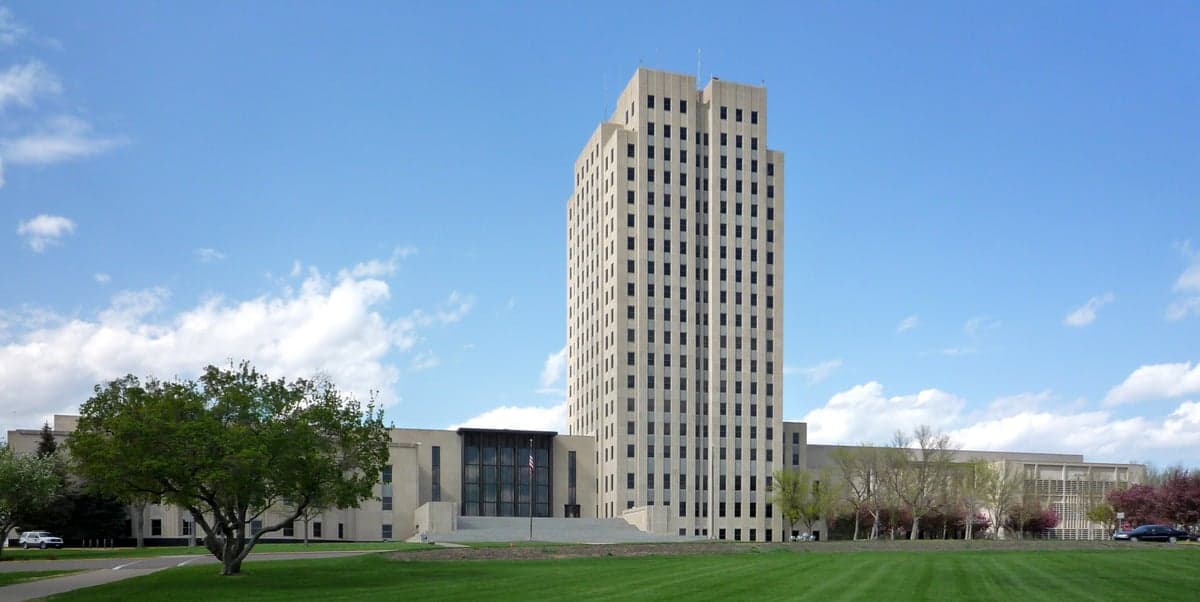
Photo: Wikipedia
Quality of Life in Bismarck, ND
A high quality of life with strong walkability, manageable living costs, healthy neighborhood signals, and solid amenity access.
What does Quality of Life tell us?
Quality of Life blends cost of living, nearby amenities, socioeconomic signals, and neighborhood character. City-level scores represent the whole municipality; individual neighborhoods can differ.
What does this tell us?
Quality of Life blends cost of living, nearby amenities, socioeconomic signals, and neighborhood character. City-level scores represent the whole municipality; individual neighborhoods can differ.
Cost of Living
7% below national average
The Real Cost of Living in Bismarck, ND for 2026
| Tier | Individual | Family (4) |
|---|---|---|
| Survival | $16k | $30k |
| Comfortable | $57k | $83k |
| Luxury | $129k+ | $200k+ |
| Elite (Top 5%) | $152k+ | $235k+ |
93%
The Area Signal
A metric tracking the socioeconomic signals of the area.


Hobbies
Explore the areaGroceries
5 within 10 miles
Gas
0 within 10 miles
Hospital
3 within 20 miles
Airport
JFK — John F. Kennedy Memorial
Post Office
USPS — Bismarck, ND
Critical Amenities
Quality-of-Life Analysis
Bismarck, North Dakota, presents a quality of life defined by economic stability, short commutes, and a cost of living that consistently undercuts the national average. With a cost of living index of 93 (where 100 equals the U.S. average), the state capital attracts a mix of government employees, healthcare professionals, and energy-sector workers seeking a balance of career opportunity and affordable daily expenses. The city’s population skews slightly older and more family-oriented than the national median, with a strong presence of state government and Sanford Health as major employers anchoring a stable, white-collar job market.
Cost of living, housing affordability, and how Bismarck compares to nearby cities
Bismarck’s housing market remains notably more affordable than the national median, with a median home value of $291,400 and a median rent of $992. This places homeownership within reach for many dual-income households, especially when compared to larger regional hubs like Fargo (median home value ~$310,000) or Minneapolis (~$380,000). The cost of living index of 93 is driven primarily by lower housing and transportation costs, though groceries and utilities run close to national averages. The average commute of just over 15 minutes is a standout advantage—among the shortest for any state capital—reducing both fuel expenses and daily stress. For renters, the median rent of $992 is roughly 15% below the national median, making Bismarck a practical choice for young professionals and retirees alike who want to avoid the housing squeeze seen in many Western cities.
Schools, daily amenities, and the rhythm of life in Bismarck
Daily life in Bismarck revolves around a compact, navigable layout where most errands and services are within a 10-minute drive. The Bismarck Public Schools district serves over 13,000 students and consistently scores above state averages in reading and math proficiency, with Century High School and Legacy High School both recognized for strong extracurricular programs. Healthcare access is robust, anchored by Sanford Health Bismarck and CHI St. Alexius Health, providing specialty care that reduces the need to travel to larger cities. Outdoor amenities include the Missouri River running through town, with the Bismarck Riverwalk and Sertoma Park offering trails, playgrounds, and fishing access. The city’s cultural rhythm is quieter than Fargo’s, but the North Dakota State Capitol grounds, the Dakota Zoo, and seasonal events like the Bismarck Marathon and Northern Plains Fair provide regular community touchpoints. Winters are long and cold (average January high of 22°F), which shapes a more indoor-focused lifestyle from November through March, with hockey and shopping at Kirkwood Mall as common pastimes.
Bismarck is best suited for individuals and families who prioritize job security, short commutes, and affordable homeownership over urban nightlife or cultural density. Government employees, healthcare workers, and those in the energy sector will find a stable economy with low unemployment (typically under 2.5%). Retirees on fixed incomes benefit from the low cost of living and access to medical facilities, while families appreciate the strong schools and safe neighborhoods. Those seeking a vibrant arts scene, diverse dining, or mild winters may find Bismarck limiting, but for anyone valuing predictability, affordability, and a community-oriented pace, the city delivers a high quality of life with few trade-offs.

Crime in Bismarck, ND
Generally safer than 68% of comparable U.S. locations.
Violent CrimeViolent Crime Analysis
Property CrimeProperty Crime Analysis
Crime Analysis
Bismarck, North Dakota, maintains a safety profile that is notably better than the national average for violent crime but faces property crime rates that warrant attention. With a violent crime rate of 237.3 incidents per 100,000 residents and a property crime rate of 1,885.5 per 100,000, the city presents a mixed picture for those considering relocation. While these figures place Bismarck below many peer cities in overall danger, the property crime rate is a specific area where residents should remain vigilant.
Crime in context
When compared to national benchmarks, Bismarck’s violent crime rate is approximately 32% lower than the U.S. average of roughly 380 per 100,000. This places the city in a relatively safe tier for violent offenses like assault, robbery, and homicide. However, the property crime rate is nearly 10% higher than the national average of about 1,700 per 100,000, driven primarily by theft and vehicle break-ins. It is important to note that North Dakota as a whole has a property crime rate of roughly 1,950 per 100,000, meaning Bismarck aligns closely with the state average. The city benefits from a conservative legal environment; unlike large metro areas with progressive district attorneys who may deprioritize certain prosecutions, Burleigh County’s justice system generally emphasizes accountability, which helps keep recidivism in check and supports public safety.
What residents experience
For daily life in Bismarck, the most common crime concerns are non-violent. Residents frequently report theft from vehicles, especially in parking lots near shopping centers like Kirkwood Mall or the downtown area. Burglaries of unattached garages and sheds are also noted in neighborhood forums. Violent crime is rare and typically concentrated in specific circumstances, such as domestic disputes or incidents tied to alcohol consumption, rather than random street attacks. The Bismarck Police Department maintains a visible presence and runs community-oriented programs, including neighborhood watch initiatives and a robust online crime mapping tool. Most families feel safe walking in residential areas after dark, though caution is advised near bars along Main Avenue late at night.
Neighborhood-level variation is modest but exists. The southwest quadrant, including areas near the University of Mary and newer subdivisions, sees the lowest crime rates. Older neighborhoods closer to the city center, such as those around the State Capitol grounds, have slightly elevated property crime but remain generally safe. The northern industrial corridor and areas near the railroad tracks have higher reported incidents of theft and occasional vandalism. Overall, Bismarck’s crime geography is not sharply divided, and no neighborhood is considered high-risk by national standards. For those moving from larger cities, the safety level will feel reassuring, though standard precautions—locking vehicles, securing bikes, and using outdoor lighting—are still recommended to avoid becoming a target for opportunistic property crime.
* Values derived from national, state, county, city and local statistics and may differ in a specific area. Last updated: 2026-04-19T09:11:23.000Z
Narrative content on this page is AI-generated and may contain mistakes. Verify any details that matter before acting on them.
ReloMaps may earn a commission from affiliate links at no extra cost to you.

