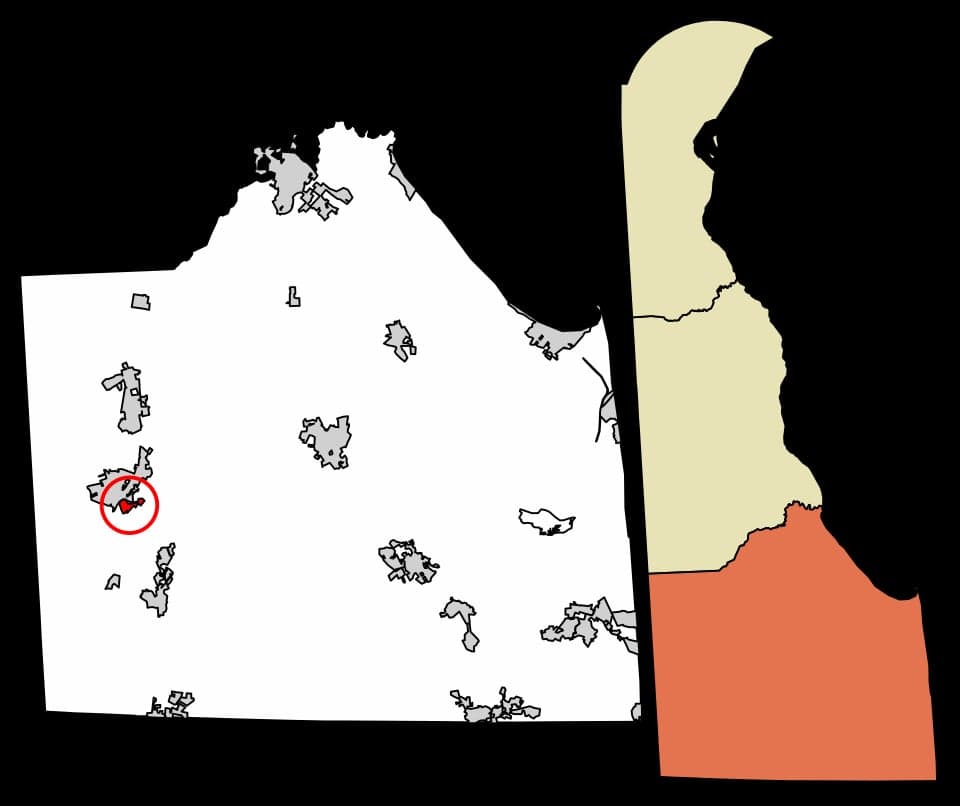
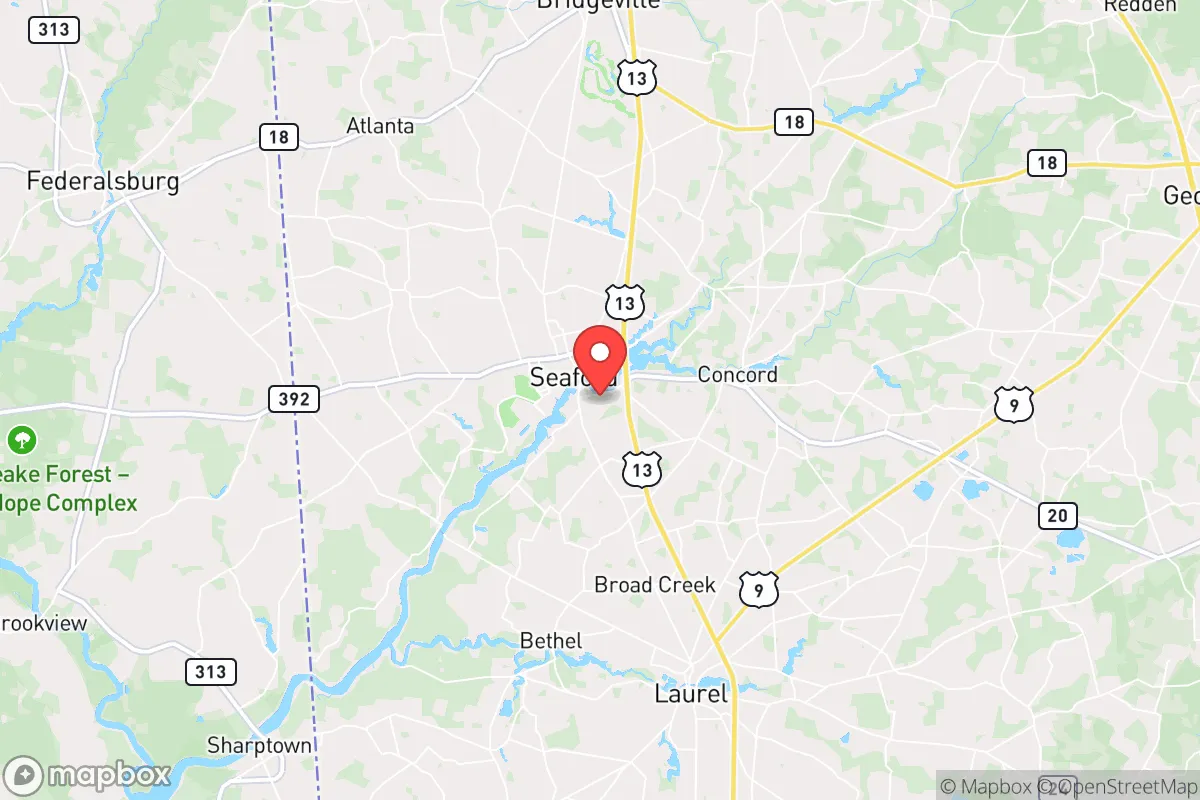
Photo: Wikipedia
Demographics of Blades, DE
Affluence Level in Blades, DE
A below-average socioeconomic profile. Incomes, home values, and educational attainment trail the U.S., with higher poverty and unemployment.
People of Blades, DE
The people of Blades, Delaware today form a small, tight-knit community of just over 1,000 residents, characterized by a predominantly white population (67.6%) with a significant Hispanic minority (15.6%) and a smaller Black community (8.4%). The town’s identity is rooted in its working-class heritage, with a notably low college attainment rate of 7.8% and a foreign-born population of 4.9%, reflecting a community shaped more by domestic migration than international immigration. Blades feels like a quiet, family-oriented enclave along the Nanticoke River, where generational roots run deep and newcomers are often drawn by affordable housing and a slower pace of life.
How the city was settled and grew
Blades was originally settled in the early 18th century as a small agricultural and milling community along the Nanticoke River, with the first European settlers being English and Scots-Irish farmers who took up land grants in the area. The town was officially incorporated in 1867, and its growth was modest, driven by the local sawmill and gristmill industries that employed a handful of families. The original settlement clustered around what is now Main Street and the riverfront, where the earliest homes and businesses were built. By the late 19th century, a small wave of German and Irish laborers arrived to work in the mills and on the railroad spur that connected Blades to the larger Delmarva Peninsula network. These families settled in the Railroad District, a narrow strip of modest homes near the tracks that still bears the imprint of that era. The population remained overwhelmingly white and native-born through the mid-20th century, with the 1950 census recording fewer than 500 residents, almost all of whom were descendants of the original English and German settlers.
Modern era (post-1965)
The post-1965 period brought gradual demographic change to Blades, though the town remained far more homogeneous than many Delaware communities. The Hispanic population began to grow in the 1990s and 2000s, driven by Mexican and Central American laborers who found work in the region’s poultry processing plants and agricultural fields. These families concentrated in the West Blades neighborhood, a cluster of rental homes and small houses west of Main Street, where a small but visible Hispanic commercial presence emerged. The Black population, which had been minimal for most of the town’s history, grew slightly after 2000, with families settling in the East Side area near the town’s eastern boundary. The white population, while still the majority, has aged in place, with many younger white residents moving to larger towns like Seaford or Laurel for employment and amenities. The East/Southeast Asian population remains negligible at 0.9%, and there is no recorded Indian subcontinent population. The foreign-born share of 4.9% is almost entirely Hispanic, reflecting the town’s limited role as a destination for international migration beyond Latin America.
The future
The population of Blades is likely to remain small and slowly declining, as the town lacks the economic drivers to attract significant new residents. The Hispanic share is expected to continue its gradual increase, potentially reaching 20-25% over the next decade, as families already in the area grow and a trickle of new arrivals from the poultry industry settle in West Blades and the River Road corridor. The white population will likely continue to age and shrink, with younger white adults leaving for educational and job opportunities elsewhere. The Black population is expected to remain stable or grow slightly, with some families moving from nearby Seaford into the East Side and South Blades neighborhoods. The town is not tribalizing into distinct ethnic enclaves in the way larger cities do, but a subtle geographic sorting is visible: Hispanic families cluster in the west, Black families in the east, and white families remain scattered across the older central neighborhoods. The next 10-20 years will likely see Blades become a slightly more Hispanic, slightly older, and economically stagnant community, with little change in its overall character as a quiet, working-class river town.
For someone moving in now, Blades offers a stable, low-cost, and safe environment where neighbors know each other and the pace of life is unhurried. The town is becoming more diverse in a modest, organic way, but it remains a place where the dominant culture is still defined by its white, native-born, working-class roots. New residents should expect a community that values privacy and self-reliance, with limited amenities but strong ties to the surrounding rural area.

* Values derived from national, state, county, city and local statistics and may differ in a specific area. Last updated: 2026-04-30T05:21:13.000Z
Narrative content on this page is AI-generated and may contain mistakes. Verify any details that matter before acting on them.
ReloMaps may earn a commission from affiliate links at no extra cost to you.

