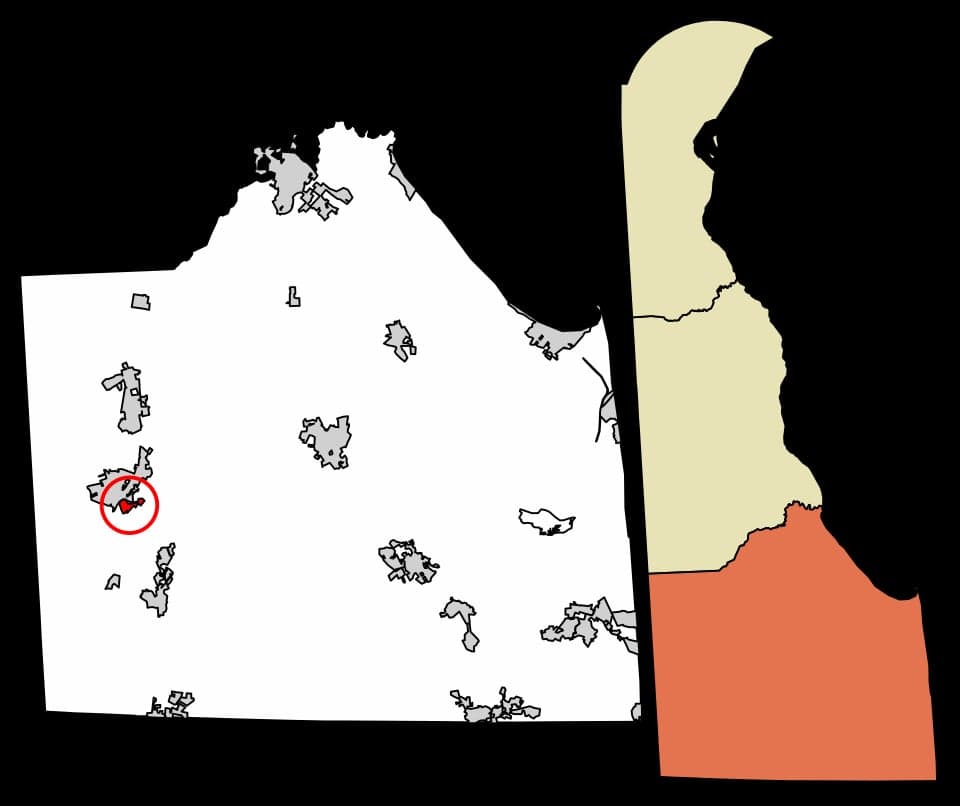
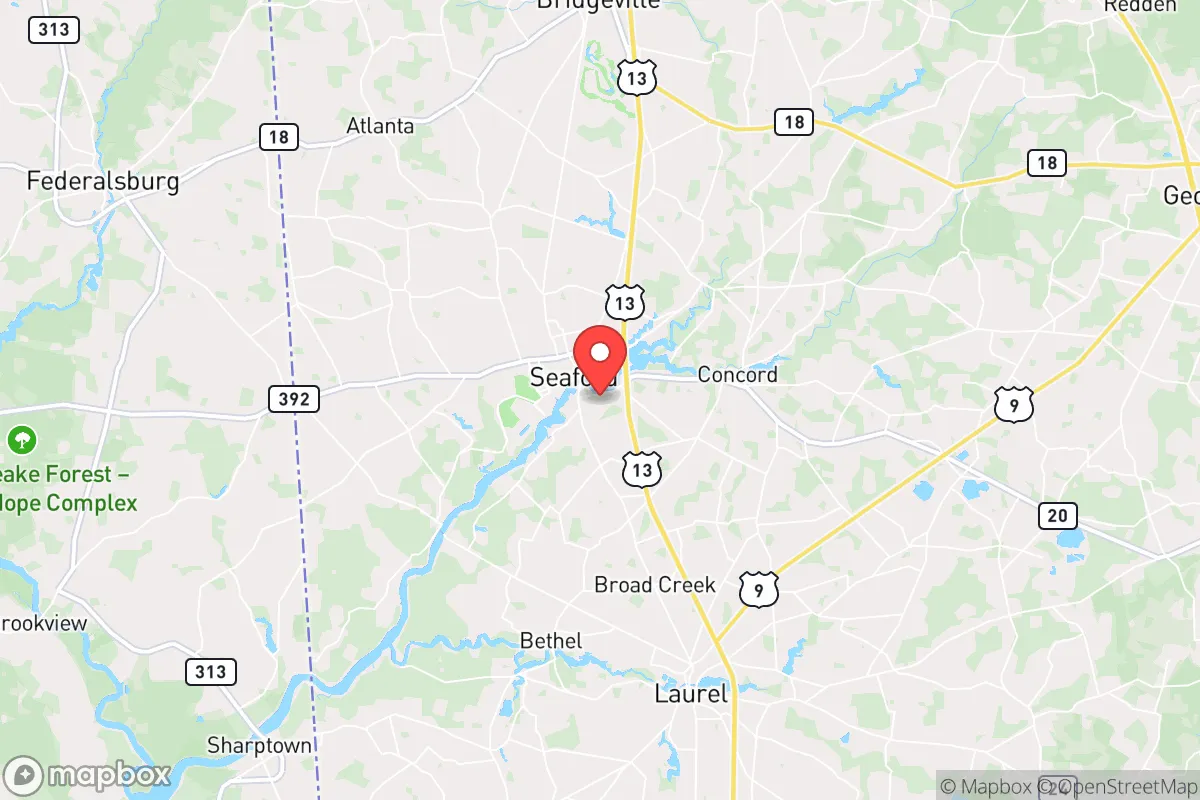
Photo: Wikipedia
Personal Sovereignty in Blades, DE
Viable for self-reliance. Generally workable, though some barriers may limit total independence.
What does Personal Sovereignty tell us?
Personal Sovereignty measures your capacity for self-reliance and independence with minimal government friction. Higher scores mean fewer barriers between you and the way you want to live... but it assumes you have the space you need and good neighbors.
What does this tell us?
Personal Sovereignty measures your capacity for self-reliance and independence with minimal government friction. Higher scores mean fewer barriers between you and the way you want to live... but it assumes you have the space you need and good neighbors.
State Policy
Energy independence: Importer (2% of energy produced in-state)
Personal Liberty
Homesteading

Personal Liberty Analysis
Blades, Delaware, offers a surprisingly robust environment for personal sovereignty, particularly when measured against the encroaching regulatory climates of the Mid-Atlantic and Northeast corridors. While no location is a fortress against federal overreach, this small Sussex County community sits within a state that, despite its blue-leaning national reputation, has maintained a notably hands-off approach in several key areas of daily life. For the individual or family prioritizing autonomy—from tax strategy to self-defense to the right to live without constant bureaucratic interference—Blades presents a viable, if imperfect, sanctuary that warrants serious consideration.
Tax burden and regulatory posture: How Delaware’s structure favors the self-reliant
Delaware’s tax architecture is a significant draw for those seeking to minimize government extraction from their labor. The state imposes no sales tax, which immediately reduces the effective cost of living and eliminates a layer of state surveillance into personal purchases. For a prepper or survivalist, this means stockpiling supplies—from bulk food to building materials—incurs no additional state penalty. Property taxes in Sussex County are among the lowest in the region, typically hovering around 0.55% of assessed value, which keeps the cost of land ownership manageable. The state’s corporate-friendly reputation extends to individuals: Delaware does not tax Social Security benefits and offers a significant deduction on other retirement income. However, be aware that the state income tax is progressive, topping out at 6.6%, which is moderate but not negligible. The regulatory posture in Sussex County leans rural and pragmatic. Zoning in and around Blades is generally permissive, with fewer of the environmental and land-use restrictions that plague areas closer to Wilmington or the coastal resort zones. This is not a jurisdiction that aggressively pursues code enforcement on minor property improvements, giving residents breathing room to manage their own land.
Self-defense and gun law specifics: A constitutional carry haven in the First State
For the sovereignty-minded individual, Delaware’s firearm laws are a critical factor. As of 2024, Delaware is a constitutional carry state for residents aged 21 and older, meaning no permit is required to carry a concealed firearm. This is a bedrock liberty that many surrounding states—Maryland, New Jersey, New York—have outright denied their citizens. The state also preempts local firearm ordinances, so Blades cannot enact its own restrictions beyond state law. There is no state-level registry for long guns, and private firearm sales between individuals are not subject to background checks (though this is a contested area politically). Magazine capacity is not restricted at the state level. However, the landscape is not static. Delaware recently enacted a permit-to-purchase requirement for handguns and banned so-called "assault weapons" and large-capacity magazines (defined as over 17 rounds) in 2022, though these laws face ongoing legal challenges. For the survivalist, the key takeaway is that while the state has moved in a restrictive direction, enforcement in rural Sussex County is lax, and the cultural norm remains pro-Second Amendment. The proximity to free states like Pennsylvania and the ability to carry without a government-issued permission slip are tangible advantages over the draconian regimes to the south and west.
Self-reliance and homesteading viability: Lot sizes, zoning, and off-grid feasibility in Blades
Blades sits in a sweet spot for those looking to reduce dependency on fragile systems. The area is characterized by agricultural zoning and rural residential parcels. Lot sizes of one to five acres are common and affordable, with raw land prices significantly lower than in the coastal resort towns. Zoning codes in Sussex County generally permit keeping livestock—chickens, goats, even a small cow—on parcels of one acre or more, with no excessive permitting fees. The county’s building code is based on the International Residential Code but is enforced with a light touch, especially for agricultural structures. Off-grid feasibility is high: well water is the norm in rural areas, and septic systems are standard. Solar panel installation is permitted without the bureaucratic hurdles seen in more progressive counties, and net metering is available through the local co-op, Delaware Electric Cooperative. The climate is forgiving for year-round food production, with a long growing season. The primary limitation is that the state does not explicitly recognize a right to rainwater harvesting, though it is not prohibited in practice. For the prepper, Blades offers the rare combination of affordable land, permissive zoning, and a climate that supports genuine self-sufficiency without the extreme winters or arid conditions of other regions.
Personal liberties: Parental rights, medical autonomy, speech, and property
On the spectrum of personal freedoms, Delaware presents a mixed but generally favorable picture for the conservative-leaning individual. Parental rights are relatively strong in Sussex County, with school boards that have resisted the more aggressive curriculum mandates seen in northern Delaware. The state does not have a universal vaccine mandate for school attendance, and religious and philosophical exemptions are available for required immunizations. Medical autonomy is a contested arena: Delaware has not enacted the extreme public health orders seen in states like New York or California, and the rural culture respects the right to make personal healthcare decisions without government compulsion. Freedom of speech is constitutionally protected, and there are no state-level hate speech laws that criminalize protected expression. Property rights are the strongest pillar. Delaware’s eminent domain laws are constrained, and the state’s pro-business legal environment (the Court of Chancery) generally favors property owners over government takings. There is no state income tax on capital gains, which incentivizes private investment and wealth retention. The primary concern for the liberty-minded is the state’s political trajectory: the northern counties (New Castle) drive state policy, and there is a persistent threat of expanded gun control and environmental regulations. However, Blades’ location in Sussex County provides a buffer, as local officials are overwhelmingly conservative and resistant to top-down mandates from Dover.
In the final analysis, Blades, Delaware, offers a level of personal sovereignty that is increasingly rare in the densely populated Northeast. It combines the tax advantages of a no-sales-tax state with the practical freedoms of rural living—constitutional carry, permissive zoning for homesteading, low property taxes, and a culture that values self-reliance. It is not a libertarian utopia; the state government has shown a willingness to restrict firearm ownership and could impose more onerous regulations in the future. But for the individual or family looking to plant roots in a community where government overreach is still the exception rather than the rule, Blades stands as a strong contender. Compared to the regulatory nightmares of Maryland, New Jersey, or even northern Virginia, this small Sussex County town feels like a pocket of relative freedom—a place where a person can still live largely on their own terms, provided they are willing to engage in the ongoing fight to keep it that way.

* Values derived from national, state, county, city and local statistics and may differ in a specific area. Last updated: 2026-04-30T05:21:13.000Z
Narrative content on this page is AI-generated and may contain mistakes. Verify any details that matter before acting on them.
ReloMaps may earn a commission from affiliate links at no extra cost to you.

