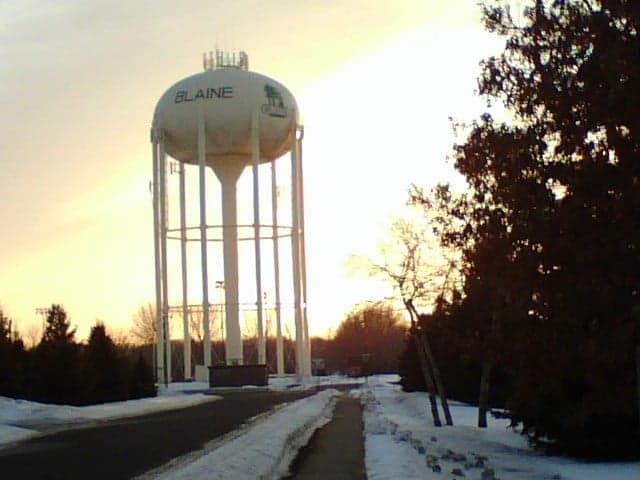
Photo: Wikipedia
Personal Sovereignty in Blaine, MN
Viable for self-reliance. Generally workable, though some barriers may limit total independence.
What does Personal Sovereignty tell us?
Personal Sovereignty measures your capacity for self-reliance and independence with minimal government friction. Higher scores mean fewer barriers between you and the way you want to live... but it assumes you have the space you need and good neighbors.
What does this tell us?
Personal Sovereignty measures your capacity for self-reliance and independence with minimal government friction. Higher scores mean fewer barriers between you and the way you want to live... but it assumes you have the space you need and good neighbors.
State Policy
Energy independence: Importer (20% of energy produced in-state)
Personal Liberty
Homesteading

Personal Liberty Analysis
Blaine, Minnesota, offers a mixed bag for those prioritizing personal sovereignty, where a strong local culture of self-reliance bumps up against a state government that has increasingly centralized control over individual choices. While the city itself is known for its family-friendly, suburban order, the broader legal environment in Minnesota has shifted in ways that should give any survivalist or prepper pause. The key to understanding Blaine is recognizing that your day-to-day autonomy will largely depend on how well you can navigate state-level mandates, particularly on taxation, self-defense, and medical freedom, while leveraging the city’s relatively permissive zoning for self-reliant living.
Tax burden and regulatory posture for independent living
Minnesota’s tax burden is among the highest in the nation, and Blaine residents feel it directly. The state’s progressive income tax can hit 9.85% on higher earners, and combined with state and local sales taxes (around 7.775% in Anoka County), the cost of funding government is substantial. Property taxes in Blaine are also above the national average, though they are competitive within the metro area—expect to pay roughly 1.1% to 1.3% of assessed home value annually. For a prepper mindset, this high tax environment means less disposable income for stockpiling supplies, land purchases, or investing in off-grid infrastructure. On the regulatory front, Minnesota is aggressive: the state has strict environmental regulations that can complicate anything from building a private well to installing a large-scale solar array. Blaine’s city code is generally business-friendly for standard operations, but any attempt to run a home-based manufacturing or food preservation business will trigger health department and zoning inspections. The state’s permitting process for firearms-related businesses is also notoriously slow. In short, the tax and regulatory posture here is a net negative for personal sovereignty—you are paying heavily for services you may not want, and the state maintains a tight grip on what you can do with your own property.
Self-defense and gun law specifics in Minnesota
This is the most critical area where Blaine diverges from a truly sovereign-friendly environment. Minnesota is a "shall-issue" state for permits to carry, meaning that if you meet the basic requirements (21+, no felony, completed a training course), the county sheriff—in this case, Anoka County—must issue your permit. That is a positive. However, the state has no constitutional carry; you must have a permit to carry a handgun in public. More concerning for the prepper: Minnesota has a "red flag" law (Extreme Risk Protection Order) that allows law enforcement or family members to petition a court to seize your firearms without a criminal conviction. Blaine police have used this tool, and it represents a direct threat to self-defense autonomy. Additionally, the state bans private transfers of handguns and "assault weapons" without a background check through a licensed dealer. Magazine capacity is not currently restricted, but that is a perennial legislative target. For long-term survivalists, the lack of a castle doctrine (Minnesota has a "duty to retreat" in public spaces, though not in your home) is a significant limitation. In your home, you can use deadly force if you reasonably believe it is necessary to prevent a felony or great bodily harm, but the legal burden is on you to prove no retreat was possible. Blaine itself is a low-crime area, but the legal framework around self-defense is fragile and subject to political winds from St. Paul.
Self-reliance and homesteading viability: lot sizes, zoning, and off-grid feasibility
Blaine’s suburban character offers more room for self-reliance than a dense urban core, but it is not a rural homesteading paradise. Standard residential lots range from one-third to one-half acre, with some larger parcels in the northern parts of the city near the Anoka County line. Zoning is generally R-1 (single-family residential), which allows for vegetable gardens, small fruit trees, and even backyard chickens (hens only, no roosters, and you need a permit). However, the city strictly prohibits livestock like goats, pigs, or cattle. Off-grid feasibility is low: Blaine requires connection to municipal water and sewer in most areas, and the city code mandates grid-tied electrical service. Solar panels are allowed but must be installed by licensed contractors and meet building codes; battery storage is permitted but subject to fire safety regulations. Rainwater collection is legal for non-potable uses (irrigation) but heavily regulated to prevent contamination. For a serious prepper looking to be fully self-sufficient—well, septic, solar, and livestock—Blaine is not the place. You would need to look further north into rural Anoka County or Isanti County for that. What Blaine does offer is a stable, low-crime environment where you can build a substantial food garden, store supplies in a basement or detached garage, and participate in a strong local community of like-minded individuals. The city’s numerous parks and green spaces also provide opportunities for foraging and low-key outdoor skills practice.
Personal liberties: parental rights, medical autonomy, speech, and property
This is where the tension between local culture and state policy becomes most acute for a conservative-leaning individual. On parental rights, Minnesota has moved aggressively in recent years: the state passed a law that allows minors 16 and older to consent to certain medical procedures without parental knowledge, and schools are not required to notify parents if a child changes their gender identity or pronouns. For parents who believe they should have primary authority over their children’s upbringing, this is a direct infringement. Blaine’s school district (ISD 11, Anoka-Hennepin) has been a battleground over curriculum transparency and library content, but local school board elections offer a path to push back. On medical autonomy, Minnesota has no religious or philosophical exemptions for vaccine mandates in schools or healthcare settings, and the state’s emergency powers (used during COVID) allowed the governor to mandate lockdowns and business closures. For a prepper who values the right to make their own health decisions, this is a red flag. Free speech is protected under the First Amendment, and Blaine has no notable local ordinances restricting it, but the state’s hate speech laws and social media regulations are more expansive than in many other states. Property rights are generally respected, but the state’s environmental review process can delay or block development, and the city’s zoning board has significant discretion over land use. The bottom line: your personal liberties in Blaine are strongest in your own home and in local community interactions, but they are constantly under pressure from state-level mandates that prioritize collective outcomes over individual choice.
Overall, Blaine offers a moderate level of personal sovereignty compared to the rest of the United States—better than deep-blue urban centers like Portland or Seattle, but far weaker than states like Texas, Idaho, or Montana. For a survivalist or prepper, the city works as a base if you are willing to engage in local politics to defend your rights, maintain a low profile on sensitive activities, and accept that full autonomy will require a move further out. The tax burden and state-level overreach on medical and parental rights are the biggest negatives. The positives are a strong community, low crime, and enough space for a robust suburban prepper setup. If you are looking for a place where the government stays out of your life, Blaine is not that—but it is a place where a determined individual can carve out a significant degree of freedom while staying close to the resources of the Twin Cities.

* Values derived from national, state, county, city and local statistics and may differ in a specific area. Last updated: 2026-04-30T00:19:51.000Z
Narrative content on this page is AI-generated and may contain mistakes. Verify any details that matter before acting on them.
ReloMaps may earn a commission from affiliate links at no extra cost to you.

