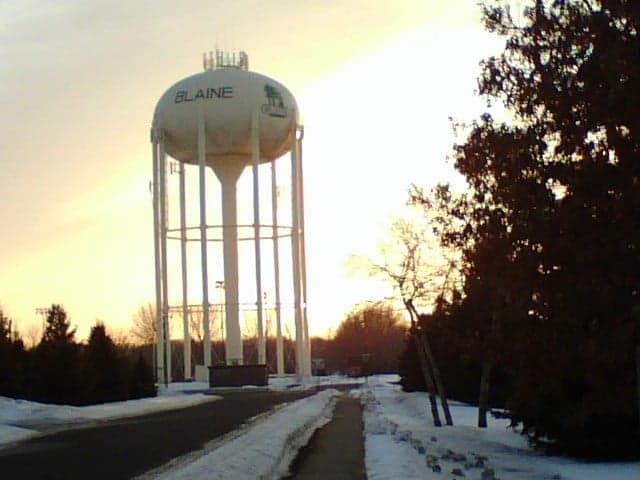
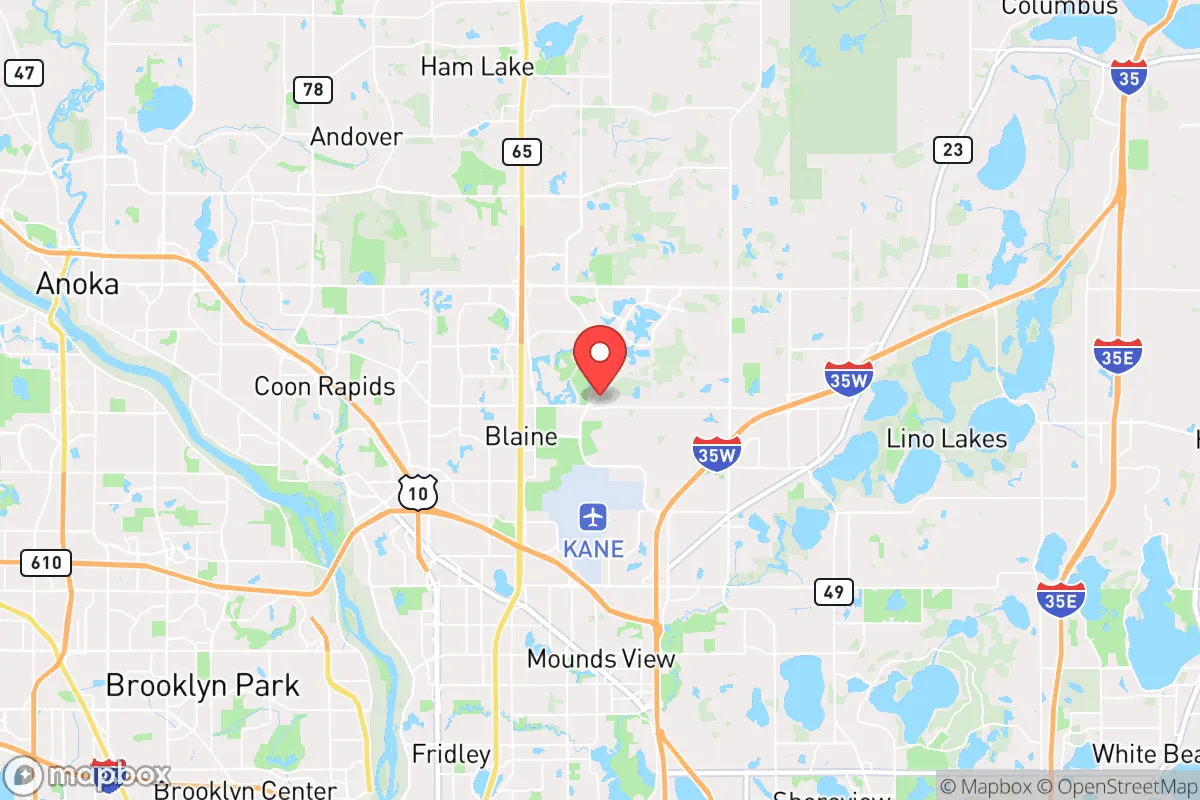
Photo: Wikipedia
Quality of Life in Blaine, MN
A high quality of life with strong walkability, manageable living costs, healthy neighborhood signals, and solid amenity access.
What does Quality of Life tell us?
Quality of Life blends cost of living, nearby amenities, socioeconomic signals, and neighborhood character. City-level scores represent the whole municipality; individual neighborhoods can differ.
What does this tell us?
Quality of Life blends cost of living, nearby amenities, socioeconomic signals, and neighborhood character. City-level scores represent the whole municipality; individual neighborhoods can differ.
Cost of Living
35% above national average
The Real Cost of Living in Blaine, MN for 2026
| Tier | Individual | Family (4) |
|---|---|---|
| Survival | $27k | $51k |
| Comfortable | $64k | $94k |
| Luxury | $149k+ | $232k+ |
| Elite (Top 5%) | $176k+ | $272k+ |
111%
The Area Signal
A metric tracking the socioeconomic signals of the area.
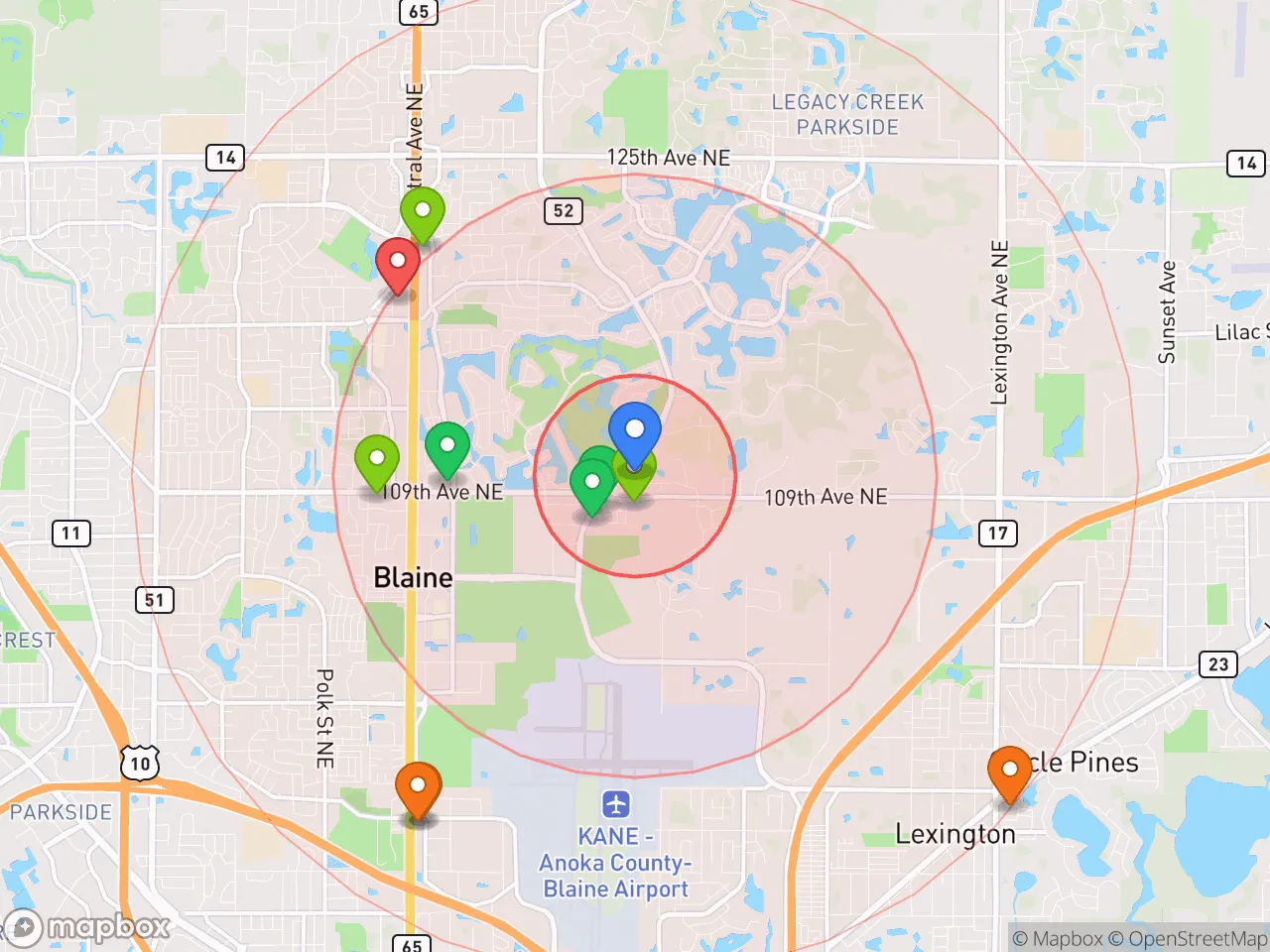
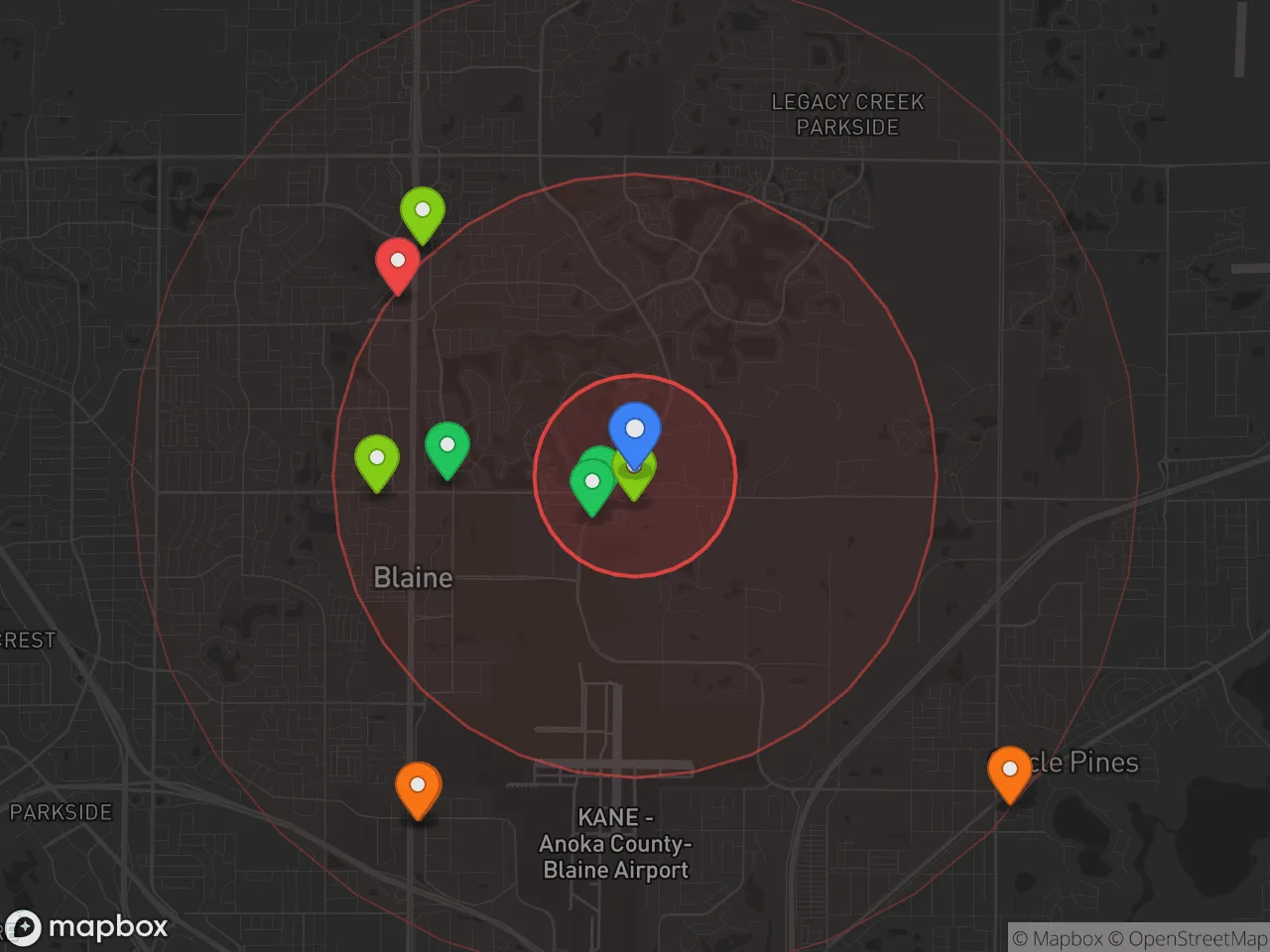
Hobbies
Explore the areaGroceries
4 within 10 miles
Gas
20 within 10 miles
Hospital
20 within 20 miles
Airport
JFK — John F. Kennedy Memorial
Post Office
USPS — Circle Pines, MN
Critical Amenities
Quality-of-Life Analysis
Blaine, Minnesota, is an upper-middle-income suburb located about 20 miles north of downtown Minneapolis, with a cost-of-living index of 135 (35% above the U.S. average) that reflects its desirability among families and professionals seeking newer housing, strong schools, and a balanced suburban lifestyle. The city’s population of roughly 70,000 skews toward married couples with children, and the median household income of approximately $95,000 supports a comfortable standard of living. Blaine attracts residents who prioritize space, safety, and access to outdoor recreation over the urban intensity of Minneapolis or Saint Paul.
Cost of living, housing costs, and affordability compared to the Twin Cities metro
Blaine’s cost of living is significantly higher than the national average but remains competitive within the Twin Cities metro, where many inner-ring suburbs have become more expensive. The median home value of $327,500 is roughly 15% below the metro-wide median of about $385,000, making Blaine a more attainable option for buyers who want a single-family home with a yard. Median rent of $1,707 is also below the metro average of roughly $1,850, though it has risen about 8% since 2022. The average one-way commute of 25 minutes is slightly longer than the metro average of 23 minutes, reflecting Blaine’s position as a bedroom community where many residents drive to jobs in Minneapolis, Saint Paul, or the growing employment corridors along I-35W and Highway 10. Property taxes in Anoka County are moderate, with an effective rate around 1.1%, and Minnesota’s progressive income tax means high earners pay a top rate of 9.85% — a factor that can surprise newcomers from lower-tax states.
Schools, parks, and what daily life is like for families in Blaine
Daily life in Blaine revolves around its highly rated public schools, extensive park system, and family-oriented amenities. The Anoka-Hennepin School District, which serves most of Blaine, is the largest in Minnesota and includes Blaine High School, which offers strong Advanced Placement programs and a well-regarded performing arts center. The city maintains over 50 parks, with the 700-acre Blaine Wetland Sanctuary providing hiking trails and wildlife viewing, while the National Sports Center — a 600-acre complex with soccer fields, a golf course, and a velodrome — draws regional tournaments year-round. Retail and dining cluster along Highway 65 and the Northtown Mall area, with chains dominating but a few local spots like Bella Pizza and Crooked Pint Ale House offering neighborhood gathering places. The rhythm of life is car-dependent, though Metro Transit express buses connect Blaine to downtown Minneapolis in about 35 minutes. Crime rates are low: the city’s violent crime rate of 1.2 per 1,000 residents is roughly half the national average, and property crime has declined steadily since 2020.
Blaine is best suited for families and professionals who value suburban space, good schools, and outdoor amenities and are willing to trade the cultural density of the urban core for a quieter, more predictable daily routine. Empty-nesters and retirees may also find it appealing for its newer housing stock and proximity to medical facilities like Mercy Hospital in nearby Coon Rapids. However, singles and young renters without cars may find the lack of walkable neighborhoods and limited nightlife a drawback. For those who prioritize affordability within the Twin Cities metro without sacrificing school quality or recreation, Blaine offers a strong balance of cost and lifestyle.

Crime in Blaine, MN
Lower crime rates than 87% of comparable U.S. locations.
Violent CrimeViolent Crime Analysis
Property CrimeProperty Crime Analysis
Crime Analysis
Blaine, Minnesota, reports a violent crime rate of 66.8 per 100,000 residents and a property crime rate of 1,112.6 per 100,000, placing it in a complex safety landscape for a suburb of the Minneapolis-Saint Paul metropolitan area. While the violent crime figure is notably lower than both the national average and the City of Minneapolis, the property crime rate is elevated compared to many outer-ring suburbs. The broader context of the Twin Cities metro area, where progressive prosecutorial policies in Hennepin and Ramsey counties have been linked to reduced incarceration rates and higher recidivism, means that Blaine residents must remain vigilant despite the city’s relatively low violent crime numbers.
Crime in context
Blaine’s violent crime rate of 66.8 per 100,000 is roughly 80% lower than the national average of about 380 per 100,000, and significantly below the Minnesota state average of approximately 280 per 100,000. However, the property crime rate of 1,112.6 per 100,000 is about 15% higher than the national average of roughly 1,950 per 100,000, and notably above the state average of around 2,100 per 100,000. This disparity is typical of suburbs bordering larger metro areas: violent incidents are rare, but theft, burglary, and vehicle break-ins are more common. The influence of progressive district attorneys in nearby Hennepin County, who have implemented policies like presumptive citation for low-level theft and reduced cash bail, has been cited by law enforcement as a factor in property crime spillover into adjacent jurisdictions like Blaine.
What residents experience
For most Blaine residents, daily life does not involve violent crime. The city’s low homicide and aggravated assault rates mean that random acts of violence are uncommon. The primary safety concern is property crime, particularly theft from vehicles and residential burglary, which tend to cluster near shopping corridors like the Northtown Mall area and along Highway 65. Residents report that unlocked cars and garages are frequent targets, and police data shows that a significant portion of property crimes are crimes of opportunity. The presence of progressive judicial policies in the metro area—such as reduced sentences for property offenses and diversion programs—has been criticized by local law enforcement for creating a “catch-and-release” cycle that emboldens repeat offenders, a dynamic that directly impacts Blaine’s property crime statistics.
Neighborhood-level variation in Blaine is modest but noticeable. Areas east of Interstate 35W, particularly older subdivisions near Lexington Avenue, tend to report slightly higher property crime rates than newer developments west of the freeway. The city’s police department maintains a proactive community policing strategy, including a dedicated crime prevention unit and neighborhood watch programs, which helps mitigate some of the spillover effects from the larger metro area’s lenient justice system. For prospective residents, the key takeaway is that Blaine offers a safe environment for families and individuals, provided they take standard precautions against property crime—a reality shaped by the broader progressive policies of the Twin Cities region.
* Values derived from national, state, county, city and local statistics and may differ in a specific area. Last updated: 2026-04-30T00:19:51.000Z
Narrative content on this page is AI-generated and may contain mistakes. Verify any details that matter before acting on them.
ReloMaps may earn a commission from affiliate links at no extra cost to you.

