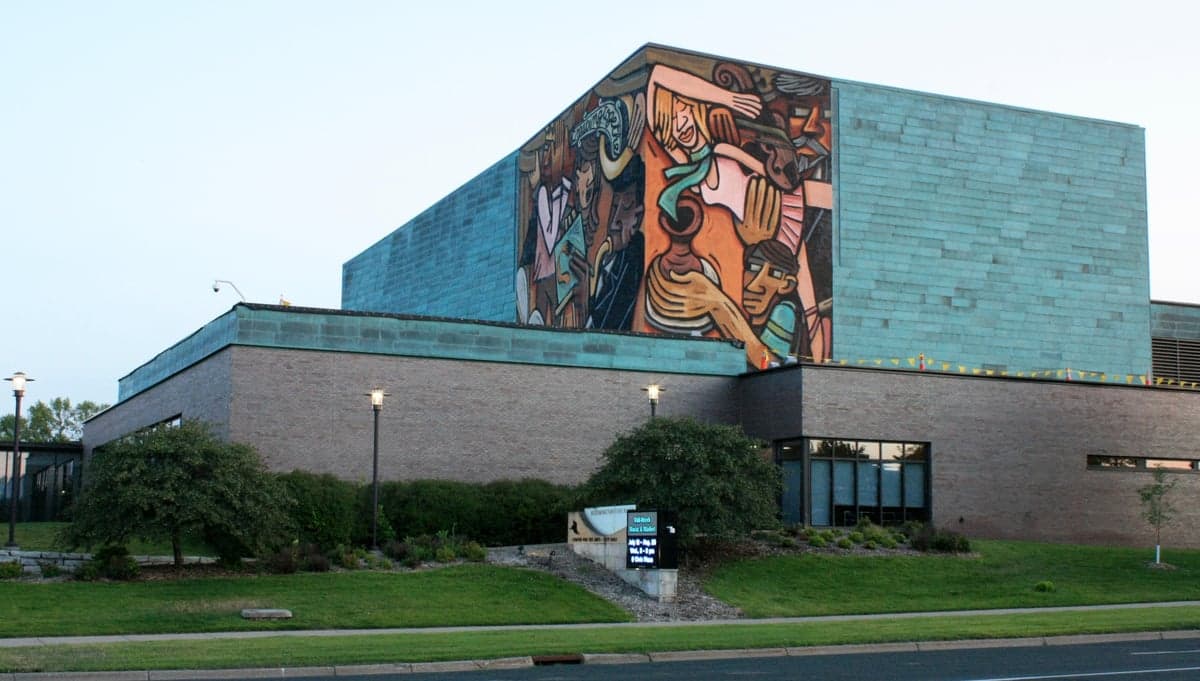
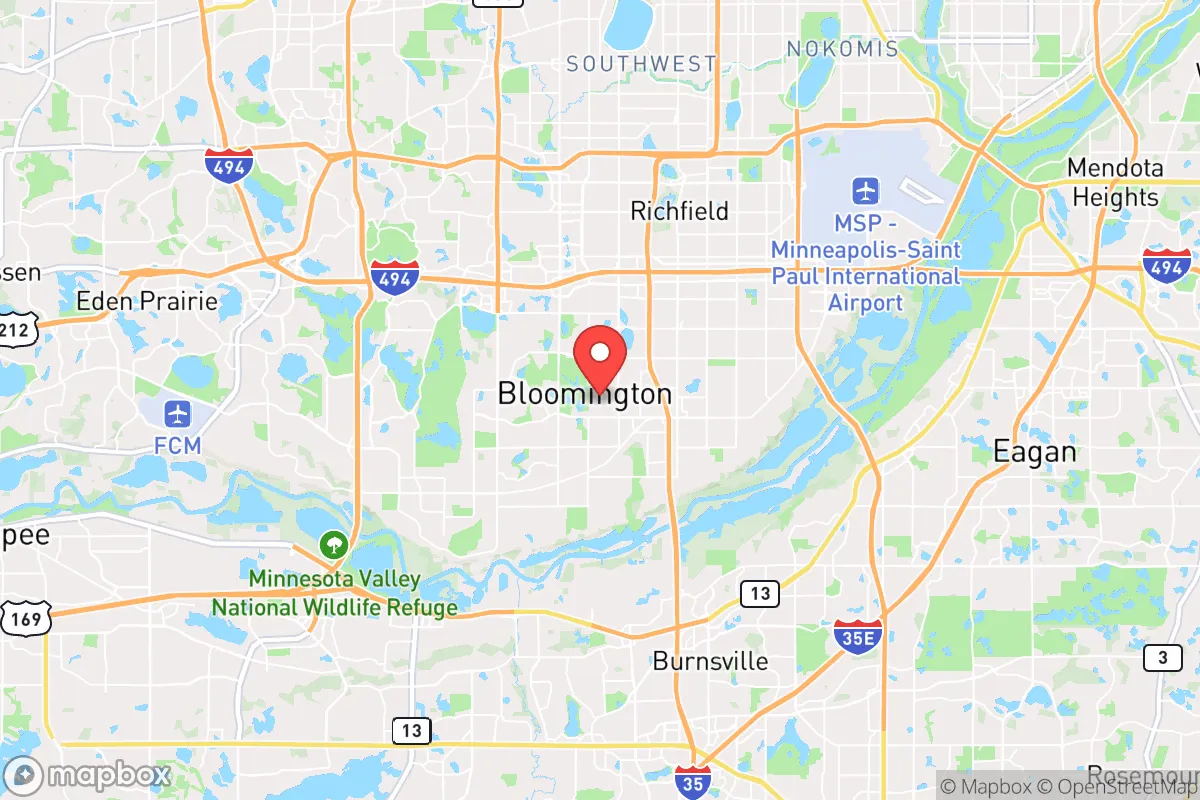
Photo: Wikipedia
Demographics of Bloomington, MN
Affluence Level in Bloomington, MN
A middle-class area roughly in line with national averages across income, home values, education, and employment.
People of Bloomington, MN
Bloomington, Minnesota, is a mature, largely settled suburb of 88,838 residents that has transitioned from a post-war white, middle-class enclave into a more diverse, college-educated community. The city is characterized by a stable, family-oriented population with a strong tax base, anchored by the Mall of America and major corporate employers. Its identity today is one of a well-established, relatively affluent suburb that is slowly diversifying, though it remains predominantly white and native-born, with a foreign-born population of just 6.1%.
How the city was settled and grew
Bloomington’s human history begins with the Dakota people, who used the Minnesota River bluffs for seasonal camps. European-American settlement began in the 1840s with farmers of German, Irish, and Scandinavian descent, drawn by the fertile land of the Minnesota River valley. The city’s first major growth wave came after World War II, when returning veterans and their families flooded into new housing developments. The Pond neighborhood, built on former farmland, became a classic post-war suburb of single-family homes, largely settled by white, second-generation Scandinavian and German families. The Bush Lake area attracted a slightly more affluent wave of professionals in the 1950s and 1960s. The opening of the Mall of America in 1992 on the site of the former Metropolitan Stadium cemented Bloomington’s role as a regional retail and employment hub, but did not trigger a major residential population boom.
Modern era (post-1965)
The post-1965 immigration reforms had a modest impact on Bloomington compared to Minneapolis or St. Paul. The city’s foreign-born population remains low at 6.1%, but the composition has shifted. The East Bloomington area, particularly around the I-494 corridor, saw an influx of East and Southeast Asian families (4.0% of the population), including Vietnamese and Hmong residents, many of whom moved from Minneapolis for better schools and housing. The South Bloomington neighborhoods near the Minnesota River bluffs attracted a growing number of Indian-subcontinent professionals (1.1%), drawn by tech and healthcare jobs at companies like HealthPartners and Seagate. The Hispanic population (10.7%) is concentrated in the West Bloomington area, particularly in older apartment complexes and duplexes near Normandale Lake, with many families arriving from Mexico and Central America for service-sector work. The Black population (11.0%) is more dispersed but has a visible presence in the Oxboro and Pond neighborhoods, reflecting both domestic migration from Chicago and African immigrant communities. The white population (67.0%) remains the majority, but has aged in place, with many younger white families moving to exurbs like Lakeville or Prior Lake.
The future
Bloomington’s population is projected to remain stable, with slow growth driven by infill development rather than new subdivisions. The city is not homogenizing; instead, it is slowly tribalizing into distinct enclaves based on income and ethnicity. The East/Southeast Asian and Indian communities are growing modestly, primarily through professional migration, while the Hispanic population is plateauing as second-generation families move to more affordable suburbs. The white population is aging, with a median age of 39.5, and younger white families are being replaced by a mix of domestic and international newcomers. The Normandale Lake area is seeing new luxury apartments that attract young professionals, while older neighborhoods like Pond are experiencing a slow turnover as retirees sell to younger families. The city’s high college attainment rate (45.3%) and strong school system will continue to attract educated families, but the high cost of housing (median home value over $350,000) limits in-migration from lower-income groups.
For someone moving in now, Bloomington is a stable, safe, and well-run suburb that is slowly diversifying without dramatic demographic upheaval. It offers excellent schools, low crime, and proximity to Minneapolis jobs, but it is not a destination for rapid growth or cultural dynamism. The city is becoming a comfortable, middle-to-upper-middle-class enclave where established families and professionals coexist, with distinct neighborhoods reflecting the modest waves of immigration that have arrived since the 1990s.

* Values derived from national, state, county, city and local statistics and may differ in a specific area. Last updated: 2026-04-30T01:10:24.000Z
Narrative content on this page is AI-generated and may contain mistakes. Verify any details that matter before acting on them.
ReloMaps may earn a commission from affiliate links at no extra cost to you.

