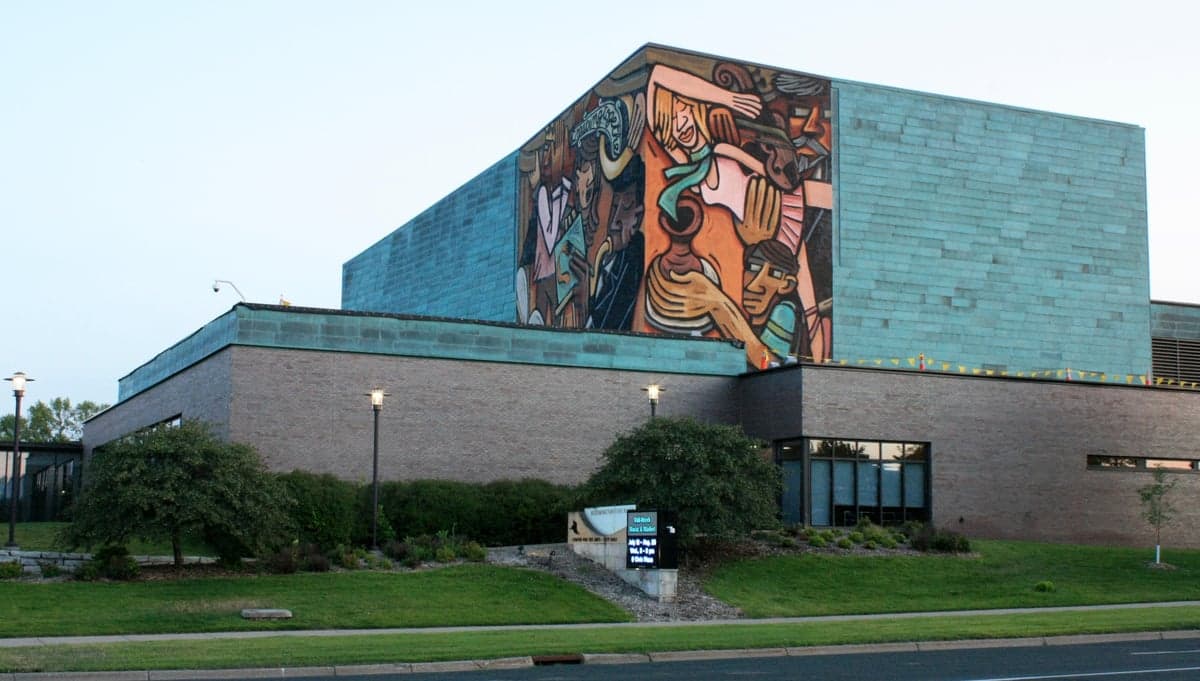
Photo: Wikipedia
Strategic Assessment of Bloomington, MN
Multiple tactical vulnerabilities. Population density, target proximity, or disaster risk are likely compounding. A retreat property and exit planning is required.
What does the Strategic Assessment tell us?
Our Strategic Assessment grades tactical survivability of an area. Major population centers, military targets, fallout zones, natural disasters, and border exposure all drive risk — lower exposure means a more defensible position in a crisis.
This is heavily inspired by Joel Skousen's Strategic Relocation book. Highly recommended you checkout the book ($)What does this tell us?
Our Strategic Assessment grades tactical survivability of an area. Major population centers, military targets, fallout zones, natural disasters, and border exposure all drive risk — lower exposure means a more defensible position in a crisis.
This is heavily inspired by Joel Skousen's Strategic Relocation book. Highly recommended you checkout the book ($)Strategic Pillars

Key Distances
Regional Safe Places
Below is our recommended "safe zones" in Minnesota and the surrounding area based on our strategic heuristics. For most people, it's unrealistic to live in a “safe zone” full-time due to work, family or other personal reasons. They tend to be more rural. However, many of these areas are perfect for second homes and retreat properties that double as a vacation home or even a short-term rental.
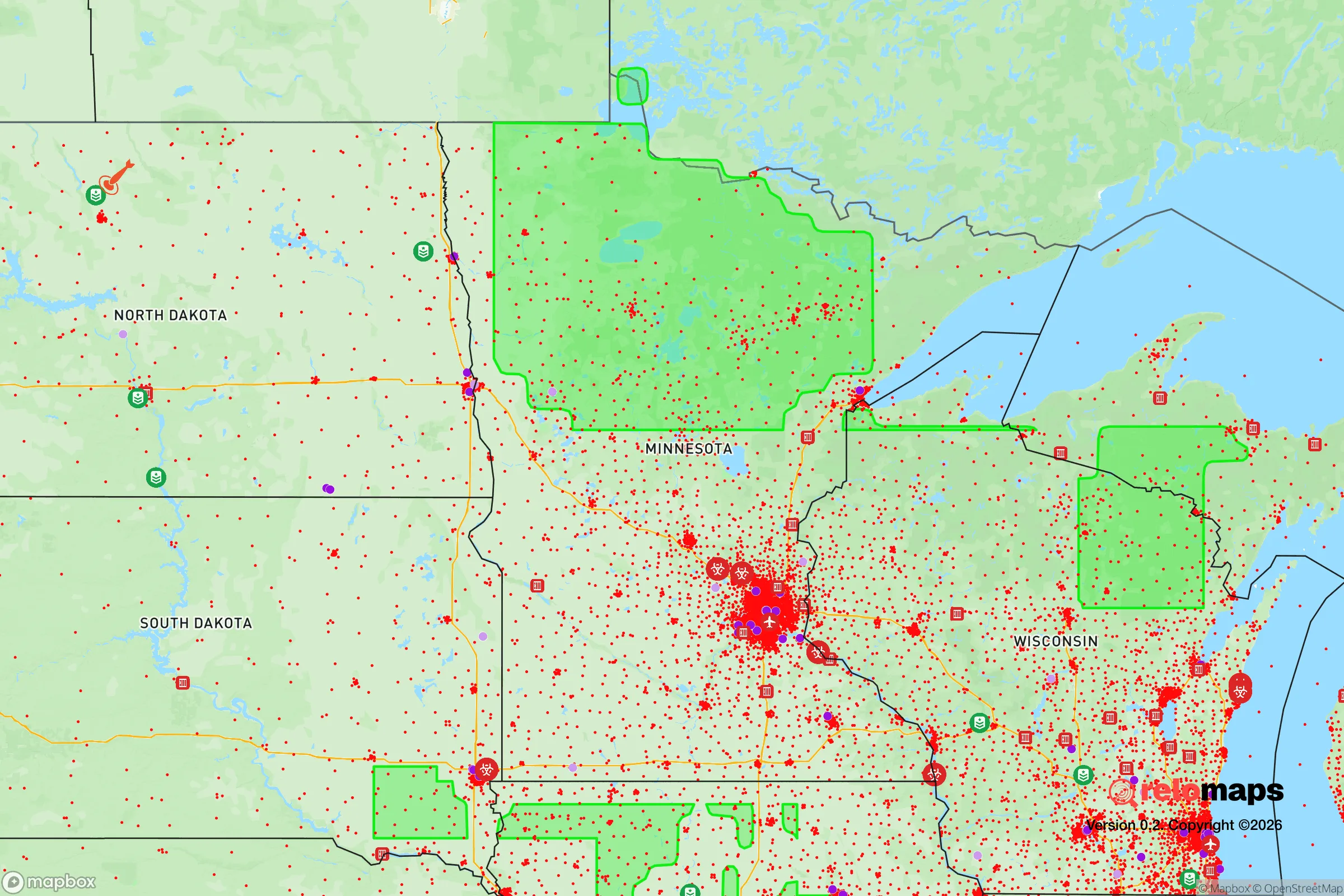
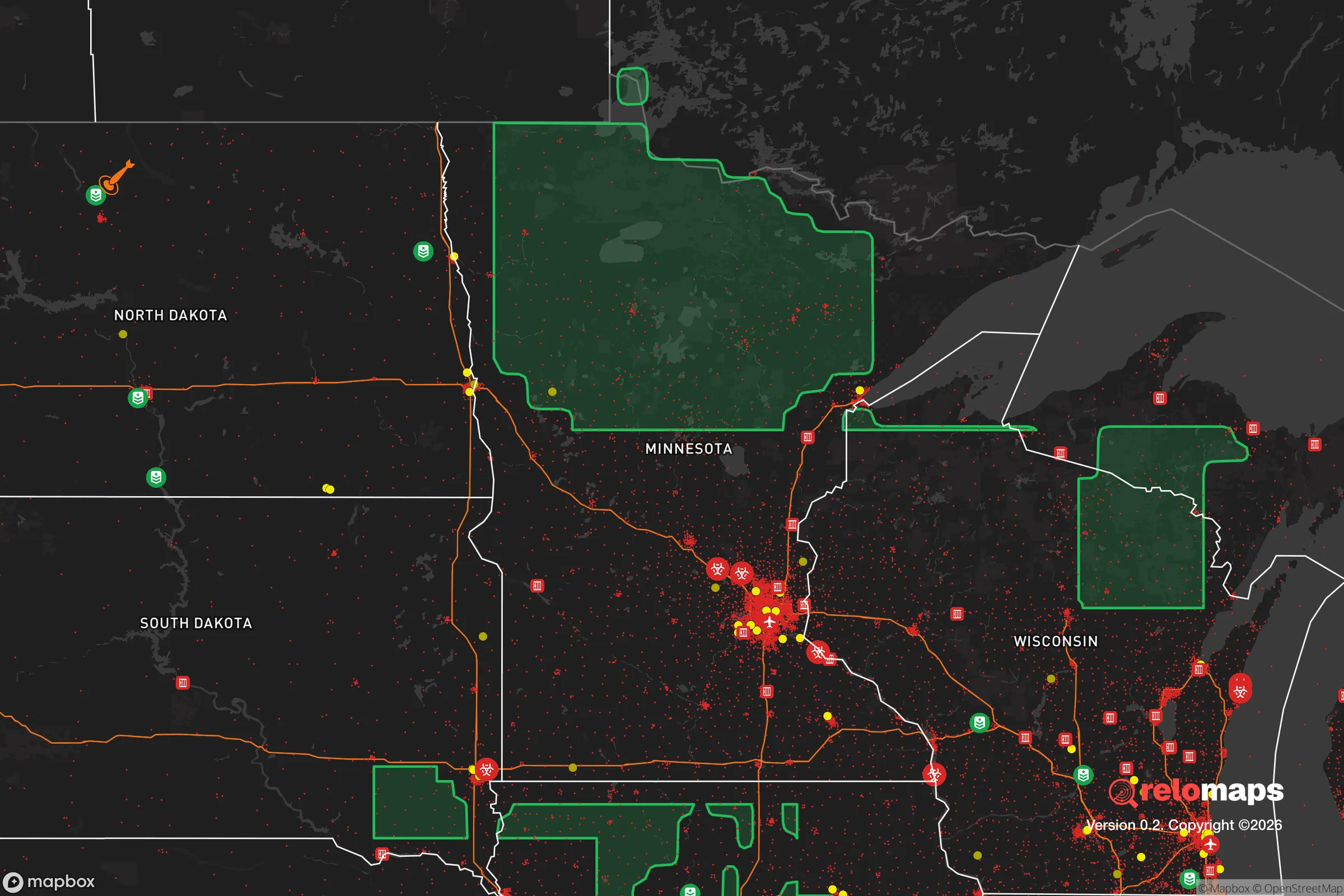


Important Note: For informational purposes only. This does not mean nothing bad ever happens in the green zones. Please use common sense. This is based on public data and modeled with AI. We tried to take a conservative approach but mistakes happen. We update this regularly as new information becomes available.
Solar Generator Recommendations
Backup power matters more here than in safer locations. We've picked three solar generators across budgets and capacity tiers — start with the budget unit if you only need a few essentials, or step up if you want to run a fridge and HVAC for days at a time.

Jackery Portable Power Station Explorer 300
Budget OptionPower on the Go: Weighing only 11 lbs, it's convenient to set up and store with book-sized foldable solar panels

BLUETTI Portable Power Station AC180
Designed for both indoor and outdoor scenarios, AC180 is highly capable as it has a robost capacity and continuous output power.

EF ECOFLOW DELTA Pro Ultra Power Station
Upgraded PickEcoFlow DELTA Pro Ultra is a whole-home energy system designed to grow with your family. Integrated with the Smart Home Panel 2, it scales to meet your evolving energy needs — keeping your home powered, intelligent, and secure through every stage of life.
We earn a commission, at no additional cost to you.
Strategic Assessment Analysis
Bloomington, Minnesota, sits in a precarious strategic position that demands a clear-eyed assessment. While its location at the crossroads of major interstates and within the Minneapolis-St. Paul metro offers economic advantages, for a survivalist or prepper mindset, those same factors represent significant liabilities. The city’s resilience is fundamentally compromised by its proximity to high-density population centers, critical infrastructure, and potential fallout targets, making it a location that requires careful, defensive planning rather than a simple relocation recommendation. This analysis strips away the marketing gloss and examines Bloomington through the lens of practical preparedness for civic unrest, mass casualty events, and large-scale disasters.
Geographic position and natural advantages: A double-edged sword
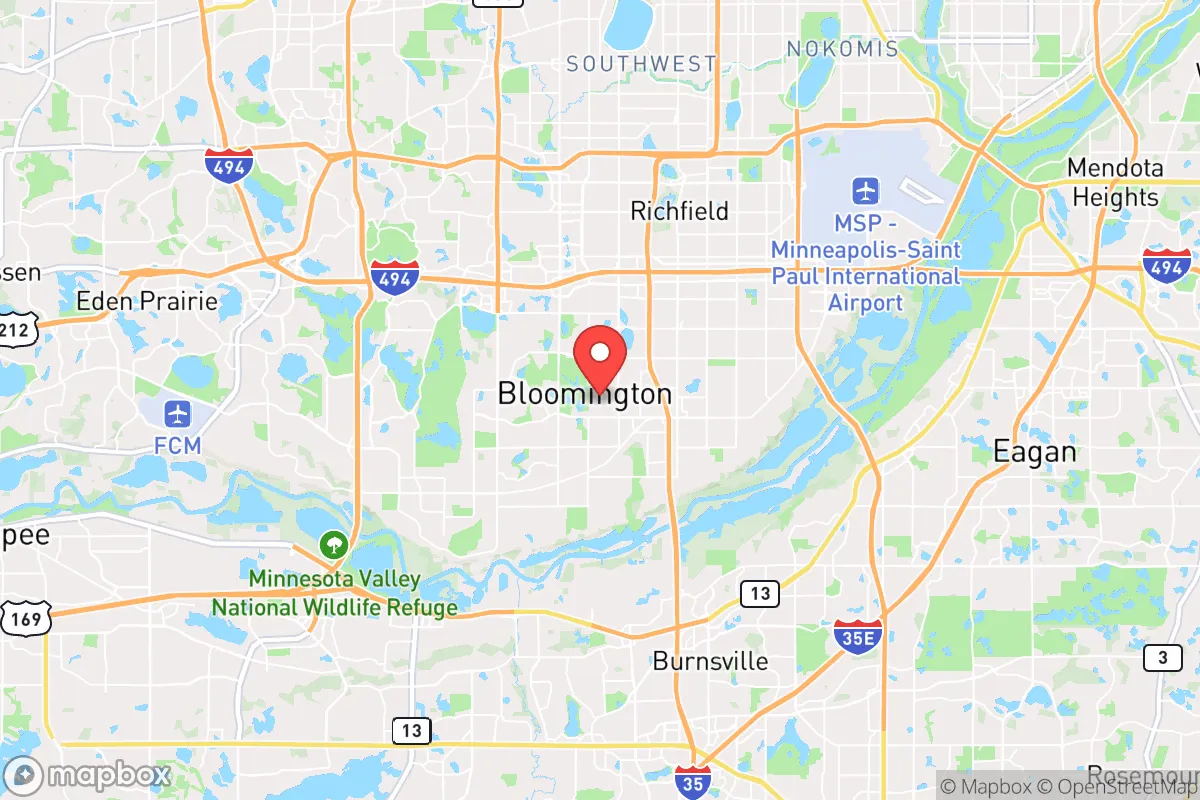
Bloomington’s geography is defined by the Minnesota River Valley, which provides some natural terrain features that could be leveraged for defensive positioning. The river itself offers a potential water source, though it is heavily polluted and requires extensive filtration. The city’s position at the junction of I-35W, I-494, and Highway 77 means rapid egress is possible in multiple directions, but those same arteries become choke points during any evacuation scenario. The presence of the Minneapolis-St. Paul International Airport (MSP) directly adjacent to the city is a major negative: it is a high-value target for any coordinated attack or disruption, and its daily operations create noise and air traffic that complicate any low-profile living. The Bloomington Central Station light rail stop also ties the city directly to the urban core, meaning any unrest in Minneapolis will spill over quickly. The natural advantages—the river valley, some wooded areas along the bluffs, and the Minnesota Valley National Wildlife Refuge—offer limited cover and concealment, but they are fragmented by suburban development and do not provide the kind of remote, defensible terrain a serious prepper would seek.
Risks, exposures, and proximity to fallout-relevant landmarks
The most glaring risk for Bloomington is its location within the immediate blast and fallout zone of multiple high-value targets. The MSP airport is a primary target for any state-level adversary, and the nearby Mall of America, while a commercial hub, is a symbolic target for civil unrest or terrorist attacks. The city is also within 10 miles of the I-35W Mississippi River bridge, a critical infrastructure node that, if compromised, would paralyze regional movement. For a survivalist, the density of the metro area—over 3.6 million people in the broader Twin Cities region—means that any major event will trigger a massive, chaotic outflow of people. Bloomington’s population of roughly 85,000 is dense enough that civil unrest in Minneapolis will inevitably reach its borders, as seen during the 2020 riots when looting and arson spread to the Mall of America area. The city’s reliance on the regional power grid, natural gas pipelines, and centralized water treatment plants makes it vulnerable to cascading failures. There are no significant hardened shelters or fallback positions within the city limits, and the flat, developed terrain offers little natural protection from fallout or small-arms fire. The proximity to the Minnesota River also means flooding is a recurring hazard, with the 2019 floods causing significant damage to low-lying areas.
Practical resilience for a relocator: Food, water, energy, and defensibility
For a relocator considering Bloomington, the practical realities of daily preparedness are sobering. Food security is poor: the city is entirely dependent on just-in-time supply chains, with most grocery stores carrying only 3-5 days of inventory. Local agriculture is minimal, and the growing season is short (roughly 150 days). Community gardens exist but are insufficient for any sustained survival scenario. Water is a critical vulnerability: the municipal supply comes from the Mississippi River and the Prairie du Chien-Jordan aquifer, both of which are susceptible to contamination from industrial runoff or a coordinated attack. A well is not a realistic option for most properties due to urban density and zoning restrictions. Energy resilience is weak: the grid is reliable day-to-day but has no redundancy for extended outages. Solar panels are feasible but face shading issues from mature trees and neighbors’ homes. Natural gas is the primary heating source, and a disruption would leave residents without heat in winter—a life-threatening scenario. Defensibility is the biggest concern: Bloomington is a typical suburban grid with cul-de-sacs and open streets. There are no natural chokepoints, and the police response time during a widespread event would be measured in hours, not minutes. The city’s demographics skew toward professionals and families, meaning most neighbors are not prepared for extended crisis situations. The best defensive strategy would be to secure a home on the southern or western edges of the city, near the river bluffs, where there is slightly more cover and fewer entry points. However, even that is a marginal improvement. For a serious prepper, Bloomington is a location to be avoided unless you have a specific, hardened retreat within the city—which is rare.
The overall strategic picture for Bloomington is one of calculated risk with limited upside. It offers the convenience of urban amenities and a strong local economy, but those benefits evaporate in any major crisis. The city’s location within the Twin Cities metro makes it a high-probability zone for civil unrest, supply chain collapse, and infrastructure failure. For a conservative-leaning individual or family prioritizing self-reliance, security, and long-term stability, Bloomington is a poor fit. The best use of this analysis is as a cautionary example: if you are already here, your plan should focus on rapid egress to a rural retreat in western Wisconsin or central Minnesota within the first 24 hours of any major event. If you are considering relocation, look further afield—to smaller towns like Northfield or Hutchinson, where population density is lower, natural resources are more accessible, and the political climate aligns more closely with a preparedness mindset. Bloomington is a place to pass through, not to dig in.

* Values derived from national, state, county, city and local statistics and may differ in a specific area. Last updated: 2026-04-30T01:10:24.000Z
Narrative content on this page is AI-generated and may contain mistakes. Verify any details that matter before acting on them.
ReloMaps may earn a commission from affiliate links at no extra cost to you.

