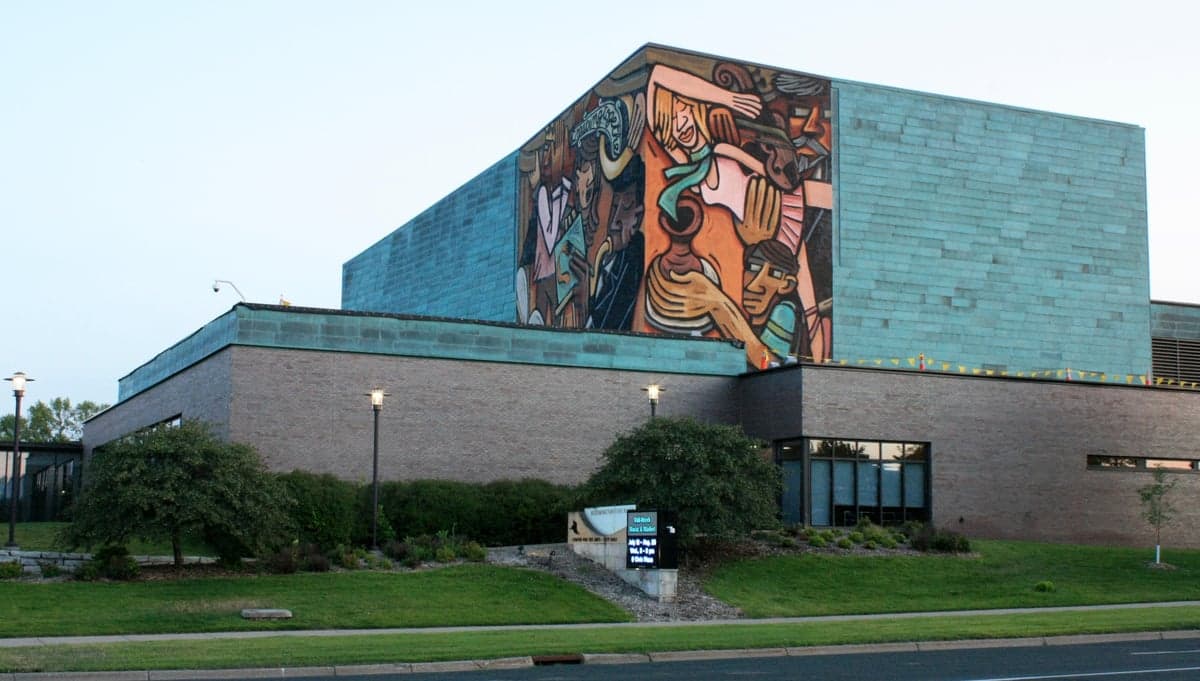
Photo: Wikipedia
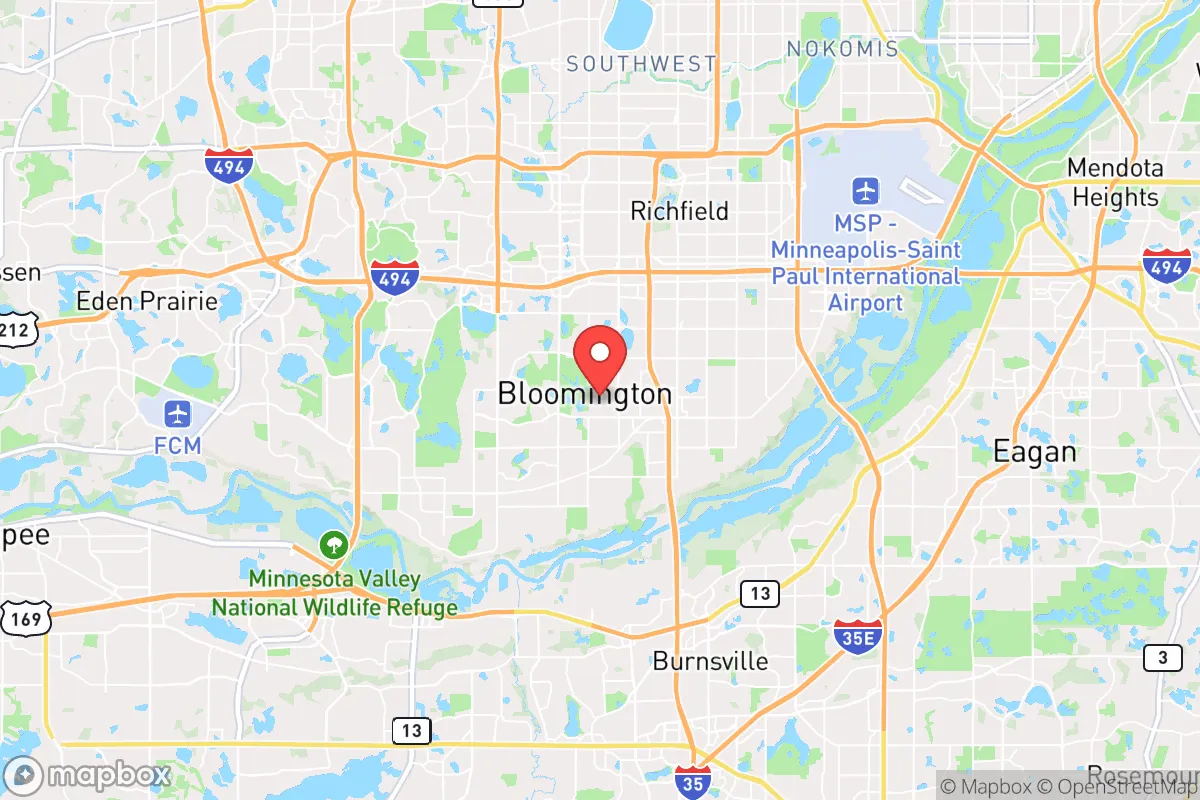
Personal Sovereignty in Bloomington, MN
Viable for self-reliance. Generally workable, though some barriers may limit total independence.
What does Personal Sovereignty tell us?
Personal Sovereignty measures your capacity for self-reliance and independence with minimal government friction. Higher scores mean fewer barriers between you and the way you want to live... but it assumes you have the space you need and good neighbors.
What does this tell us?
Personal Sovereignty measures your capacity for self-reliance and independence with minimal government friction. Higher scores mean fewer barriers between you and the way you want to live... but it assumes you have the space you need and good neighbors.
State Policy
Energy independence: Importer (20% of energy produced in-state)
Personal Liberty
Homesteading

Personal Liberty Analysis
For a strategic relocation analysis focused on personal sovereignty, Bloomington, Minnesota presents a complex and often contradictory environment. While the city offers strong economic stability and a high standard of living, it operates within a state framework that has increasingly prioritized collective governance over individual autonomy, particularly in areas of taxation, self-defense, and medical freedom. For the survivalist or prepper mindset, the core question is whether the area’s practical advantages outweigh the steady encroachment of state-level mandates on personal decision-making. The answer, as with many metro-adjacent suburbs, is a qualified "yes" only if you are prepared to navigate a dense regulatory landscape and accept a higher baseline of government involvement in daily life.
Tax burden and regulatory posture for the self-reliant
Minnesota’s tax posture is a significant factor for anyone prioritizing financial sovereignty. The state imposes a progressive income tax with rates reaching 9.85% on high earners, and Bloomington residents also pay a city sales tax of 0.5% on top of the state’s 6.875% rate, bringing the total to 7.375% in most areas. Property taxes are notably high, with effective rates often exceeding 1.1% of a home’s assessed value, and Bloomington’s strong public services—schools, parks, and infrastructure—are funded accordingly. For the prepper, this means a substantial portion of income is redirected before you can allocate it to your own supplies, land, or resilience projects. The regulatory environment is similarly dense: Minnesota has a robust state building code, strict environmental regulations on land use, and a permitting process that can slow or block modifications to property. While Bloomington itself is not the most restrictive suburb, the state’s overall posture is one of active management rather than laissez-faire, which can frustrate those seeking to operate with minimal government interference.
Self-defense rights and gun law specifics in Bloomington
This is a critical area where Minnesota’s state-level policies directly impact personal sovereignty. The state requires a permit to carry a firearm in public, and while it is a "shall-issue" state for permits, the process involves a background check, a training course, and a fee. More concerning for the survivalist mindset is the state’s recent move toward "red flag" laws (Extreme Risk Protection Orders), which allow law enforcement or family members to petition a court to temporarily confiscate firearms from an individual deemed a risk. Bloomington, as a suburban city with a professional police force, enforces these laws. There is no state preemption for local gun ordinances, meaning Bloomington could theoretically pass its own restrictions, though it currently does not. For long-term preparedness, the legal landscape is fragile: a change in state leadership could bring magazine capacity limits, universal background checks on private sales, or even a registry. The practical takeaway is that while you can legally own and carry firearms in Bloomington, the legal framework is not as robust as in states with constitutional carry, and the political trend is toward further restriction.
Self-reliance and homesteading viability: lot sizes, zoning, and off-grid feasibility
Bloomington is a fully developed, first-ring suburb of Minneapolis, and the reality for homesteading or off-grid living is stark. The typical residential lot is a quarter-acre or less, with most homes on standard suburban plots. Zoning is strictly enforced: raising chickens is permitted with a permit and specific coop requirements, but larger livestock like goats or pigs are generally prohibited. Keeping bees is allowed with registration, but the city’s code limits the number of hives. Off-grid living is functionally impossible within city limits. The city requires connection to municipal water and sewer, and any attempt to install solar panels or a wind turbine must comply with building codes and homeowner association rules where applicable. Rainwater collection is legal but regulated, and you cannot disconnect from the grid. For the prepper, this means Bloomington is a location for financial and community resilience—building a network, storing supplies, and maintaining a low profile—rather than a place for true self-sufficiency. The nearest viable land for a more independent lifestyle is 45–60 minutes north or west, in exurban counties like Sherburne or Wright, where acreage and looser zoning become available.
Personal liberties: parental rights, medical autonomy, speech, and property
This is the most nuanced area of personal sovereignty in Bloomington. On parental rights, Minnesota law generally supports parental authority in education and healthcare decisions, but the state has moved to mandate certain curricula in public schools (e.g., comprehensive sex education) and has a strong child protective services system that can intervene in cases of medical neglect. For the parent seeking to opt out of vaccines or specific medical treatments, the state’s stance is permissive but not absolute—philosophical exemptions exist for school vaccines, but the process is bureaucratic. Medical autonomy for adults is similarly mixed: Minnesota has legalized medical cannabis and is moving toward full recreational legalization, but the state’s health department maintains tight control over supplements and alternative treatments. Free speech is protected under the First Amendment, but Bloomington’s public spaces are subject to local ordinances on noise, assembly, and signage that can limit spontaneous expression. Property rights are the weakest link: the state’s eminent domain authority is broad, and environmental regulations can restrict how you use your land. For the survivalist, the key takeaway is that while you retain significant personal freedoms in private life, the state has a long reach into education, healthcare, and land use, and the political climate is one of active governance rather than deference to individual choice.
In the broader context of the Upper Midwest, Bloomington offers a relatively stable and prosperous environment, but it is not a haven for those seeking maximum personal sovereignty. Compared to states like South Dakota or Wyoming, Minnesota’s tax burden, gun laws, and regulatory density are significantly higher. For the conservative-leaning prepper, Bloomington is best viewed as a "high-trust, high-compliance" location: you can live well, build a career, and raise a family, but you must accept a baseline of government oversight and plan for the possibility that state-level restrictions will tighten over time. The strategic move is to treat Bloomington as a base of operations—leveraging its economic and community strengths—while maintaining a secondary plan for a more autonomous lifestyle in a less regulated jurisdiction. If your priority is absolute sovereignty over your life, property, and defense, the northern plains or the rural West remain more aligned with that vision. Bloomington is a compromise, not a sanctuary.

* Values derived from national, state, county, city and local statistics and may differ in a specific area. Last updated: 2026-04-30T01:10:24.000Z
Narrative content on this page is AI-generated and may contain mistakes. Verify any details that matter before acting on them.
ReloMaps may earn a commission from affiliate links at no extra cost to you.

