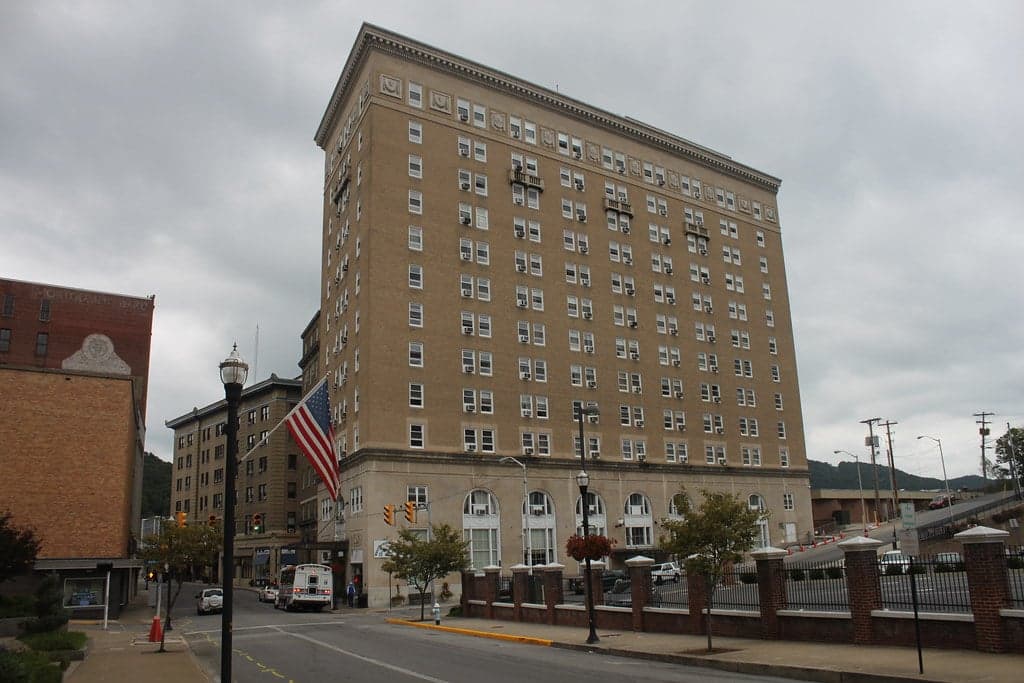
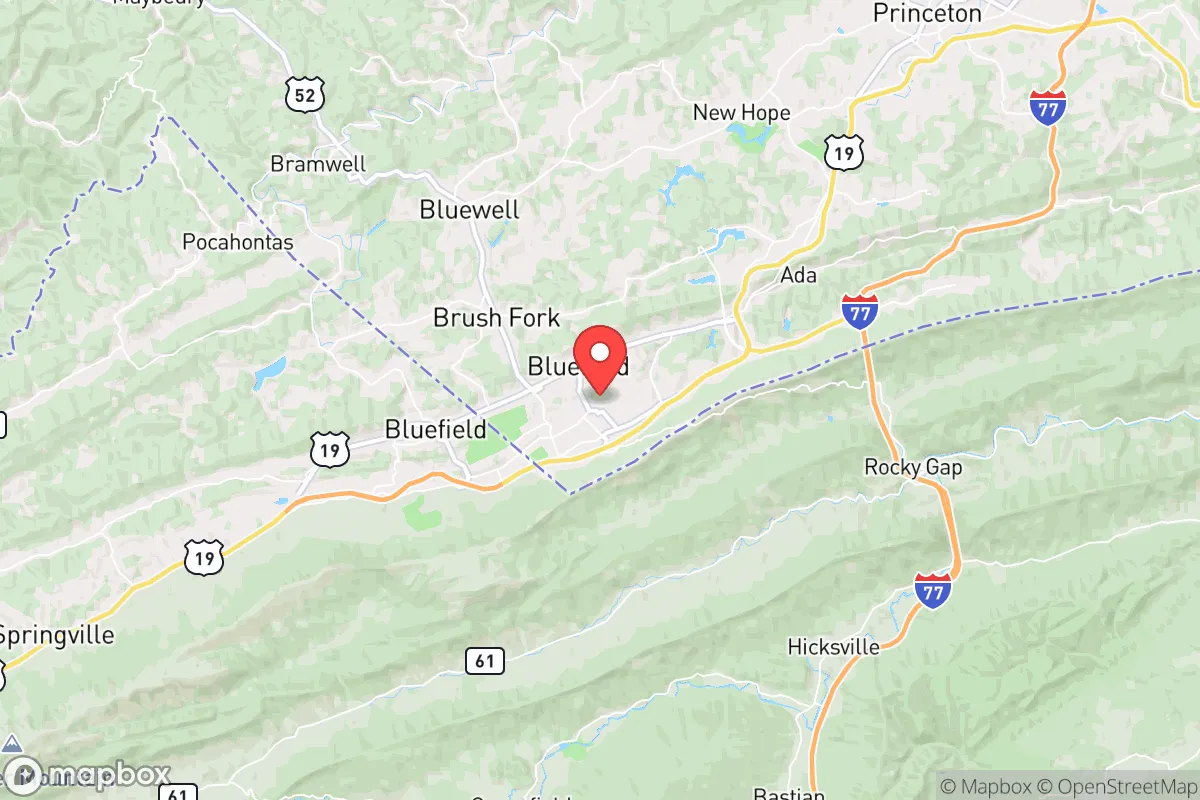
Photo: Wikipedia
Personal Sovereignty in Bluefield, WV
Strong independent fundamentals that actively favor personal liberty and low regulation.
What does Personal Sovereignty tell us?
Personal Sovereignty measures your capacity for self-reliance and independence with minimal government friction. Higher scores mean fewer barriers between you and the way you want to live... but it assumes you have the space you need and good neighbors.
What does this tell us?
Personal Sovereignty measures your capacity for self-reliance and independence with minimal government friction. Higher scores mean fewer barriers between you and the way you want to live... but it assumes you have the space you need and good neighbors.
State Policy
Energy independence: Net exporter (200% of energy produced in-state)
Personal Liberty
Homesteading

Personal Liberty Analysis
Bluefield, West Virginia offers one of the strongest environments for personal sovereignty in the eastern United States, particularly for those who view government overreach as a growing threat to individual autonomy. Nestled in the Appalachian Mountains along the Virginia border, this small city of roughly 9,700 people operates within a state framework that consistently ranks among the most liberty-respecting in the nation. For conservative-leaning individuals and families who prioritize self-reliance, minimal state interference, and the ability to live life on their own terms, Bluefield presents a compelling case — though it is not without its own local nuances that require careful examination.
Tax burden and regulatory posture: How West Virginia compares to neighboring states
West Virginia has made aggressive moves in recent years to shed its reputation as a high-tax state, and Bluefield residents benefit directly from these reforms. The state's personal income tax was cut by 21.25% in 2023, with a path toward full elimination, and the corporate net income tax sits at a flat 6.5%. Property taxes remain among the lowest in the nation, with effective rates averaging around 0.55% of assessed home value — roughly half the national average. For a family purchasing a $200,000 home in Bluefield, that translates to about $1,100 annually in property tax, compared to over $2,500 in much of Virginia or Ohio. Sales tax is 6%, with no local add-ons, and groceries are exempt. On the regulatory front, West Virginia is a right-to-work state with minimal occupational licensing burdens relative to the Northeast. The state's Department of Environmental Protection has historically been more business-friendly than its counterparts in Pennsylvania or Maryland, which matters for anyone considering small-scale manufacturing or land-based enterprises. However, Mercer County, where Bluefield sits, does enforce standard building codes and septic regulations — so total off-grid freedom requires navigating local health department rules for water and waste systems. Compared to the regulatory thicket of states like New York or California, Bluefield feels like a breath of fresh air for those seeking to minimize government entanglement in their finances and livelihoods.
Self-defense and gun law specifics: What the Second Sanctuary movement means locally
West Virginia is a constitutional carry state, meaning no permit is required to carry a concealed firearm for anyone legally allowed to possess one. Bluefield sits in Mercer County, which was designated a Second Amendment Sanctuary in 2020 — a formal resolution by county commissioners affirming that local resources will not be used to enforce federal gun laws deemed unconstitutional. This matters practically because it signals a local culture that takes self-defense rights seriously. The state preempts all local firearm ordinances, so Bluefield city council cannot pass its own restrictions on magazine capacity, ammunition types, or storage requirements. Stand-your-ground laws are fully in effect, with no duty to retreat in any place where a person has a legal right to be. For preppers and survivalists, the ability to own NFA items like suppressors and short-barreled rifles is protected under state law, though federal paperwork still applies. The nearest Class 3 dealer is in Princeton, about 10 miles away. One practical consideration: while the legal framework is strong, Bluefield's proximity to the Virginia border means a 15-minute drive can land you in a state with a Democratic trifecta that passed universal background checks and a red-flag law in 2020. Anyone living on the West Virginia side of the metro area enjoys significantly stronger self-defense protections than their neighbors across the state line.
Self-reliance and homesteading viability: Lot sizes, zoning, and off-grid feasibility
Bluefield's geography and zoning code create genuine opportunities for self-reliant living, but the specifics matter. Within the city limits, standard residential lots range from one-quarter to one-half acre, and the city zoning code allows for backyard chickens, small gardens, and rain barrels without special permits. However, keeping larger livestock like goats or pigs requires a minimum of two acres and a conditional use permit from the city planning commission. The real opportunity lies just outside city limits in Mercer County's unincorporated areas, where five-acre parcels are common and priced between $15,000 and $30,000. No building permits are required for structures under 200 square feet in the county, which means a small workshop, tool shed, or prepper storage building can go up without government approval. Off-grid solar is entirely legal, and net metering is available through Appalachian Power, though the utility's interconnection process requires paperwork and an approved inverter. Rainwater collection is unrestricted, and private wells are common — the water table in the region sits at about 30 to 50 feet, making drilling feasible for most properties. Composting toilets are permitted under the state's alternative sewage system regulations, but a permit from the county health department is required. For those serious about homesteading, the Bluefield area offers a realistic middle ground: you can achieve meaningful self-sufficiency without the extreme remoteness of Montana or Alaska, and without the hostile zoning found in most coastal suburbs.
Personal liberties: Parental rights, medical autonomy, speech, and property
West Virginia's legal landscape for personal liberties is a mixed bag that leans positive for conservative families, but requires vigilance. On parental rights, the state passed the Parental Bill of Rights in 2022, which requires schools to notify parents of any changes in a child's mental, emotional, or physical health — including discussions around gender identity — and prohibits schools from withholding information from parents. This is a strong protection compared to states like California or Illinois where parental notification laws are weaker or nonexistent. Medical autonomy is more complicated: West Virginia has no vaccine mandate for adults, but school immunization requirements remain in place for K-12 attendance, with only medical and religious exemptions available — no philosophical exemption. The state did pass a law in 2023 prohibiting COVID-19 vaccine mandates by private employers, which signals a pro-medical-freedom tilt. On speech, there are no state-level hate speech laws that could chill political expression, and the city of Bluefield has no local ordinances restricting signs, flags, or public demonstrations. Property rights are protected by a strong eminent domain statute that requires "public use" — not just "public benefit" — meaning the Kelo-style taking of private land for private development is effectively banned. One area of concern: West Virginia's property tax system is administered at the county level, and Mercer County has been known to reassess properties aggressively after sales, so buyers should budget for potential tax increases in the first year after purchase.
When stacked against other regions commonly considered by liberty-minded relocators — such as rural Idaho, Tennessee, or the Texas Hill Country — Bluefield offers a unique combination of low taxes, strong gun rights, genuine homesteading potential, and a state government that has actively rolled back its own power in recent years. The trade-offs are real: the local economy is modest, the job market leans heavily on healthcare and education, and the climate includes genuine winters with occasional snow and ice. But for someone whose primary concern is maximizing personal sovereignty while maintaining access to infrastructure and community, Bluefield represents one of the better bets east of the Mississippi. The state's trajectory under Governor Jim Justice and the Republican supermajority legislature has been consistently toward more freedom, and that trend shows no sign of reversing. For a strategic relocation aimed at insulating yourself and your family from federal overreach and cultural instability, this corner of West Virginia deserves a serious look.

* Values derived from national, state, county, city and local statistics and may differ in a specific area. Last updated: 2026-05-01T13:45:23.000Z
Narrative content on this page is AI-generated and may contain mistakes. Verify any details that matter before acting on them.
ReloMaps may earn a commission from affiliate links at no extra cost to you.

